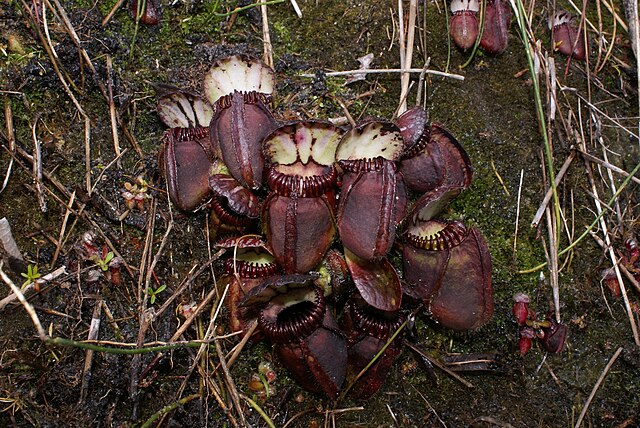
來源:Wikimedia Commons
土瓶草
適合高級Cephalotus follicularis
澳洲獨有的單屬單種食蟲植物。精巧的小壺狀捕蟲囊令收藏家愛不釋手。壽命超過10年。
關於我們
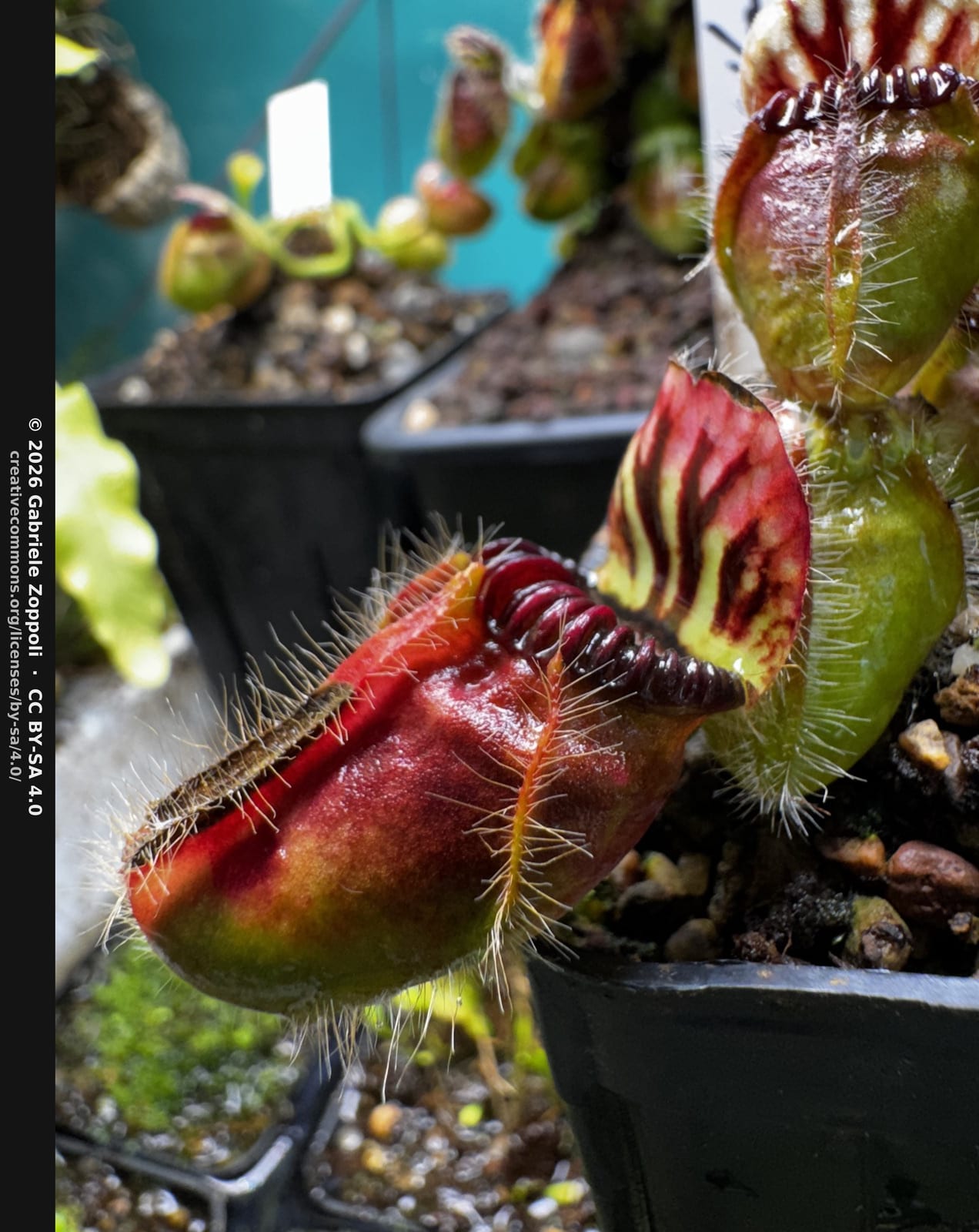
瓶子草(Cephalotus follicularis)是僅分佈於澳洲西南部(西澳大利亞州西南端・奧爾巴尼周邊)極其狹小地區的單屬單種特有食蟲植物。形成小型陷阱式瓶狀捕蟲囊,囊體具有蓋、口緣盤與翼等精妙構造。具備普通葉與捕蟲葉(瓶狀囊)的二型葉特徵。栽培用土宜使用水苔或泥炭土+珍珠岩,避免腰水,應在保持高濕度的同時確保通氣性。應使用蒸餾水或雨水。光照宜為明亮的間接光至微弱直射光,過強的直射光易導致葉燒。生長緩慢,栽培難度偏高。作為世界上唯一的單屬單種植物,在食蟲植物收藏家中享有極高人氣。
土瓶草的壽命
土瓶草的壽命為10年以上。
土瓶草的體型
土瓶草的成體體型為5〜15公分。
土瓶草的適溫與濕度
土瓶草的適溫為10〜25℃。
適溫為10〜25℃,不耐高溫。
基本資訊
產地
澳洲西南部(西澳大利亞州奧爾巴尼周邊)的沿海濕地
壽命
10年以上
體型
5〜15公分
溫度
10〜25℃
濕度
60〜90%
澆水與施肥
昆蟲(自動捕獲)
栽培要點
光照與擺放
適合明亮的散射光至微弱直射光,過強的直射陽光會造成葉片灼傷。放在通風良好處。
澆水
避免腰水法,用純水或雨水濕潤介質。保持高濕度的同時確保通氣。
溫度與越冬
適溫為10〜25℃,不耐高溫。夏季放在涼爽處,避免悶熱。
用土與換盆
使用純水苔或泥炭土與珍珠岩的混合介質。生長緩慢,換盆時需小心勿傷根。
病蟲害與注意事項
高濕度很重要,但通氣不足會導致腐爛。避免葉片灼傷和高溫即可長期栽培。
土瓶草常見問題
Q土瓶草的栽培難度是多少?
適合高級。進階者用品種。需要高度的栽培技術和專業設備,並需要對環境進行細微調整。
Q土瓶草的理想溫度是多少?
土瓶草的理想溫度為10〜25℃。避免溫度驟變,保持穩定的環境。
Q土瓶草的壽命是多長?
土瓶草的平均壽命為10年以上。透過適切的栽培環境和養分管理,可以長期健康成長。
Q土瓶草能長多大?
土瓶草的成體大小為5〜15公分。會因栽培環境和個體差異有所變化。
Q土瓶草如何澆水施肥?
土瓶草的澆水與施肥為:昆蟲(自動捕獲)。請注意適當的頻率和用量。
Q土瓶草的一般價格是多少?
土瓶草的價格因品種・特徵・大小・系統而異。請查看GrowerDirect的市價頁面以取得最新價格資訊。
最後更新: 2026年8月31日
栽培規格
- 耐寒性(RHS)
- H2
參考與來源
編輯與資料核驗: GrowerDirect編輯部
本頁的分類、規制和栽培數據基於以下主要信息數據庫進行創建和驗證。
分類與學名依據
學名(受理名): Cephalotus follicularis Labill.
權威資料庫: GBIF · POWO · ICPS 栽培品種登記(國際食蟲植物協會)
學名、命名者與異名依據全球分類學權威資料庫。
法規與保育狀況
此物種不涉及 CITES(曾列入後刪除)、IUCN 易危(VU)。
來源: CITES 與食蟲植物檢查清單(RBG Kew) / CITES 與食蟲植物檢查清單(RBG Kew) / IUCN紅色名錄:Cephalotus follicularis (VU) - 分類群 39635
法規可能修訂,請以各主管機關的最新第一手資訊為準。
相關物種
相關文章
土瓶草栽培完全指南|優美培育袋型捕蟲葉
土瓶草(袋雪之下)的基本栽培方法、溫度和濕度管理、培養土和澆水,以及培育大型捕蟲葉的技巧。
食蟲植物冬眠甦醒啟動指南|給餌、施肥、澆水重新開始的正確時機
從食蟲植物冬眠甦醒到春季生長期,逐步說明澆水重新開始、濕度恢復、給餌、施肥的正確時機。
食蟲植物的陷阱功能失效的原因與對策|濕度、營養、捕蟲系統的優化
探究食蟲植物陷阱無法捕捉昆蟲的原因。詳細解說濕度管理、營養平衡、腺體分泌功能、休眠狀態等,進行使陷阱發揮功能的科學方法。
食蟲植物禮物指南|獨特禮物的選擇方法與長期享受的訣竅
說明選擇食蟲植物作為禮物時的要點。介紹按收禮人類型選擇的方法,以及水質、休眠期等贈送前應告知的管理注意事項。