AI 生成圖像
香蕉蓮
適合新手Nymphoides aquatica
具有香蕉房狀塊莖的獨特水草。浮葉迷人。
關於我們
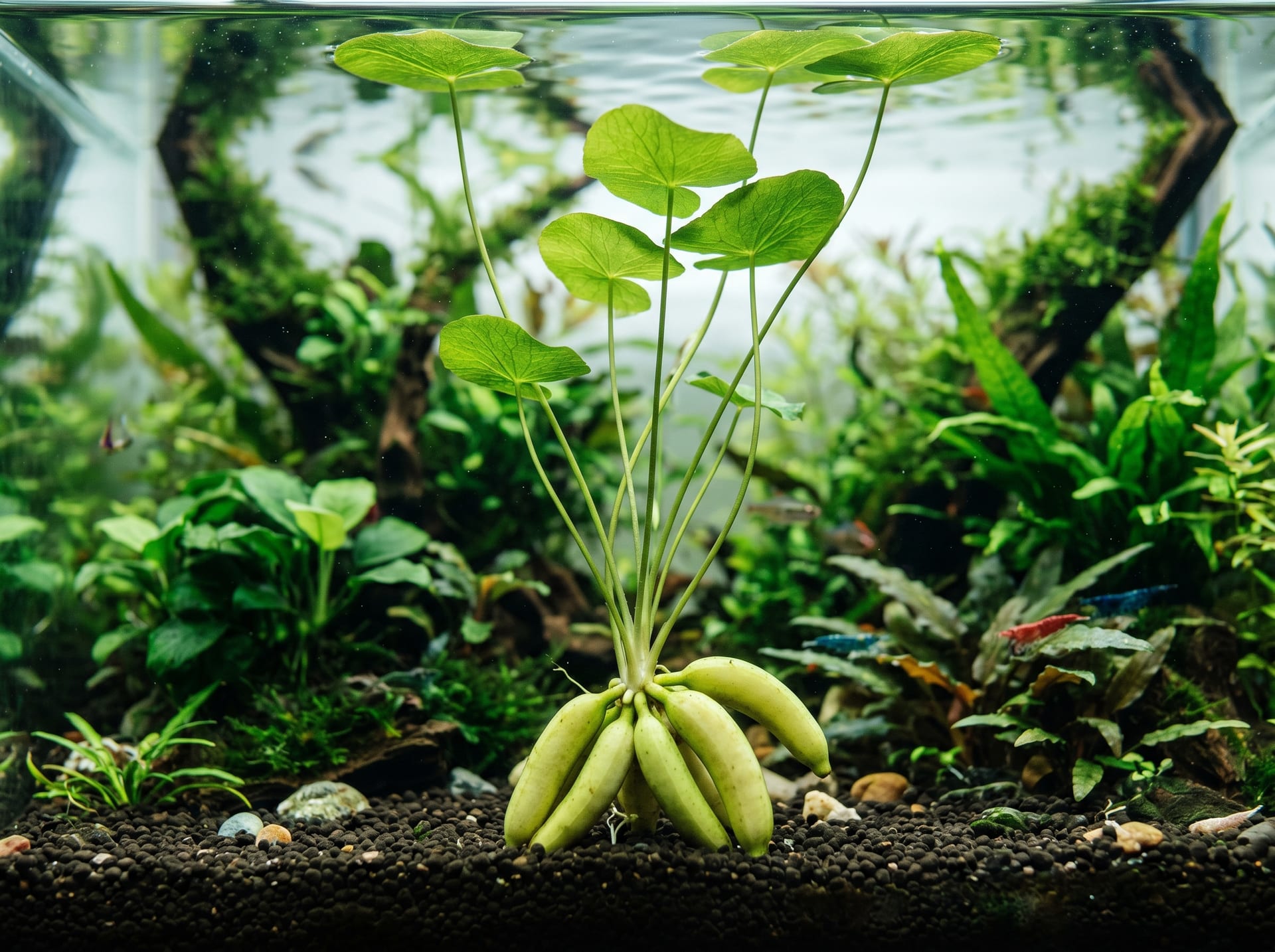
南方睡美蓮(Nymphoides aquatica)是原產於北美東南部的睡菜科多年生水草,以「香蕉蓮」的俗稱而為人所知。其根部具有綠色的香蕉狀塊莖(營養儲存根),呈房狀排列,形態獨特,只需將其放在水族箱底部即可生根。塊莖是營養儲存庫,因此基本放置方式是將其半埋在底砂中而不是完全埋沒。在水中,它們會伸出長莖,在水面上長出心形的浮葉,但在莖未達水面之前,可作為水中葉欣賞。浮葉若覆蓋過多水面,應定期修剪。這是初學者友善的水草,光照需求低至中等,無需CO2即可生長;其獨特外觀在收集者中也頗受歡迎。
香蕉蓮的體型
香蕉蓮的成體體型為5~15公分。
基本資訊
產地
北美東南部(美利堅合眾國東南部)
壽命
多年生
體型
5~15公分
溫度
20〜28℃
澆水與施肥
底砂肥料
栽培要點
光照
在低至中光照下生長的入門水草。不需要強光,標準設備即可維持。
CO2與肥料
不添加CO2也能栽培。在塊莖附近施用底床肥料,可一邊在塊莖儲存養分一邊生長。
底床與附著
不要埋入底床,只需將香蕉狀塊莖半露地放在底面即可定植。
生長
會長出浮葉,但可修剪
注意事項
塊莖埋得太深會受損,務必讓一半露出。在莖伸到水面之前可作為水中葉欣賞。
香蕉蓮常見問題
Q香蕉蓮的栽培難度是多少?
適合新手。初學者用品種。不需要特殊設備或經驗,只要備齊基本栽培環境就能輕鬆栽培。
Q香蕉蓮能長多大?
香蕉蓮的成體大小為5~15公分。會因栽培環境和個體差異有所變化。
Q香蕉蓮如何澆水施肥?
香蕉蓮的澆水與施肥為:底砂肥料。請注意適當的頻率和用量。
Q香蕉蓮的一般價格是多少?
香蕉蓮的價格因品種・特徵・大小・系統而異。請查看GrowerDirect的市價頁面以取得最新價格資訊。
最後更新: 2026年6月24日
參考與來源
編輯與資料核驗: GrowerDirect編輯部
本頁的分類、規制和栽培數據基於以下主要信息數據庫進行創建和驗證。
分類與學名依據
法規與保育狀況
相關物種
相關文章
馬拉巴栗完全養護指南|編織株的特點、澆水、換盆、繁殖方法
了解也稱為發財樹的馬拉巴栗原生地特點,從擺放位置、澆水、越冬、換盆、扦插繁殖到常見問題的完整詳解。
水草用CO2系統的完全指南|從設置到日常維護的實踐手冊
當水草進行光合作用時,CO2是不可或缺的要素。本文章涵蓋CO2添加系統的選擇、電磁閥調節器的安裝、擴散器的配置,到日常維護為止,涵蓋了培育生長迅速的有莖草和紅系水草所需的所有實施方法。
水草水槽的使用過後底土・底床的處理與回收方法|正確的拋棄方式與再利用訣竅
講解水草水槽的使用過後底土的正確處理方法。介紹遵循地方自治體規則的拋棄步驟,以及使用期間較短時的再利用想法。
無需CO2添加即可生長的初學者水草|育成條件與水族箱佈景活用
無需昂貴的CO2機材也能創造出美麗的水族箱。本文將從適合初學者、成功率高的無CO2水草選擇,到育成條件、水族箱佈景活用,進行實踐性解說。