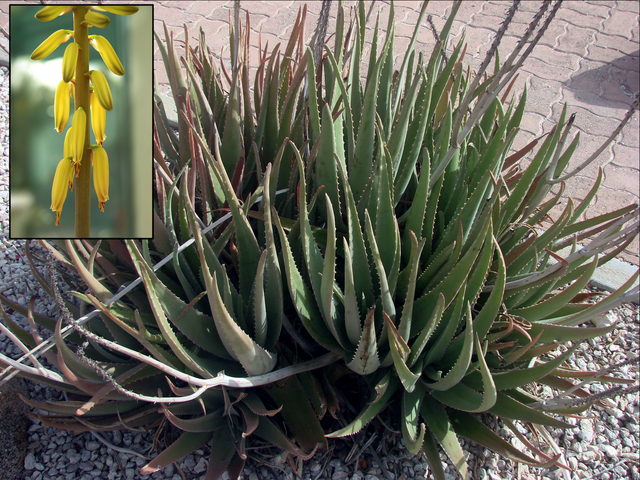
來源:Wikimedia Commons
蘆薈
適合新手Aloe vera
因藥用和美容功效而在全球聞名的多肉植物。厚實的葉片含有膠狀物質。為多年生植物(壽命數十年)。澆水需適度。
關於我們
蘆薈是蘆薈屬的多肉植物之一。被認為原產地為阿拉伯半島南部、北非、加那利群島和佛得角。能在乾燥地帶生長,廣泛分布於非洲、印度和其他地區。常被用作中藥。關於蘆薈的藥效已進行了許多研究。雖然其中有相互矛盾的結果,但許多證據表明其提取物對創傷、燒傷、皮膚感染、皮脂囊腫、糖尿病、高血脂等有效。特別是胰島素抵抗性的降低可能對預防年齡相關疾病有效。這些藥效被認為源自於多糖、甘露聚糖、蒽醌、凝集素等成分的存在。用於治療的成分提取的品質管理存在挑戰,目前採用流水沖洗著色物質並使用專利超乾燥系統的方法被認為是有效的。雖然蘆薈丁酸鹽對免疫調節和慢性炎症的有用性也得到認可,但另一方面也有人期待新的認知出現。繁殖方法為扦插和分株。據稱也可以進行葉插,但真偽不明。
Source: Wikipedia (CC BY-SA 4.0)
蘆薈的壽命
蘆薈的壽命為多年生植物(數十年)。
蘆薈的體型
蘆薈的成體體型為30〜60公分。
基本資訊
壽命
多年生植物(數十年)
體型
30〜60公分
溫度
5〜35℃
濕度
30〜50%
澆水與施肥
澆水適度
栽培要點
光照環境
在陽光充足的地方生長健壯
水分管理
澆水需適度。過度潮濕會導致根部腐爛
用土與換盆
在乾旱地帶也能生長,應種在排水良好的多肉專用土中,並確保盆底排水。
繁殖方法
可用扦插或分株繁殖。子株生長旺盛,從基部分離栽種即可。
蘆薈常見問題
Q蘆薈的栽培難度是多少?
適合新手。初學者用品種。不需要特殊設備或經驗,只要備齊基本栽培環境就能輕鬆栽培。
Q蘆薈的壽命是多長?
蘆薈的平均壽命為多年生植物(數十年)。透過適切的栽培環境和養分管理,可以長期健康成長。
Q蘆薈能長多大?
蘆薈的成體大小為30〜60公分。會因栽培環境和個體差異有所變化。
Q蘆薈如何澆水施肥?
蘆薈的澆水與施肥為:澆水適度。請注意適當的頻率和用量。
Q蘆薈的一般價格是多少?
蘆薈的價格因品種・特徵・大小・系統而異。請查看GrowerDirect的市價頁面以取得最新價格資訊。
最後更新: 2026年6月24日
栽培規格
- 耐寒性(RHS)
- H1c
來源: RHS Find a Plant
參考與來源
編輯與資料核驗: GrowerDirect編輯部
本頁的分類、規制和栽培數據基於以下主要信息數據庫進行創建和驗證。
分類與學名依據
法規與保育狀況
Aloe vera 在 1995 年從 CITES 附屬書中除名(該屬整體仍列於附屬書 II)。
來源: CITES — Aloe spp. 附錄II (A. vera除外)
法規可能修訂,請以各主管機關的最新第一手資訊為準。
相關物種
相關文章
蘆薈完全種植指南|日照、澆水和幼株增殖方法
介紹耐旱多肉植物蘆薈的基本特性、日照管理、澆水、換盆、幼株分株增殖方法以及根腐對策。
夏型多肉植物的秋季準備管理
解說夏型多肉植物的秋季管理。從9至11月植株發生的變化、分階段減少澆水的時機、由室外移入室內的擺放位置與溫度管理、秋季施肥與病蟲害對策,到依品種的檢查重點,介紹迎接冬季休眠的準備工作。
多肉植物的粉蚧蟲防治|早期發現・駆除・預防的完整指南
粉蚧蟲易潛伏於多肉植物的葉基部和新芽。本文詳細解説其特徵、發生環境、早期發現訣竅、用棉棒和酒精的駆除方法,以及再發防止的管理習慣。
多肉植物的夏型和冬型成長週期・水管理戰略
說明多肉植物的生育型差異、全年成長週期、季節別水管理戰略、失敗案例與防治方法。