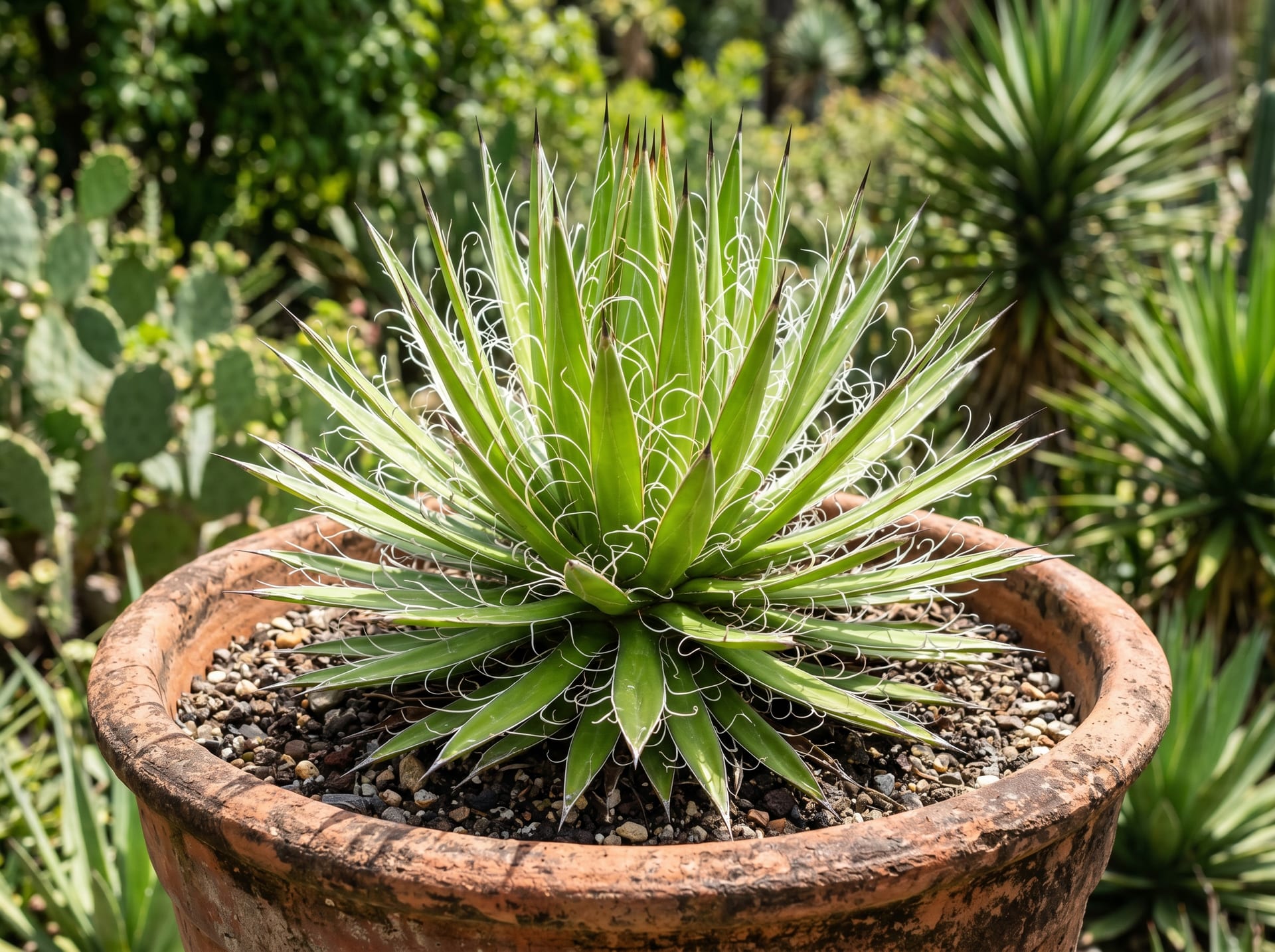
AI 生成图像
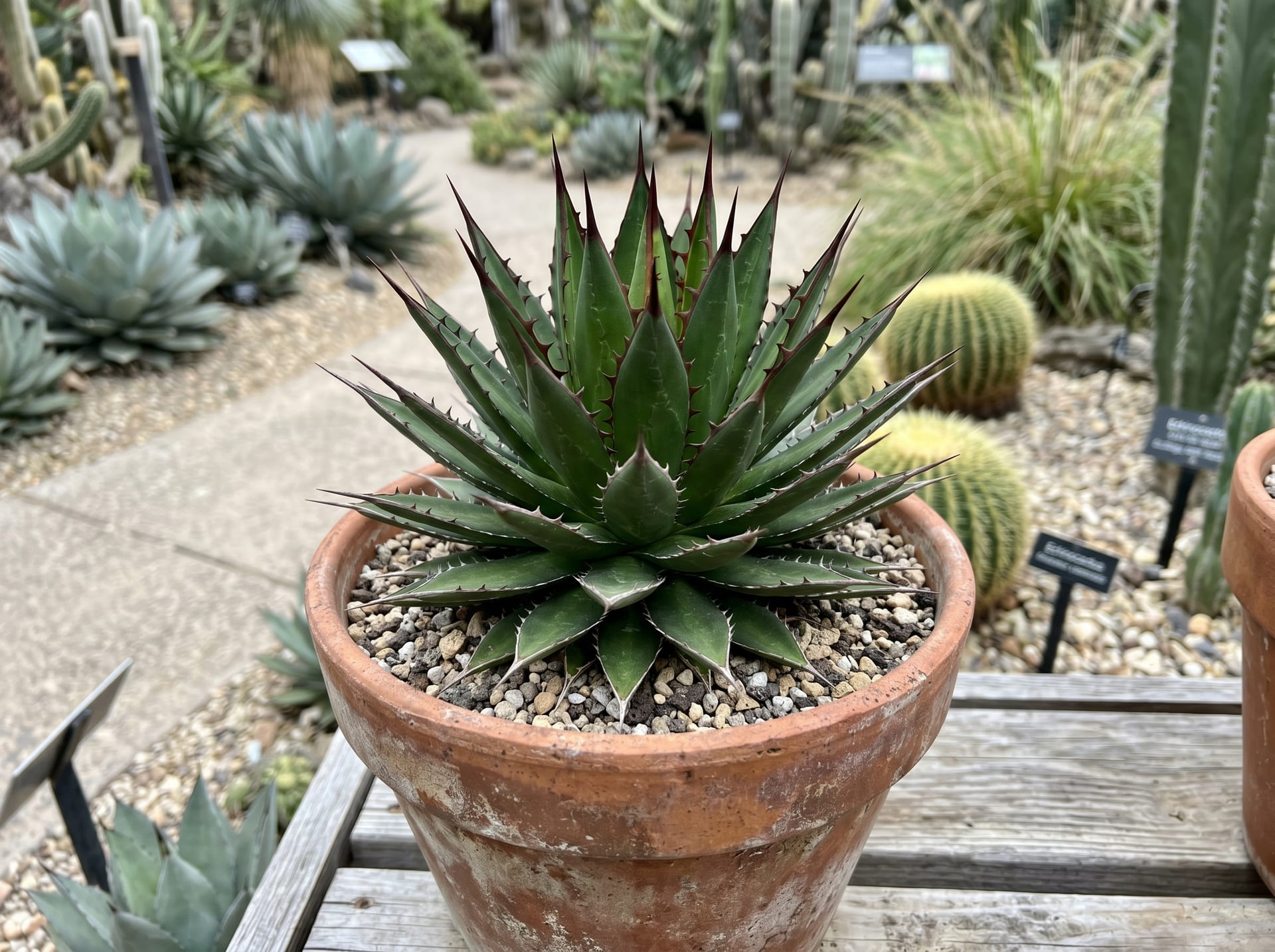
多丝龙舌兰
适合中级Agave multifilifera
原产于墨西哥西北部。如名称所示,叶缘处生有多条丝状纤维。相比之下,丝状纤维更加众多,外观更加华丽。
关于我们
龙舌兰是墨西哥西北部山区自生的中型龙舌兰品种。种小名"multifilifera"意为"具有众多丝线",这正是其最显著的特征——细长叶片的边缘生出大量白色丝状纤维。相比其他同样具有丝线特征的龙舌兰品种(如丝叶龙舌兰和某龙舌兰),其丝线更加丰富茂密,使整株植物看似被柔和的白丝轻轻包裹,呈现华丽而优雅的外观。细长叶片紧密排列,形成整齐的球形莲座。栽培相对容易,应使用排水性强的土壤,在光照充足、通风良好的环境中管理。浇水应等土壤完全干燥后进行,避免过湿。要维持丝状纤维的美观,需要充足的光照和适度的干燥环境。
多丝龙舌兰的体型
多丝龙舌兰的成体体型为40~70cm(莲座直径)。
多丝龙舌兰的适宜温度与湿度
多丝龙舌兰可耐受的温度范围为-5〜38℃。湿度以10〜40%为宜。
基本信息
产地
墨西哥西北部
体型
40~70cm(莲座直径)
温度
-5〜38℃
湿度
10〜40%
栽培指南
光照
丝状纤维在直射日光下发育最好
浇水
待土壤完全干燥后再浇水,避免过湿。适度干燥有助于保持丝状纤维的美观。
用土与换盆
使用排水性好的介质,在光照充足、通风良好的环境中管理。根系长满后再换盆即可。
温度与越冬
耐寒性约为-5℃。寒冷地区冬季移至不受霜冻的位置,保持偏干管理。
注意事项
丝状纤维沾水后容易粘连,易导致腐烂
多丝龙舌兰常见问题
Q栽培多丝龙舌兰的难度如何?
适合中级。这是一个中级难度的物种。建议有一定的栽培经验和环境管理知识。
Q多丝龙舌兰能耐受的温度范围是多少?
多丝龙舌兰可耐受的温度范围为-5〜38℃。推荐湿度为10〜40%。这是可耐受的极限范围,并非适宜生长的温度。请保持在范围内侧的稳定环境,并避免温度骤变。
Q多丝龙舌兰能长多大?
多丝龙舌兰成年后通常可达40~70cm(莲座直径)。大小可能因栽培条件和个体遗传而异。
Q多丝龙舌兰的一般价格是多少?
多丝龙舌兰的价格因品种、大小和系统而有很大差异。请查看我们的市场价格页面获取最新价格信息。
最后更新: 2026年9月17日
参考与来源
编辑与数据核验: GrowerDirect编辑部
本页的分类·法规·栽培数据依据下列权威一手来源编制并核验。
分类与学名依据
法规与保护状况
来源: CITES附录(《濒危野生动植物种国际贸易公约》附录II保护物种) / 日本环境省 特定外来生物清单(Agave 已确认不列入)
法规可能修订,请以各主管机关的最新一手信息为准。
相关物种
查找此物种的商品
相关文章
龙舌兰叶烧防止与光照管理|室内栽培向室外环境的移行战略
在完全防止龙舌兰叶烧的同时,成功实现室内到室外过渡的光照管理战略。解释了阶段性光量调整、季节性位置变更、紫外线防护等实践方法。
种植白色斑纹龙舌兰品种的窍门
种植白色斑纹龙舌兰品种的窍门
龙舌兰·奥特罗伊完全养护指南|打造美丽大型莲座的秘诀
介绍原产于墨西哥瓦哈卡州的大型龙舌兰·奥特罗伊的特征和养护方法。从摆放位置、土壤、浇水到越冬要点,为想要开始种植的人实用整理。
龙舌兰与龙舌兰酒的深层关系|从龙舌兰诞生的蒸馏烈酒的秘密
龙舌兰酒的原料仅为龙舌兰属(Agave)中的龙舌兰(Agave tequilana)一种。本栏目解读龙舌兰的生态、哈利斯科州产地特征,以及与观赏龙舌兰的区别。