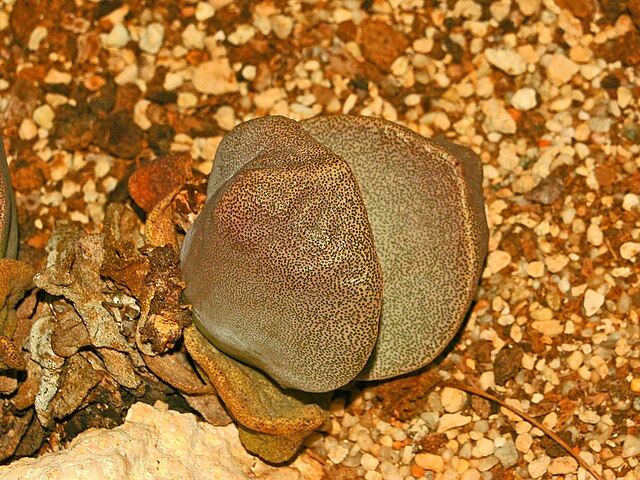
来源:Wikimedia Commons
帝玉
适合中级Pleiospilos nelii
外观酷似裂石的独特多肉植物。从中央绽放的花朵姿态优美。每年仅浇水数次。
概述
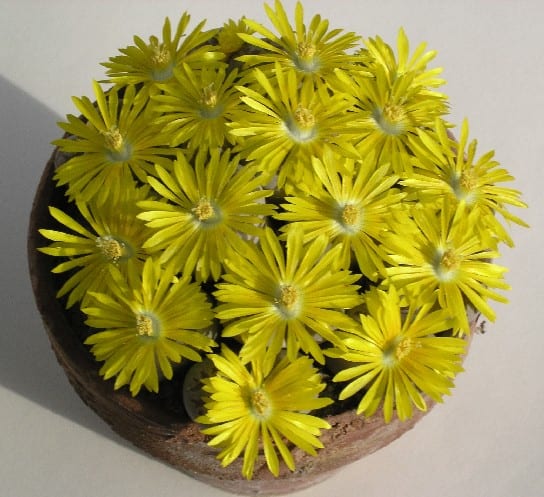
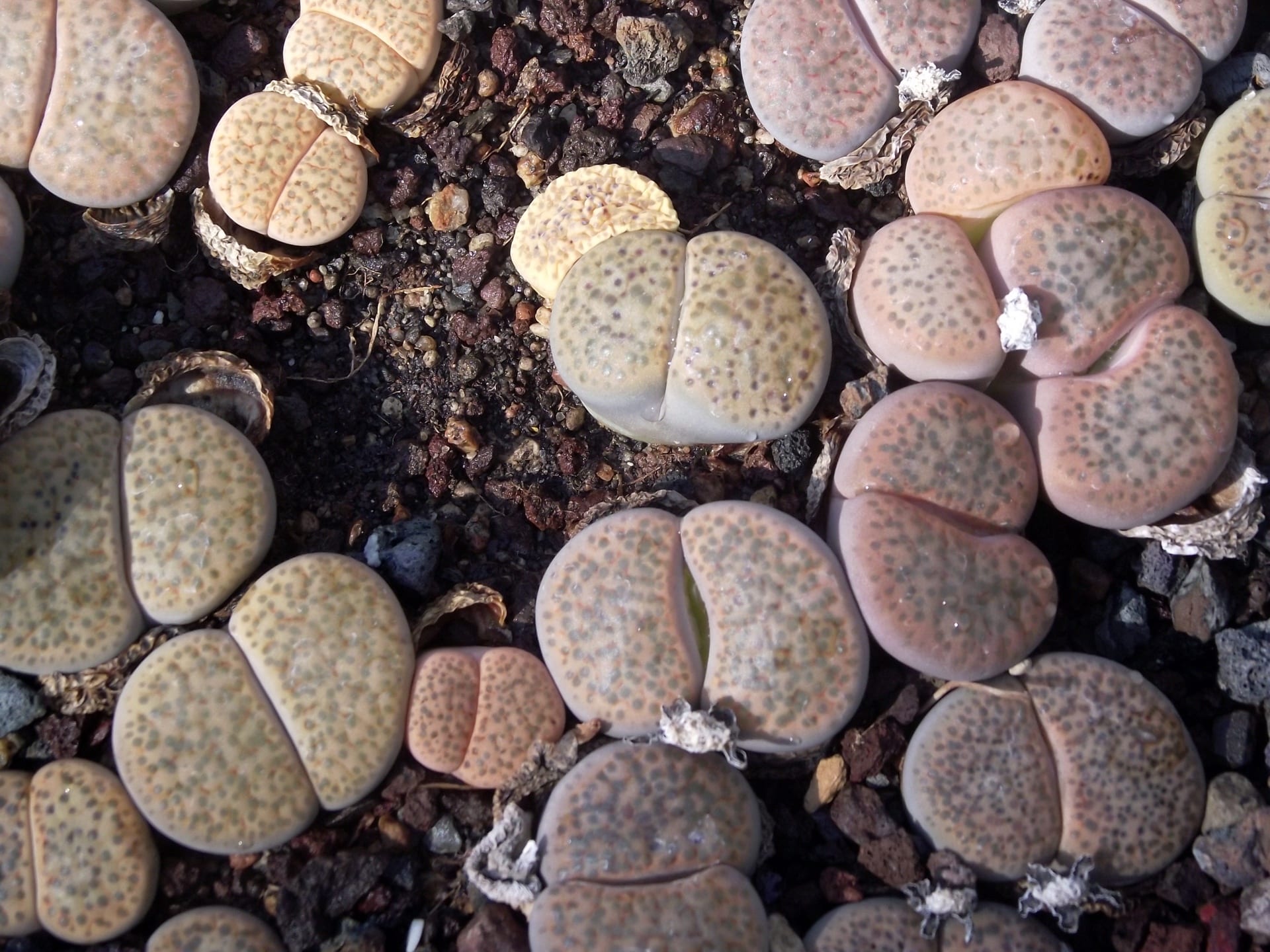
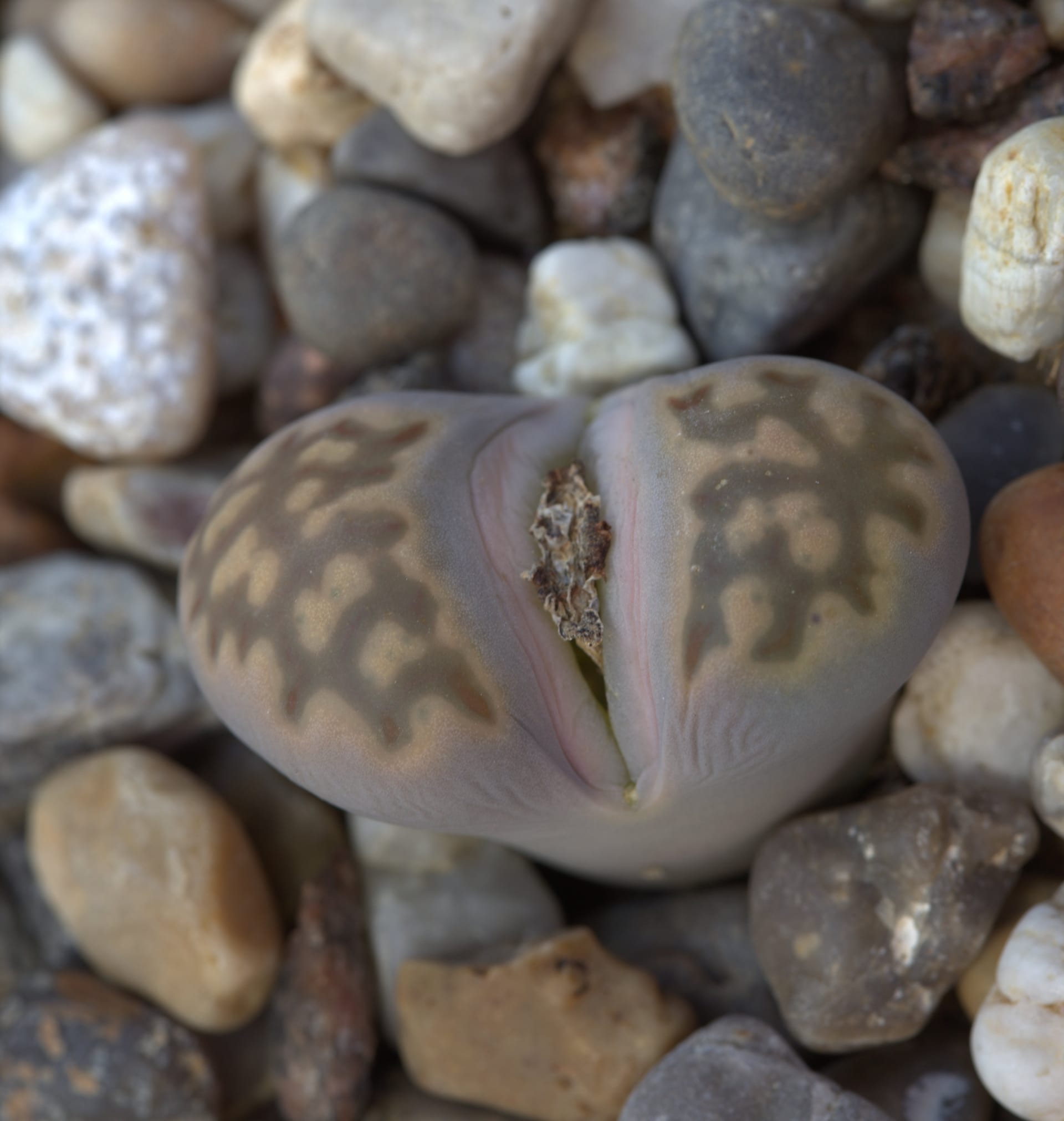
帝玉是番杏科帝玉属的多肉植物,原产于南非开普州。因其外观酷似裂石而得英名"Split Rock"。2~4枚肉厚的叶片呈半球状堆积,表面布满绿色至褐色的细小斑点。秋冬季节中央开出大朵橙黄色花朵,花姿非常优美。成株直径约3~8厘米。与生石花类似,帝玉会进行脱皮(换叶),旧叶为新叶提供水分后枯萎。脱皮期(春季)过度浇水会导致双重脱皮或腐烂,因此全年需水量极少,夏季尤其要完全断水。需要超高排水性的用土和强烈的阳光。栽培难度与岩石拟态的独特外观和硕大的花朵形成反差,这一特点吸引了众多多肉植物收集者。
帝玉的体型
帝玉的成体体型为3~8厘米。
基本信息
产地
南非(开普州)
寿命
多年生
尺寸
3~8厘米
温度
5〜35℃
湿度
30〜50%
浇水与施肥
基本无需特殊管理
栽培指南
光照与摆放
需要强光,放在阳光充足、通风良好的地方。光照不足时叶片拉长,岩石般的形态会走样。
浇水
全年浇水极少,仅数次即可。夏季必须完全断水,拿不准时就不要浇。
用土与换盆
使用超高排水性、透气性好的介质。换盆在脱皮结束后的干燥期进行,之后暂时不要浇水。
病虫害与注意事项
春季脱皮期多余的水会导致双重脱皮或腐烂。旧叶是新叶的水分来源,不要摘除,管理方式与生石花相同。
帝玉常见问题
Q栽培帝玉的难度如何?
适合中级。这是一个中级难度的物种。建议有一定的栽培经验和环境管理知识。
Q帝玉能长多大?
帝玉的成株通常可达3~8厘米。大小可能因栽培条件和个体遗传而异。
Q帝玉如何浇水施肥?
帝玉的浇水与施肥为:基本无需特殊管理。请注意适当的频率和用量。
Q帝玉的一般价格是多少?
帝玉的价格因品种、大小和系统而有很大差异。请查看我们的市场价格页面获取最新价格信息。
最后更新: 2026年10月2日
参考与来源
分类与学名依据
相关物种
相关文章
夏型多肉植物的秋季准备管理
介绍夏型多肉植物的秋季管理。包括9-11月植株的变化、逐步减少浇水的时机、从室外移至室内的放置位置和温度管理、秋季施肥和病虫害防治,以及品种特异性的检查要点,为冬季休眠做好准备。
多肉植物粉蚧虫防治|早期发现、消除、预防的完整指南
粉蚧虫是一种容易隐藏在多肉植物叶基和新芽处的害虫。本文详细阐述了粉蚧虫的特征、发生环境、早期发现窍门、用棉签或酒精进行消除的方法,以及防止再发的管理习惯。
多肉植物的夏型和冬型生长周期·浇水管理策略
本文阐述多肉植物生育型的差异、全年生长周期、季节性浇水管理策略、失败案例及对策方法。
多肉植物的选盆与根系生长的关系|盆号·材料·排水性完全指南
影响多肉植物生长的选盆要点。从盆号选择到素烧盆vs塑料盆的对比,再到排水性优化,一份帮助根系良好生长的实践指南。