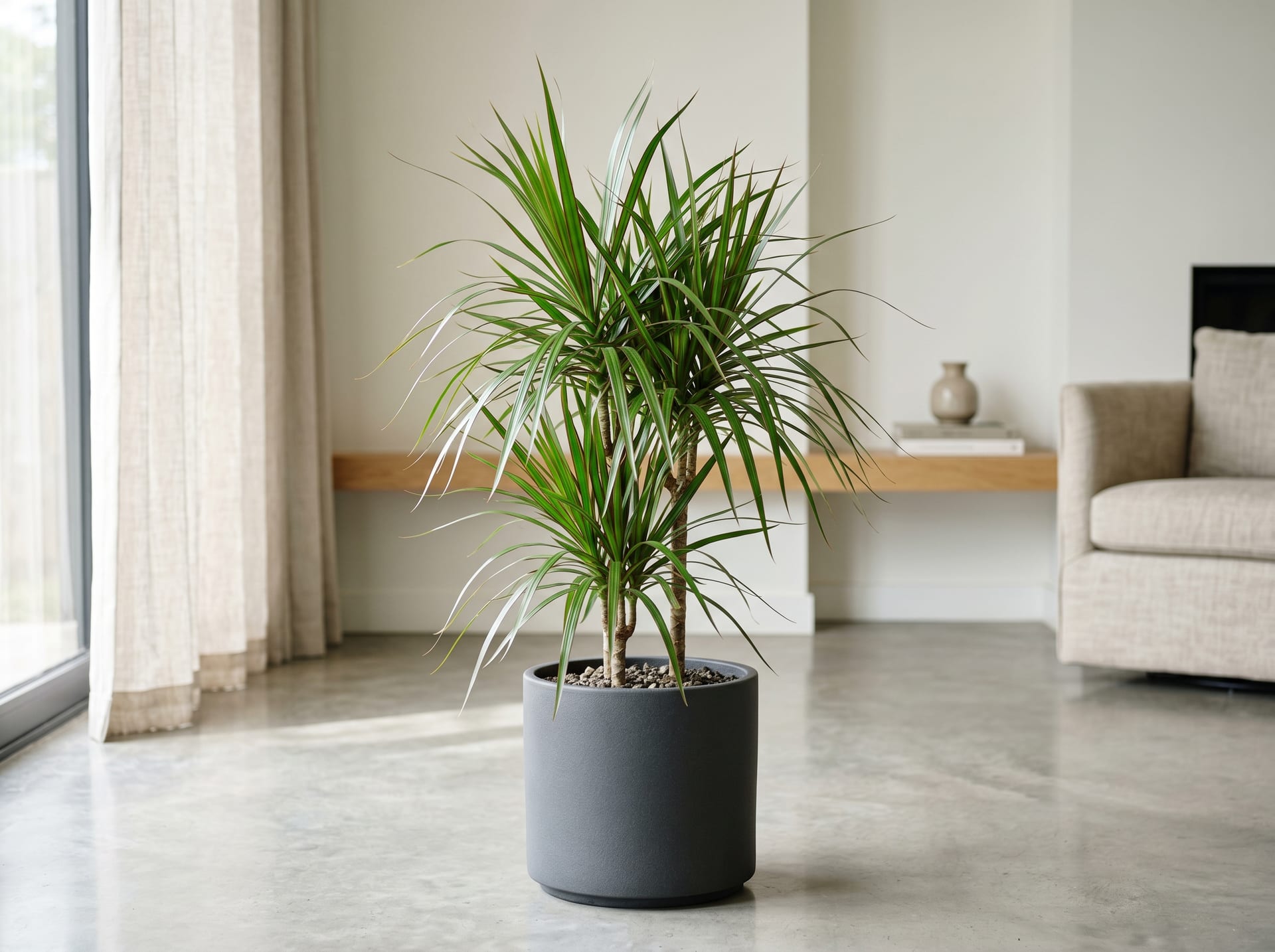
AI 生成圖像
龍血樹·朱蕉
適合新手Dracaena spp. / Cordyline spp.
兩種人氣觀葉植物。龍血樹以細長葉片、朱蕉以彩色葉色為特徵。可在室內環境栽培,管理容易。易於生長高大,適合充分利用空間的室內佈置。
概述
龍血樹與朱蕉都是深受喜愛的觀葉植物組群。龍血樹(龍血樹屬)屬於天門冬科,具有狹長的劍形或條紋狀葉片,常以放射狀展開,其中以「幸福樹」著稱的香龍血樹(Dracaena fragrans)為代表品種。朱蕉(朱蕉屬)同屬天門冬科,許多品種具有紅色、紫色、粉紅等豐富的葉色,營造出熱帶風情。兩者外形相似,容易混淆,但屬於不同的屬,龍血樹的根為黃色至橙色,朱蕉的根則呈白色,可據此區分。兩者均易於適應室內環境,生長強健,容易栽培。偏好明亮的間接光線,強烈的直射日光會導致葉片灼傷。澆水應在土壤表面乾燥後進行,需注意過度潮濕導致的根腐。植株易於長高,適合用於利用垂直空間的室內設計。
龍血樹·朱蕉的適溫與濕度
龍血樹·朱蕉的適溫為10〜30℃。
基本資訊
產地
非洲、亞洲、大洋洲、南太平洋(因屬而異)
溫度
10〜30℃
濕度
40〜60%
栽培要點
擺放位置
明亮的室內。透過蕾絲窗簾的光線
澆水
土表乾燥後澆透,注意過濕導致的爛根。冬季減少澆水。
繁殖方法
可透過莖插、扦插繁殖。將過長的莖剪下扦插,母株的切口處也會長出側芽。
用土與換盆
使用排水良好的介質種植,植株容易長高,應選擇穩固的盆以免傾倒。根系長滿後換到大一號的盆。
注意事項
不耐寒,需在10℃以上環境下管理。葉尖乾枯是乾燥或低溫所致
龍血樹·朱蕉常見問題
Q龍血樹·朱蕉的栽培難度是多少?
適合新手。初學者用品種。不需要特殊設備或經驗,只要備齊基本栽培環境就能輕鬆栽培。
Q龍血樹·朱蕉的理想溫度是多少?
龍血樹·朱蕉的理想溫度為10〜30℃。避免溫度驟變,保持穩定的環境。
Q龍血樹·朱蕉的一般價格是多少?
龍血樹·朱蕉的價格因品種・特徵・大小・系統而異。請查看GrowerDirect的市價頁面以取得最新價格資訊。
最後更新: 2026年10月2日
參考與來源
編輯與資料核驗: GrowerDirect編輯部
本頁的分類、規制和栽培數據基於以下主要信息數據庫進行創建和驗證。
法規與保育狀況
法規可能修訂,請以各主管機關的最新第一手資訊為準。
相關物種
尋找此物種的商品
相關文章
龍血樹完全養護指南|從巴西木到紅邊龍血樹品種別管理術
幸福樹(巴西木)、紅邊龍血樹、白邊龍血樹等熱門龍血樹品種的完整養護方法解說。涵蓋澆水、光照、修剪、幹立仕立的方法,以及葉尖枯萎等常見問題的原因與對策。
觀葉植物葉片光澤的環境最適化|光澤感與健全性兼備的濕度管理
引出觀葉植物葉面光澤感(光澤)的環境管理方法。透過優化光、濕度、水質,實現健全而美麗的葉片表現的技術。
觀葉植物新葉變小的原因和對策|光照、濕度、營養平衡的實踐解決方法
分析觀葉植物生長停滯、新葉變小的原因。從光環境、濕度管理、施肥策略、根部健康狀況等逐一要素出發進行解說,介紹恢復新葉大小的方法。
蜘蛛蟎與介殼蟲防治及害蟲預防實踐
觀葉植物上的紅蜘蛛與介殼蟲的辨別方法與危害跡象、紅蜘蛛的防治實踐步驟、介殼蟲的防除方法、營造害蟲難以發生的環境與季節性管理,以及使用農藥時的注意事項,詳細解說早期發現與預防的訣竅。