Caudex appraisal guide
Even in the same "Pachypodium gracilis," the evaluation varies greatly depending on the caudex thickness, form, branch shape, whether it's seed-grown or wild-collected (imported), and the presence or absence of roots. In caudex plants, the sculptural beauty of the caudex itself and the cultivation story generate price differences.
What determines the price
Caudex thickness and form
HighThe core of evaluation is caudex thickness approaching a spherical shape with substantial, full appearance. Round, protruding sculptural forms are valued more highly than thin or elongated ones.
Branch shape and tree form
HighThe way branches spread from the caudex and the completeness of a natural tree form increase ornamental value. The better balanced the branch development, the higher the evaluation.
Seed-grown or wild-collected (imported)
HighSeed-grown plants cultivated from seeds domestically offer peace of mind in terms of quarantine and environmental adaptation. Wild-collected imports have thicker caudexes, but confirming root development status is essential.
Presence or absence of roots and root condition
HighWell-rooted specimens have low establishment risk and make for stable transactions. For wild-collected imports, confirming root development status is essential.
Size and age
MediumSpecimens with large caudexes take many years to cultivate, so rarity increases. Often, quality of form is more important than size.
Appraisal points
Confirming caudex form
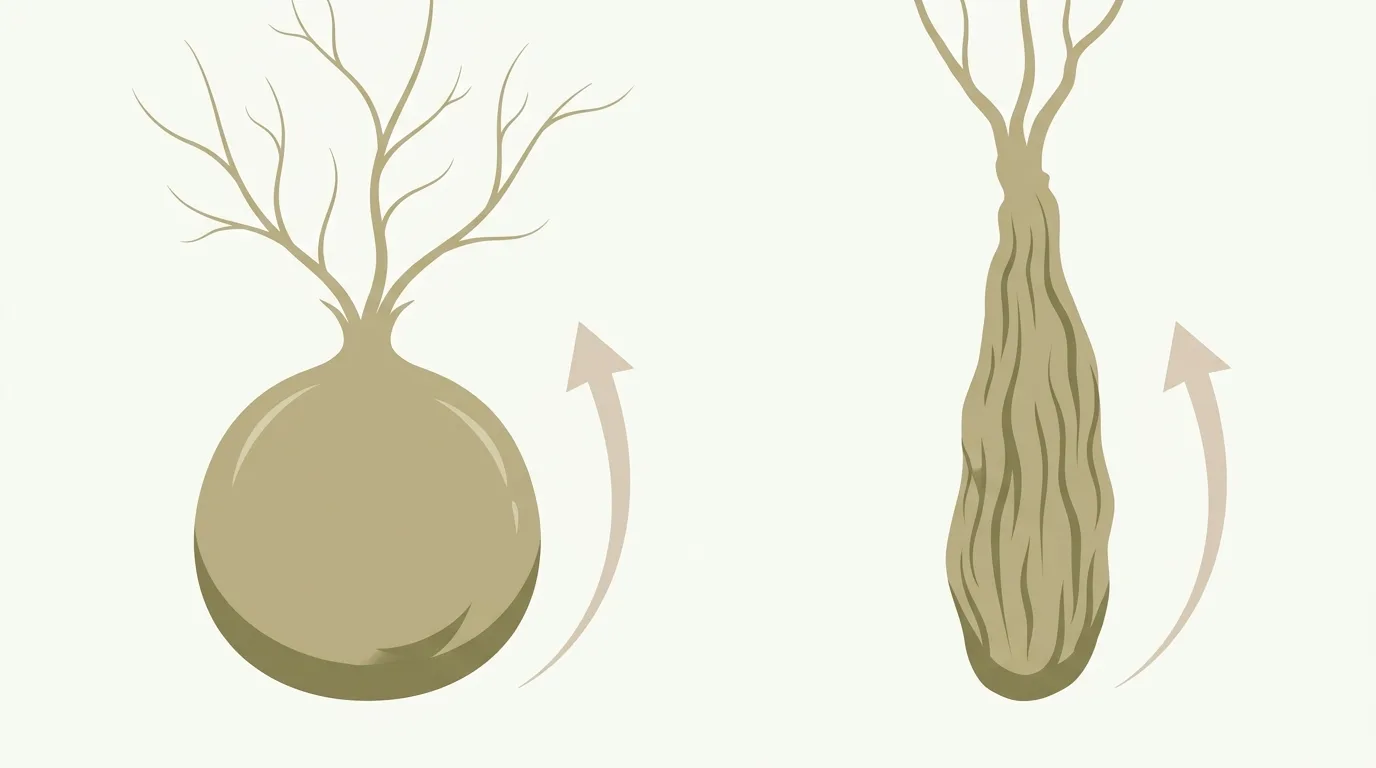
- Good:
- Caudex approaches spherical shape with roundness and protrusion, with substantial fullness.
- Caution:
- If the caudex is soft or has many wrinkles, it's a sign of poor root development or insufficient moisture.
Verify root development
- Good:
- Multiple sturdy roots are visible, and the plant is stable in the medium.
- Caution:
- If root development is unclear or the plant is unstable, root development management is needed. Always confirm this, especially for wild-collected imports.
Confirming branch shape and tree form
- Good:
- Branches develop with good balance, with high completeness as a natural tree form.
- Caution:
- If branches are biased in one direction or unnatural cutting is present, assess the future tree form.
Appraisal quiz
What is the most important thing to confirm when purchasing a caudex plant?
Appraisal by breed
General information on judging value; not a guarantee of any individual's price or quality. See the market-price page for actual rates.