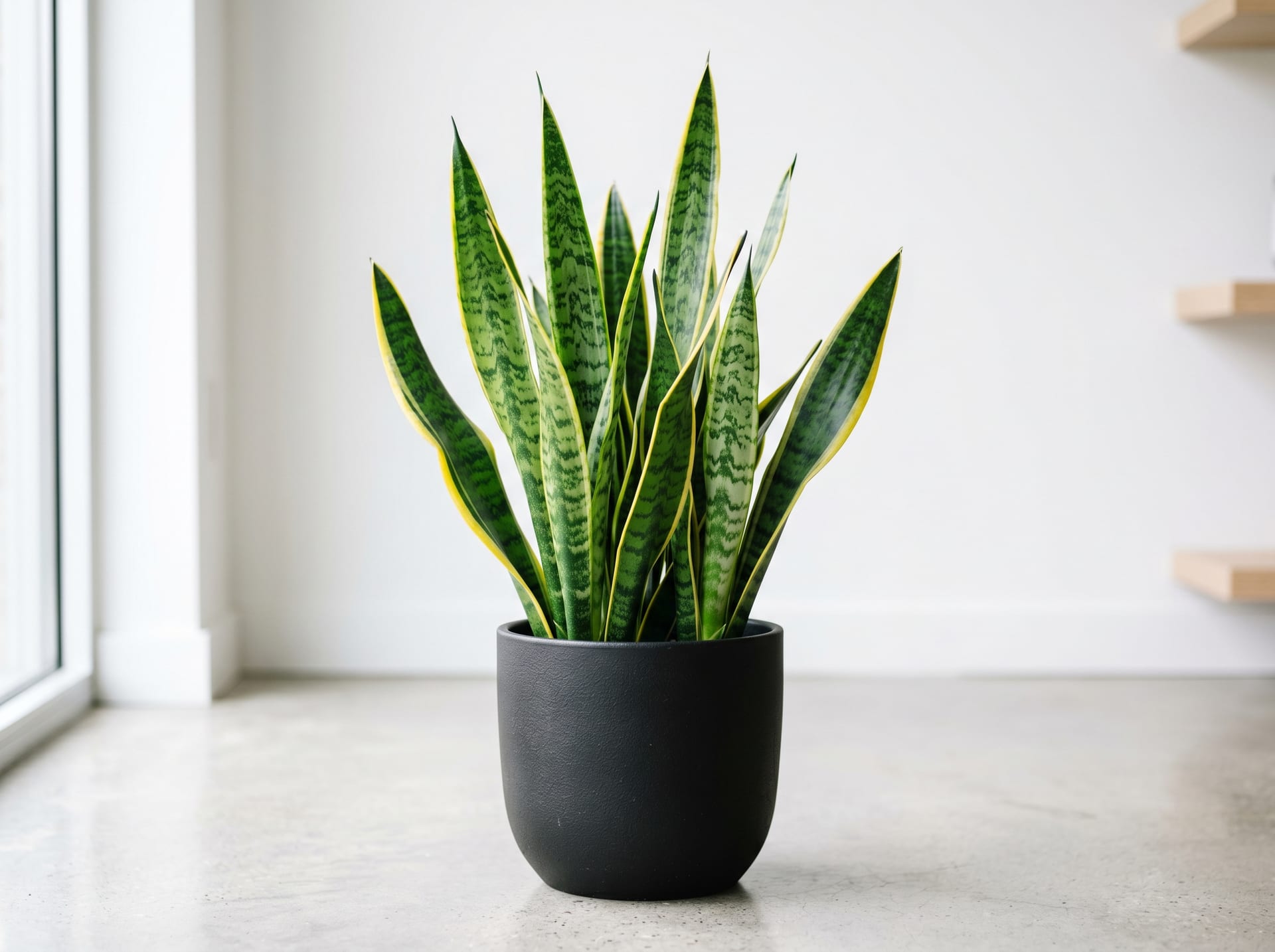
AI 生成图像
虎尾兰
适合新手Sansevieria
剑状直立的叶子是其特征。被NASA选为空气净化植物。浇水频率低,是最难枯死的植物之一。
概述
虎尾兰(学名:Dracaena trifasciata,旧学名:Sansevieria trifasciata)是原产于西非的天门冬科多年生草本植物。具有横纹剑状叶片直立生长,英文名为"Mother-in-law's Tongue"(婆婆舌)或"Snake Plant"(蛇植)。极耐干旱,每月浇水1-2次即可。虽然最适宜放在光线充足的地方,但也能耐受黑暗环境,有很强的耐阴性。夜间进行CAM型光合作用,吸收二氧化碳并释放氧气,因此被认为适合放在卧室。NASA研究表明其具有除去甲醛等有害物质的空气净化效果。由于叶片易折断,在有儿童或宠物的环境中需要谨慎。是初学者也难以养死的坚韧常见观叶植物。
Source: Wikipedia (CC BY-SA 4.0)
虎尾兰的寿命
虎尾兰的寿命为10年以上。
虎尾兰的体型
虎尾兰的成体体型为20厘米~1.2米(因品种而异)。
虎尾兰的适宜温度与湿度
虎尾兰的适宜温度为10〜30℃。湿度以30〜60%为宜。
基本信息
产地
西非(尼日利亚~刚果)
寿命
10年以上
尺寸
20厘米~1.2米(因品种而异)
温度
10〜30℃
湿度
30〜60%
栽培指南
摆放位置
明亮的地方最佳,但也能耐受黑暗环境
浇水
每月浇水1-2次左右。极耐干旱
温度
10℃以上。冬季基本无需浇水
用土
排水良好的土壤。多肉专用土也可以
繁殖方法
可通过分株或叶插繁殖。斑叶品种叶插后斑纹会消失,分株更可靠。
病虫害与注意事项
过湿是最大的敌人,会导致烂根。叶片容易折断,避免放在儿童或宠物能碰到的地方。
虎尾兰常见问题
Q栽培虎尾兰的难度如何?
适合新手。这是一个适合初学者的物种。不需要特殊设备或经验,基本的栽培设置即可成功栽培。
Q虎尾兰的理想温度是多少?
虎尾兰的理想温度为10〜30℃。推荐湿度为30〜60%。避免温度骤变,保持稳定的环境。
Q虎尾兰的寿命是多长?
虎尾兰的平均寿命为10年以上。通过适当的护理和营养,它们可以长寿健康地生活。
Q虎尾兰能长多大?
虎尾兰的成株通常可达20厘米~1.2米(因品种而异)。大小可能因栽培条件和个体遗传而异。
Q虎尾兰的一般价格是多少?
虎尾兰的价格因品种、大小和系统而有很大差异。请查看我们的市场价格页面获取最新价格信息。
最后更新: 2026年6月23日
参考与来源
编辑与数据核验: GrowerDirect编辑部
本页的分类·法规·栽培数据依据下列权威一手来源编制并核验。
参考的一手来源
相关物种
相关文章
虎皮兰完全养护指南|强健易养的经典室内植物管理方法
讲解初学者也推荐的经典室内植物虎皮兰的养护方法。汇总了光照、浇水、换盆、分株及叶插繁殖的方法。
观叶植物叶光泽的环境优化|光泽感与健康性兼顾的湿度管理
观叶植物叶表面光泽感(光泽)的环境管理方法。通过优化光照、湿度和水质,实现健康美观叶片表现的技巧。
观叶植物新叶变小的原因与对策|光照、湿度、营养平衡的实践解决方案
解析观叶植物生长停滞、新叶变小的原因。逐一解释光环境、湿度管理、施肥策略、根系健康等因素,介绍恢复新叶大小的方法。
蜘蛛螨和介壳虫防治·害虫预防实践
观叶植物上红蜘蛛和介壳虫的区分方法与危害迹象、红蜘蛛防治的实践步骤、介壳虫消除方法、营造不易发生害虫的环境与季节管理、使用农药时的注意事项等,讲解早期发现与预防的诀窍。