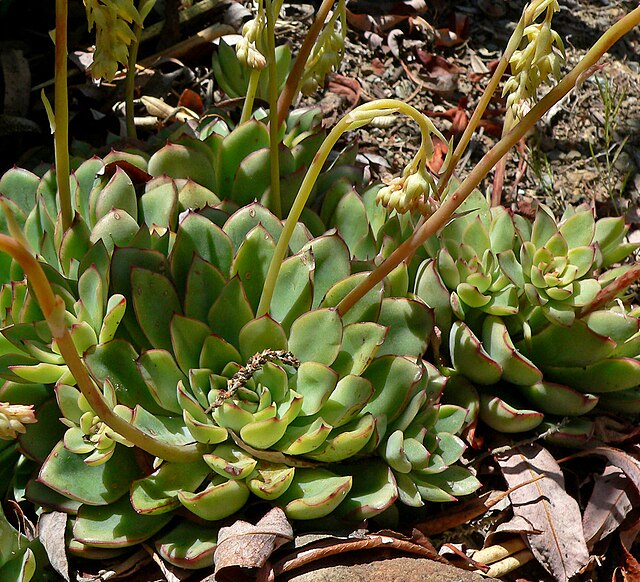
来源:Wikimedia Commons
普利多尼石莲花
适合新手Echeveria pulidonis
青白色叶片边缘呈鲜艳红色的优雅石莲花。莲座形状优美且易于保持整齐。
概述
普利多尼石莲花(Echeveria pulidonis)原产于墨西哥伊达尔戈州和克雷塔罗州,是石莲花的原生种。叶片呈淡蓝绿色,整体覆盖白粉,叶缘和叶尖呈鲜艳的红色,形成优美的色彩对比。具有整齐平坦的莲座形状,成体莲座直径约8~15厘米,十分紧凑。放在光照充足的地方,红色叶缘会更加突出,色泽更加鲜艳。作为原生种,相对强健,被广泛用作多个杂交品种的亲本。浇水要等土壤干透后再适量浇灌,梅雨至夏季要避免过湿。可以通过叶插和子株分株进行繁殖。在多肉植物收集者中,作为原生种被高度评价,也是重要的杂交素材。
普利多尼石莲花的寿命
普利多尼石莲花的寿命为5~10年。
普利多尼石莲花的体型
普利多尼石莲花的成体体型为8~15厘米。
普利多尼石莲花的适宜温度与湿度
最低气温在3~5℃左右可以越冬。
基本信息
产地
墨西哥(伊达尔戈州、克雷塔罗州)
寿命
5~10年
尺寸
8~15厘米
温度
3〜35℃
湿度
30〜50%
栽培指南
光照
放在光照充足的地方,红色叶缘会更加突出
浇水
土干后少量浇水。原种较强健,但应避免梅雨至夏季的过湿。
温度与越冬
最低约3〜5℃可越冬。冬季放在室内或屋檐下,避免霜冻。
用土与换盆
种在排水良好的多肉培养土或赤玉土、鹿沼土、轻石的混合土中。为防过湿,选用易干的盆。
繁殖方法
可用叶插或分子株繁殖。取下健康叶片放在土面上,等待生根。
普利多尼石莲花常见问题
Q栽培普利多尼石莲花的难度如何?
适合新手。这是一个适合初学者的物种。不需要特殊设备或经验,基本的栽培设置即可成功栽培。
Q普利多尼石莲花的寿命是多长?
普利多尼石莲花的平均寿命为5~10年。通过适当的护理和营养,它们可以长寿健康地生活。
Q普利多尼石莲花能长多大?
普利多尼石莲花的成株通常可达8~15厘米。大小可能因栽培条件和个体遗传而异。
Q普利多尼石莲花的一般价格是多少?
普利多尼石莲花的价格因品种、大小和系统而有很大差异。请查看我们的市场价格页面获取最新价格信息。
最后更新: 2026年7月5日
栽培参数
- 耐寒性(RHS)
- H2
来源: RHS Find a Plant
参考与来源
编辑与数据核验: GrowerDirect编辑部
本页的分类·法规·栽培数据依据下列权威一手来源编制并核验。
分类与学名依据
法规与保护状况
相关物种
查找此物种的商品
相关文章
拟石莲花属完全指南|热门品种特征与组合种植的选择方法
深入解析多肉植物中特别受欢迎的拟石莲花属的品种分类、特征差异、适合组合种植的搭配方式。介绍从初学者到高级养殖者都能享受的品种选择技巧。
拟石莲花的热门品种和种植方法|初学者完全指南
拟石莲花热门品种的特点、基本种植方法、浇水、光照和换盆技巧,为初学者详细讲解。
拟石莲属的繁殖与叶插技巧
针对拟石莲属的叶插实践指南。具体讲解如何选择优质叶片、愈伤组织形成与发根管理、粉质品种特有的失败因素,以及子株分离与茎插的使用区别。
拟石莲(Echeveria subsessilis)子株的独立采取|从母株分离方法、促根、母株恢复管理
详细介绍拟石莲子株从母株安全分离的方法、促根诀窍,以及采取后母株的恢复管理。