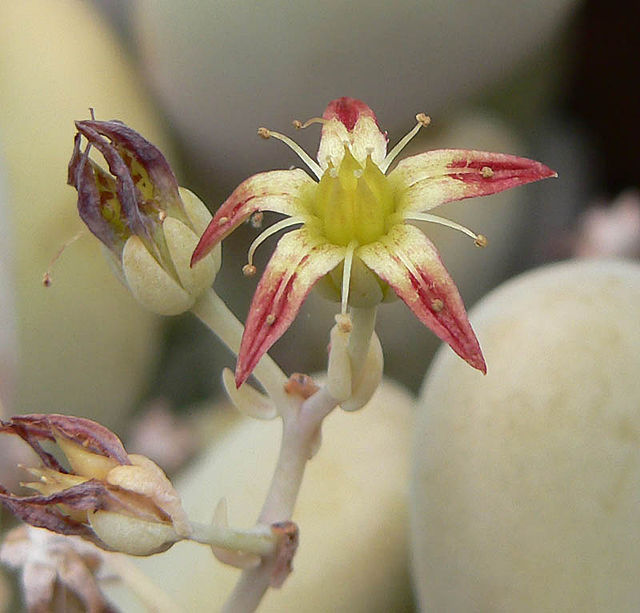
Source: Wikimedia Commons
豆瓣掌
适合新手以朧月(Graptopetlum paraguayense)为代表种的坚强多肉植物。银灰色叶片优美,通过叶插可轻松繁殖。适合初学者。
关于我们
豆瓣掌是景天科豆瓣掌属的多肉植物,原产于墨西哥及亚利桑那州南部。代表种"朧月(G. paraguayense)"的银灰色~淡粉色莲座形色彩静谧,是日本最普遍的多肉植物之一。叶色随日照和气温变化,秋冬季许多品种呈现粉红色或淡紫色红叶。成体莲座直径因品种而异,约5~20厘米,茎易伸长。非常坚强,极度耐旱,可在室外管理。喜光,光照不足时叶片易徒长。浇水频率约月2~3次,明显偏少,对梅雨季潮湿也有相对耐受力。抗寒性良好,许多品种可耐受0℃左右的低温。叶插极其容易,掉落的叶片也能发芽生根,因此繁殖容易,特别适合初学者。作为与拟石莲属属间杂交种"豆瓣莲"的亲本,具有重要意义。
基本信息
产地
墨西哥及亚利桑那州南部
寿命
10年以上
体型
5~20厘米
温度
0〜35℃
湿度
30〜50%
栽培指南
日照
喜光。室外也能生长
浇水
月2~3次左右。极度耐旱
耐寒性
可耐受0℃左右低温
繁殖
叶片掉落即能生根,繁殖力惊人
注意事项
易于伸长徒长,需确保充足光照
豆瓣掌常见问题
Q栽培豆瓣掌的难度如何?
适合新手. 这是一个适合初学者的物种。不需要特殊设备或经验,基本的栽培设置即可成功栽培。
Q豆瓣掌的理想温度是多少?
豆瓣掌的理想温度为0〜35℃。推荐湿度为30〜50%。避免温度骤变,保持稳定的环境。
Q豆瓣掌的寿命是多长?
豆瓣掌的平均寿命为10年以上。通过适当的护理和营养,它们可以长寿健康地生活。
Q豆瓣掌能长多大?
豆瓣掌成年后通常可达5~20厘米。大小可能因栽培条件和个体遗传而异。
Q豆瓣掌的一般价格是多少?
豆瓣掌的价格因品种、大小和系统而有很大差异。请查看我们的市场价格页面获取最新价格信息。
最后更新: 2026年6月23日
参考与来源
编辑与数据核验: botachoku编辑部
本页的分类·法规·栽培数据依据下列权威一手来源编制并核验。
法规与保护状况
相关物种
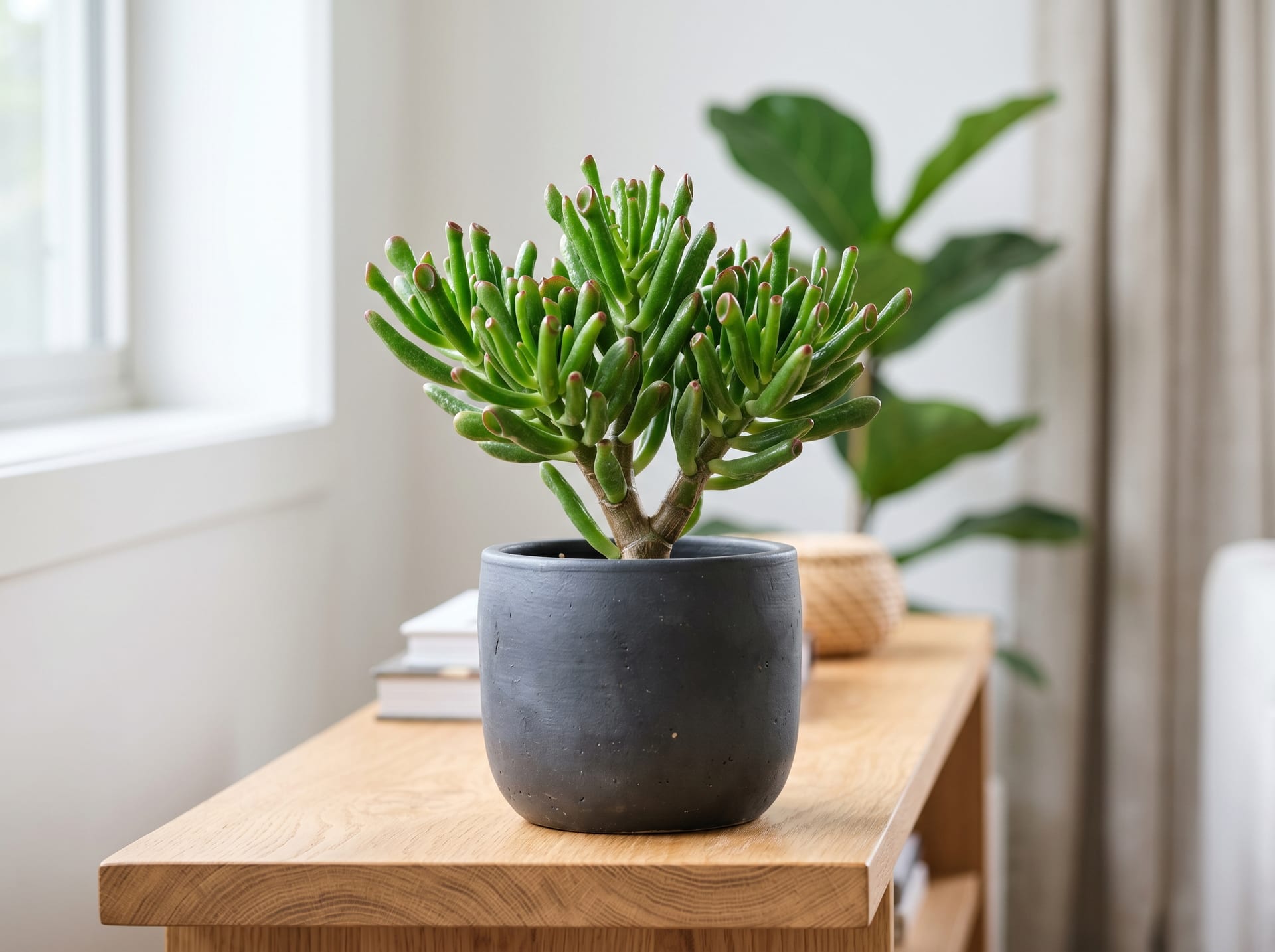
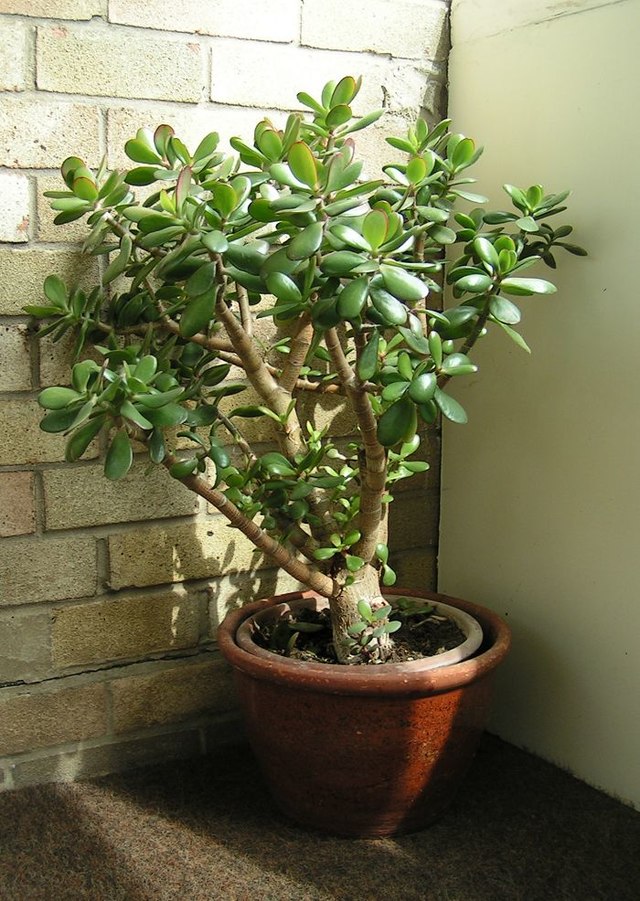

查找此物种的商品
相关文章
How to Create Succulent Massed Plantings | Tips for Mixed Containers and Seasonal Management
Techniques for creating massed succulent plantings by combining multiple varieties in a single container. This guide provides practical explanations of the complete process: variety selection, soil and container choice, layout design, planting methods, and seasonal care.
Tips for Bringing Out Beautiful Fall Colors in Succulents | Seasonal Color Development Through Care Methods and Variety Selection
The secret to succulents' beautiful fall and winter colors. This guide explains the mechanisms of color development, light, temperature, and watering management to bring out vibrant autumn hues, and recommendations for the best colored varieties.
A Complete Guide to Growing Aloe | Sunlight, Watering, and Propagation by Offsets
From the basic characteristics of aloe, a drought-hardy succulent, to detailed guidance on sunlight, watering, repotting, propagation through offset division, and root rot prevention.
Case Study: Restoring Etiolated Succulents | Before-and-After Recovery Procedures by Symptom Pattern
Succulent etiolation requires different approaches depending on symptom severity. This article breaks down four patterns—mild, moderate, severe, and partial etiolation in cluster plantings—with specific before-and-after recovery procedures in each case.