Source: Wikimedia Commons
Shishigashira Japanese maple
IntermediateAcer palmatum 'Shishigashira'
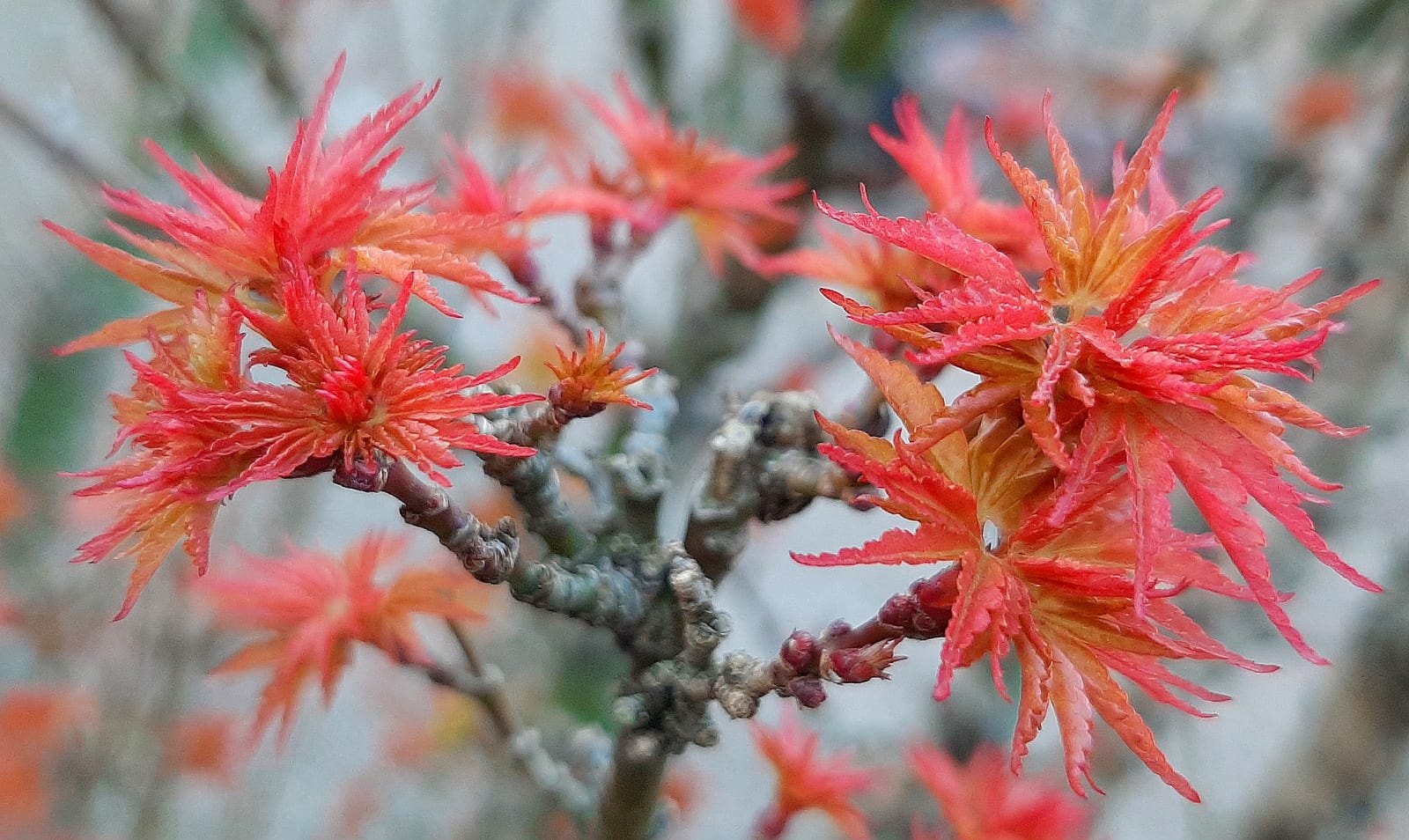
A yatsubusa maple famed for its leaf character: small, thick, crinkled leaves crowded at the shoot tips. Its unusual foliage sets it apart from ordinary Japanese maples at a glance.
About
Shishigashira is a maple cultivar described in Japanese bonsai guides as a yatsubusa form of the yama-momiji group with thick, crinkled leaves. The yama-momiji group includes many forms with unusual leaves, and Shishigashira is the best known. Its small, crinkled leaves crowd densely at the shoot tips. Ordinary Japanese maple leaves are thin and open flat with long-pointed lobes, whereas Shishigashira's are thick, wavy and crinkled, so it is instantly distinguishable from standard iroha-momiji or 'Deshojo'. Other small-leaved yatsubusa forms such as 'Kiyohime' and 'Kotohime' have flat leaves. Because leaves pack tightly along the shoots, the interior can become stuffy, so watch for powdery mildew and damp foliage from the rainy season on. Defoliating to force a second flush tends to weaken maples in general, so rely mainly on leaf thinning. Little is documented about its origin or exact leaf size. It is sold both as bonsai material and as a garden tree, and colours in autumn.
Basic Info
Origin
Japan (maple cultivar; little documented about its origin)
Lifespan
Little data for the cultivar
Size
Shohin to medium bonsai; also sold as a garden tree (little data on mature size)
Temperature
-5〜35℃
Watering & Fertilizer
Fertilizer (spring and autumn, sparingly)
Growing Tips
Light & placement
Sun and good airflow; space pots apart because the foliage is dense. Shade from the end of the rainy season to early September
Watering
Dries fast once in leaf: about twice daily in spring, 2–3 in summer, every 1–2 days in winter, aiming at the soil. Summer drought spoils autumn colour
Temperature & overwintering
Cold-hardy (A. palmatum: USDA zone 5). After leaf fall let it see 2–3 frosts, then shelter from drying wind and late frost
Soil & repotting
Free-draining mix; repot around March before budbreak, every 2–3 years (1–2 for mini), pruning roots to encourage fine feeders
Fertilizer
Organic fertilizer in mid-April once leaves harden, a top-up in May; autumn feeding from mid-August, finishing in September to aid colour
Pruning & styling
Pinch the central bud mid-March to mid-April. With such dense leaves, thin rather than fully defoliate to open the interior. Prune around leaf fall
Pests & cautions
Dense foliage invites powdery mildew and damp from the rainy season; aphids on new shoots. Watch for spray damage
Shishigashira Japanese maple FAQ
QWhat is the growing difficulty level for Shishigashira Japanese maple?
Intermediate. A variety suitable for intermediate growers. Requires some cultivation experience and knowledge of environment management. Pay careful attention to temperature and humidity control.
QHow should I water and fertilize Shishigashira Japanese maple?
Shishigashira Japanese maple: watering & fertilizer — Fertilizer (spring and autumn, sparingly). Aim for appropriate frequency and amount.
QWhat is the typical price for Shishigashira Japanese maple?
The price of Shishigashira Japanese maple varies significantly by variety, characteristics, size, and lineage. Please check GrowerDirect's price guide for the latest market information.
Last updated: September 23, 2026
References & Sources
Edited & verified by: GrowerDirect Editorial Team
The classifications, regulations, and growing data on this page are created and verified based on the primary information database below.
Taxonomy & Authority
Regulations & Conservation Status
Not listed by CITES and not regulated for domestic sale. Not a registered variety under the Plant Variety Protection Act (no entry for 'Shishigashira' in the MAFF database, checked Sept 2026).
Sources: Species+ (CITES listing search) / MAFF Plant Variety Registration Database
Regulations may change. Always verify the latest information with the relevant authorities.
Related Species
Find listings for this species
Related Articles
How to Make Japanese Maple Bonsai Autumn Foliage Beautiful | Techniques to Bring Out Vivid Red Coloring
Explains the care methods for making Japanese maple bonsai autumn foliage beautiful. Introduces the mechanism of fall color change, summer leaf care, use of sunlight and temperature differences, defoliation techniques, and characteristics of foliage color by variety.
Bonsai Aged Wood Techniques | Creating Branch Aging Expression and Tree Age Aesthetics
Explains techniques for creating bonsai that appear aged from young stock. Introduces practical methods for expressing tree age aesthetics, from bark texture and branch structure to root development expression and changes over time.
How to Prevent Fertilizer Burn in Bonsai | Determining the Right Fertilizer Amount and Concentration
Why does fertilizer burn occur in bonsai? This explains the mechanism of osmotic pressure, how to identify early symptoms such as browning of leaf tips, why it occurs easily in midsummer and right after repotting, and emergency measures and preventive strategies.
A Guide to Giving Bonsai as Gifts | Appropriate Species and Etiquette for Longevity Celebrations and Business Opening Celebrations
This guide explains how to choose bonsai species and proper etiquette when giving bonsai as gifts for celebrations. It introduces recommended species for different occasions such as longevity celebrations and business opening celebrations, as well as how to choose species while considering management requirements.
🩺 Common diseases
Can't find the plant you're looking for?
Post your wishes for free and growers with matching plants will contact you with introductions.