Bonsai Aged Wood Techniques | Creating Branch Aging Expression and Tree Age Aesthetics
Explains techniques for creating bonsai that appear aged from young stock. Introduces practical methods for expressing tree age aesthetics, from bark texture and branch structure to root development expression and changes over time.
Key Takeaways
Explains techniques for creating bonsai that appear aged from young stock. Introduces practical methods for expressing tree age aesthetics, from bark texture and branch structure to root development expression and changes over time.
In bonsai appreciation, "aged wood character" influences aesthetic value as much as—or more than—tree height or flower quantity. In nature, traces of time carved over decades or even more than a century should be expressed within the confined space of a small pot. How can this be achieved? The answer lies in what is called "aged wood creation," a bonsai technique system. This article systematically explains aging expression in branches, trunk, and roots, as well as overall tree form composition.
Understanding the Visual Characteristics of Aged Wood
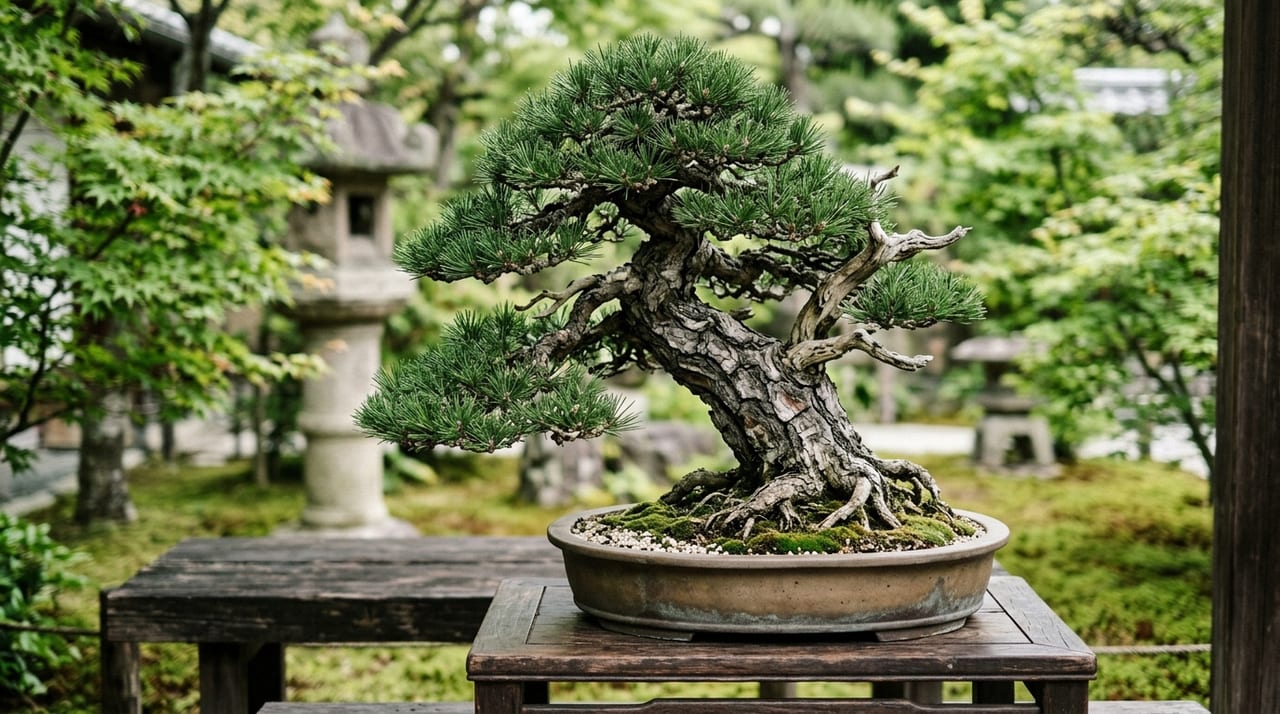
Aged trees, regardless of species, share several common visual characteristics. Organizing these first is the first step in aged wood creation.
The main characteristics of aged trees in nature are as follows.
- Trunk Thickening and Bark Roughening: Young tree bark is thin and smooth, but as the tree ages, the bark thickens and develops deep vertical cracks and irregularities.
- Exposed Root Development: Over years of weathering and soil erosion, thick roots rise to the surface, creating complex patterns.
- Branch Asymmetry and Drooping: Main branches become thicker with more pronounced curves, while lower branches of the crown gradually decline and become sparse.
- Crown Contraction: Aged trees show reduced extension of new growth, resulting in a tighter canopy.
Aged wood creation in bonsai is the work of intentionally and naturally imparting these characteristics to a bonsai. From selection of material to management methods, everything is organized toward this goal.
Expressing Aging in Trunk and Bark
The trunk thickness and bark texture are what first determine an aged wood appearance. If the bark expression is youthful, no matter how well the branches are arranged, the bonsai will not appear aged.
The basic approach to thickening the trunk is consciously alternating "growth phases" and "shaping phases." For several years, allow the foliage to grow freely, concentrating nutrition into the trunk (growth phase), then organize unnecessary branches and refine the tree form (shaping phase). Repeating this cycle produces faster trunk thickening with stronger lines than continually pruning year after year.
For bark texture expression, the approach differs by species. Conifers such as pine, Hinoki cypress, and juniper develop rough bark relatively early, but deciduous trees such as Japanese maple, acer, and Japanese zelkova take years for bark to change. In the case of deciduous trees, the deadwood technique called "jin" and the exposed wood technique called "shari" can be combined to visually supplement aging expression.
Jin is the expression of deadening the branch tip, while shari is the expression of stripping the trunk bark to expose the wood. Both mimic phenomena seen in natural aged trees, and when applied appropriately, tree age character increases dramatically. However, excessive application becomes unnatural, so prioritize natural placement over quantity.
Composing Branch Structure and Creating Aging
Aged wood branch structure has two elements: "stepped thinning from thick to fine branches" and overall asymmetry. In contrast to young bonsai with branches of uniform thickness and straight lines, aged wood branches show clear thickness variation at various points, with curves and drooping.
Below is an effective sequence for branch aging expression.
- Narrow Primary Branches to 3-5: First determine the main trunk of the tree form, and select only the essential primary branches extending from there. Retaining many branches maintains a youthful impression.
- Prioritize Thickening Primary Branches: By concentrating nutrition to primary branches during the growth phase, the thickness difference from other branches increases, creating an aged wood structure.
- Apply Natural Curves with Wire: Branch bending is done gradually over multiple years, not with one strong bend at once. Abrupt bending produces an unnatural fold, but gently accumulated curves become indistinguishable from natural aging.
- Intentionally Cause Lower Branches to Decline: In natural aged trees, lower branches gradually become deadwood. By reducing fertilization to lower branches and gradually reducing them through pruning, this process can be expressed.
Wire application is best done in early spring before the growing season begins or in late autumn to winter after leaf fall. Wire must be removed before it cuts into the branch—wire scarring hinders aged wood creation.
Planning and Practicing Root Development Expression
Root development is the part requiring the most time to completion among the three elements (trunk, branches, roots) that determine a bonsai's aged appearance. Creating natural root development requires conscious care at each repotting.
The basic principle for creating root development is "shallow and spreading roots." During repotting, spread roots radially, cut short any roots attempting to go deep, and retain roots extending horizontally. Repeating this work at each repotting causes roots to spread in a plate-like manner and eventually emerge at the surface.
Pot selection also affects root development. Using shallow pots naturally causes roots to extend horizontally, making root development expression more likely to emerge. If aged wood is the goal, consider using a shallow pot—one-third or less the height of the tree—from an early stage.
Root washing, a display method that intentionally exposes part of the roots, is also one technique to enhance the beauty of root development. This is used in bonsai exhibitions, but daily management requires attention to drying.
Overall Shape Balance and Finishing Aged Wood Character
Even if individual elements (trunk, branches, roots) are refined, if overall balance is lost, aged wood character will not be conveyed. Aged wood tree form follows two visual principles: "low center of gravity" and "tight apex."
Low center of gravity is created by a thick, stable trunk and root development that grips firmly into the ground. Conversely, a tight apex is expressed by preventing excessive new growth in the upper crown and keeping it compact through pruning. When the trunk is thick but only the apex grows freely, it appears "aged but unmanaged" rather than aged wood.
The use of "space" is also important. In aged wood tree form, appropriate space emerges between branches. Too densely packed branches appear youthful; too sparse appear meager. When pruning, organize branches while being mindful of allowing light and wind into the canopy.
Recording tree form silhouettes regularly with photographs allows objective confirmation of yearly changes. Aged wood creation is a decades-long work, and although short-term changes are minimal, comparing several years reveals dramatic change. Observing this accumulation is the fundamental joy of aged wood creation.
Management Techniques to Accelerate Aging Expression
Sense of tree age is something only time can provide, but daily management can accelerate its accumulation.
Fertilizer management directly affects aging expression. Excessive nitrogen promotes vigorous leaf and new growth, strengthening a youthful impression. At the stage of intentional aged wood creation, switch to fertilization centered on phosphorus and potassium, prioritizing trunk and root fullness as the basic approach.
Watering rhythm also affects tree form. Overly moist management makes root development too shallow, causing roots to embed too deeply in soil. Metered management where the soil surface dries before thorough watering creates healthy root development.
For placement, ensure an environment with adequate sunlight and air circulation as the baseline, and adjust full summer sun with shade cloth. Moderate stress promotes bark roughening and branch fullness, but excessive environmental stress only reduces tree vigor. The balance of management—"harsh, yet keeping the tree alive"—is the greatest secret to accelerating aged wood creation.