Caudex Plant Encyclopedia
Encyclopedia of popular caudex plants with care guides, traits, and root management tips.
Featured Caudex Plant
Showing 141 of 141 species(1–24)
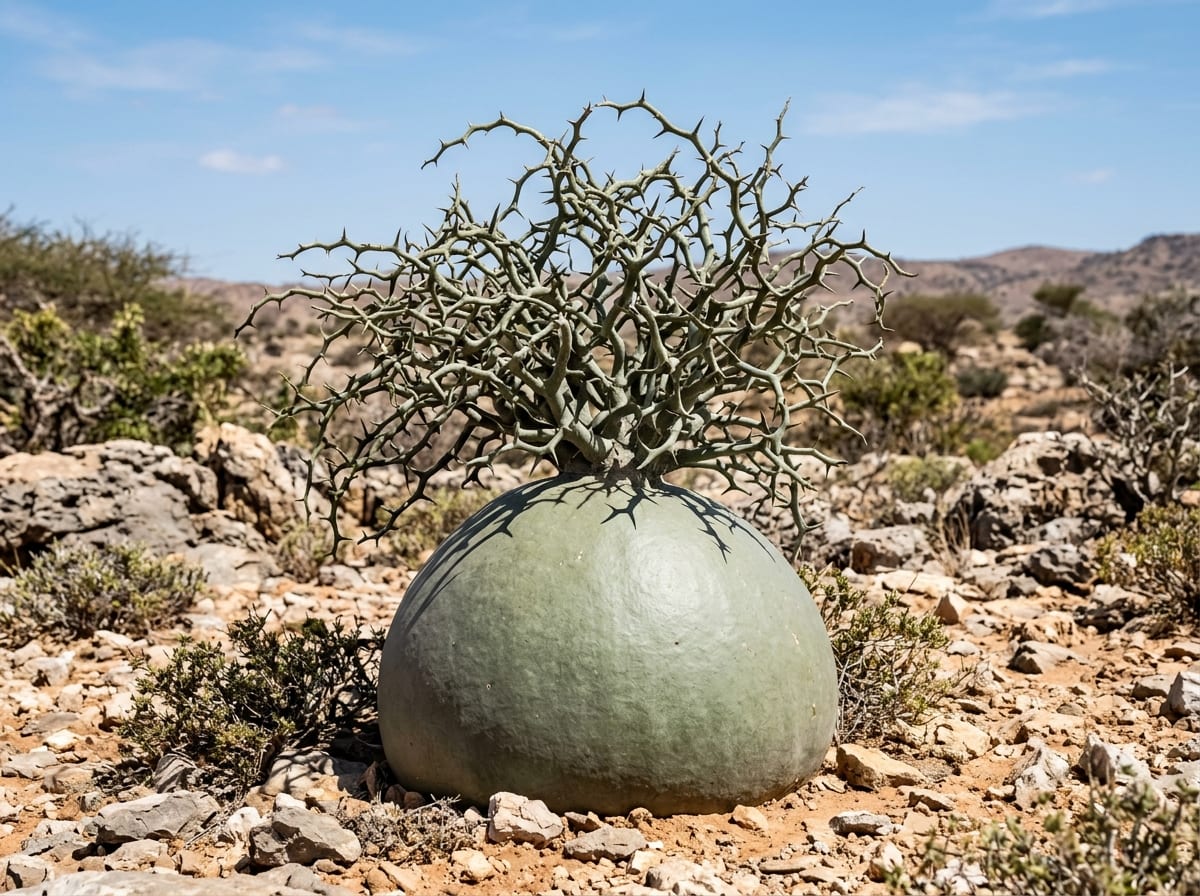
Adenia ballyi
Adenia ballyi
A Somali Adenia whose large grey-green, dome-shaped caudex is topped by a tangle of strongly curved, spiny branches. Its tendrils have become thorns, and wild caudices can reach 1 m across like boulders.
 © JMK / CC BY-SA 3.0
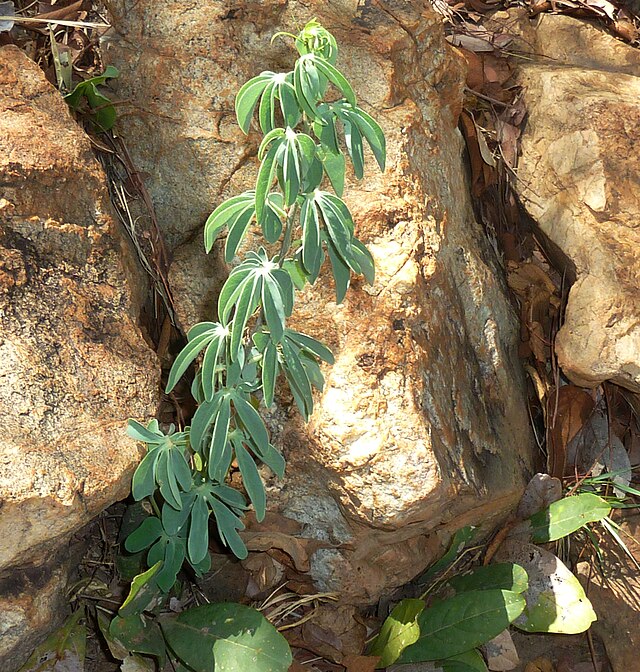
Adenia Glauca
Adenia glauca
A Passiflora-family caudex with a large green caudex and tri-lobed leaves with climbing stems.
 © Daderot / CC0
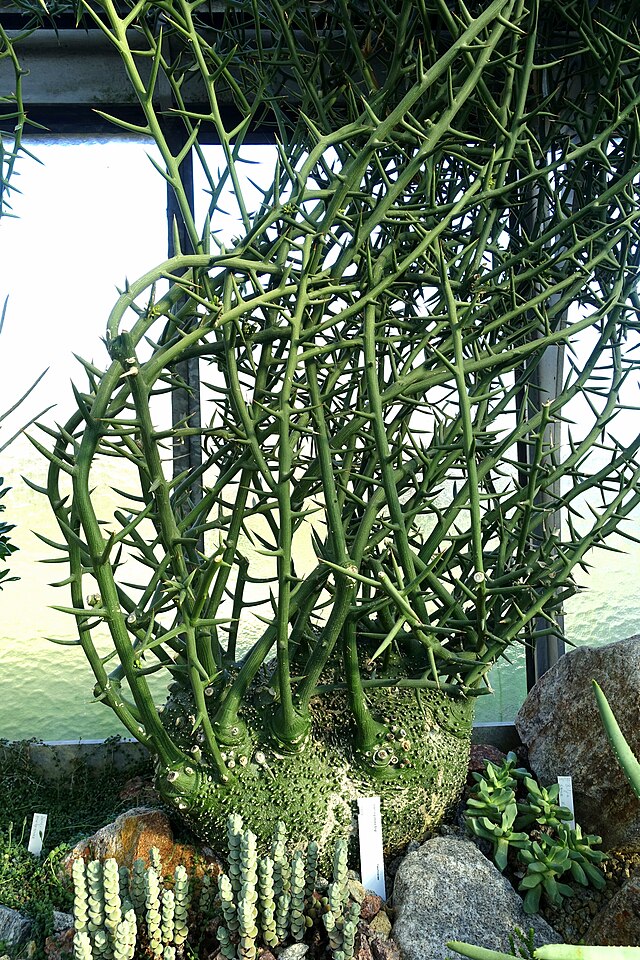
Adenia Globosa
Adenia globosa
An Adenia with a massive spherical caudex and thorny branches, very wild appearance.
 © Michael Wolf (Webseite) / CC BY-SA 3.0
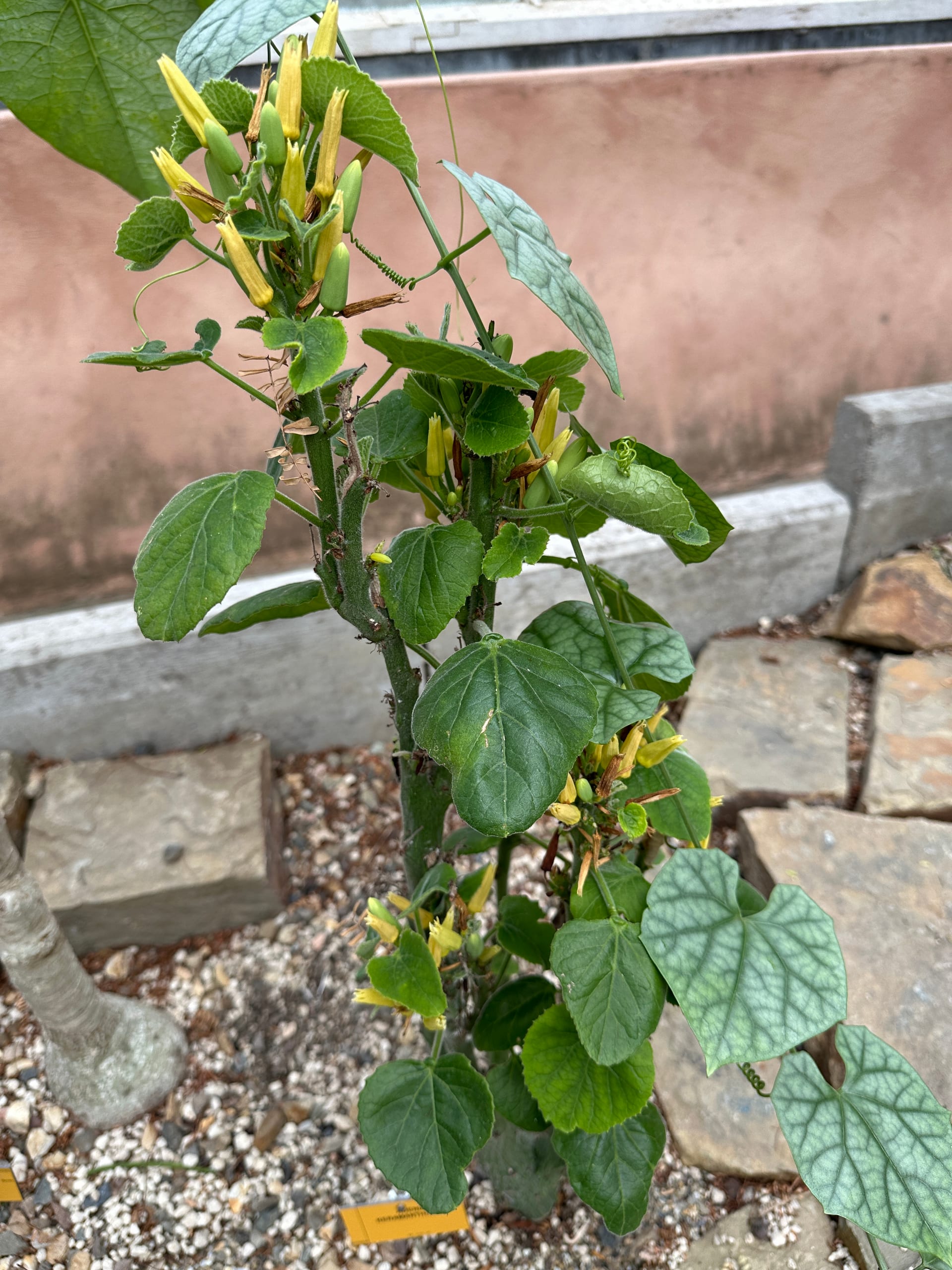
Adenia keramanthus
Adenia keramanthus
An exceptionally hairy Adenia from Kenya and Tanzania, with trunk and leaves covered in fine grey to rusty-brown hairs. It bears downward-facing, cream, pot-shaped flowers and bright red fruits the size of an egg.
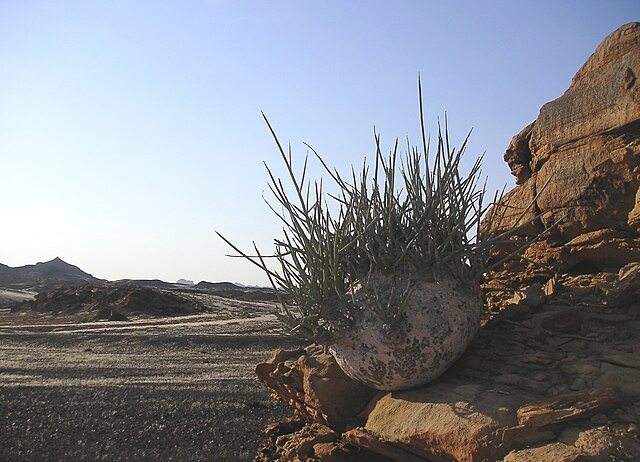 © Ewald Schmidt (= Harbuse ) / Public domain
Adenia Pechuelii
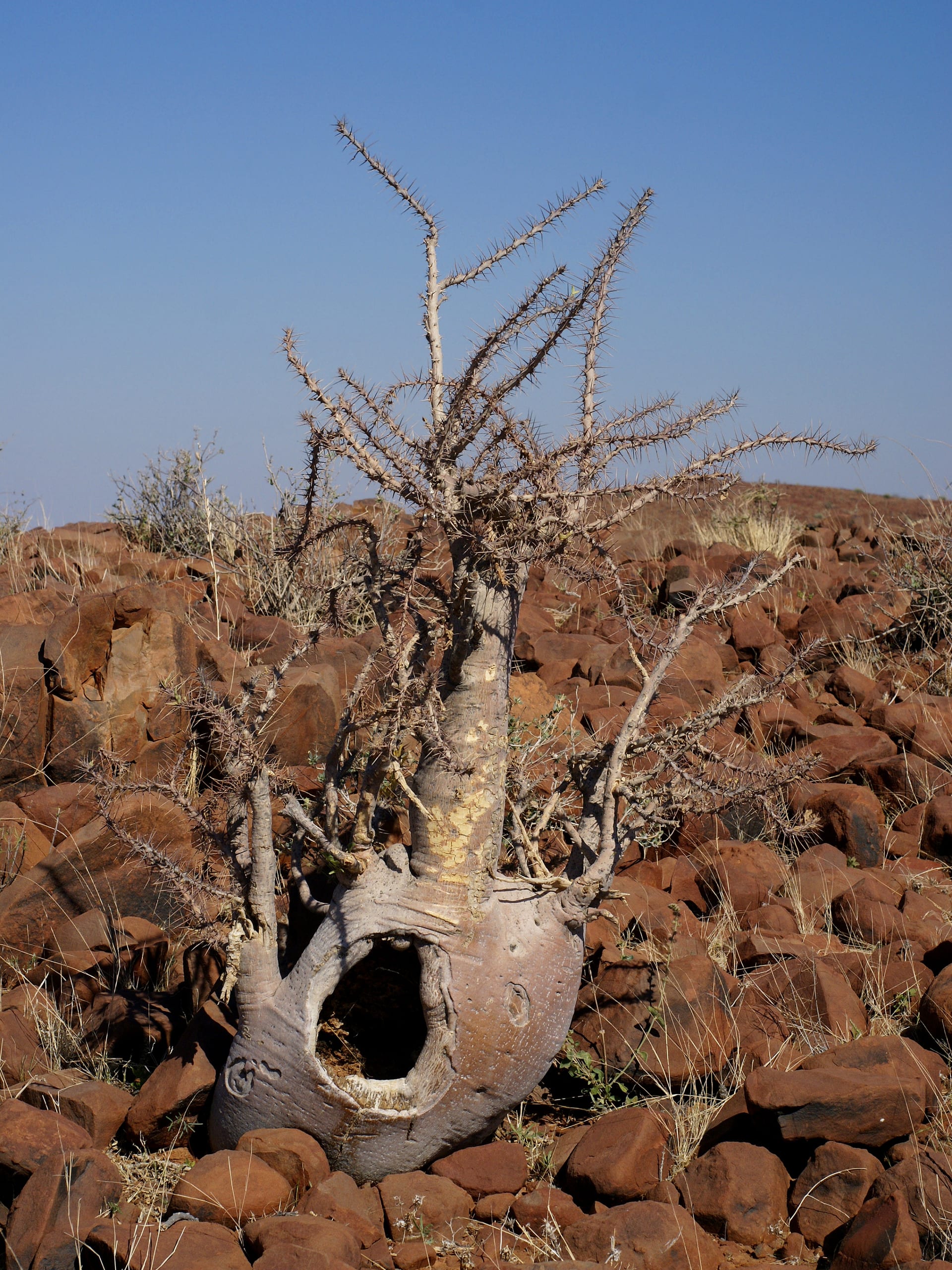
Adenia pechuelii
A rare Namibian Adenia with massive gray-green caudex exposed above ground.
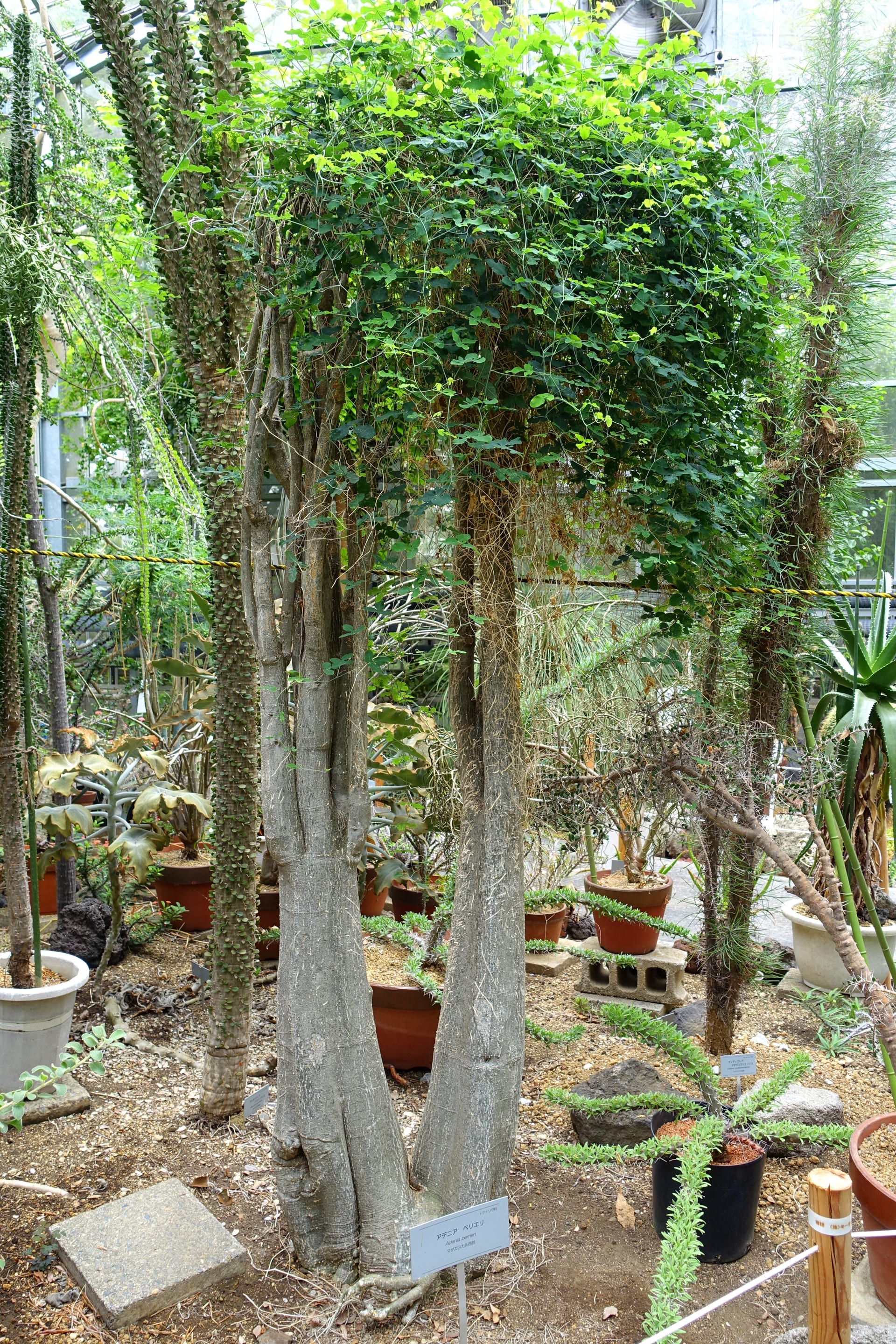 © Daderot / CC0
Adenia perrieri
Adenia perrieri
A Madagascan Adenia that sends green vines with lace-like, finely divided leaves from a caudex about 20 cm across. It is grown more for its foliage than its caudex, and a white-spotted "snowflake" form is also known.
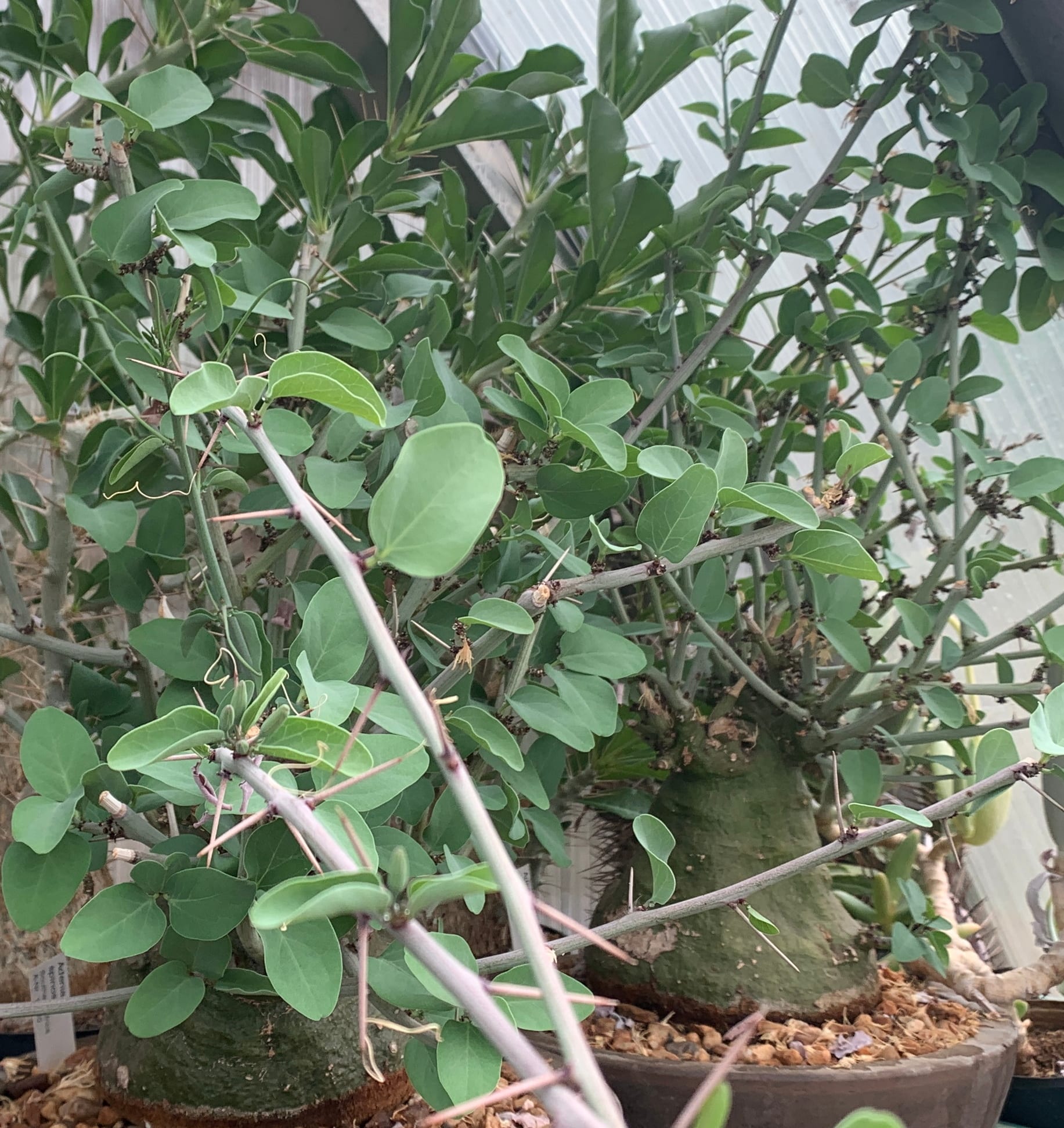 © Michael Wolf (Webseite) / CC BY-SA 3.0
Adenia spinosa
Adenia spinosa
A summer-growing Adenia from northern South Africa, Botswana and Zimbabwe whose twisted, spiny branches rise from a large, irregular, swollen stem. Only seed-grown plants form a caudex; plants from cuttings never do.
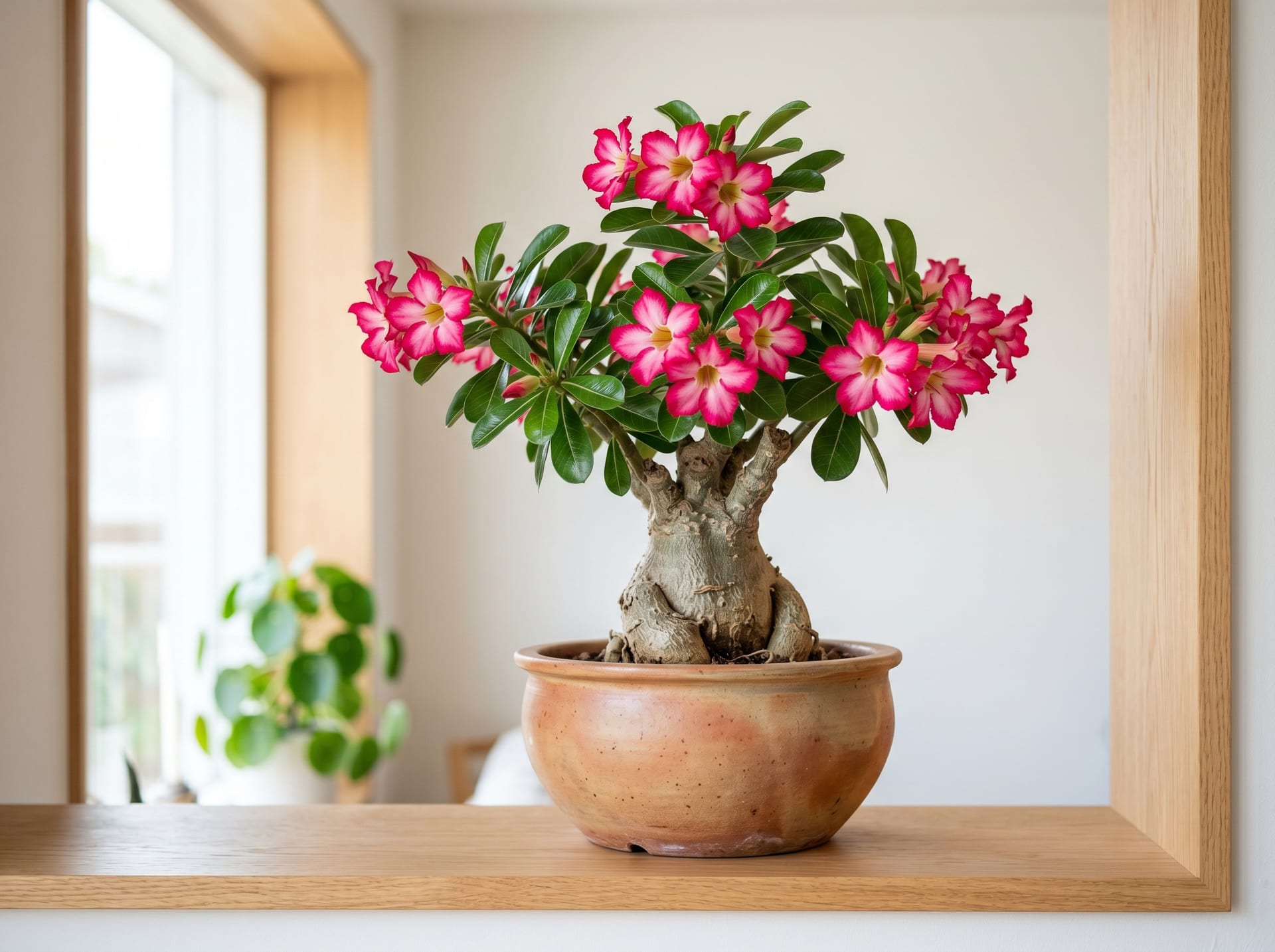
Adenium (Desert Rose)
Adenium obesum
The 'Desert Rose' from Africa and Arabia. Plump caudex with showy pink/red flowers. Ideal caudex starter — develops thick caudex relatively quickly from seed. Extensive Thai breeding programs.
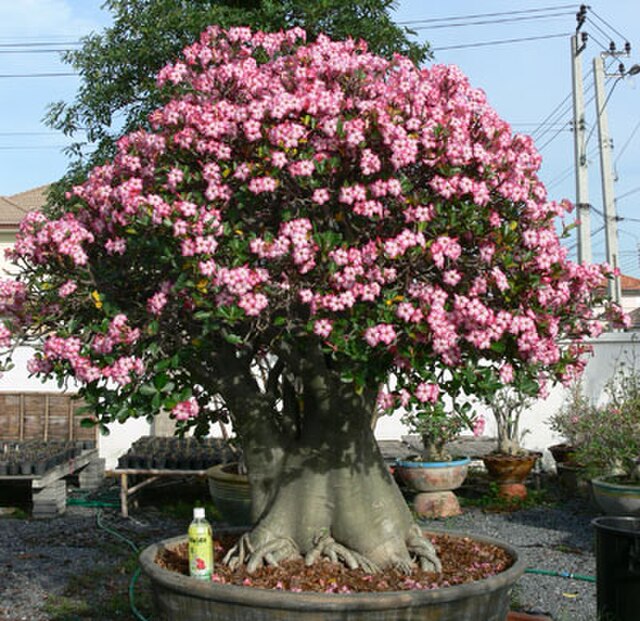 © Siamadenium / Public domain
Adenium Arabicum
Adenium arabicum
An Adenium with wide spreading caudex, more caudex-focused than obesum, popular with collectors.
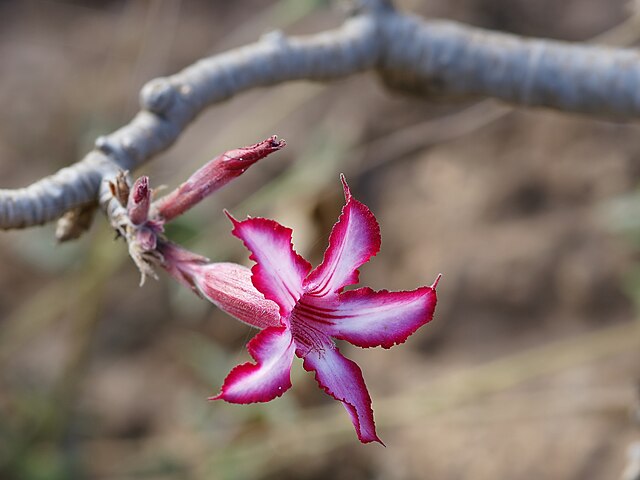 © Hans Hillewaert / CC BY-SA 3.0
Adenium Multiflorum
Adenium multiflorum
From South Africa, blooming many red-white flowers in winter, called Impala Lily.
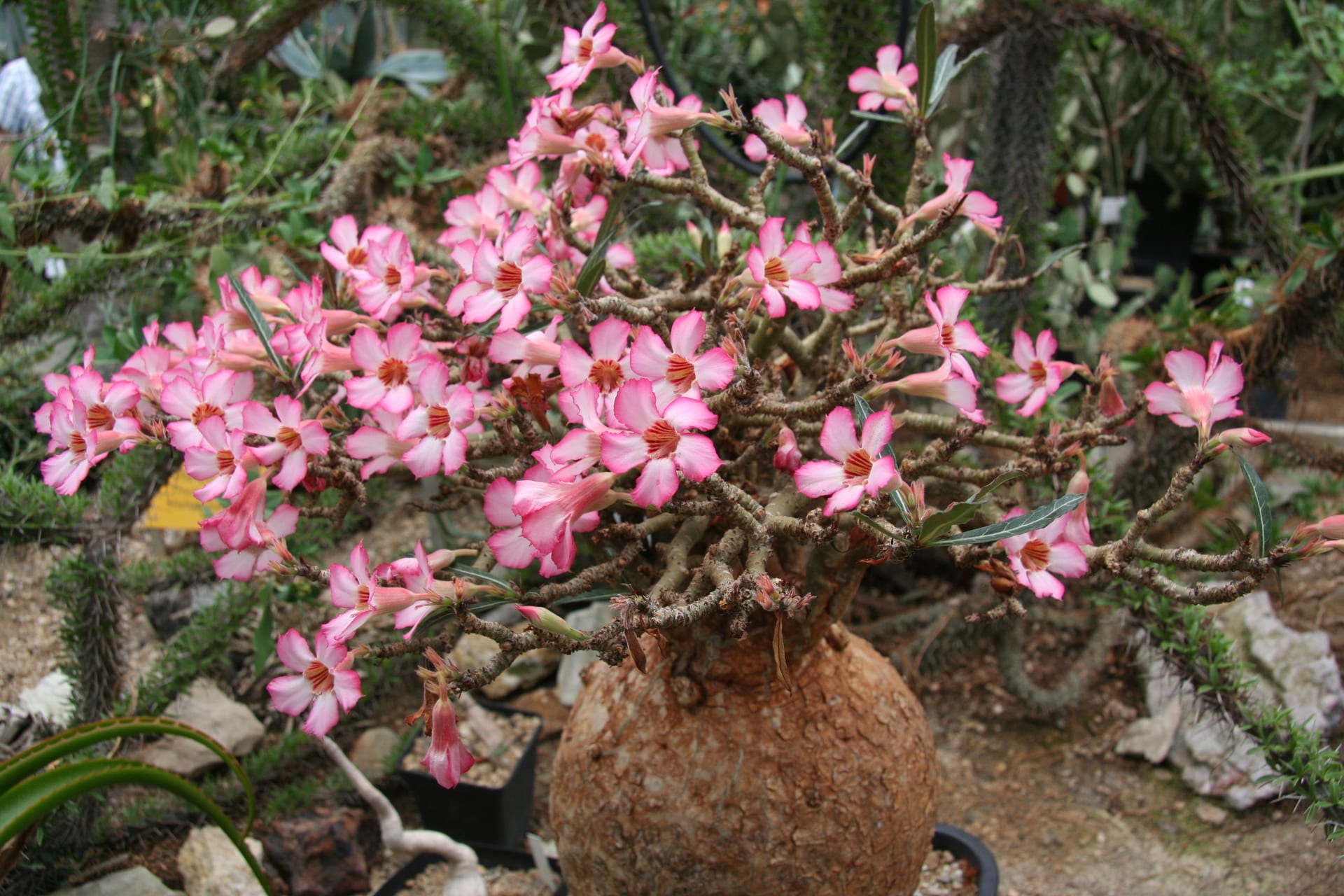 © Michael Wolf (Webseite) / CC BY-SA 3.0
Adenium obesum subsp. somalense
Adenium obesum subsp. somalense
An Adenium recognised by its broad-based, conical caudex and narrow leaves with white veins. Flowers are smaller than those of A. obesum, under 5 cm across, with narrow pointed petals and red nectar guides.
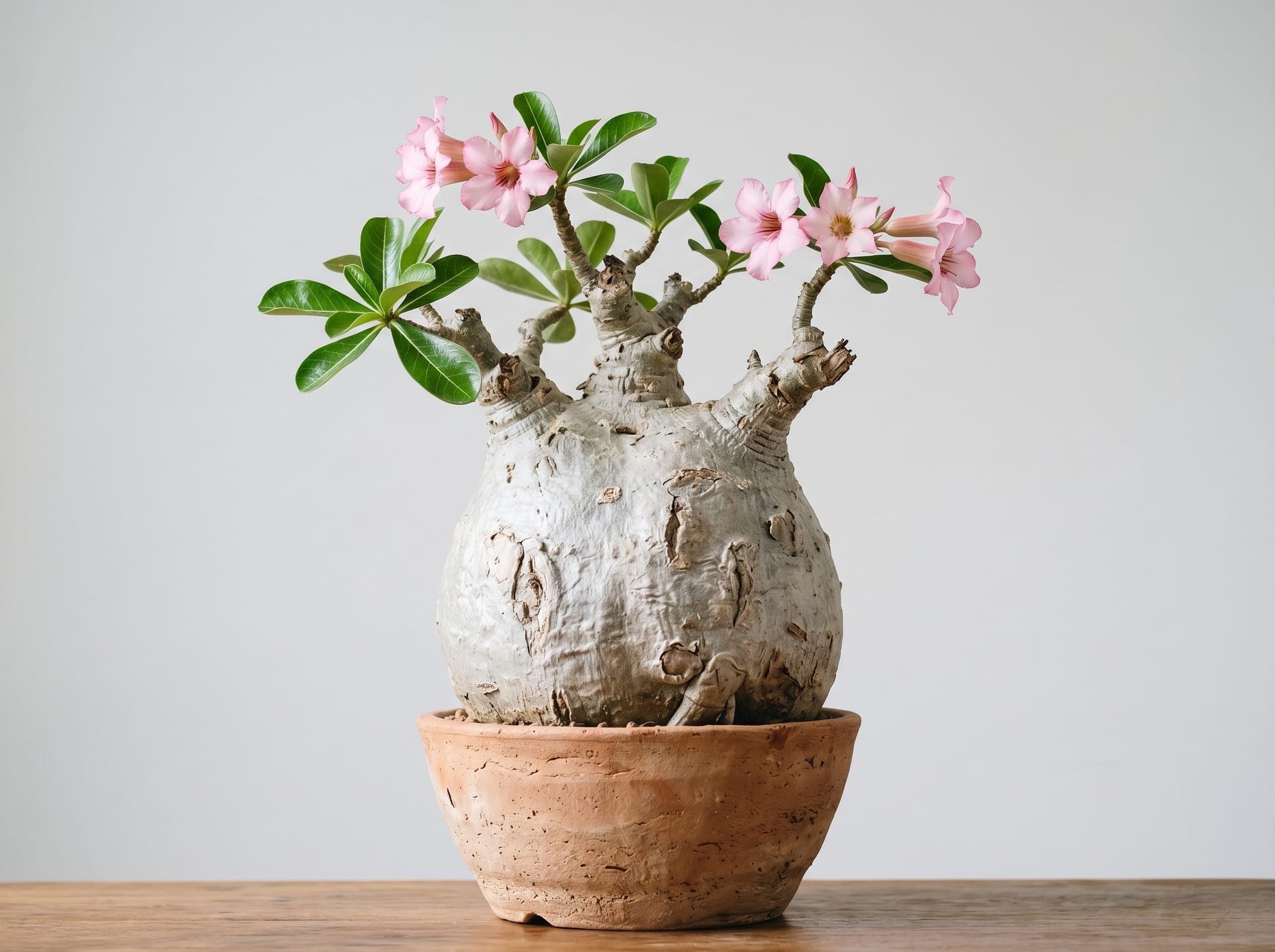
Adenium Socotranum
Adenium obesum subsp. socotranum
From Socotra Island, growing into massive bottle trees several meters wide in habitat.
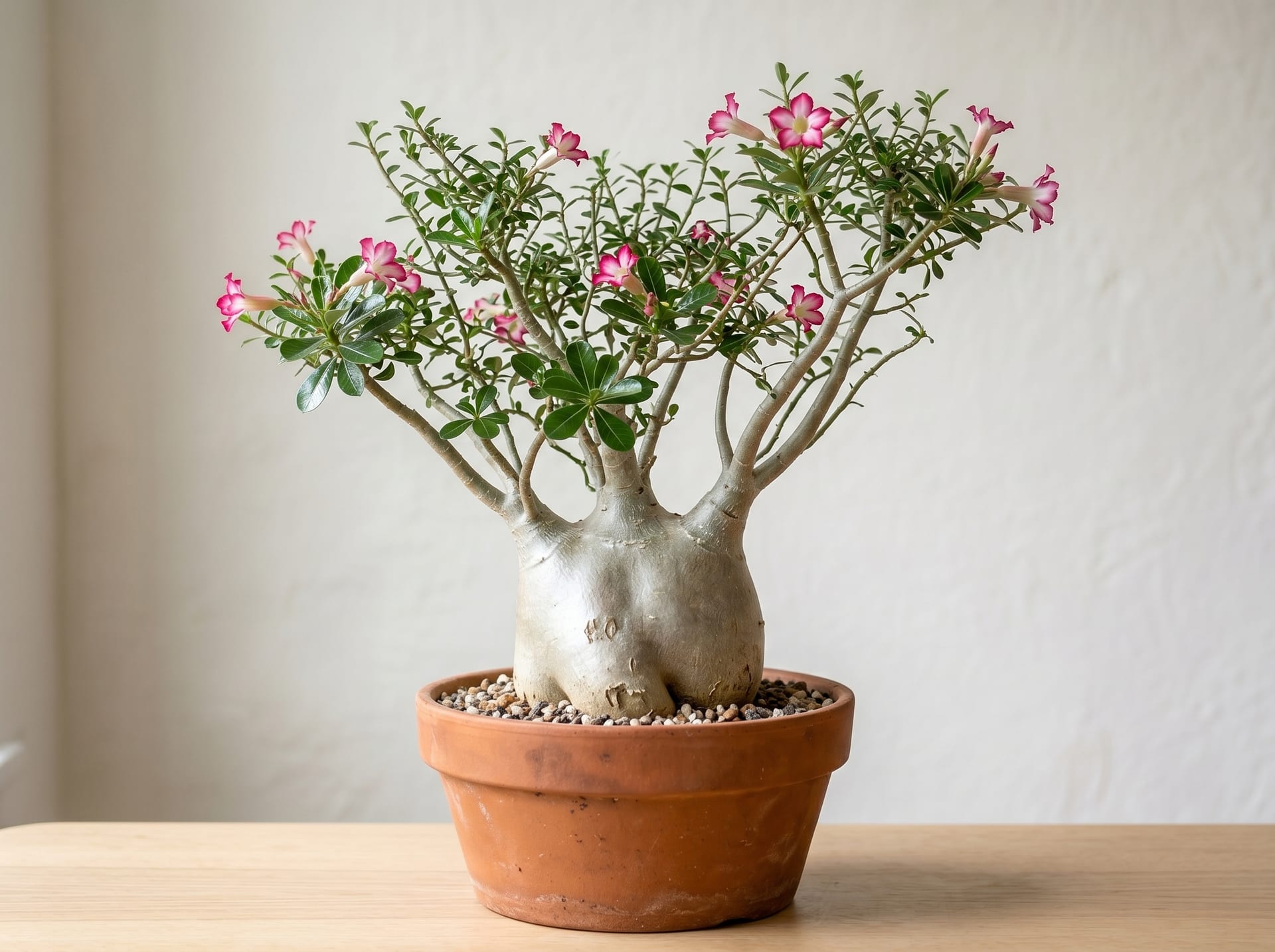
Adenium Thai Socotranum
Thai-bred Socotranum-type Adenium with thick round caudex and diverse flower colors.
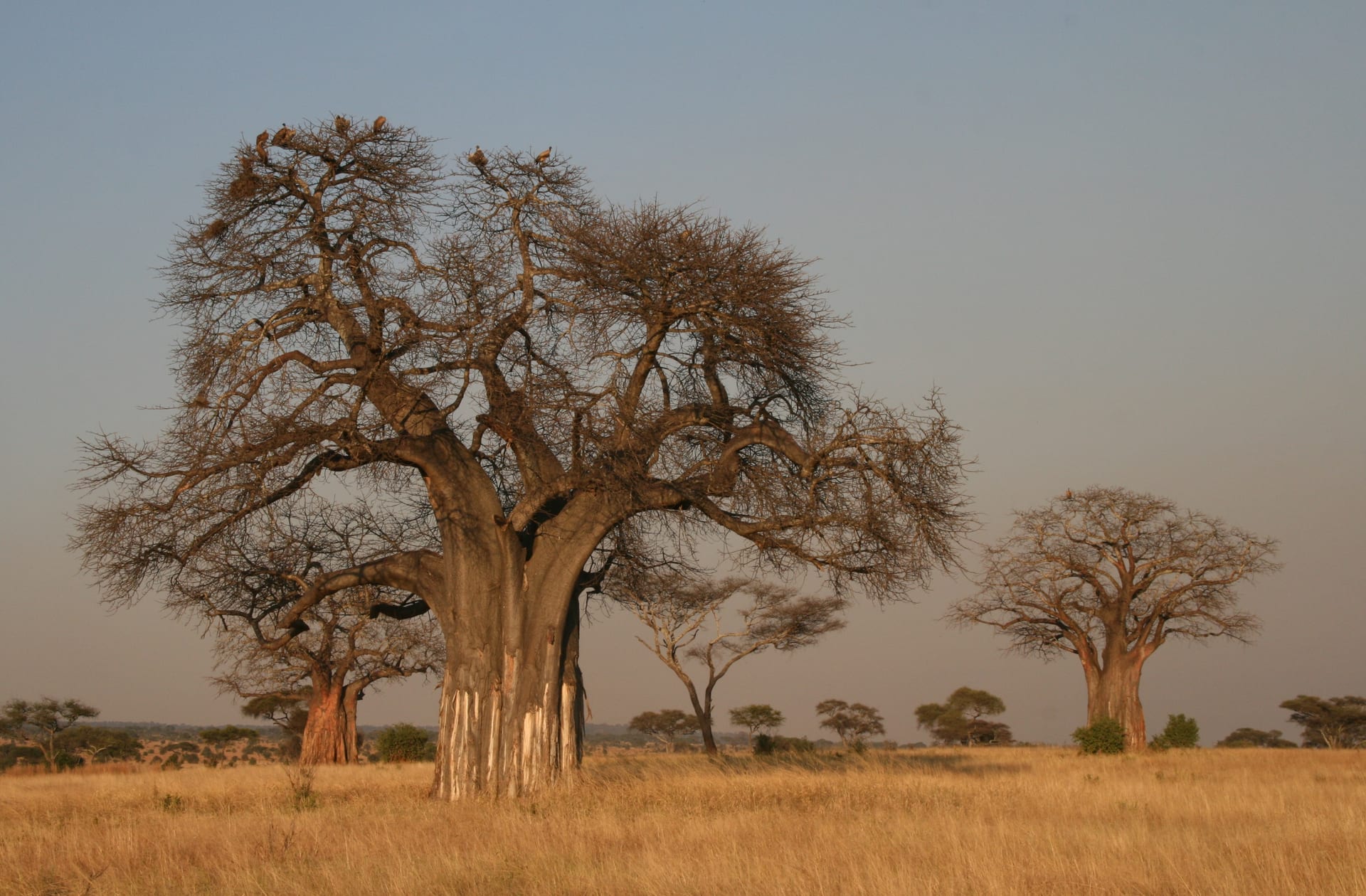 © Yoky / CC BY-SA 3.0
African baobab
Adansonia digitata
The African baobab of the savanna, famous for its massive bottle-shaped trunk. Seedlings have simple leaves that change with age to palmate leaves of five to seven leaflets, and young plants can be kept in pots for many years.
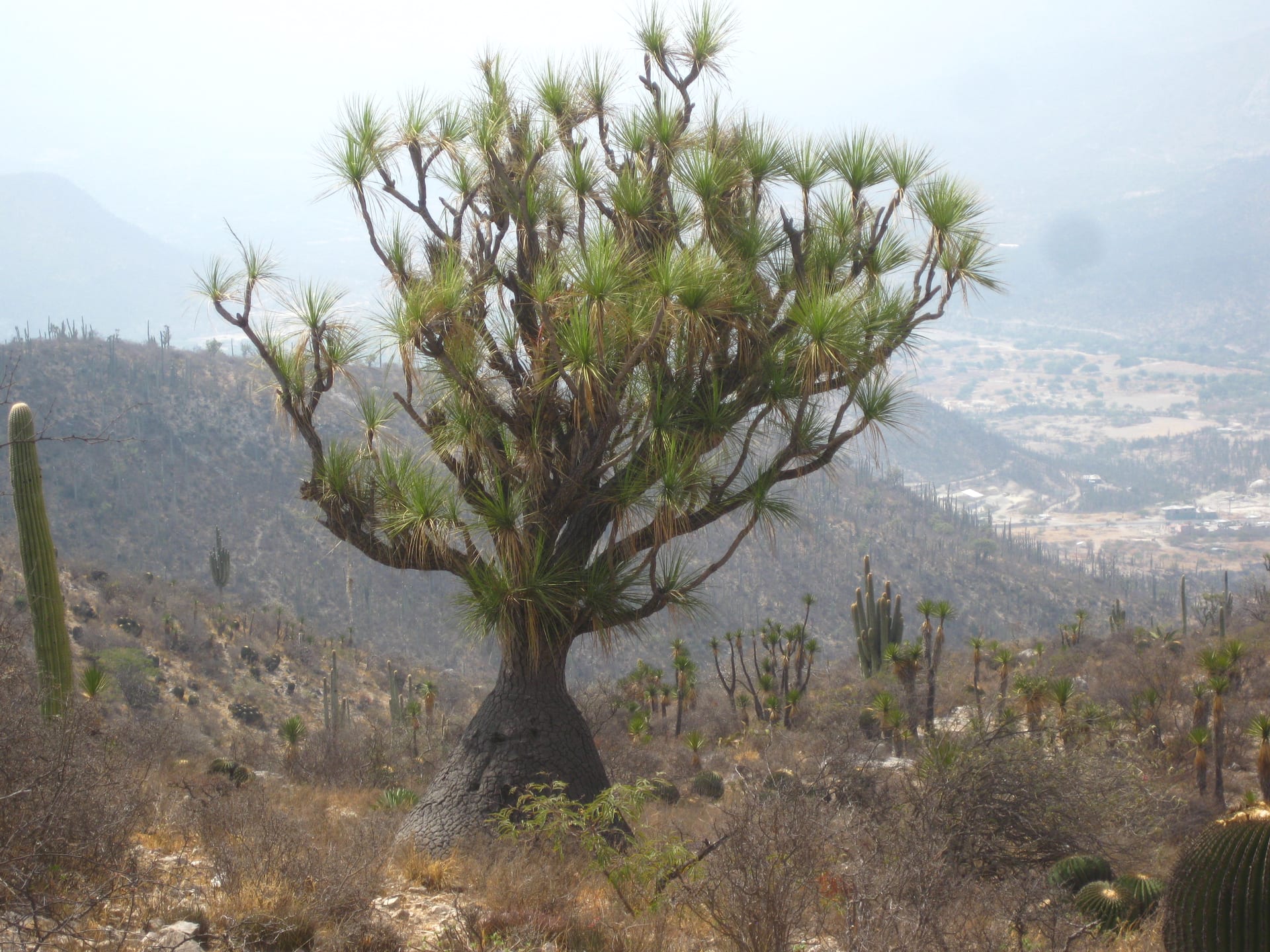 © Marinosalas / CC BY-SA 3.0
Beaucarnea gracilis
Beaucarnea gracilis
A ponytail-palm relative endemic to Mexico's Tehuacán Valley, raising several slender stems from a huge corky base like an elephant's foot. Unlike B. recurvata, its narrow, strongly blue-grey leaves stand stiffly upright.
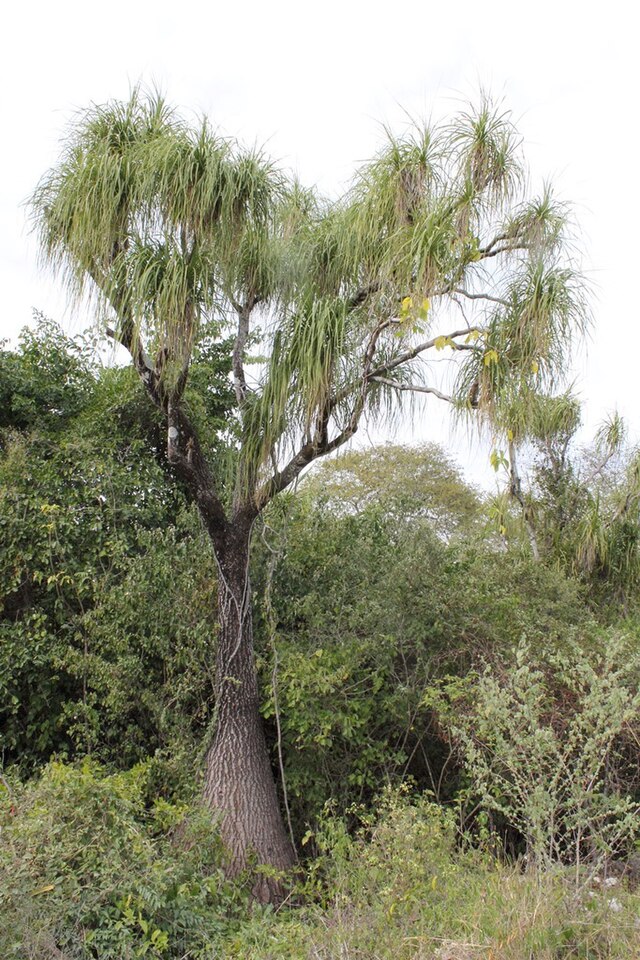 © juancruzado / CC BY-SA 4.0
Beaucarnea Recurvata
Beaucarnea recurvata
Known as Ponytail Palm, with a swollen trunk base and cascading leaves.
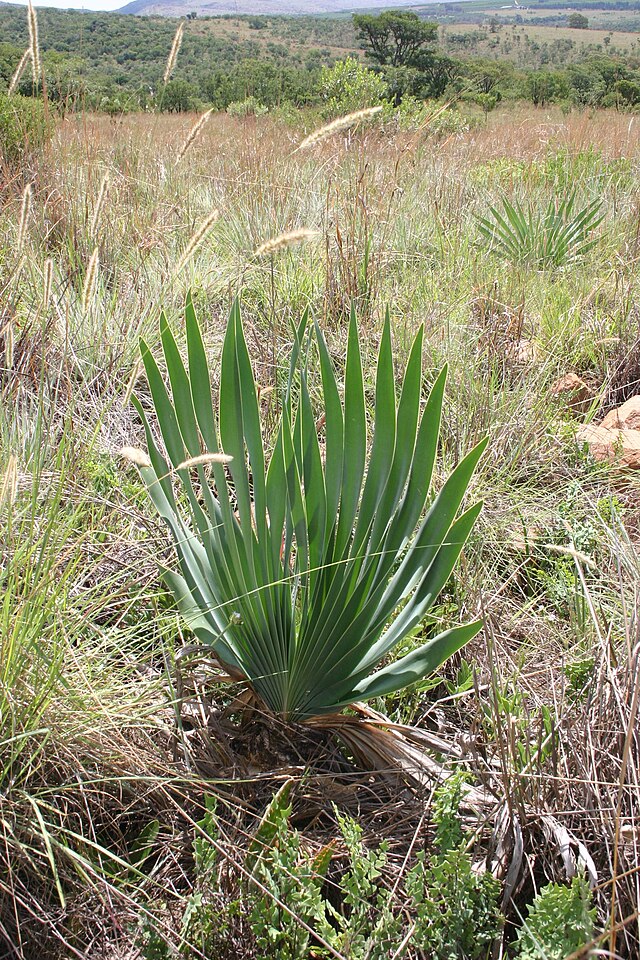 © Paul venter / CC BY-SA 3.0
Boophone Disticha
Boophone disticha
An African bulbous caudex with beautiful fan-shaped wavy leaves and impressive flower heads.
Boswellia nana
Boswellia nana
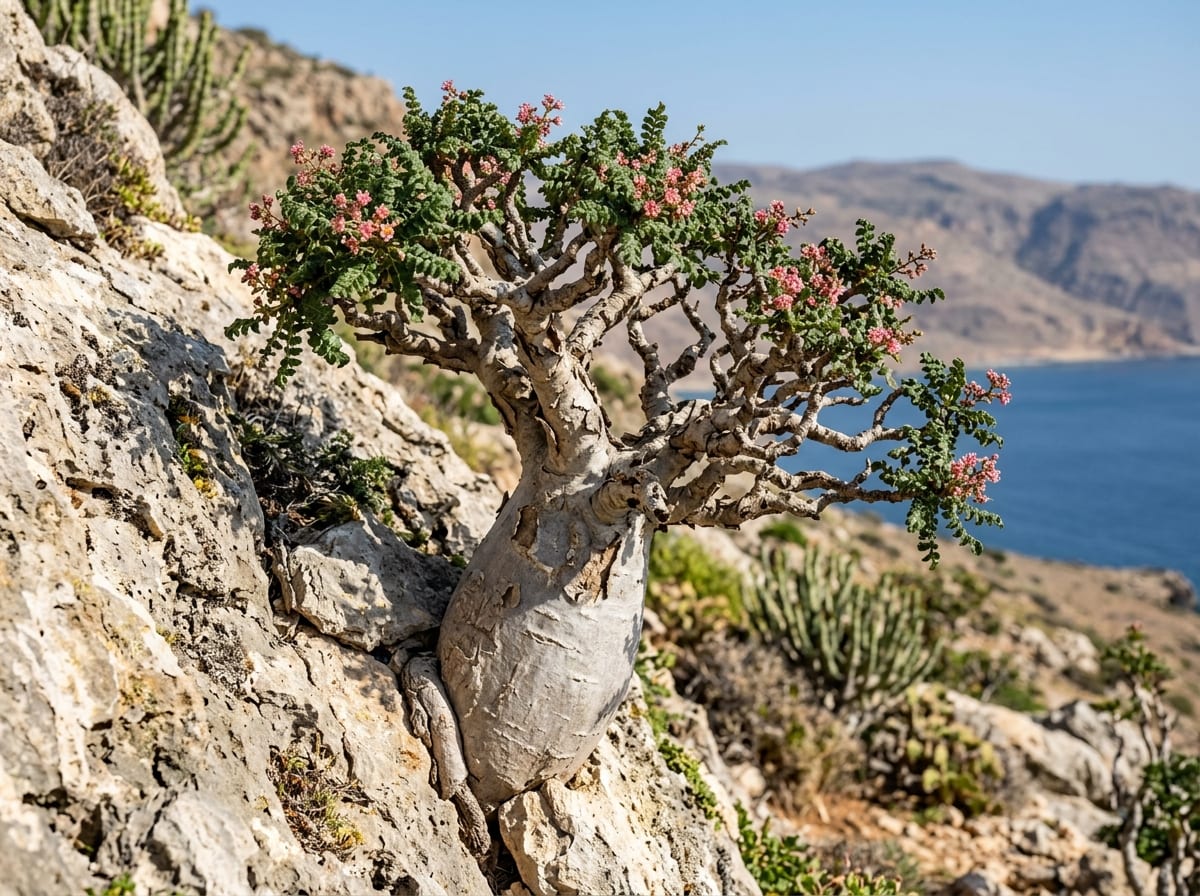
A dwarf frankincense relative that clings to limestone cliffs on Socotra. A bottle-shaped base bears short branches, and its pink to rosy-red flowers set it apart from other Boswellia.
 © Mauro Raffaelli / CC BY-SA 3.0
Boswellia Neglecta
Boswellia neglecta
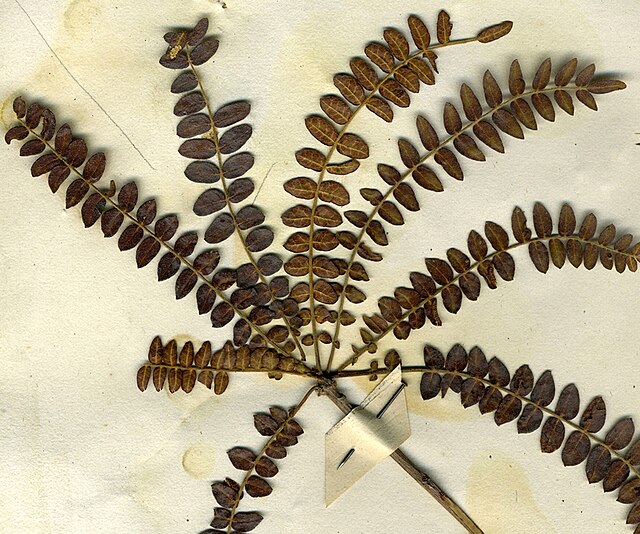
A frankincense relative caudex plant with white bark and unique branching, increasingly popular.
 © Hans Hillewaert / CC BY-SA 4.0
Bottle Tree
Pachypodium lealii
A Pachypodium from Namibia and Angola that grows into a 3-6 m tree with a bottle-shaped, swollen-based trunk. In the dry season it bears fragrant white flowers, flushed purple outside, on leafless branch tips.
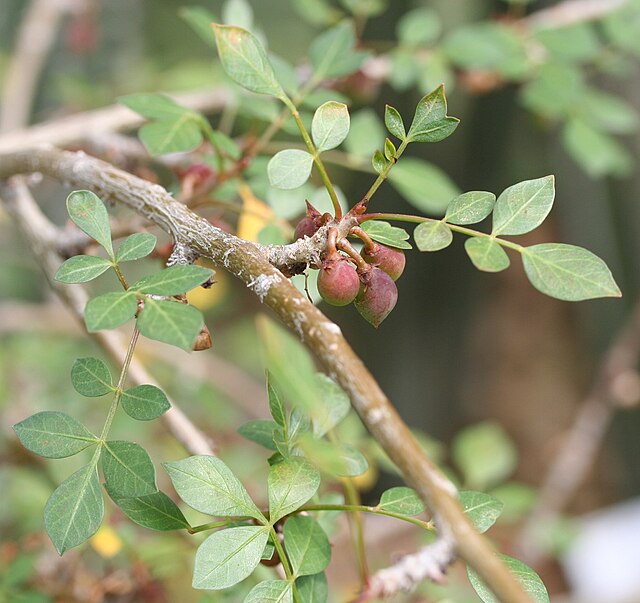 © Michael Wolf / CC BY-SA 3.0
Bursera Fagaroides
Bursera fagaroides
A Mexican aromatic caudex with peeling bark and fragrant resin.
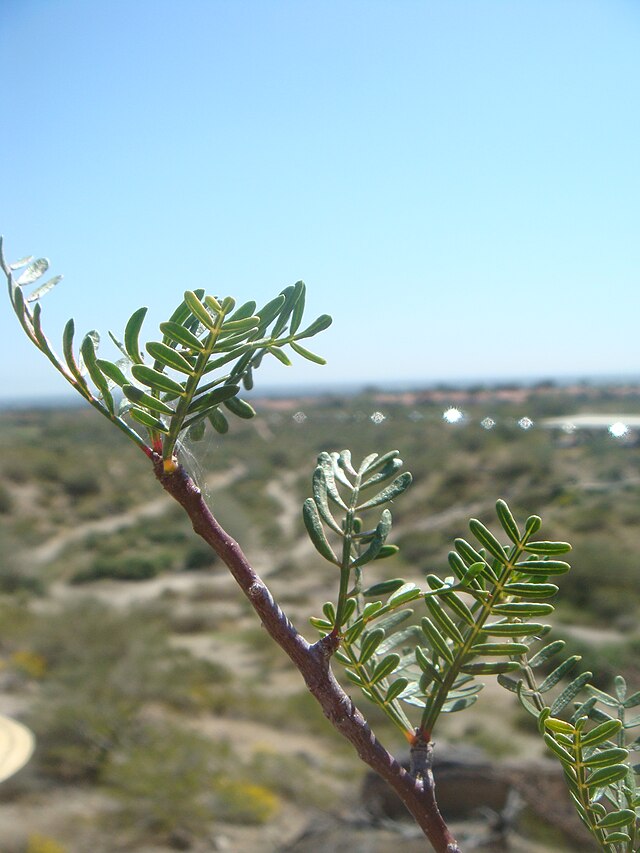 © Miwasatoshi / CC BY-SA 4.0
Bursera Microphylla
Bursera microphylla
Called Elephant Tree, a Mexican caudex with thick white trunk and tiny leaves.
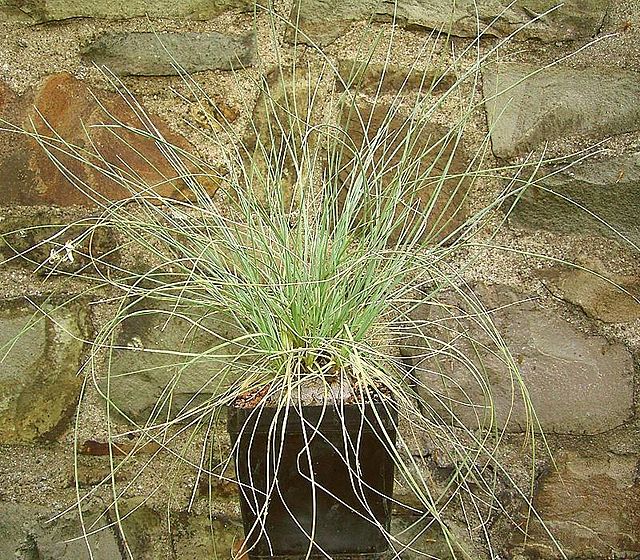 © Frank Vincentz / CC BY-SA 3.0
Calibanus Hookeri
Beaucarnea hookeri
A Mexican spherical caudex with cork-like large tuber producing fine grass-like leaves.
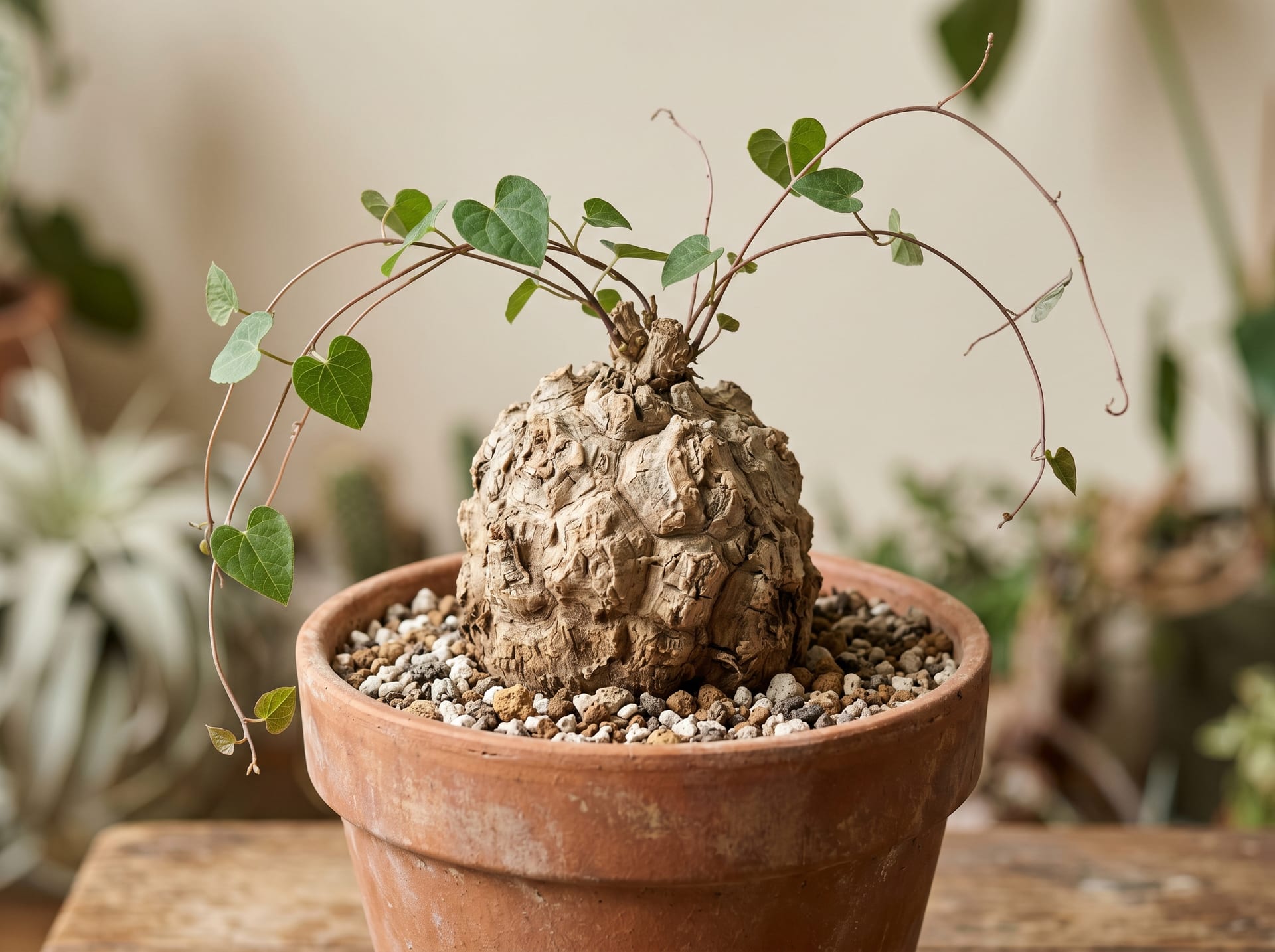
Cephalopentandra Ecirrhosa
Cephalopentandra ecirrhosa
An East African cucurbit caudex with impressive large gray-white tuber, relatively fast growing.
Related Content
Caudex Plant FAQ
- How much do caudex plants cost?
- Pachypodium gracilius seedlings cost 2,000-10,000 yen, wild-collected specimens 30,000-200,000+ yen, and Operculicarya pachypus can reach hundreds of thousands of yen.
- Can beginners grow caudex plants?
- Adenium (Desert Rose) and Pachypodium seedlings are relatively easy and beginner-friendly. Just be careful with watering during winter dormancy, and you can enjoy them for years.
- How long do caudex plants live?
- Some specimens live for hundreds of years in the wild. In cultivation, they can thrive for decades with proper care. Watching the caudex thicken year by year is the greatest appeal.
- What should I check when buying caudex plants?
- Whether it's rooted is the most important point. Wild-collected imports are often unrooted and require root establishment. Beginners should start with rooted domestically grown seedlings.
- How do caudex plants overwinter?
- Many caudex plants go dormant in winter. Reduce watering from October, and withhold water completely from December to February. Keep indoors in a sunny spot at minimum 10°C.