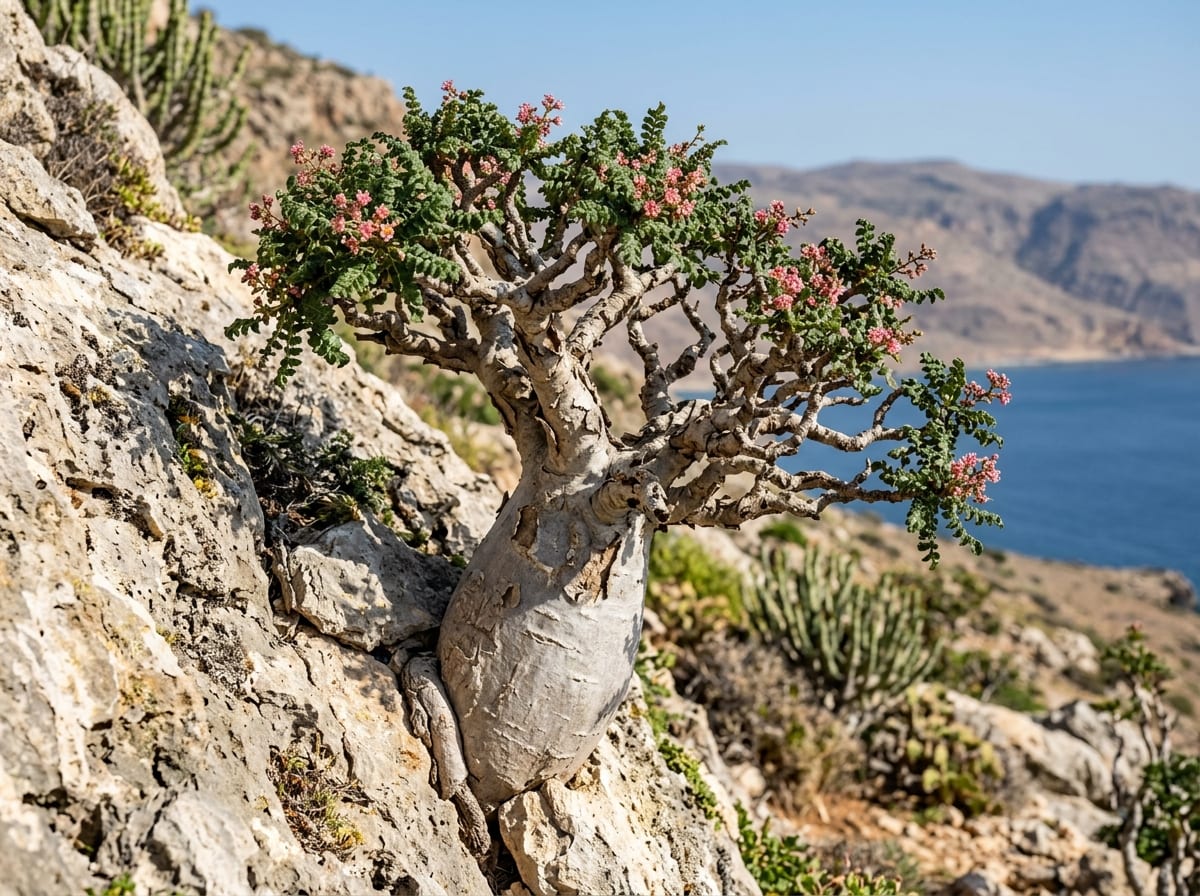
AI-generated image
Boswellia nana
AdvancedBoswellia nana
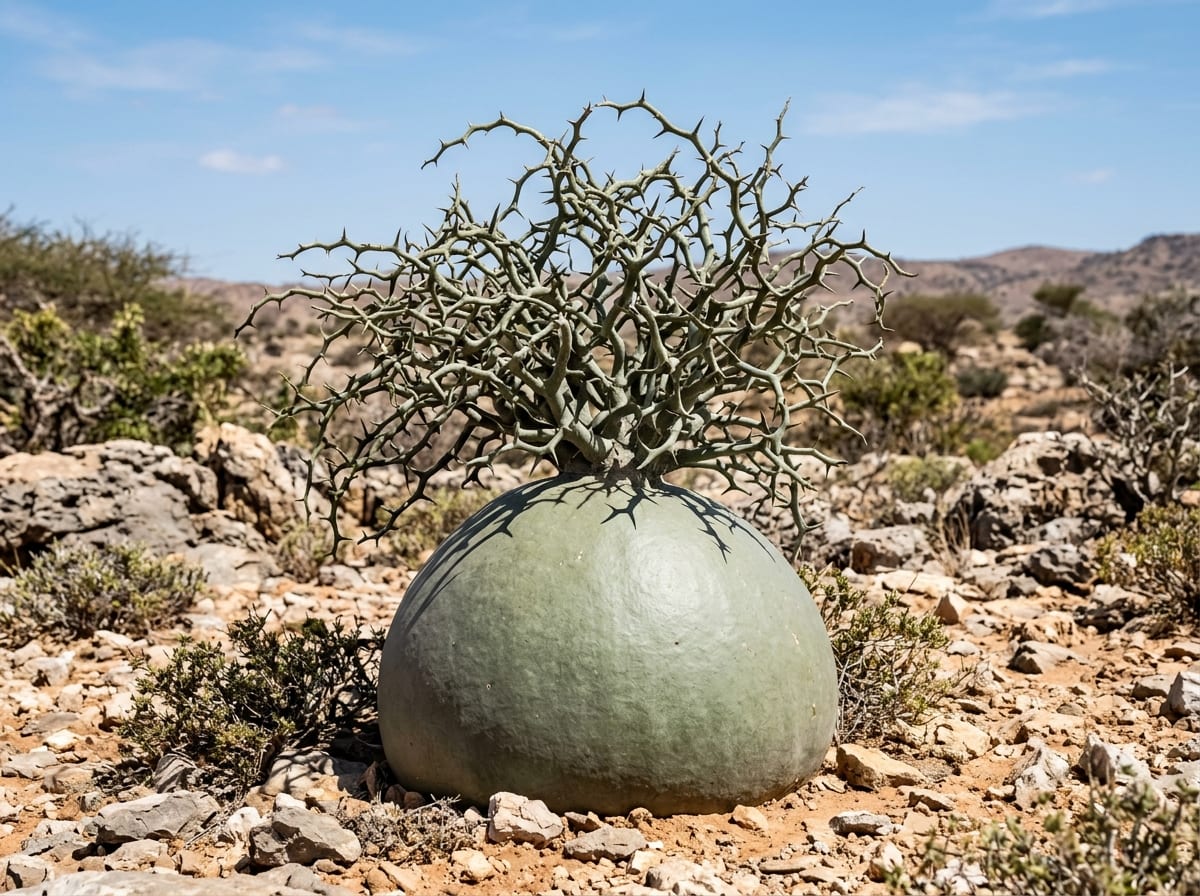
A dwarf frankincense relative that clings to limestone cliffs on Socotra. A bottle-shaped base bears short branches, and its pink to rosy-red flowers set it apart from other Boswellia.
About
Boswellia nana is a dwarf member of the Burseraceae endemic to Socotra, Yemen. It is known from only two sites in the north-east of the island, on limestone cliffs and pavement at 300-550 m, with an area of occupancy under 20 km²; the IUCN Red List category is Critically Endangered. In habitat it grows to about 60 cm above the ground or hangs 60-100 cm down the cliff face, forming a bottle-shaped, bonsai-like base. Leaves are usually unifoliolate and glossy green, but wild plants vary from simple to pinnate, which is attributed to natural hybridisation. Pink to rosy-red flowers appear in small terminal clusters; it differs from the related B. popoviana by its red rather than yellowish flowers and hairless leaf undersides. In cultivation, especially planted in the ground, it can exceed 1 m and look quite unlike wild plants. In Japan, seedlings and individual potted plants are sold through online shops and auction sites; seed of B. socotrana x nana hybrids is also offered, so check labels.
Source: Wikipedia (CC BY-SA 4.0)
Size of the Boswellia nana
The Boswellia nana grows to About 60 cm tall in habitat (hanging 60-100 cm on cliffs); can exceed 1 m in cultivation.
Basic Info
Origin
North-eastern Socotra, Yemen (limestone cliffs, 300-550 m)
Lifespan
Long-lived woody perennial (little published data)
Size
About 60 cm tall in habitat (hanging 60-100 cm on cliffs); can exceed 1 m in cultivation
Temperature
10〜35℃
Watering & Fertilizer
Liquid fertiliser about monthly in spring and summer
Growing Tips
Light & Placement
It likes plenty of light and fresh air. In summer, moving it outdoors to sun or partial shade keeps growth compact.
Watering
Increase water during growth and flowering. It drops leaves if overwatered, so give about as much as other succulents.
Temperature & Overwintering
In winter keep it bright with a minimum of 12-15°C. If kept warm do not let it dry out completely; if kept cool, reduce water and let it rest.
Soil & Repotting
Root-prune and repot every two years after the winter rest. It tolerates being somewhat pot-bound.
Pruning & Shaping
The shape comes from the thick base and a few short branches, so heavy pruning is unnecessary; keep cuts to a minimum.
Pests & Cautions
Known from only two wild sites, it is critically endangered. Choosing plants raised from seed in cultivation rather than anything of wild Socotran origin helps its conservation.
Boswellia nana FAQ
QWhat is the growing difficulty level for Boswellia nana?
Advanced. A variety suitable for advanced growers. Requires advanced cultivation techniques and specialized equipment, with careful environmental adjustments needed.
QHow large does Boswellia nana get?
The mature size of Boswellia nana is About 60 cm tall in habitat (hanging 60-100 cm on cliffs); can exceed 1 m in cultivation. This may vary slightly depending on cultivation environment and individual differences.
QHow should I water and fertilize Boswellia nana?
Boswellia nana: watering & fertilizer — Liquid fertiliser about monthly in spring and summer. Aim for appropriate frequency and amount.
QWhat is the typical price for Boswellia nana?
The price of Boswellia nana varies significantly by variety, characteristics, size, and lineage. Please check GrowerDirect's price guide for the latest market information.
Last updated: September 23, 2026
References & Sources
Edited & verified by: GrowerDirect Editorial Team
The classifications, regulations, and growing data on this page are created and verified based on the primary information database below.
Taxonomy & Authority
Regulations & Conservation Status
Not listed in CITES (checked on Species+). No special procedure is needed for transfers within Japan. The IUCN Red List category is Critically Endangered.
Sources: Species+ (CITES): Boswellia nana / IUCN Red List category via GBIF: Boswellia nana
Regulations may change. Always verify the latest information with the relevant authorities.
Related Species
Find listings for this species
Related Articles
Boswellia Growing Guide | The Appeal of Frankincense Trees and Cultivation Management Tips
A detailed explanation of how to grow Boswellia, the source of frankincense. Covers Boswellia sacra characteristics, proper watering and temperature management, repotting methods, and tips for winter care—comprehensive cultivation guidance.
How to Grow Uncarina | Differences Between the Madagascar Endemic Species Grandidieri and Roeoesliana
An explanation of the appeal and cultivation methods of the Madagascar endemic caudex plant Uncarina genus. We introduce the differences between Uncarina grandidieri and roeoesliana, seedling cultivation, and repotting timing.
Complete Guide to Choosing Caudex Plants as Gifts | Recommended Varieties by Occasion and How to Include Care Notes
A guide to choosing caudex plants as gifts organized by occasion. We introduce how to select varieties based on the recipient's cultivation experience and how to include care notes for long-term enjoyment.
Diagnosing and Treating Poor Root Development in Caudex Plants | Causes and Solutions for Roots That Won't Emerge or Won't Grow
A detailed guide to root emergence problems in caudex plants. From diagnosis methods to solutions, practical techniques for promoting healthy root development are introduced.
🩺 Common diseases
Can't find the plant you're looking for?
Post your wishes for free and growers with matching plants will contact you with introductions.