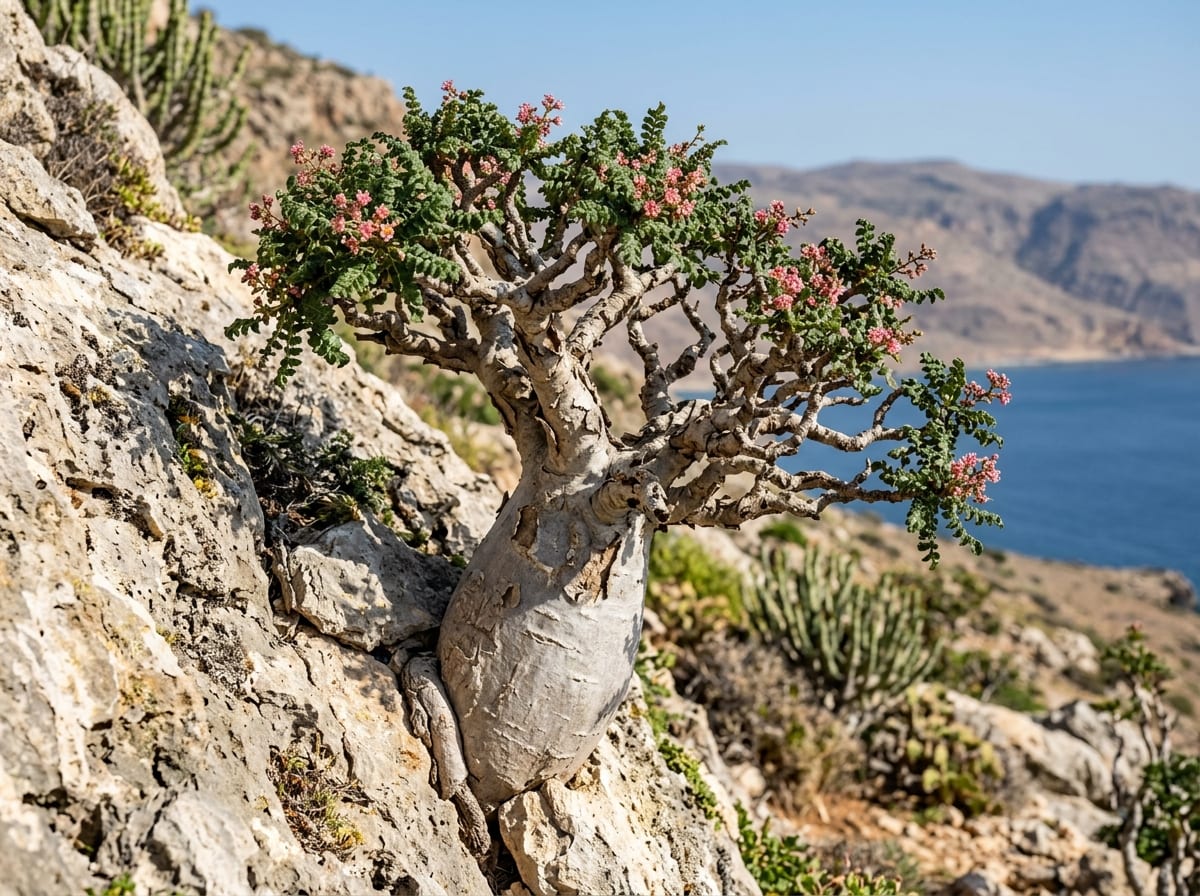
Boswellia nana
Boswellia nana is a dwarf member of the frankincense genus Boswellia, found clinging to limestone cliffs on Yemen's Socotra Island. Its rounded, bottle-shaped base sends out short branches, and unlike other Boswellia species, it produces pink to crimson flowers, its signature feature. Adapted to a harsh, arid, rocky habitat, it suits caudex-style cultivation that highlights the swollen base over time. Growth is slow, gradually forming a distinctive silhouette, making this a plant best suited to experienced growers.
View Boswellia nana encyclopedia →0% commission on your first sales!Register by September 30, 2026 and your first 2 plants are commission-free!
Grower Wanted!
List your plants on GrowerDirect and sell directly to customers nationwide!
6 Transparency Commitments from GrowerDirect
Our Grower disclose all key information for Caudex Plants listings, ensuring complete transparency on variety, origin, light needs, and difficulty.
- Variety Disclosed
- Real Plant Photos
- Color Details
- Origin Disclosed
- Light Requirements
- Difficulty Level
Browse all 145 varieties
Light Requirements
Difficulty Level
Verified growers wanted for Caudex Plants
Growers are signing up now ahead of launch. Subscribe to be notified when new listings go live.
Getting alerts is free with a member account. When new listings match your saved search, we'll notify you by email and in-app.
Browse other categories
Verified growers (preview)
Are you growing caudex plants?
Register as a grower and connect with buyers directly.
Apply as a growerBoswellia nana key facts
- Growing Difficulty
- Advanced
- Lifespan
- Long-lived woody perennial (little published data)
- Size
- About 60 cm tall in habitat (hanging 60-100 cm on cliffs); can exceed 1 m in cultivation
- Watering
- Liquid fertiliser about monthly in spring and summer
- Light & Placement
- It likes plenty of light and fresh air. In summer, moving it outdoors to sun or partial shade keeps growth compact.
- Watering
- Increase water during growth and flowering. It drops leaves if overwatered, so give about as much as other succulents.
- Temperature & Overwintering
- In winter keep it bright with a minimum of 12-15°C. If kept warm do not let it dry out completely; if kept cool, reduce water and let it rest.
- Soil & Repotting
- Root-prune and repot every two years after the winter rest. It tolerates being somewhat pot-bound.
- Pruning & Shaping
- The shape comes from the thick base and a few short branches, so heavy pruning is unnecessary; keep cuts to a minimum.
- Pests & Cautions
- Known from only two wild sites, it is critically endangered. Choosing plants raised from seed in cultivation rather than anything of wild Socotran origin helps its conservation.
About Boswellia nana
Boswellia nana is a dwarf frankincense relative from Socotra Island, known for its bottle-shaped base and pink-to-crimson flowers. An advanced-level caudex species — explore care tips and FAQs.
7 things to know before growing Boswellia nana
1Placement & Sunlight
Boswellia nana thrives with strong light and good airflow, much like its native cliffside habitat. Indoors, place it as close to direct sun as possible — a shaded windowsill will leave the base looser and less compact.
2Watering
This plant is adapted to dry, rocky terrain, so overwatering is the main cause of root rot. Water thoroughly once the soil has dried out during the growing season, and cut back further when growth slows.
3Choosing the Right Soil
A soil that retains too much moisture invites root rot, so use a fast-draining mix heavy in akadama, pumice, or similar mineral components. A coarse drainage layer at the bottom of the pot also helps prevent water from pooling.
4When to Repot
The roots are sensitive, so repot only once temperatures have stabilized and the plant is actively growing. Avoid disturbing the root ball more than necessary — trim only damaged roots and move up to a pot roughly the same size or slightly larger.
5Winter Care
Boswellia nana is sensitive to cold, so move it to a warm, bright indoor spot as temperatures drop. Growth slows and water uptake decreases during cooler months, so water even less frequently and let the soil stay on the dry side.
6Choosing by Base Shape
The appeal of Boswellia nana lies in its rounded, bottle-shaped base. When choosing a plant, look for a firm, unblemished base without excessive wrinkling, a good sign for healthy future growth.
7Patience Pays Off
Growth is slow, and it can take years before the distinctive silhouette really develops. This plant suits growers who enjoy watching a caudex change gradually rather than expecting fast results.
Frequently asked questions about Boswellia nana
- Q.Is this a good plant for beginners?
- A.Boswellia nana is generally considered an advanced-level plant. Its preference for arid, rocky conditions and its particular watering needs make it better suited to growers who already have experience with caudex plants.
- Q.What do the flowers look like?
- A.Under the right conditions, short branches produce pink to crimson flowers. This flower color is unusual within the Boswellia genus and is one of the features that sets Boswellia nana apart.
- Q.How big does it grow?
- A.In the wild it reaches roughly 60cm tall, often hanging down 60–100cm on cliff faces. In cultivation, it can grow to over a meter.
- Q.What does the "bottle-shaped base" mean?
- A.It refers to the rounded, swollen base that resembles a sake bottle. This distinctive shape is one of the main appeals of caudex plants like Boswellia nana.
- Q.How long does it live?
- A.It's a long-lived, perennial woody plant, though detailed data on its lifespan is limited. It's best approached as a plant to grow and enjoy gradually over many years.
Handy Growing Tools for Boswellia nana
Learn more about Boswellia nana in the encyclopedia
View Boswellia nana encyclopedia entry →
Care difficulty, size, origin and light needs — all basics covered.
More in this category
Can't find the plant you're looking for?
Post your wishes for free and growers with matching plants will contact you with introductions.