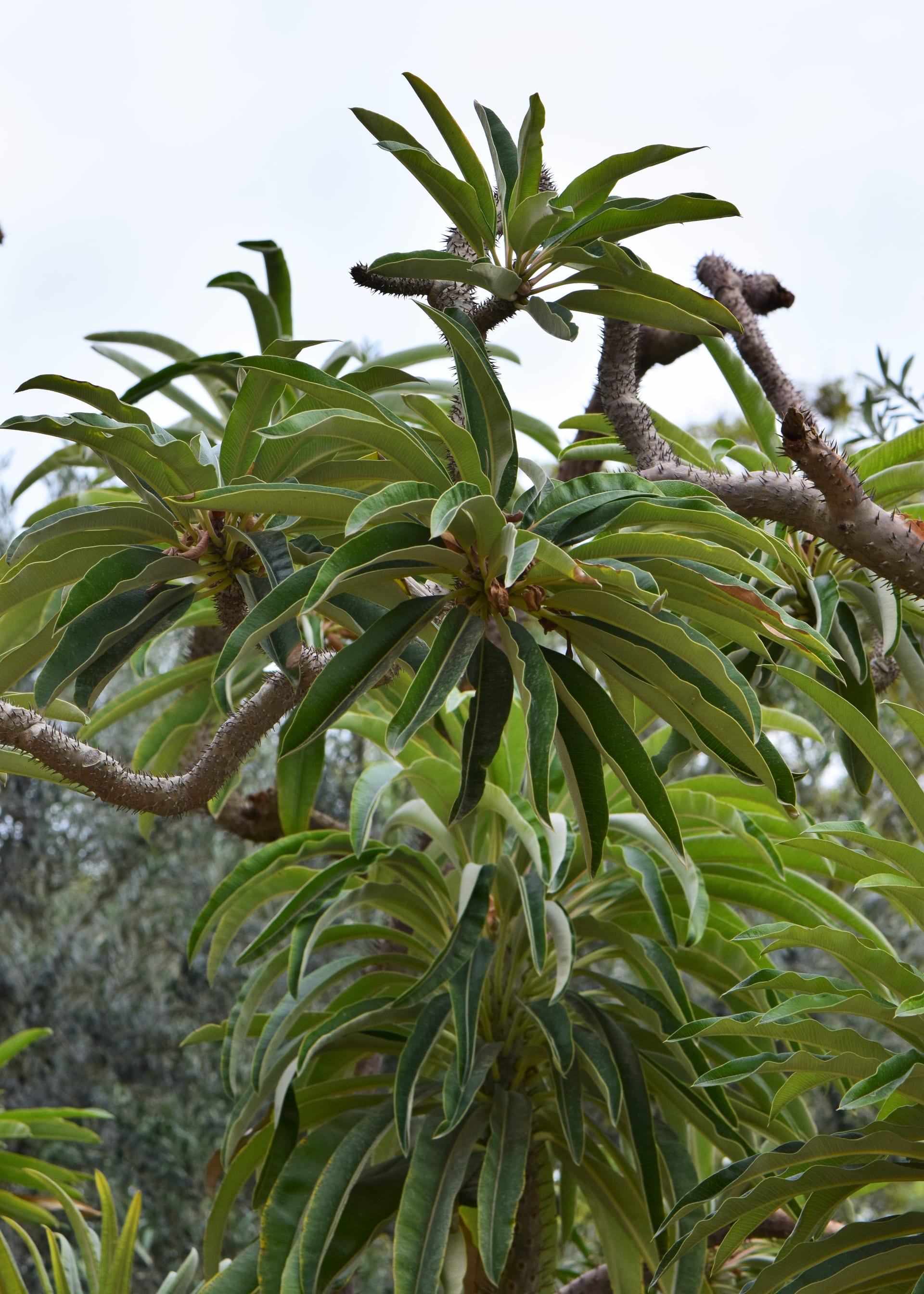
 © Krzysztof Ziarnek, Kenraiz / CC BY-SA 4.0
Pachypodium geayi
Known in Japan as "Aa-sokai," Pachypodium geayi is a large-growing species native to southwestern Madagascar. Its thick, silvery-gray trunk bristles with sharp spines and rises straight up like a column, giving it real presence among caudex-forming plants. At the crown, narrow leaves fan out with a striking pink midrib that adds a splash of color to an otherwise simple silhouette. It's generally considered beginner-friendly, tolerating dry conditions well and requiring relatively little fuss, which makes it approachable even for those new to caudex plants. In a pot it grows slowly, gaining roughly 10cm a year, rewarding patient growers with a distinctive form that develops over many years.
View Pachypodium geayi encyclopedia →0% commission on your first sales!Register by September 30, 2026 and your first 2 plants are commission-free!
Grower Wanted!
List your plants on GrowerDirect and sell directly to customers nationwide!
6 Transparency Commitments from GrowerDirect
Our Grower disclose all key information for Caudex Plants listings, ensuring complete transparency on variety, origin, light needs, and difficulty.
- Variety Disclosed
- Real Plant Photos
- Color Details
- Origin Disclosed
- Light Requirements
- Difficulty Level
Browse all 146 varieties
Light Requirements
Difficulty Level
Verified growers wanted for Caudex Plants
Growers are signing up now ahead of launch. Subscribe to be notified when new listings go live.
Getting alerts is free with a member account. When new listings match your saved search, we'll notify you by email and in-app.
Browse other categories
Verified growers (preview)
Are you growing caudex plants?
Register as a grower and connect with buyers directly.
Apply as a growerPachypodium geayi key facts
- Growing Difficulty
- Beginner-friendly
- Lifespan
- Long-lived tree (little published data)
- Size
- 4-7 m (rarely 8 m) in habitat; grows about 10 cm a year in cultivation
- Watering
- Regularly during the growing season
- Light & Placement
- Grow in a warm spot in full sun to light shade. It is fairly easy indoors or out.
- Watering
- Water regularly while in leaf; in a well-drained mix it takes plenty in hot summers. Indoors keep it on the drier side to avoid rot.
- Dormancy Care
- It is deciduous and dormant in winter. Reduce water after leaf fall and resume when new leaves appear in spring.
- Soil & Repotting
- Use a free-draining cactus-type mix. Repot about every three years, wrapping the spiny trunk in newspaper to handle it.
- Pruning & Shaping
- It grows about 10 cm a year and may outgrow an indoor spot within ten years. Cutting the top encourages branching, and it regenerates well.
- Pests & Cautions
- Pachypodium sap is toxic and the spines are sharp. Wear thick gloves or wrap the trunk in several layers of newspaper when repotting or moving it.
About Pachypodium geayi
Pachypodium geayi is a large caudex plant from southwestern Madagascar, with a spiny silvery-gray trunk and narrow leaves marked by a vivid pink midrib. It's considered beginner-friendly to grow.
7 things to know before growing Pachypodium geayi
1Light & Placement
Being native to Madagascar, Pachypodium geayi thrives with as much sunlight as possible year-round. It can be placed outdoors in direct sun from spring through autumn, though it's best to acclimate it gradually to avoid leaf scorch during the height of summer.
2Watering Basics
During the active growing season from spring to autumn, water thoroughly until it drains from the pot once the soil has fully dried out. Because this species tolerates drought well, overwatering and the resulting root rot pose a greater risk than underwatering.
3Choosing Soil
Good drainage is the top priority. Start with a commercial succulent or caudex-plant soil mix, and blend in akadama or pumice to improve aeration so the roots can develop healthily.
4When to Repot
Spring, when growth resumes, is the best time to repot. Move it into a slightly larger pot once roots start emerging from the drainage holes or the soil no longer drains as freely as before.
5Winter Care
This species is sensitive to cold, so bring it indoors to a sunny windowsill once temperatures start to drop. Cutting back significantly on watering once it enters dormancy, and keeping the soil on the dry side, helps reduce stress on the plant.
6Choosing a Plant
Look for a plant with a firm, well-thickened stem, which makes it easier to judge its condition. Fresh green leaves at the crown with a clearly visible pink midrib are one sign that the plant is growing in good health.
7Handling the Spines
The stem is densely covered in sharp spines, so wearing thick gloves when moving or repotting the plant is a good safety measure. It's also worth placing it somewhere children and pets are unlikely to touch it.
Frequently asked questions about Pachypodium geayi
- Q.Is this a good choice for beginners?
- A.Yes, this species is generally considered beginner-friendly. Its drought tolerance means it doesn't need frequent watering, making it approachable even for those new to succulents or caudex plants.
- Q.How large does it eventually grow?
- A.In its native habitat it can reach 4 to 7 meters, occasionally up to 8 meters, making it one of the larger species in the genus. Grown in a pot, it develops much more slowly, adding around 10cm per year, so you can enjoy watching its gradual change over many years.
- Q.How long can it live?
- A.It's considered a long-lived woody plant, though detailed data on its exact lifespan is limited. With consistent care, it can be grown and enjoyed for many years.
- Q.Is it normal for it to drop leaves in winter?
- A.It's natural for the plant to shed leaves once it enters dormancy. New leaves will emerge from the crown again once growth resumes in spring.
- Q.Can it be grown outdoors in the ground?
- A.Because it's sensitive to cold, keeping it planted outdoors year-round isn't practical in most parts of Japan. Growing it in a pot and bringing it indoors when temperatures drop is the more realistic approach.
Handy Growing Tools for Pachypodium geayi
Learn more about Pachypodium geayi in the encyclopedia
View Pachypodium geayi encyclopedia entry →
Care difficulty, size, origin and light needs — all basics covered.
More in this category
Can't find the plant you're looking for?
Post your wishes for free and growers with matching plants will contact you with introductions.