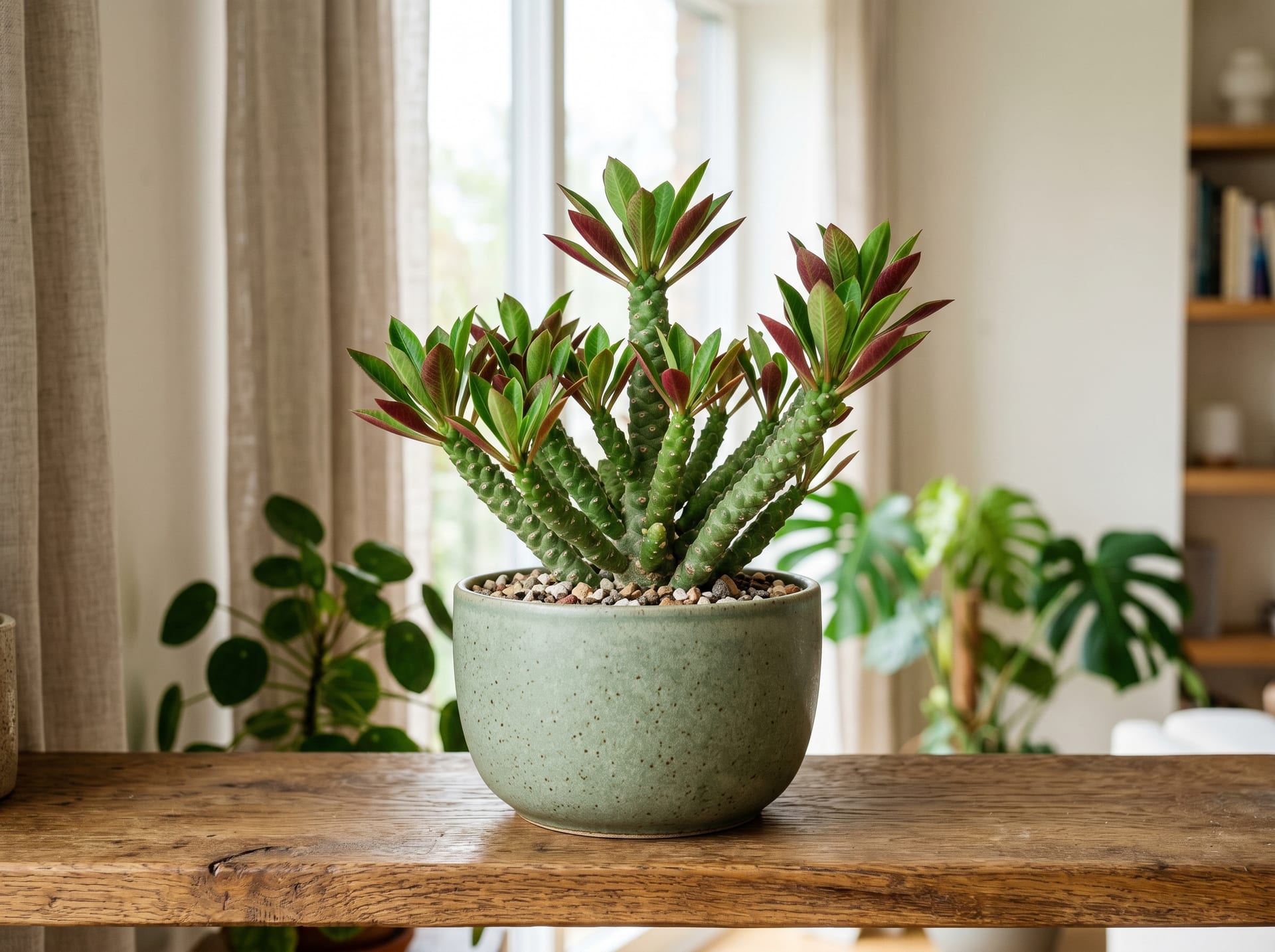
Monadenium
Monadenium is a caudex-forming succulent from Africa in the Euphorbiaceae family, prized for its swollen stem base and uniquely shaped flower clusters. It tolerates drought but dislikes excess moisture, and it needs care that distinguishes the growing season from dormancy, so it suits intermediate growers. The more it grows, the more pronounced its sculptural form becomes, giving it strong appeal as a collector's plant.
View Monadenium encyclopedia →Grower Wanted!
List your plants on GrowerDirect and sell directly to customers nationwide!
6 Transparency Commitments from GrowerDirect
Our Grower disclose all key information for Caudex Plants listings, ensuring complete transparency on variety, origin, light needs, and difficulty.
- Variety Disclosed
- Real Plant Photos
- Color Details
- Origin Disclosed
- Light Requirements
- Difficulty Level
Browse all 146 varieties
Light Requirements
Difficulty Level
Verified growers wanted for Caudex Plants
Growers are signing up now ahead of launch. Subscribe to be notified when new listings go live.
Getting alerts is free with a member account. When new listings match your saved search, we'll notify you by email and in-app.
Browse other categories
Verified growers (preview)
Are you growing caudex plants?
Register as a grower and connect with buyers directly.
Apply as a growerMonadenium key facts
- Growing Difficulty
- Intermediate
- Light & Placement
- Prefers a sunny position, but strong direct sun can scorch the leaves, so moving it to bright partial shade in summer is safer.
- Watering
- In the growing season, water thoroughly only after the soil has dried out completely. It tolerates drought but not wet soil, so when in doubt, wait.
- Dormancy Care
- During winter dormancy, keep it on the dry side to prevent root rot. A clear contrast between growing-season and dormant-season watering is important.
- Soil & Repotting
- Use a fast-draining mix amended with pumice or sand. Many species stay small and compact, so they can be grown in small pots or mixed plantings.
- Pests & Cautions
- The sap is irritating, as in Euphorbia, so wear gloves when pruning or repotting and keep it away from eyes and mouth.
About Monadenium
Monadenium is a genus in the Euphorbiaceae family native to eastern Africa. While some modern taxonomists place it within Euphorbia, it remains widely known among enthusiasts under its original name. Its defining feature is the swollen caudex that forms at the base and along the stem, storing water and nutrients to create the plant's distinctive sculptural silhouette. Leaves are small and thin, and many species naturally drop them during the dry season as they enter dormancy. The inflorescences are characterized by cup-shaped bracts called cyathia — modest in size but unmistakably unique in form. In cultivation, the core principle of "less water, more light" applies well, and with consistent care the caudex gradually thickens into an impressive, weighty form. Growth is slow, but that very quality — a plant that visibly matures and deepens in character over the years — is precisely what keeps collectors captivated.
7 things to know before growing Monadenium
1Handle the Latex Carefully
Monadenium exudes a white latex sap when cut or damaged. This sap can cause skin irritation or eye discomfort, so always wear rubber gloves when handling and keep the plant away from children and pets.
2Needs Bright Light
Monadenium prefers a sunny spot. A bright windowsill is suitable indoors, and insufficient light causes etiolation and a leggy form. However, strong direct sun can scorch the plant, so move it to bright partial shade in summer.
3Water Only After Soil Dries Out
Water thoroughly until it drains from the pot bottom, then allow the soil to dry out completely before watering again — typically waiting a few extra days after drying. Overwatering is the leading cause of root rot, so always empty the saucer after watering.
4Reduce Water in Winter
Many Monadenium species go dormant in winter. Once temperatures drop below 10°C, reduce watering to almost nothing — just a very small amount once or twice a month to prevent the roots from completely desiccating while keeping the plant safe through winter.
5Use Fast-Draining Soil
Use a commercial cactus or succulent mix as a base and blend in 20–30% pumice or coarse sand to improve drainage and prevent root rot. Adding mineral particles also enhances aeration, which supports healthy caudex development.
6Low Cold Tolerance
Monadenium does best when temperatures stay above 10°C and is highly sensitive to frost and freezing. Bring it indoors to a warm, bright windowsill in winter and protect it from cold drafts. Even in mild climates, outdoor overwintering is best avoided.
7Repot During Active Growth
Repot in spring or early summer during the active growing period. When roots fill the pot, move to a slightly larger container. After repotting, withhold water for about a week to let any root wounds heal. Plant shallowly so the base of the caudex remains visible for good airflow.
Frequently asked questions about Monadenium
- Q.Is Monadenium suitable for beginners?
- A.Its difficulty is intermediate. It needs seasonal contrast in care, such as watering only after the soil has completely dried in the growing season and keeping it on the dry side in winter. A beginner who follows the basics can still try it. Because the white latex sap is an irritant, it is wise to make a habit of wearing rubber gloves when handling the plant.
- Q.How should I overwinter Monadenium?
- A.Once temperatures drop below 10°C, bring the plant indoors to a bright windowsill and reduce watering to near-zero. Monadenium is very sensitive to frost and freezing, so in colder regions take it inside early to be safe.
- Q.My plant dropped its leaves — is it dying?
- A.Many Monadenium species naturally drop their leaves and go dormant in response to cooler temperatures or drought. As long as the caudex is firm and there is no smell of rot, the plant is not dead — it will re-sprout once warmer spring temperatures return.
- Q.What type of pot is best for Monadenium?
- A.Unglazed terracotta pots are recommended because they offer excellent airflow and drainage, reducing the risk of root rot. If using plastic pots, water less frequently to avoid overwatering. Choose a pot only one size larger than the current root ball.
- Q.How can I propagate Monadenium?
- A.Stem cuttings are the most common propagation method. After cutting, rinse away the white latex with water, let the cut end dry for several days, then insert it into clean, dry soil. Rooting typically takes several weeks to about a month.
Handy Growing Tools for Monadenium
Learn more about Monadenium in the encyclopedia
View Monadenium encyclopedia entry →
Care difficulty, size, origin and light needs — all basics covered.
Monadenium related articles
See more Monadenium articles →More in this category
Can't find the plant you're looking for?
Post your wishes for free and growers with matching plants will contact you with introductions.