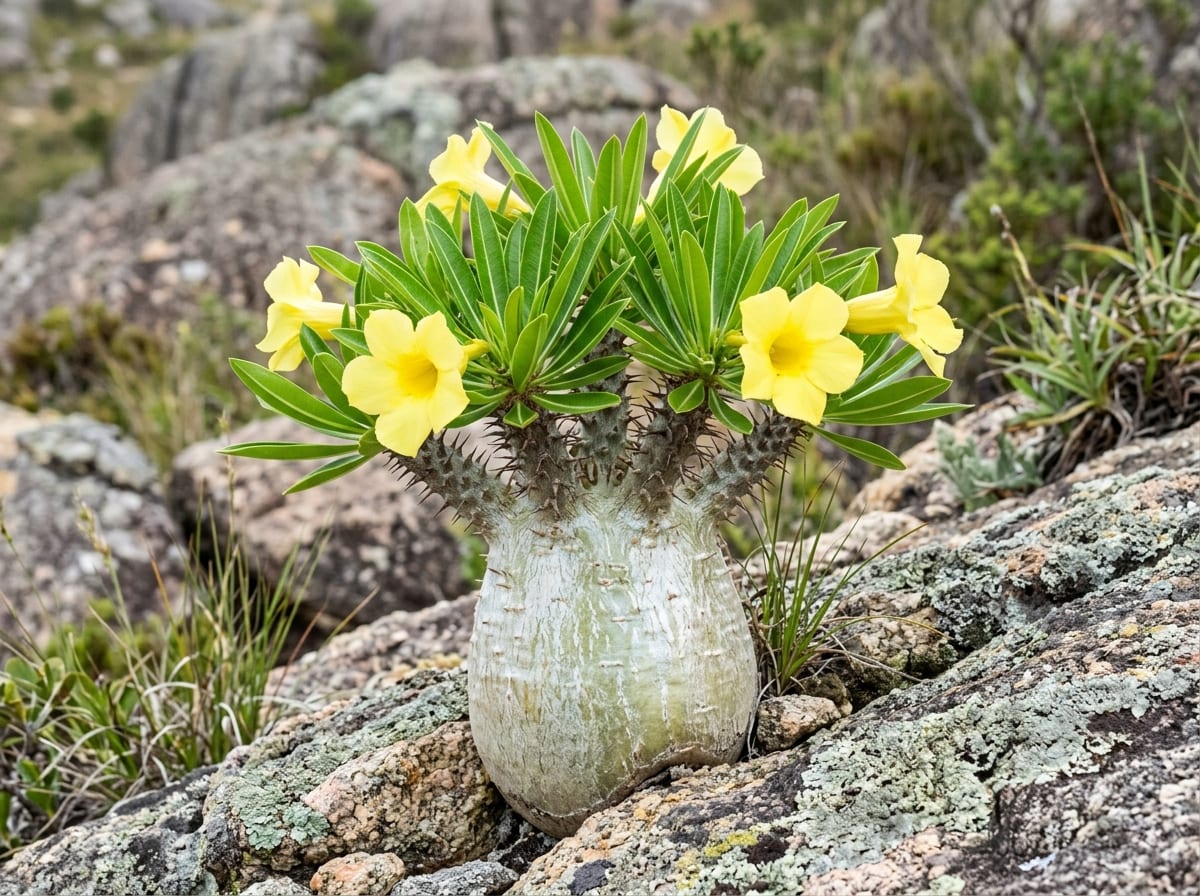
Pachypodium enigmaticum
Pachypodium enigmaticum was first described as a new species in 2014 and comes from central Madagascar. Its rounded, greenish-white caudex sends out glossy, hairless leaves in a radiating rosette from the crown, and mature plants produce large, clear yellow flowers. The contrast between the sculptural caudex and the bright blooms gives it strong ornamental appeal. As a relatively recently described and unusual species, it's generally considered suited to intermediate growers, which makes the process of growing it all the more rewarding.
View Pachypodium enigmaticum encyclopedia →0% commission on your first sales!Register by September 30, 2026 and your first 2 plants are commission-free!
Grower Wanted!
List your plants on GrowerDirect and sell directly to customers nationwide!
6 Transparency Commitments from GrowerDirect
Our Grower disclose all key information for Caudex Plants listings, ensuring complete transparency on variety, origin, light needs, and difficulty.
- Variety Disclosed
- Real Plant Photos
- Color Details
- Origin Disclosed
- Light Requirements
- Difficulty Level
Browse all 146 varieties
Light Requirements
Difficulty Level
Verified growers wanted for Caudex Plants
Growers are signing up now ahead of launch. Subscribe to be notified when new listings go live.
Getting alerts is free with a member account. When new listings match your saved search, we'll notify you by email and in-app.
Browse other categories
Verified growers (preview)
Are you growing caudex plants?
Register as a grower and connect with buyers directly.
Apply as a growerPachypodium enigmaticum key facts
- Growing Difficulty
- Intermediate
- Lifespan
- Little data available
- Size
- Little data available
- Watering
- Sparingly in the growing season
- Light & Placement
- As a rock-dwelling species, grow it in a sunny position during the growing season.
- Watering
- Water once the soil dries in the growing season and reduce water after it drops its leaves.
- Dormancy Care
- It has a dormant period and drops its leaves in winter. Keep it dry and warm while dormant and resume watering when new growth starts.
- Temperature & Overwintering
- Cold tolerance is poorly documented, so overwinter it dry in a warm room away from frost.
- Soil & Repotting
- Use a free-draining mix and repot at the start of the growing season.
- Pests & Cautions
- Pachypodium sap is toxic and the spines are sharp. Wear thick gloves or wrap the trunk in several layers of newspaper when repotting or moving it. As it was described only recently and cultivation data are scarce, learn its habits gradually with seed-raised plants.
About Pachypodium enigmaticum
Described as a new species in 2014, this Pachypodium from central Madagascar has a rounded green-white caudex topped with glossy leaves and large, clear yellow flowers.
7 things to know before growing Pachypodium enigmaticum
1Sun and Airflow
True to its Madagascan origins, this Pachypodium favors strong light and dry air. Indoors, place it somewhere it gets long hours of direct sun rather than light filtered through a curtain; outdoors, a bright spot works well. Avoid stuffy, poorly ventilated corners, which invite rot and pests.
2Water on the Dry Side
Because the caudex stores water, let the soil dry out fully before watering again. During periods of slower growth, space out waterings even further to avoid root rot from overwatering.
3Use Fast-Draining Soil
A gritty, mineral-based mix sold for caudiciform or succulent plants works well. Soil high in organic matter tends to stay too damp, so favor inorganic materials like akadama or pumice for easier management.
4Repot During Active Growth
Repot while the plant is actively growing and roots are extending. Gently remove it from its pot, brush away old soil without damaging the caudex or roots, and settle it into fresh mix. Hold off on watering for a while afterward so the roots can recover.
5Watch the Seasons
Growth slows as temperatures drop, so watering should be reduced accordingly. Sudden temperature swings or cold snaps stress the plant, so reassess placement and watering pace as the seasons change.
6Check the Caudex Closely
When choosing a plant, inspect the caudex closely for damage or soft, mushy spots. Look for glossy leaves and a caudex that feels firm and stable rather than wobbly, as signs of a healthy specimen.
7An Intermediate-Level Plant
Pachypodium enigmaticum is generally considered suited to intermediate growers, with its own balance of firm dry-season restraint and active-season care that differs from other succulents. Prior experience with Pachypodium species will help you grow it with more confidence.
Frequently asked questions about Pachypodium enigmaticum
- Q.Can beginners grow this plant?
- A.It's generally considered suited to intermediate growers, so prior experience with succulents or caudiciforms helps. Once you get a feel for its watering rhythm and ideal placement, beginners can grow it successfully too.
- Q.How large does it grow?
- A.There isn't much published data yet on its mature size. Growth can vary with individual growing conditions, so it's best to judge by the specific plant's condition at the time of purchase.
- Q.How long does it live?
- A.Detailed information on its lifespan and long-term habits is still limited. Like other Pachypodium species, it's thought to be a plant best enjoyed by growing it patiently over time.
- Q.When does it flower?
- A.This species produces large, clear yellow flowers, but the exact timing depends on the individual plant's condition and growing environment. It's best enjoyed once the plant's growth has become well established.
- Q.What should I watch for in winter care?
- A.Growth slows as temperatures drop, so watering should be reduced during this period. Keep the plant away from sudden cold snaps and in a warm, stable spot.
Handy Growing Tools for Pachypodium enigmaticum
Learn more about Pachypodium enigmaticum in the encyclopedia
View Pachypodium enigmaticum encyclopedia entry →
Care difficulty, size, origin and light needs — all basics covered.
More in this category
Can't find the plant you're looking for?
Post your wishes for free and growers with matching plants will contact you with introductions.