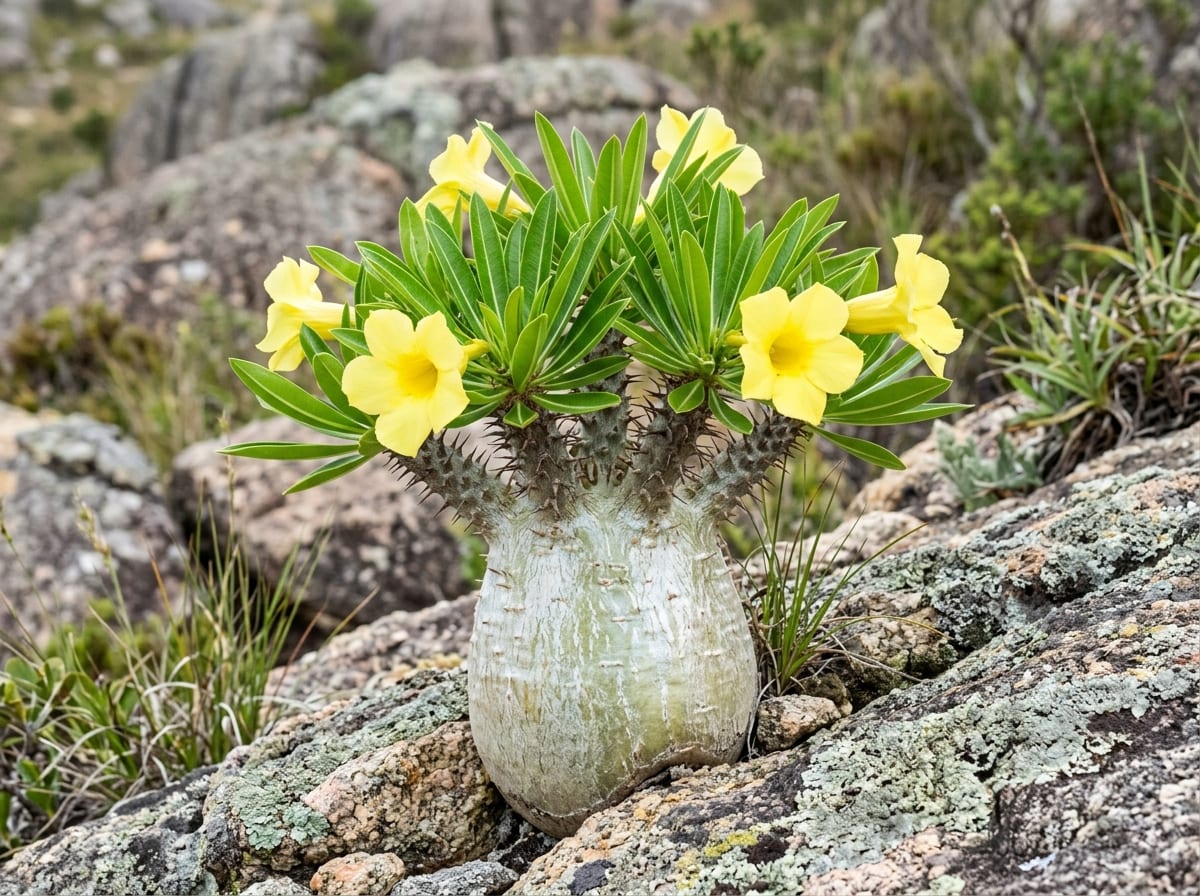
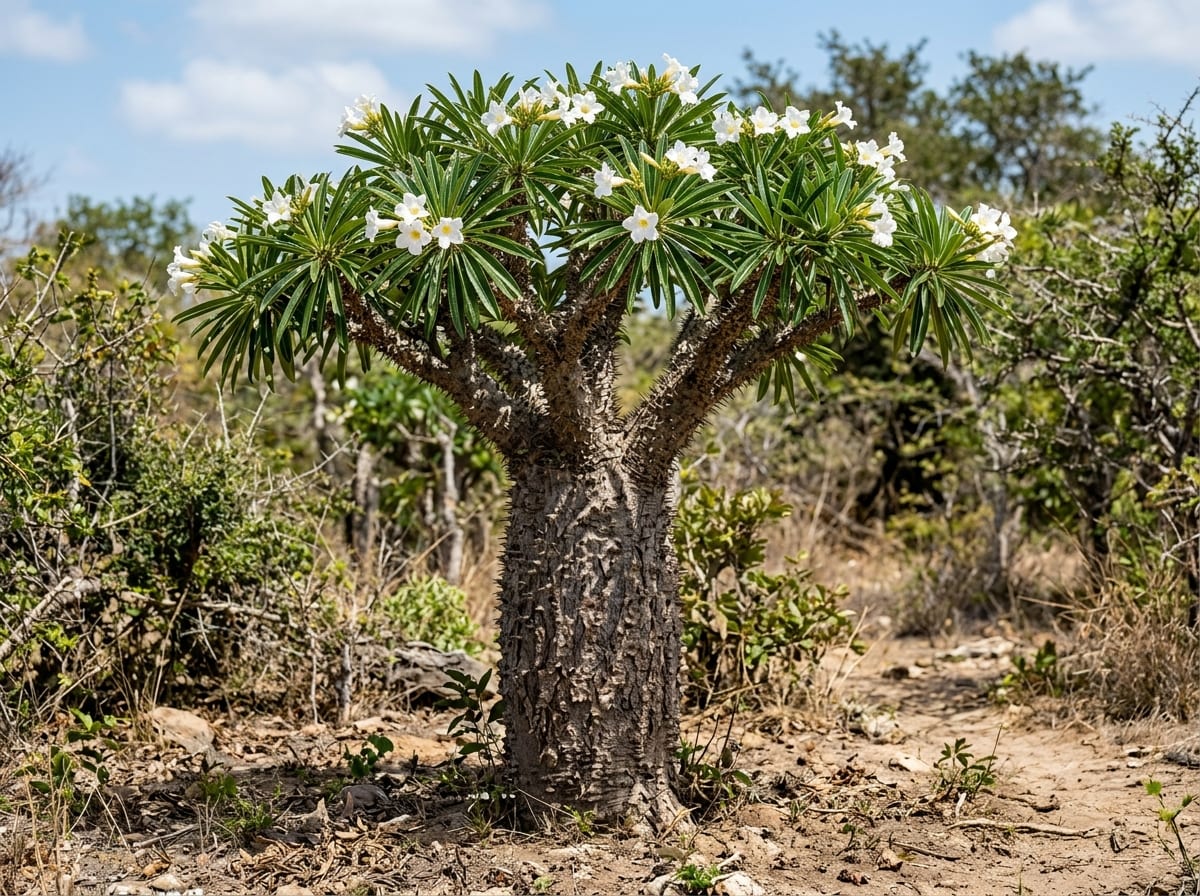
AI-generated image
Pachypodium enigmaticum
IntermediatePachypodium enigmaticum
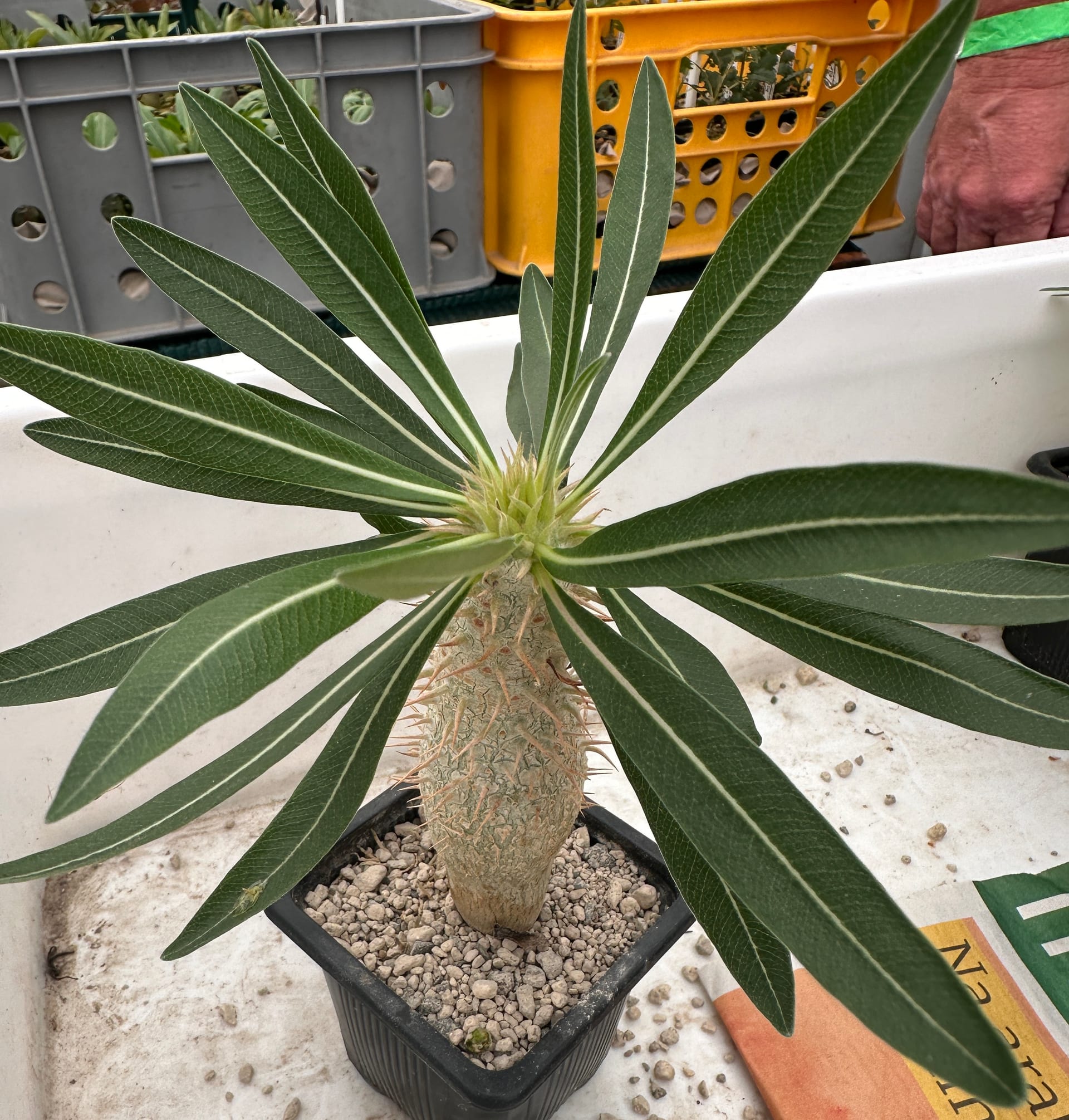
A Pachypodium from central Madagascar described in 2014. From the top of a round, greenish-white caudex it spreads glossy, hairless leaves and bears large, clear yellow flowers.
About
Pachypodium enigmaticum is a caudiciform member of the Apocynaceae described as new in 2014 by Pavelka, Lavranos and colleagues. The type was collected in 2003 near Mandoto in central Madagascar at 920 m, and the plant is reported to grow in rock crevices. The name means "enigmatic", reflecting debate over whether it was a known species or a new one. The greenish-white caudex is round at first and spiny on top, with bright green lanceolate leaves radiating from the apex; the leaves are glossy and hairless. The large flowers are pure yellow and differently shaped from those of other yellow-flowered species, and it is said to bloom at a different time from other shrubby pachypodiums. In cultivation it has a dormant period and drops its leaves in winter. Little has yet been published on its morphology, ecology or cultivation, and it has not been assessed by the IUCN. In Japan seed-raised plants are regularly sold through online shops and auction sites, and seed is available.
Basic Info
Origin
Central Madagascar (Mandoto area)
Lifespan
Little data available
Size
Little data available
Temperature
10〜35℃
Watering & Fertilizer
Sparingly in the growing season
Growing Tips
Light & Placement
As a rock-dwelling species, grow it in a sunny position during the growing season.
Watering
Water once the soil dries in the growing season and reduce water after it drops its leaves.
Dormancy Care
It has a dormant period and drops its leaves in winter. Keep it dry and warm while dormant and resume watering when new growth starts.
Temperature & Overwintering
Cold tolerance is poorly documented, so overwinter it dry in a warm room away from frost.
Soil & Repotting
Use a free-draining mix and repot at the start of the growing season.
Pests & Cautions
Pachypodium sap is toxic and the spines are sharp. Wear thick gloves or wrap the trunk in several layers of newspaper when repotting or moving it. As it was described only recently and cultivation data are scarce, learn its habits gradually with seed-raised plants.
Pachypodium enigmaticum FAQ
QWhat is the growing difficulty level for Pachypodium enigmaticum?
Intermediate. A variety suitable for intermediate growers. Requires some cultivation experience and knowledge of environment management. Pay careful attention to temperature and humidity control.
QHow should I water and fertilize Pachypodium enigmaticum?
Pachypodium enigmaticum: watering & fertilizer — Sparingly in the growing season. Aim for appropriate frequency and amount.
QWhat is the typical price for Pachypodium enigmaticum?
The price of Pachypodium enigmaticum varies significantly by variety, characteristics, size, and lineage. Please check GrowerDirect's price guide for the latest market information.
Last updated: September 23, 2026
References & Sources
Edited & verified by: GrowerDirect Editorial Team
The classifications, regulations, and growing data on this page are created and verified based on the primary information database below.
Taxonomy & Authority
Regulations & Conservation Status
Listed in CITES Appendix II (covered by the genus listing for Pachypodium). International trade needs an export permit, but no registration is required for transfers within Japan.
Sources: Species+ (CITES): Pachypodium enigmaticum
Regulations may change. Always verify the latest information with the relevant authorities.
Related Species
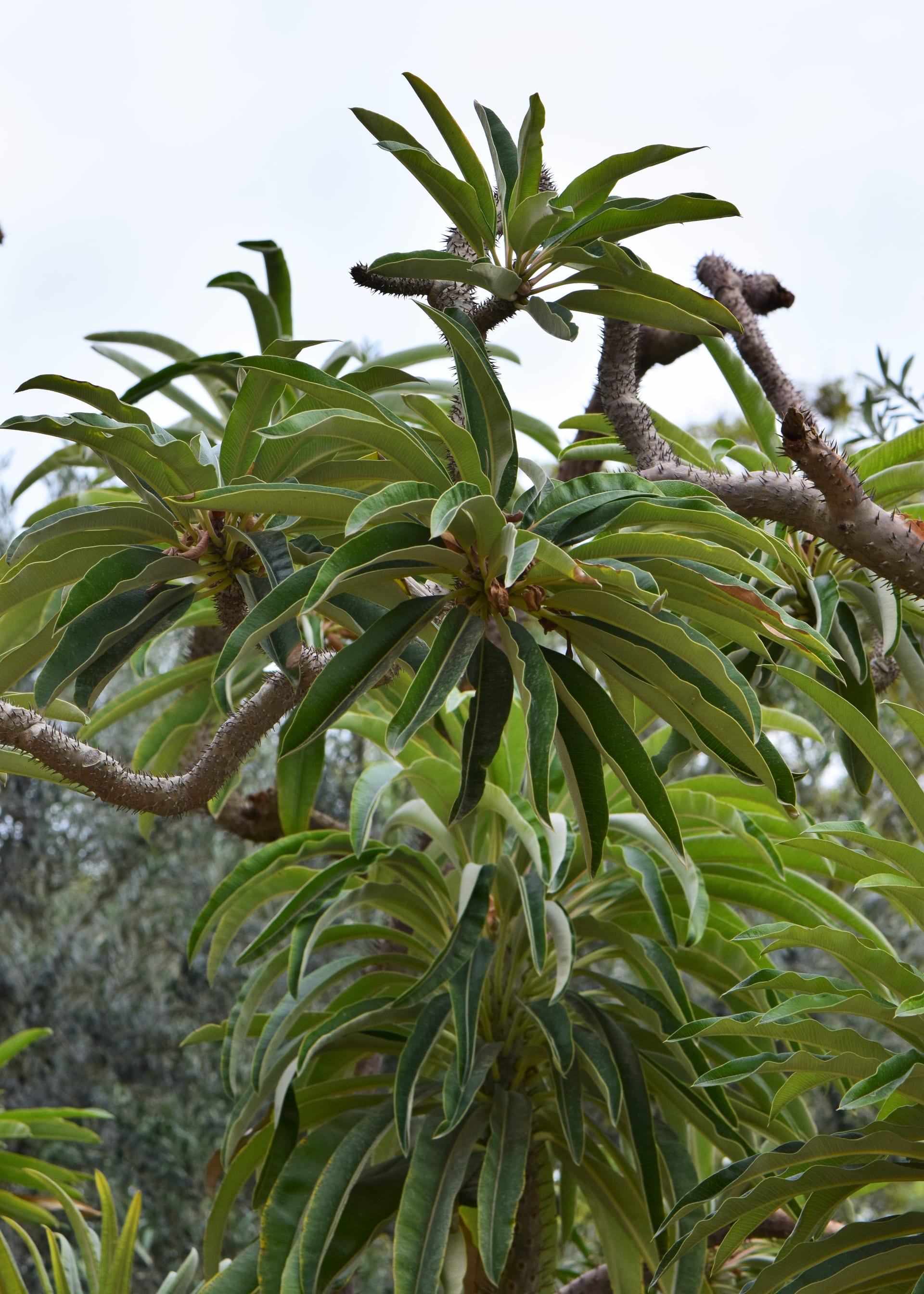
Find listings for this species
Related Articles
Pachypodium gracillis Care Guide | Growing Thick Caudex from Seed
A practical guide to caring for Pachypodium gracillis, a popular caudex plant. Covers seed propagation and cultivation, choosing the right soil and pots, summer growing season and winter dormancy management, and secrets to watering and fertilization for developing thick caudexes.
Pachypodium Species Guide | Characteristics and Differences of Gracilis, Brevicaule, and Baronii
A detailed introduction to the most popular Pachypodium species. This guide explains the characteristics and differences of Gracilis, Brevicaule, Baronii, Lamerei, and Horombense, along with cultivation tips for each.
Pachypodium Seed Propagation Guide | From Sowing to Germination and Growth
This guide explains how to grow Pachypodium from seed. We cover everything from sourcing seeds and sowing to managing germination, caring for seedlings, and the unique joys of seed propagation.
Rooting and Initial Care of Pachypodium Gracilius
Methods for encouraging root development in imported bare-root Pachypodium gracilis. Explains the preparation of pots, soil media, and temperature conditions; watering practices during rooting (maintaining primarily dry conditions); how to confirm successful rooting and interpret key indicators; initial post-rooting care; and seasonal management guidelines.
🩺 Common diseases
Can't find the plant you're looking for?
Post your wishes for free and growers with matching plants will contact you with introductions.