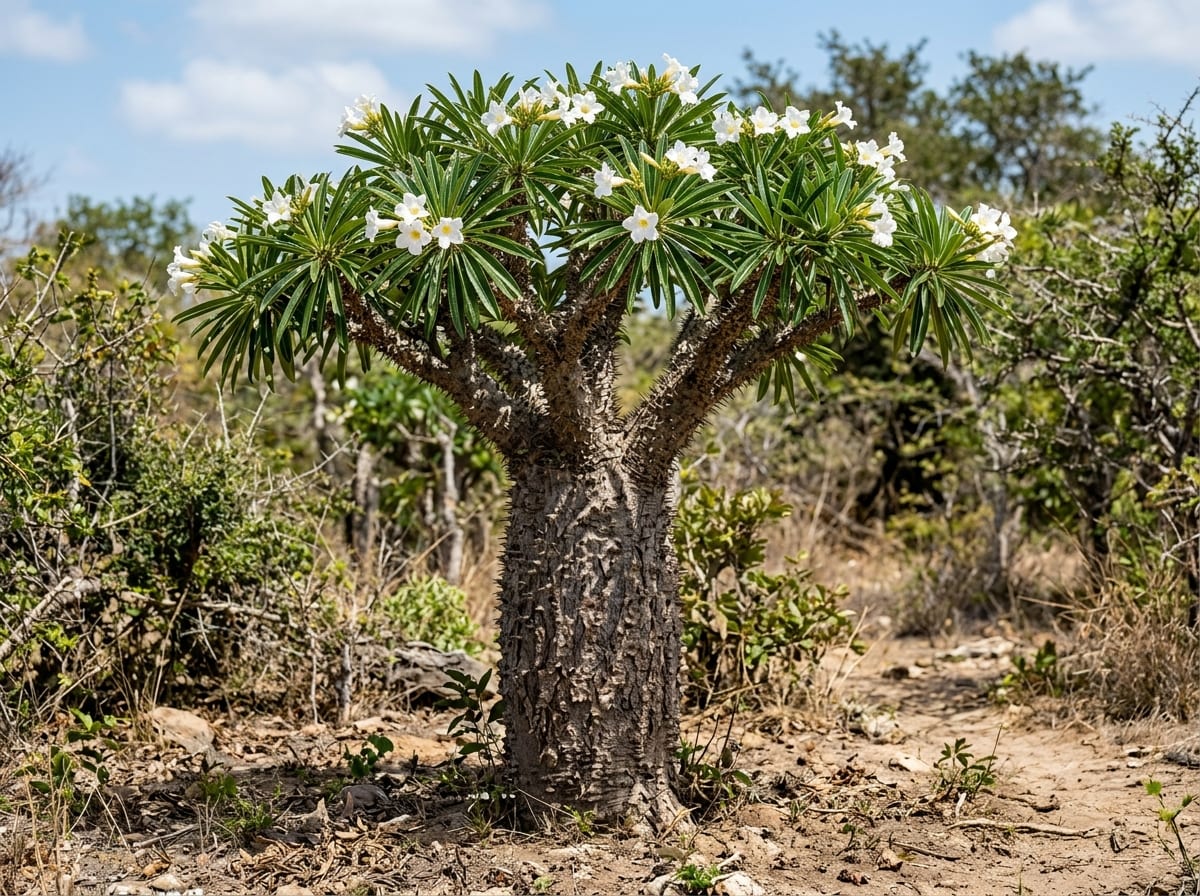
AI-generated image
Pachypodium sofiense
IntermediatePachypodium sofiense
A tree-like Pachypodium from north-western Madagascar close to P. rutenbergianum, reaching about 5 m. Spiny branches end in dense, palm-like tufts of leaves, and it produces many white flowers.
About
Pachypodium sofiense is a deciduous small tree or shrub of the Apocynaceae endemic to Madagascar. It occurs in seasonally dry tropical forest from central-northern to central-western Madagascar, and the IUCN Red List category is Vulnerable; in the north it is found in the habitats of P. baronii. Poisson described it in 1924 as a variety of P. rutenbergianum (var. sofiense), and Perrier de la Bâthie later raised it to species; GBIF and the CITES species list still treat it as a separate species. Similar to P. rutenbergianum, it is a succulent tree reaching about 5 m, with spiny branches ending in dense tufts of simple leaves that form a palm-like crown; its spines are said to be very short. It produces many white flowers. It is distinct from P. lamerei, another white-flowered species with a columnar trunk, and belongs to the rutenbergianum group. In Japan domestically raised seedlings appear on online auction sites and seed is available, but it is not widely traded.
Size of the Pachypodium sofiense
The Pachypodium sofiense grows to About 5 m tall in habitat.
Basic Info
Origin
Central-northern to central-western Madagascar
Lifespan
Long-lived tree (little published data)
Size
About 5 m tall in habitat
Temperature
10〜35℃
Watering & Fertilizer
Regularly during the growing season
Growing Tips
Light & Placement
A tree of seasonally dry forest, it should be grown in a sunny spot during the growing season.
Watering
Water once the soil dries while in leaf, and reduce water after leaf fall.
Dormancy Care
It is deciduous and rests leafless in winter, its dry season. Keep it dry while dormant and resume watering when new leaves appear.
Temperature & Overwintering
Little is recorded on its cold tolerance, so keep it in a warm room away from frost in winter.
Soil & Repotting
Use a free-draining mix and repot at the start of the growing season, increasing pot size step by step as it grows large.
Pests & Cautions
Pachypodium sap is toxic and the spines are sharp. Wear thick gloves or wrap the trunk in several layers of newspaper when repotting or moving it. Nursery seedlings arrive with established roots and do not depend on wild collection, so they are worth choosing over wild-collected plants.
Pachypodium sofiense FAQ
QWhat is the growing difficulty level for Pachypodium sofiense?
Intermediate. A variety suitable for intermediate growers. Requires some cultivation experience and knowledge of environment management. Pay careful attention to temperature and humidity control.
QHow large does Pachypodium sofiense get?
The mature size of Pachypodium sofiense is About 5 m tall in habitat. This may vary slightly depending on cultivation environment and individual differences.
QHow should I water and fertilize Pachypodium sofiense?
Pachypodium sofiense: watering & fertilizer — Regularly during the growing season. Aim for appropriate frequency and amount.
QWhat is the typical price for Pachypodium sofiense?
The price of Pachypodium sofiense varies significantly by variety, characteristics, size, and lineage. Please check GrowerDirect's price guide for the latest market information.
Last updated: September 23, 2026
References & Sources
Edited & verified by: GrowerDirect Editorial Team
The classifications, regulations, and growing data on this page are created and verified based on the primary information database below.
Taxonomy & Authority
Regulations & Conservation Status
Listed in CITES Appendix II (covered by the genus listing for Pachypodium). International trade needs an export permit, but no registration is required for transfers within Japan. The IUCN Red List category is Vulnerable.
Sources: Species+ (CITES): Pachypodium sofiense / IUCN Red List category via GBIF: Pachypodium sofiense
Regulations may change. Always verify the latest information with the relevant authorities.
Related Species
Find listings for this species
Related Articles
Pachypodium gracillis Care Guide | Growing Thick Caudex from Seed
A practical guide to caring for Pachypodium gracillis, a popular caudex plant. Covers seed propagation and cultivation, choosing the right soil and pots, summer growing season and winter dormancy management, and secrets to watering and fertilization for developing thick caudexes.
Pachypodium Species Guide | Characteristics and Differences of Gracilis, Brevicaule, and Baronii
A detailed introduction to the most popular Pachypodium species. This guide explains the characteristics and differences of Gracilis, Brevicaule, Baronii, Lamerei, and Horombense, along with cultivation tips for each.
Pachypodium Seed Propagation Guide | From Sowing to Germination and Growth
This guide explains how to grow Pachypodium from seed. We cover everything from sourcing seeds and sowing to managing germination, caring for seedlings, and the unique joys of seed propagation.
Rooting and Initial Care of Pachypodium Gracilius
Methods for encouraging root development in imported bare-root Pachypodium gracilis. Explains the preparation of pots, soil media, and temperature conditions; watering practices during rooting (maintaining primarily dry conditions); how to confirm successful rooting and interpret key indicators; initial post-rooting care; and seasonal management guidelines.
🩺 Common diseases
Can't find the plant you're looking for?
Post your wishes for free and growers with matching plants will contact you with introductions.