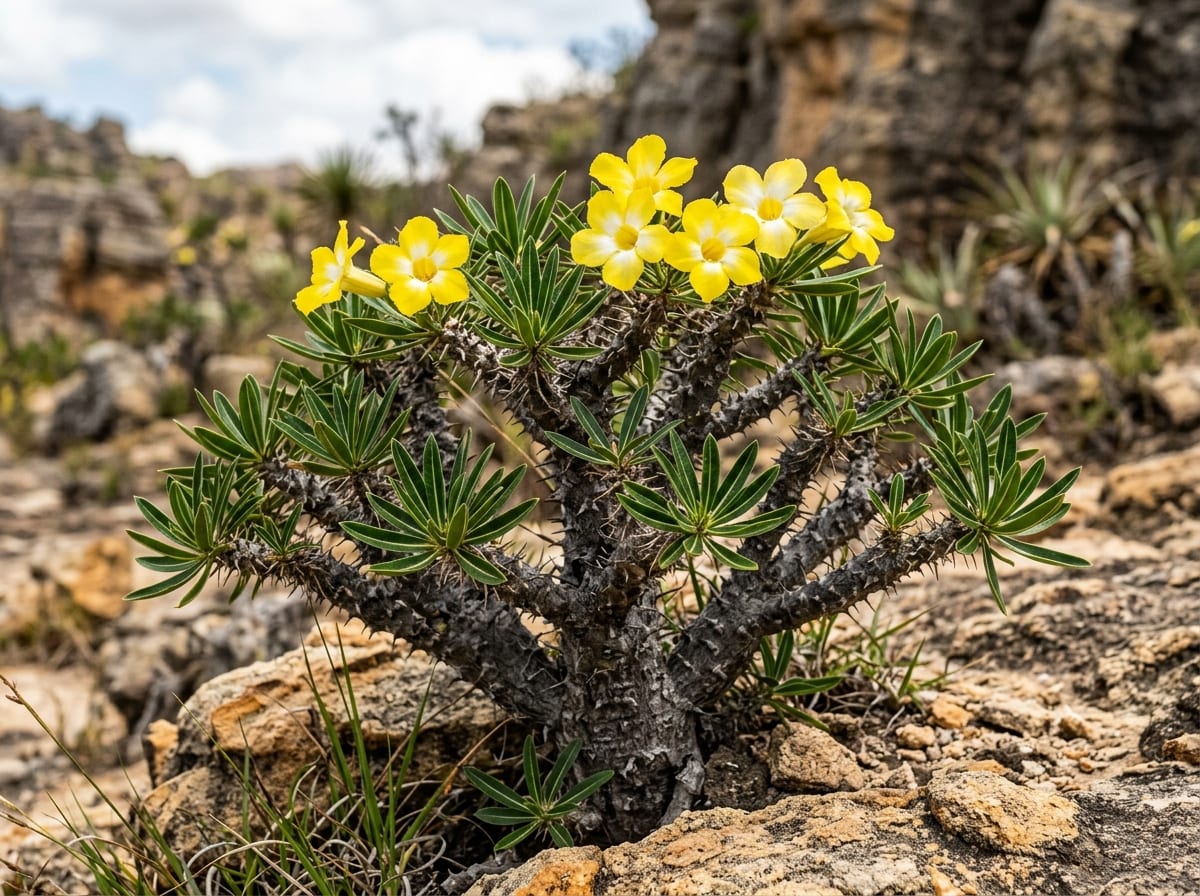
AI-generated image
Pachypodium bicolor
IntermediatePachypodium bicolor
A yellow-flowered Pachypodium in the P. rosulatum group, named for its two-tone flowers whose throat is white inside. A thick trunk branches densely into a low, somewhat pendulous shrub 25-50 cm tall.
About
Pachypodium bicolor is a small species of the Apocynaceae endemic to western Madagascar. It grows only on porous sandstone cliffs in low, open deciduous forest, for example along the Tsiribihina River west of Berevo, and is notable for being restricted to a single type of substrate. Originally a forma of P. rosulatum, it was raised to species rank by Lavranos and Rapanarivo in 1997; GBIF accepts it as a species, while the CITES species list (Species+) includes it in P. rosulatum. It is a low, somewhat pendulous shrub 25-50 cm tall with a crown about 50 cm across, densely branched from a thick trunk. The bark is pale grey and smooth, spines are 2-8 mm long in pairs, and leaves are ovate to elliptic, 3-7.5 cm long. The flowers are yellow, and the white inside of the corolla tube, about 3.5 cm long even in bud, is the key character separating it from other yellow-flowered relatives. Five to eight flowers are borne together on a long peduncle. In Japan seed-raised plants are sold through online shops and auction sites.
Size of the Pachypodium bicolor
The Pachypodium bicolor grows to 25-50 cm tall; crown about 50 cm across.
Basic Info
Origin
Western Madagascar (sandstone along the Tsiribihina River)
Lifespan
Little data available
Size
25-50 cm tall; crown about 50 cm across
Temperature
10〜35℃
Watering & Fertilizer
Sparingly in the growing season
Growing Tips
Light & Placement
It grows on cliffs in open forest, so give it a sunny position in the growing season.
Watering
Water once the soil dries in the growing season and reduce water while leafless from autumn to spring.
Temperature & Overwintering
Little is recorded on its cold tolerance, so overwinter it dry in a warm room away from frost.
Soil & Repotting
Its habitat is porous sandstone, so in cultivation use a coarse, porous, free-draining mix such as pumice.
Pests & Cautions
Pachypodium sap is toxic and the spines are sharp. Wear thick gloves or wrap the trunk in several layers of newspaper when repotting or moving it. It resembles other yellow-flowered relatives, so check the label against the scientific name and the white throat.
Pachypodium bicolor FAQ
QWhat is the growing difficulty level for Pachypodium bicolor?
Intermediate. A variety suitable for intermediate growers. Requires some cultivation experience and knowledge of environment management. Pay careful attention to temperature and humidity control.
QHow large does Pachypodium bicolor get?
The mature size of Pachypodium bicolor is 25-50 cm tall; crown about 50 cm across. This may vary slightly depending on cultivation environment and individual differences.
QHow should I water and fertilize Pachypodium bicolor?
Pachypodium bicolor: watering & fertilizer — Sparingly in the growing season. Aim for appropriate frequency and amount.
QWhat is the typical price for Pachypodium bicolor?
The price of Pachypodium bicolor varies significantly by variety, characteristics, size, and lineage. Please check GrowerDirect's price guide for the latest market information.
Last updated: September 23, 2026
References & Sources
Edited & verified by: GrowerDirect Editorial Team
The classifications, regulations, and growing data on this page are created and verified based on the primary information database below.
Taxonomy & Authority
Regulations & Conservation Status
Listed in CITES Appendix II (covered by the genus listing for Pachypodium; the CITES species list includes it in P. rosulatum). International trade needs an export permit, but no registration is required for transfers within Japan.
Sources: Species+ (CITES): Pachypodium rosulatum(bicolor を含む)
Regulations may change. Always verify the latest information with the relevant authorities.
Related Species
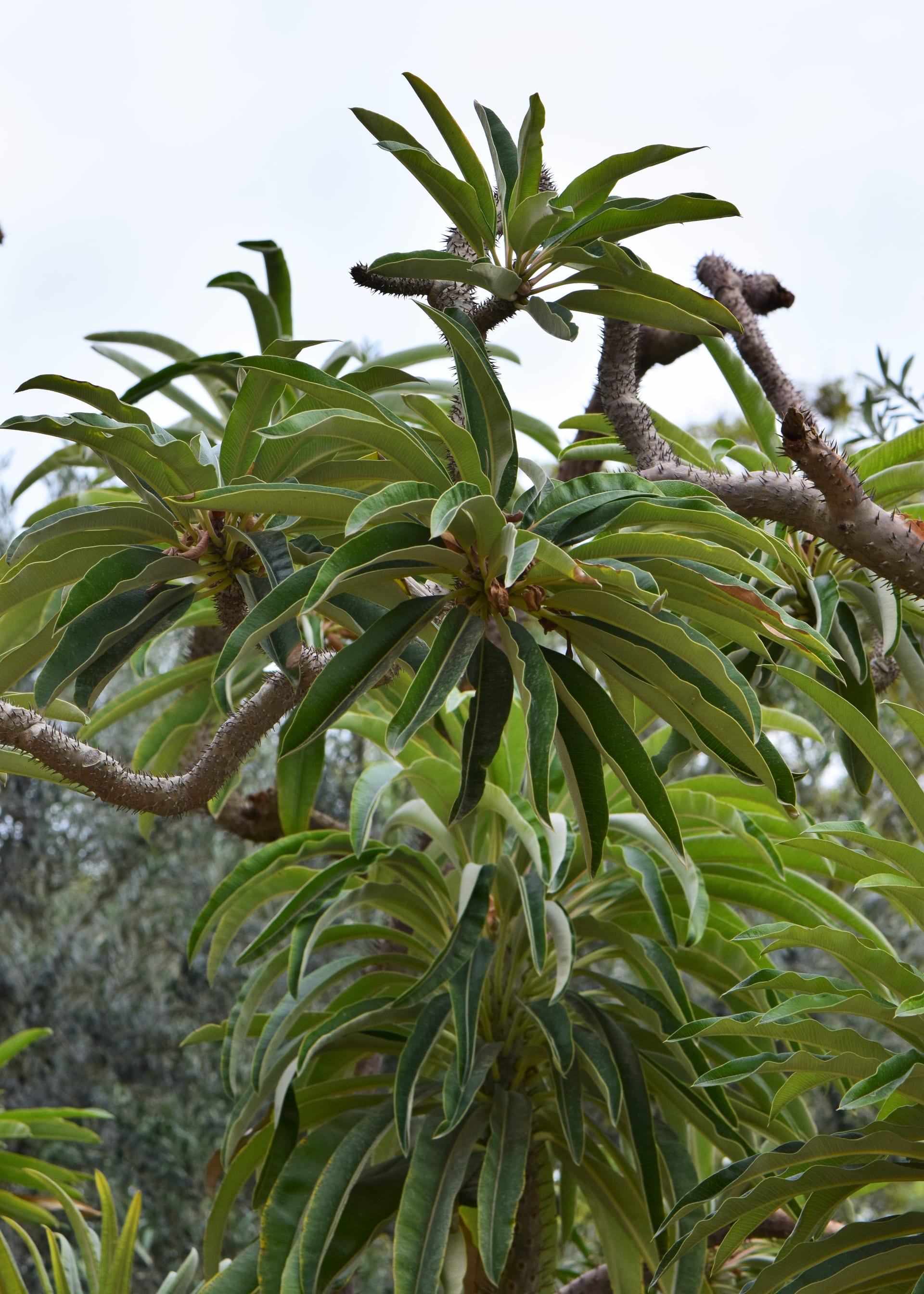
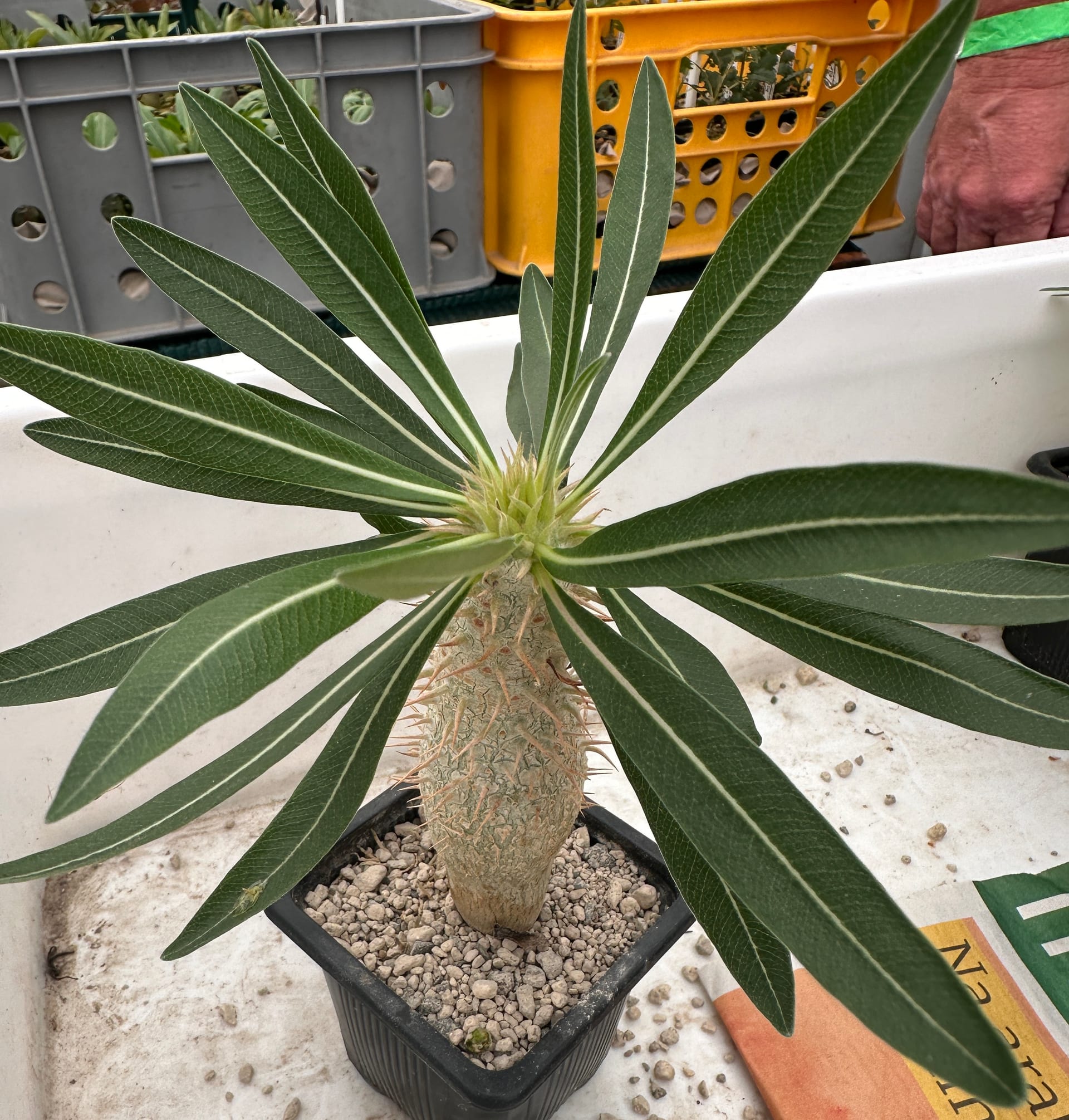
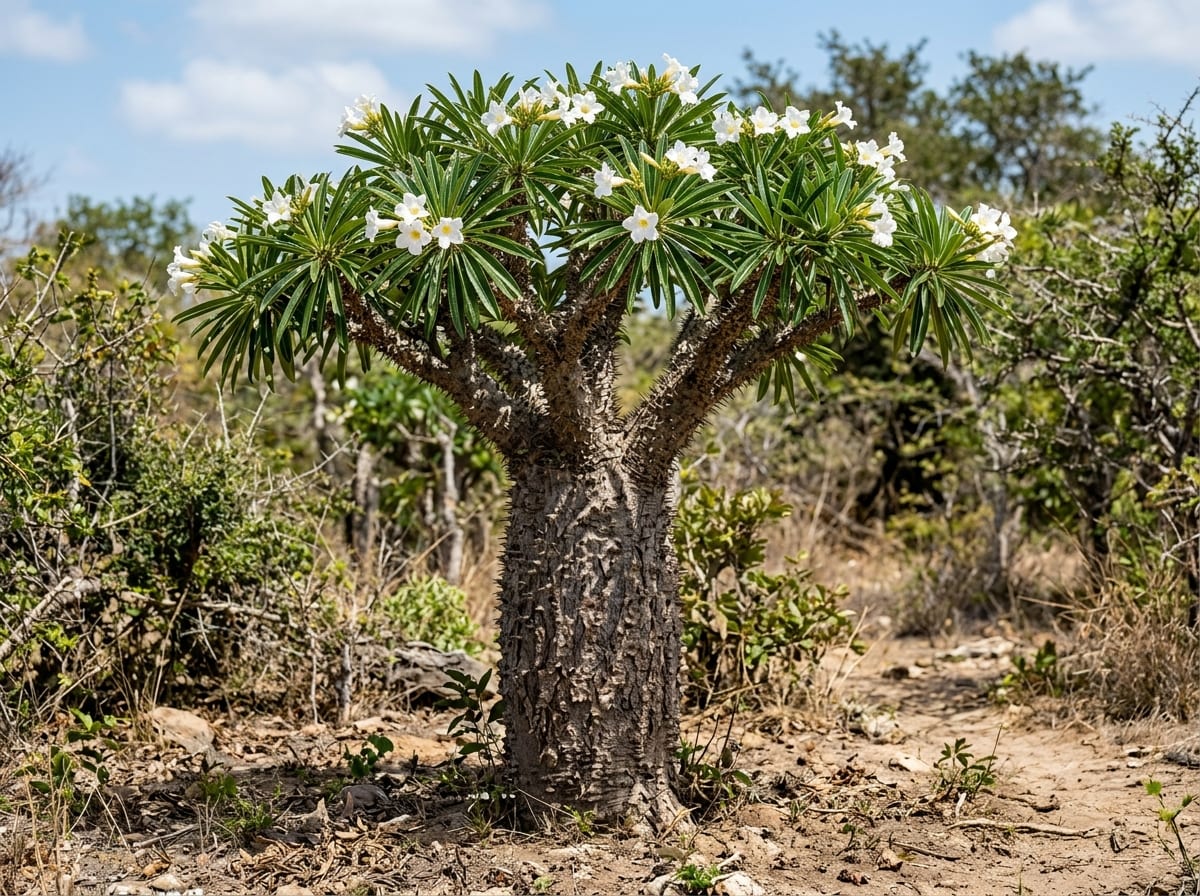
Find listings for this species
Related Articles
Pachypodium gracillis Care Guide | Growing Thick Caudex from Seed
A practical guide to caring for Pachypodium gracillis, a popular caudex plant. Covers seed propagation and cultivation, choosing the right soil and pots, summer growing season and winter dormancy management, and secrets to watering and fertilization for developing thick caudexes.
Pachypodium Species Guide | Characteristics and Differences of Gracilis, Brevicaule, and Baronii
A detailed introduction to the most popular Pachypodium species. This guide explains the characteristics and differences of Gracilis, Brevicaule, Baronii, Lamerei, and Horombense, along with cultivation tips for each.
Pachypodium Seed Propagation Guide | From Sowing to Germination and Growth
This guide explains how to grow Pachypodium from seed. We cover everything from sourcing seeds and sowing to managing germination, caring for seedlings, and the unique joys of seed propagation.
Rooting and Initial Care of Pachypodium Gracilius
Methods for encouraging root development in imported bare-root Pachypodium gracilis. Explains the preparation of pots, soil media, and temperature conditions; watering practices during rooting (maintaining primarily dry conditions); how to confirm successful rooting and interpret key indicators; initial post-rooting care; and seasonal management guidelines.
🩺 Common diseases
Can't find the plant you're looking for?
Post your wishes for free and growers with matching plants will contact you with introductions.