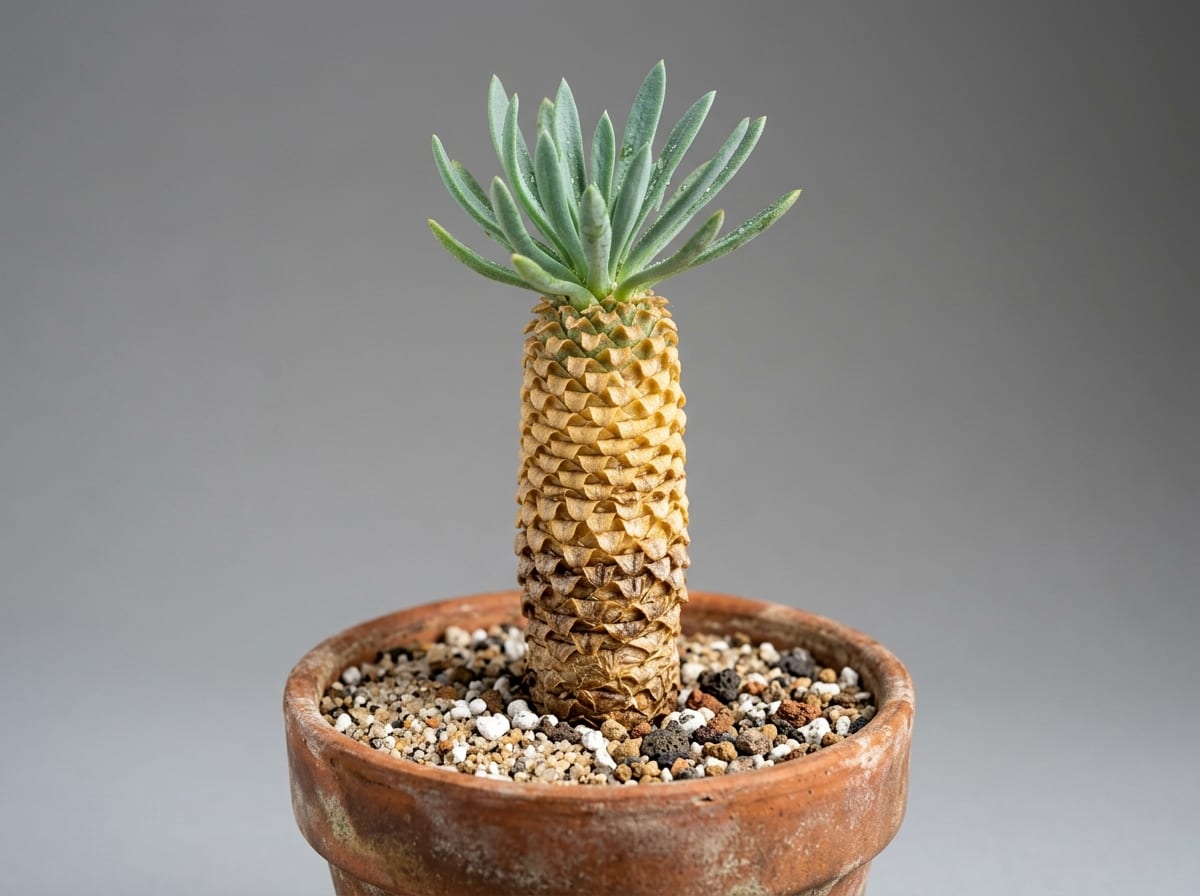
Othonna lepidocaulis
Othonna lepidocaulis is one of the most distinctive winter-growing caudiciforms in the genus, native to South Africa. As older leaves drop, the persistent leaf bases stack tightly along the stem like fish scales, giving the golden-toned trunk a texture reminiscent of a small corn cob. Plants stay compact, topping out around 23cm tall, making them well suited to smaller collections. Cultivation calls for an advanced grower's understanding of its winter growth cycle, but the reward is a slow-growing succulent with genuinely unusual character.
View Othonna lepidocaulis encyclopedia →0% commission on your first sales!Register by September 30, 2026 and your first 2 plants are commission-free!
Grower Wanted!
List your plants on GrowerDirect and sell directly to customers nationwide!
6 Transparency Commitments from GrowerDirect
Our Grower disclose all key information for Caudex Plants listings, ensuring complete transparency on variety, origin, light needs, and difficulty.
- Variety Disclosed
- Real Plant Photos
- Color Details
- Origin Disclosed
- Light Requirements
- Difficulty Level
Browse all 146 varieties
Light Requirements
Difficulty Level
Verified growers wanted for Caudex Plants
Growers are signing up now ahead of launch. Subscribe to be notified when new listings go live.
Getting alerts is free with a member account. When new listings match your saved search, we'll notify you by email and in-app.
Browse other categories
Verified growers (preview)
Are you growing caudex plants?
Register as a grower and connect with buyers directly.
Apply as a growerOthonna lepidocaulis key facts
- Growing Difficulty
- Advanced
- Lifespan
- Long-lived shrublet (little published data)
- Size
- Up to about 23 cm tall
- Watering
- Light feeding in the growing season
- Light & Placement
- Grow it in full sun from autumn to spring.
- Watering
- A winter grower: start watering when growth resumes in autumn. In cultivation it appears to need more water than most Othonna.
- Dormancy Care
- It is leafless and dormant in summer; keep it dry then so the caudex does not rot.
- Soil & Repotting
- It grows among quartz pebbles, so use a gritty, free-draining mix.
- Propagation
- Seed is the best way to propagate it, but seed is rarely available in quantity and tedious to collect.
About Othonna lepidocaulis
Othonna lepidocaulis is a winter-growing caudiciform from South Africa, known for its golden trunk of overlapping, scale-like leaf bases. It stays compact at up to about 23cm tall and suits advanced growers.
7 things to know before growing Othonna lepidocaulis
1Light and Airflow
As a winter-growing species, Othonna lepidocaulis needs bright light and good air circulation during its active season from autumn through spring. During summer dormancy, move it to a shadier, cooler spot to avoid direct sun and excess humidity.
2Water by Season
Water thoroughly when the soil surface dries out during the autumn-to-spring growing season. In summer dormancy, keep the plant nearly dry, giving only a small amount of water if the caudex starts to look shriveled.
3Fast-Draining Soil
Because the caudex is prone to rot in overly wet conditions, use a succulent mix amended with pumice or perlite for extra drainage. Choose a pot with drainage holes so excess water doesn't linger around the roots.
4Repot in Early Growth
The best time to repot is early autumn, just as the roots begin to grow again. Move the plant to a slightly larger pot without disturbing the root ball too much, then hold off on watering for a while afterward to let the roots settle.
5Winter Growth Cycle
Leaves emerge in autumn and the plant grows actively through winter and spring, then goes dormant and drops its leaves as temperatures rise in summer. Successfully mimicking this rhythm in your local climate is the key to growing it well.
6Check the Scale Pattern
When choosing a plant, look for a trunk where the overlapping, scale-like leaf-base pattern is evenly distributed. Be cautious of specimens with an overly wrinkled or unusually thin caudex, which may indicate the plant has been kept too dry.
7Manage Cold and Heat
Even during its winter growing season, the plant is sensitive to hard frost and extreme cold, so keep it somewhere bright and protected, such as a sunny windowsill indoors. Midsummer heat and humidity are equally risky for the dormant plant, so ensure good airflow to prevent rot.
Frequently asked questions about Othonna lepidocaulis
- Q.Is this a good plant for beginners?
- A.Othonna lepidocaulis is considered an advanced-level plant to grow. It's best attempted once you're comfortable managing a winter-growing schedule and adjusting watering to match its dormancy cycle.
- Q.How large does it grow?
- A.It's a small shrub-like plant that reaches roughly 23cm in height. Growth is slow, so it stays a manageable, compact size for a long time.
- Q.How should I care for it in summer?
- A.Summer is the plant's dormant season, so it's normal for the leaves to drop at this time. Cut back on watering and keep it in a cool, well-ventilated spot to avoid excess moisture.
- Q.What causes the golden, scale-like trunk pattern?
- A.As leaves drop over time, their bases remain on the stem and stack tightly like fish scales, creating that distinctive texture. This layered pattern is what gives the golden trunk its dimensional, sculptural look.
- Q.How long does it live?
- A.It's described as a long-lived small shrub, though detailed data on its exact lifespan is limited. With care matched to its seasonal growth cycle, it can be enjoyed for many years.
Handy Growing Tools for Othonna lepidocaulis
Learn more about Othonna lepidocaulis in the encyclopedia
View Othonna lepidocaulis encyclopedia entry →
Care difficulty, size, origin and light needs — all basics covered.
More in this category
Can't find the plant you're looking for?
Post your wishes for free and growers with matching plants will contact you with introductions.