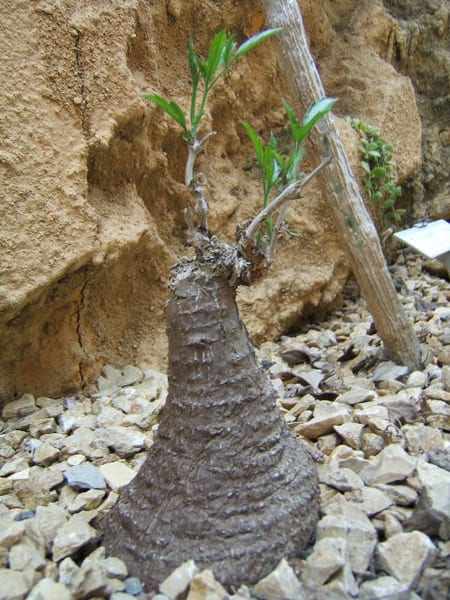
 © User:Qwertzy2 / CC BY-SA 3.0
Elephant-foot Grape Tree
Cyphostemma elephantopus is a caudex-forming succulent from the Vitaceae family, native to southwestern Madagascar. Its defining feature is a stout, swollen brown caudex that resembles an elephant's foot, giving the plant a sculptural, almost architectural presence. Each summer, vining stems emerge from the caudex and unfurl trifoliate, fleshy leaves, while the plant sheds its foliage during dormancy to reveal the caudex's striking form. Growth is slow and steady under cultivation, and the plant's character deepens with age. Considered suited to intermediate growers, it rewards patience with a uniquely rewarding caudiciform specimen.
View Elephant-foot Grape Tree encyclopedia →0% commission on your first sales!Register by September 30, 2026 and your first 2 plants are commission-free!
Grower Wanted!
List your plants on GrowerDirect and sell directly to customers nationwide!
6 Transparency Commitments from GrowerDirect
Our Grower disclose all key information for Caudex Plants listings, ensuring complete transparency on variety, origin, light needs, and difficulty.
- Variety Disclosed
- Real Plant Photos
- Color Details
- Origin Disclosed
- Light Requirements
- Difficulty Level
Browse all 146 varieties
Light Requirements
Difficulty Level
Verified growers wanted for Caudex Plants
Growers are signing up now ahead of launch. Subscribe to be notified when new listings go live.
Getting alerts is free with a member account. When new listings match your saved search, we'll notify you by email and in-app.
Browse other categories
Verified growers (preview)
Are you growing caudex plants?
Register as a grower and connect with buyers directly.
Apply as a growerElephant-foot Grape Tree key facts
- Growing Difficulty
- Intermediate
- Lifespan
- Long-lived perennial (little published data)
- Size
- Vines about 2 m in cultivation (over 20 m in habitat)
- Watering
- Regularly during the growing season
- Light & Placement
- Grow in sun to light shade, ideally with the leaves in sun and the caudex shaded. Avoid harsh midsummer sun.
- Watering
- Water generously in summer and keep dry in winter. It rots easily if watered heavily while leafless.
- Temperature & Overwintering
- Keep it warm in winter; an average of 12°C or more is safe. It can take lower temperatures briefly, but never frost; keep it dry and above 2°C.
- Soil & Repotting
- Use a very free-draining but reasonably rich mix with plenty of pumice. Repot every two years into pots with generous drainage holes.
- Pruning & Shaping
- Once established after repotting, cut the vines back to encourage branching and keep the caudex form.
- Pests & Cautions
- Listed in CITES Appendix II. Seed-raised plants form a proper caudex while cuttings rarely do, so seedlings are worth choosing.
About Elephant-foot Grape Tree
Cyphostemma elephantopus is a Madagascar-native caudiciform plant with a striking elephant-foot-shaped brown caudex, vining summer growth, and trifoliate leaves — a rewarding choice for intermediate growers.
7 things to know before growing Elephant-foot Grape Tree
1Light and airflow
During the growing season, keep the plant in a bright, well-ventilated spot. It tolerates strong direct sun fairly well, but shading it from harsh afternoon sun in midsummer helps prevent leaf scorch. When outdoor placement isn't possible, a bright windowsill with good airflow works well.
2When to water
Water thoroughly when the soil surface dries during the growing season, allowing the caudex to store moisture. Once the plant enters dormancy and drops its leaves, cut back watering to near-dry conditions. This clear wet-dry cycle is key to keeping the caudex healthy.
3Well-draining soil
A well-draining mix — either a dedicated caudiciform blend or one based on akadama and pumice — suits this plant well. Excess moisture retention can lead to root rot, so avoid soil that holds standing water in the pot. Keeping organic matter to a minimum also supports healthy roots.
4Best time to repot
Repot at the start of the growing season, just as new growth begins to stir. Loosen the root ball gently, trim away any damaged roots, and move up to a slightly larger pot. This plant is considered suited to intermediate growers partly because judging the right timing for repotting and watering takes some experience.
5Leaf drop in dormancy
As the plant enters dormancy, it sheds its leaves and stands as a bare caudex — this is a normal, healthy cycle rather than a sign of decline. There's no need to worry; simply hold back on watering and let it rest. The key is to wait patiently until new growth resumes after dormancy.
6Choosing by the caudex
When choosing a plant, look for a caudex that feels firm and well-rounded, without damage or excessive wrinkling. Since this is a long-lived perennial, the caudex's condition at the time of purchase can influence how easily it grows afterward. It's also worth checking the condition of the vines and leaves.
7How the vines grow
In the wild this species can climb more than 20 meters, but under cultivation the vines typically stay around 2 meters, making it manageable in a pot. Training the vines onto a stake or trellis helps keep the shape tidy, and overly long growth can be trimmed back as desired.
Frequently asked questions about Elephant-foot Grape Tree
- Q.Can beginners grow this plant?
- A.Cyphostemma elephantopus is generally considered suited to intermediate growers. Because watering and dormancy management require some judgment, it tends to be easier to succeed with once you already have some experience growing caudiciform plants.
- Q.The leaves dropped in winter — is it dying?
- A.Leaf drop during dormancy is a normal part of this plant's cycle, not a sign that it's dying. Simply reduce watering during this period and let the bare caudex rest quietly until new growth resumes.
- Q.How large does it grow?
- A.Under cultivation, the vines typically extend to around 2 meters. In its native habitat it can climb over 20 meters, but as a potted plant it stays far more compact and manageable with the help of a stake or trellis.
- Q.When is the best time to repot?
- A.The best time to repot is at the start of the growing season, just as new growth begins. Trim any damaged roots carefully and replant in well-draining soil in a slightly larger pot.
- Q.How long does this plant live?
- A.It's considered a long-lived perennial, though detailed data on its lifespan is limited. With consistent basic care around watering and dormancy, it can be enjoyed as a slow-growing specimen over many years.
Handy Growing Tools for Elephant-foot Grape Tree
Learn more about Elephant-foot Grape Tree in the encyclopedia
View Elephant-foot Grape Tree encyclopedia entry →
Care difficulty, size, origin and light needs — all basics covered.
More in this category
Can't find the plant you're looking for?
Post your wishes for free and growers with matching plants will contact you with introductions.