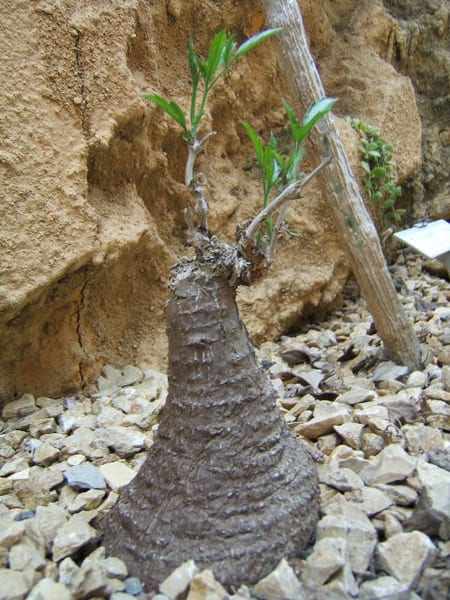
Source: Wikimedia Commons
Elephant-foot Grape Tree
IntermediateCyphostemma elephantopus
A caudiciform member of the grape family endemic to south-western Madagascar. From a stout brown caudex like an elephant's foot it sends out vining stems with fleshy three-lobed leaves in summer. CITES Appendix II.
About
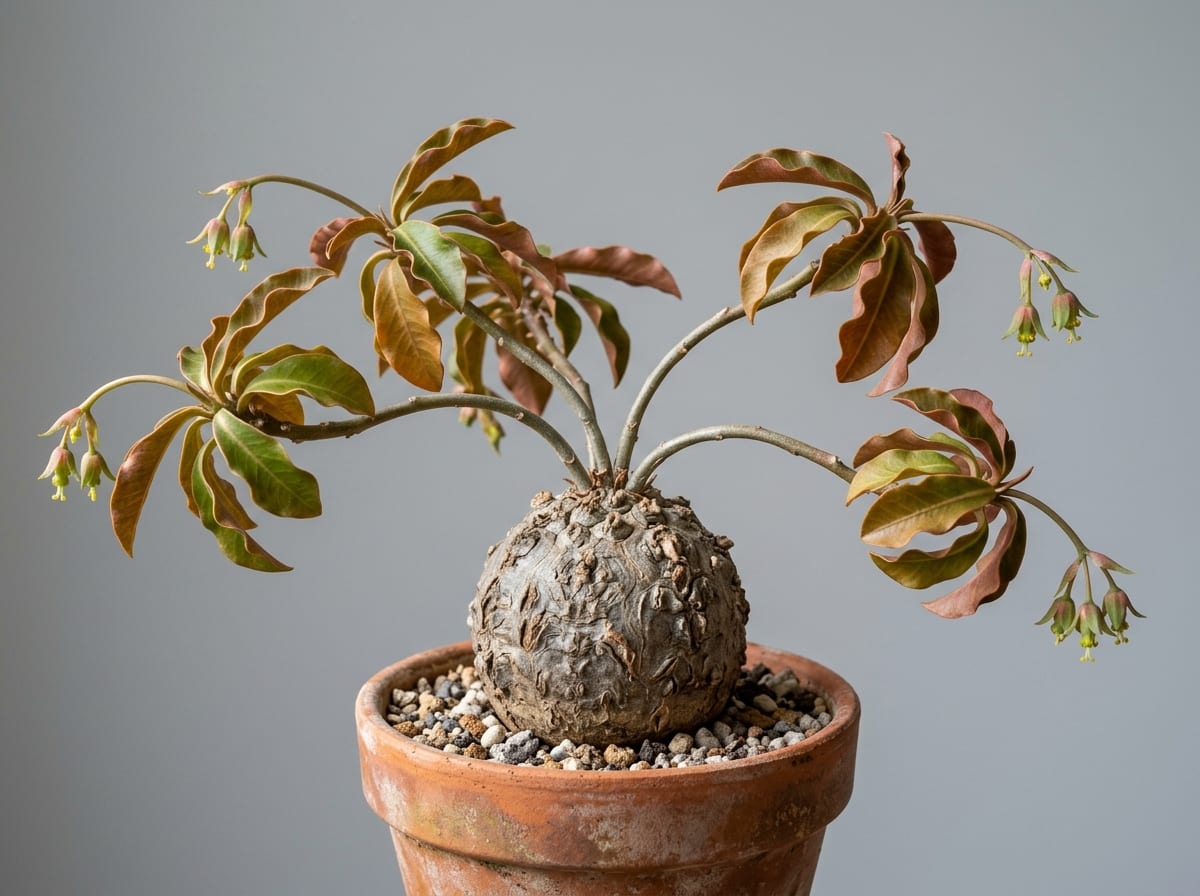
Cyphostemma elephantopus is a caudiciform member of the grape family endemic to south-western Madagascar (Toliara). It grows in subarid thicket and on dunes from sea level to about 500 m and was described by the French botanist Descoings in 1962. The above-ground caudex is flask-shaped and tapers upward; its smooth, dark brown woody surface shows ring-like markings and resembles a large rock. Succulent vining stems grow from the top, reaching about 2 m in cultivation and over 20 m in habitat. Leaves are fleshy, toothed and three-lobed and fall in winter; the small flowers are yellow-green. Together with the Madagascan C. laza it is listed in CITES Appendix II. In cultivation, generous water and fertiliser in the summer growing season speed growth somewhat, but it rots if kept too wet. A well-formed caudex develops from seed; cuttings rarely form one, so seed-raised plants are preferred for display. In Japan seedlings are sold by specialist caudex nurseries and on online auction sites, and seed is available.
Size of the Elephant-foot Grape Tree
The Elephant-foot Grape Tree grows to Vines about 2 m in cultivation (over 20 m in habitat).
Basic Info
Origin
South-western Madagascar (Toliara)
Lifespan
Long-lived perennial (little published data)
Size
Vines about 2 m in cultivation (over 20 m in habitat)
Temperature
10〜35℃
Watering & Fertilizer
Regularly during the growing season
Growing Tips
Light & Placement
Grow in sun to light shade, ideally with the leaves in sun and the caudex shaded. Avoid harsh midsummer sun.
Watering
Water generously in summer and keep dry in winter. It rots easily if watered heavily while leafless.
Temperature & Overwintering
Keep it warm in winter; an average of 12°C or more is safe. It can take lower temperatures briefly, but never frost; keep it dry and above 2°C.
Soil & Repotting
Use a very free-draining but reasonably rich mix with plenty of pumice. Repot every two years into pots with generous drainage holes.
Pruning & Shaping
Once established after repotting, cut the vines back to encourage branching and keep the caudex form.
Pests & Cautions
Listed in CITES Appendix II. Seed-raised plants form a proper caudex while cuttings rarely do, so seedlings are worth choosing.
Elephant-foot Grape Tree FAQ
QWhat is the growing difficulty level for Elephant-foot Grape Tree?
Intermediate. A variety suitable for intermediate growers. Requires some cultivation experience and knowledge of environment management. Pay careful attention to temperature and humidity control.
QHow large does Elephant-foot Grape Tree get?
The mature size of Elephant-foot Grape Tree is Vines about 2 m in cultivation (over 20 m in habitat). This may vary slightly depending on cultivation environment and individual differences.
QHow should I water and fertilize Elephant-foot Grape Tree?
Elephant-foot Grape Tree: watering & fertilizer — Regularly during the growing season. Aim for appropriate frequency and amount.
QWhat is the typical price for Elephant-foot Grape Tree?
The price of Elephant-foot Grape Tree varies significantly by variety, characteristics, size, and lineage. Please check GrowerDirect's price guide for the latest market information.
Last updated: September 23, 2026
References & Sources
Edited & verified by: GrowerDirect Editorial Team
The classifications, regulations, and growing data on this page are created and verified based on the primary information database below.
Taxonomy & Authority
Regulations & Conservation Status
Listed in CITES Appendix II (listed at species level). International trade needs an export permit, but no registration is required for transfers within Japan.
Sources: Species+ (CITES): Cyphostemma elephantopus
Regulations may change. Always verify the latest information with the relevant authorities.
Related Species
Find listings for this species
Related Articles
Complete Guide to Cyphostemma Care | Grape Family Caudex Plants with Attractive, Distinctive Caudexes
Explains how to care for distinctive caudex plants Cyphostemma such as bainesii and juttae. We present easy-to-understand tips on sunlight, watering, dormancy period management, and repotting techniques.
How to Grow Uncarina | Differences Between the Madagascar Endemic Species Grandidieri and Roeoesliana
An explanation of the appeal and cultivation methods of the Madagascar endemic caudex plant Uncarina genus. We introduce the differences between Uncarina grandidieri and roeoesliana, seedling cultivation, and repotting timing.
Complete Guide to Choosing Caudex Plants as Gifts | Recommended Varieties by Occasion and How to Include Care Notes
A guide to choosing caudex plants as gifts organized by occasion. We introduce how to select varieties based on the recipient's cultivation experience and how to include care notes for long-term enjoyment.
Diagnosing and Treating Poor Root Development in Caudex Plants | Causes and Solutions for Roots That Won't Emerge or Won't Grow
A detailed guide to root emergence problems in caudex plants. From diagnosis methods to solutions, practical techniques for promoting healthy root development are introduced.
🩺 Common diseases
Can't find the plant you're looking for?
Post your wishes for free and growers with matching plants will contact you with introductions.