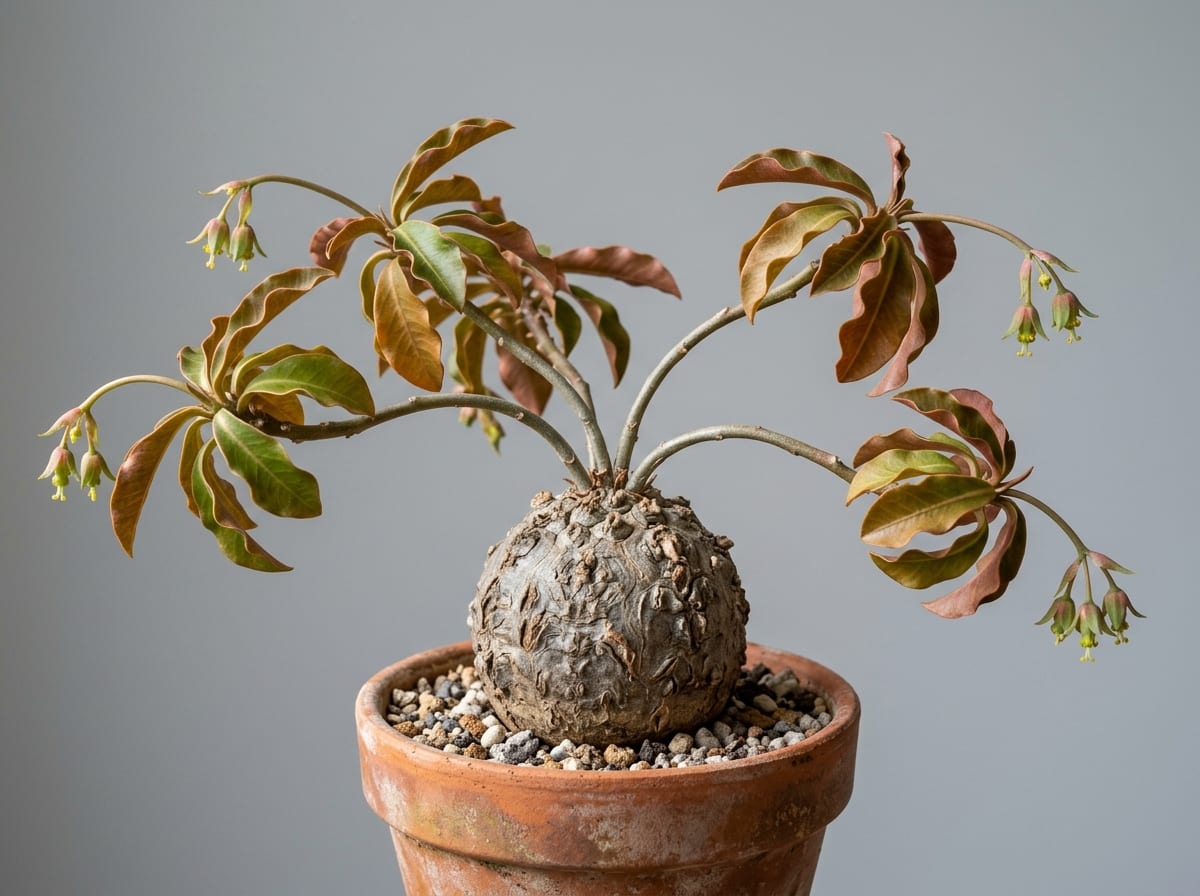
AI-generated image
Operculicarya hyphaenoides
IntermediateOperculicarya hyphaenoides
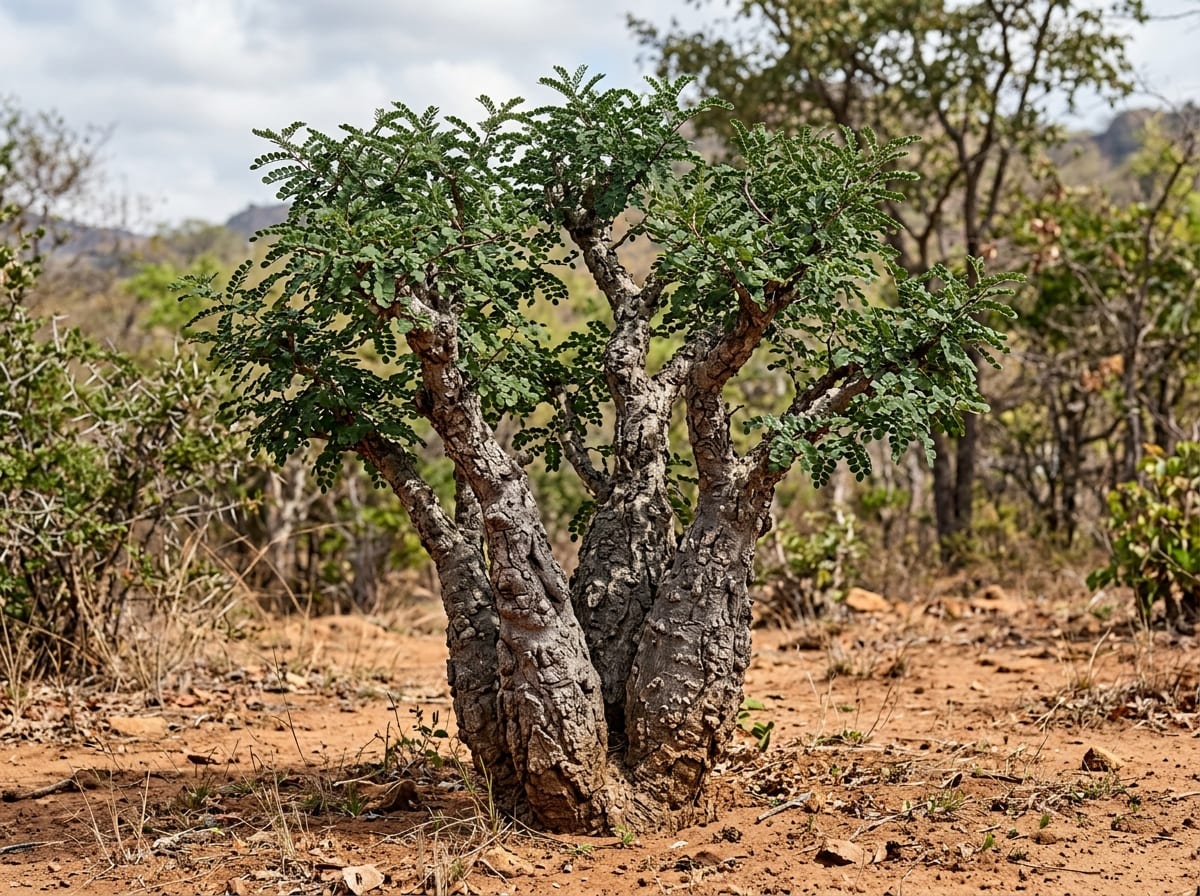
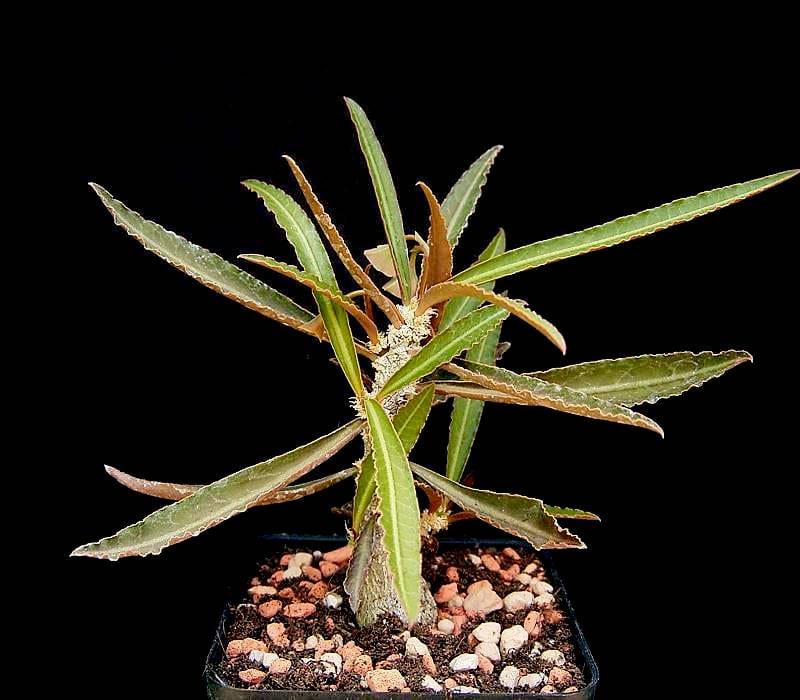
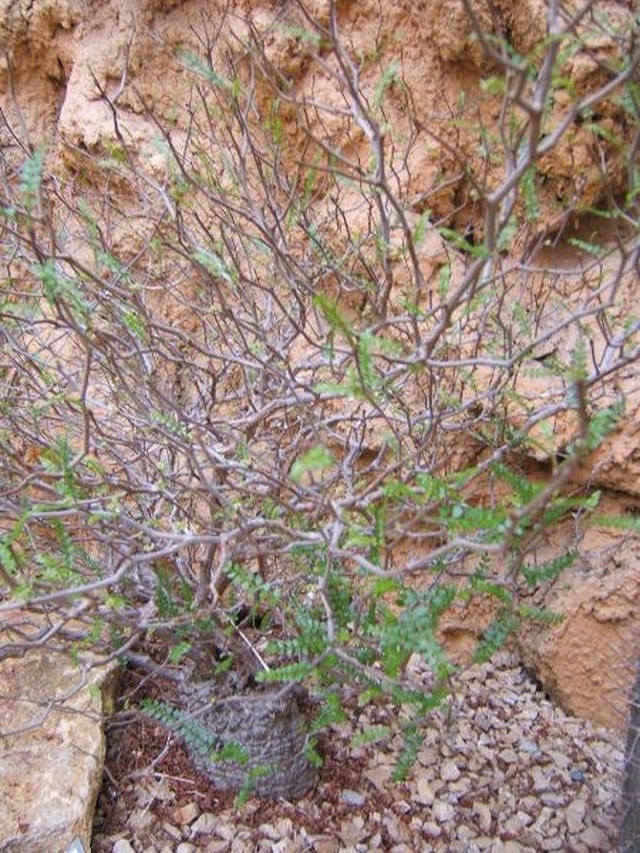
A south-western Madagascan Operculicarya with several thick, warty trunks from one base and finely divided, densely hairy pinnate leaves. Its rounded, squarish leaflets and overall hairiness set it apart from O. pachypus and O. decaryi.
About
Operculicarya hyphaenoides is a deciduous shrub or small tree of the cashew family (Anacardiaceae) endemic to Toliara province in south-western Madagascar. It grows in subarid thicket on limestone from sea level to about 500 m, notably around Lake Tsimanampetsotsa; it is known from five locations with an area of occupancy of about 54 km². Nomadic grazing, commercial logging and wildfire destroy its habitat, and the IUCN Red List category is Endangered. Several thick, gnarled trunks rise from a common base to 1.5 m, occasionally 3 m, and up to 40 cm across, with bumpy, warty bark; its bonsai-like look appeals to collectors. Leaves, three to five per short shoot, are odd-pinnate with 11-20 pairs of rounded-rectangular leaflets about 4 mm long and 2 mm wide with truncate tips, and are densely hairy throughout. They fall in drought, and the tiny flowers are dark red. O. pachypus and O. decaryi resemble each other more closely; this species is told apart by its hairy foliage and leaflet shape. In Japan it is the most traded Operculicarya after pachypus and decaryi, with seedlings sold by specialist nurseries and on online auction sites.
Size of the Operculicarya hyphaenoides
The Operculicarya hyphaenoides grows to 1.5 m tall (occasionally 3 m); trunks up to 40 cm across.
Basic Info
Origin
South-western Madagascar (Toliara province)
Lifespan
Long-lived woody plant (little published data)
Size
1.5 m tall (occasionally 3 m); trunks up to 40 cm across
Temperature
10〜35℃
Watering & Fertilizer
Regularly during the growing season
Growing Tips
Light & Placement
Grow in a warm spot in full sun to light shade. It is fairly easy both indoors and outdoors.
Watering
In leaf it needs regular water like any tree, and in a well-drained mix it takes plenty in hot summers. Indoors keep it on the dry side to avoid rot, and reduce water in winter dormancy.
Temperature & Overwintering
From spring to autumn nights of 15°C or more and days of 25-45°C suit it; in winter keep nights above 10°C and days above 18°C. It needs a dry, cool season to flower.
Soil & Repotting
Use a gritty, porous mix at least half inorganic, with excellent drainage. Repot about every three years.
Propagation
Propagate by seed, cuttings or root pieces. Soak seed in warm water for 24 hours before sowing; it germinates erratically over about six months. Seed-grown plants develop better-looking roots.
Pests & Cautions
As an endangered species with a small range, choose nursery-raised seedlings over wild-collected plants to reduce pressure on wild populations.
Operculicarya hyphaenoides FAQ
QWhat is the growing difficulty level for Operculicarya hyphaenoides?
Intermediate. A variety suitable for intermediate growers. Requires some cultivation experience and knowledge of environment management. Pay careful attention to temperature and humidity control.
QHow large does Operculicarya hyphaenoides get?
The mature size of Operculicarya hyphaenoides is 1.5 m tall (occasionally 3 m); trunks up to 40 cm across. This may vary slightly depending on cultivation environment and individual differences.
QHow should I water and fertilize Operculicarya hyphaenoides?
Operculicarya hyphaenoides: watering & fertilizer — Regularly during the growing season. Aim for appropriate frequency and amount.
QWhat is the typical price for Operculicarya hyphaenoides?
The price of Operculicarya hyphaenoides varies significantly by variety, characteristics, size, and lineage. Please check GrowerDirect's price guide for the latest market information.
Last updated: September 23, 2026
References & Sources
Edited & verified by: GrowerDirect Editorial Team
The classifications, regulations, and growing data on this page are created and verified based on the primary information database below.
Taxonomy & Authority
Regulations & Conservation Status
Listed in CITES Appendix II (listed at species level since 2010). International trade needs an export permit, but no registration is required for transfers within Japan. The IUCN Red List category is Endangered.
Sources: Species+ (CITES): Operculicarya hyphaenoides / IUCN Red List category via GBIF: Operculicarya hyphaenoides
Regulations may change. Always verify the latest information with the relevant authorities.
Related Species
Find listings for this species
Related Articles
How to Care for Operculicarya pachypus | Pruning Time, Watering, and Root Development Management
A complete guide to caring for Operculicarya pachypus, the king of caudiciform plants. Covering pruning timing (May–July), use of wound sealant, root development management and distinguishing between rot and callus formation, watering, differences between wild-collected and seed-grown specimens, and winter dormancy.
Complete Operculicarya Species Guide | Characteristics and Care Methods for Pachypus, Decaryi, Borealis, and Paucifolia
Comprehensive guide to all major Operculicarya species (Pachypus, Decaryi, Borealis, and Paucifolia). Compares each species' morphological characteristics, growth rate, difficulty level, cultivation methods in Japan, and price ranges, providing systematic information to help with variety selection.
How to Grow Uncarina | Differences Between the Madagascar Endemic Species Grandidieri and Roeoesliana
An explanation of the appeal and cultivation methods of the Madagascar endemic caudex plant Uncarina genus. We introduce the differences between Uncarina grandidieri and roeoesliana, seedling cultivation, and repotting timing.
Complete Guide to Choosing Caudex Plants as Gifts | Recommended Varieties by Occasion and How to Include Care Notes
A guide to choosing caudex plants as gifts organized by occasion. We introduce how to select varieties based on the recipient's cultivation experience and how to include care notes for long-term enjoyment.
🩺 Common diseases
Can't find the plant you're looking for?
Post your wishes for free and growers with matching plants will contact you with introductions.