Source: Wikimedia Commons
Euphorbia pachypodioides
AdvancedEuphorbia pachypodioides
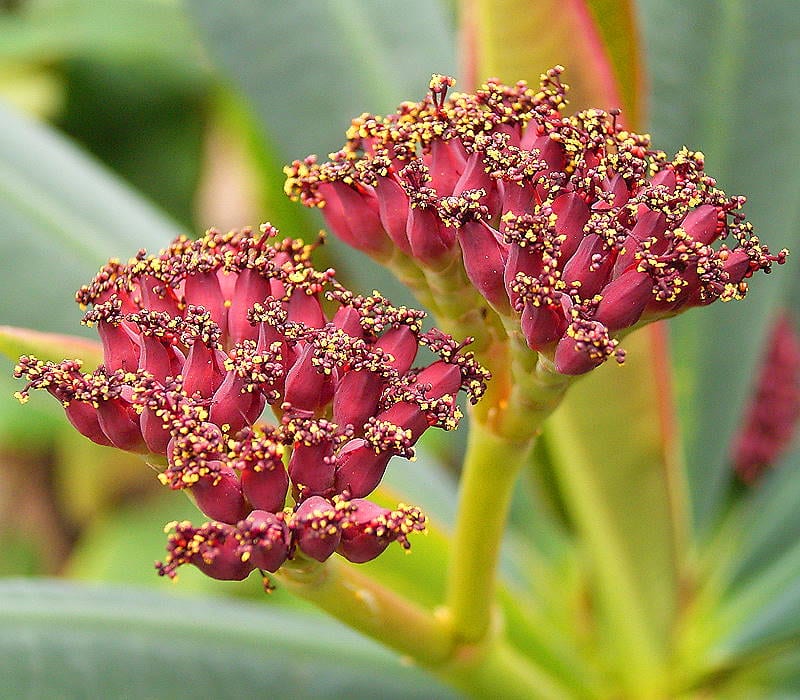
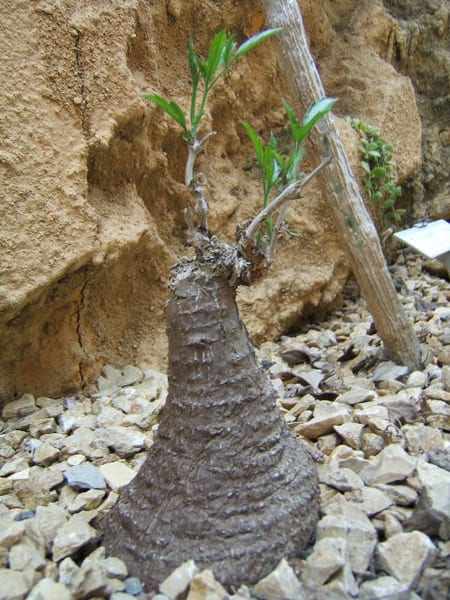
A Euphorbia with a Pachypodium-like columnar stem topped by large leaves, glaucous blue-green above and red-violet beneath. Flowers wrapped in dark purple bracts open before the leaves.
About
Euphorbia pachypodioides is a succulent spurge endemic to northern Madagascar, known only from steep rock faces in the tsingy limestone of the Ankarana reserve. Its area of occupancy is only 7.8 km², threatened by habitat degradation, fire and collection for horticulture; the IUCN Red List category is Critically Endangered. It is a usually unbranched subshrub 35-50 (rarely 70) cm tall with a columnar stem 5-8 cm thick at the base, green to dark purple with a bluish tint, spiral leaf scars and reddish-brown spines about 1.5 cm long. Leaves are elliptic, 10-12 cm long and 3-5 cm wide, glaucous green above and red-violet beneath; they fall in winter and new leaves appear from late winter. Several inflorescences at the stem tip carry many small flowers hidden in dark purple bracts, opening at the end of the dry season before the leaves; it is self-fertile. In Japan both seedlings and wild-collected plants are sold through online shops and auction sites.
Size of the Euphorbia pachypodioides
The Euphorbia pachypodioides grows to 35-50 cm tall (rarely 70 cm), stem 5-8 cm thick.
Basic Info
Origin
Northern Madagascar (Ankarana limestone tsingy)
Lifespan
Slow-growing and long-lived (little published data)
Size
35-50 cm tall (rarely 70 cm), stem 5-8 cm thick
Temperature
10〜35℃
Watering & Fertilizer
Sparingly in the growing season
Growing Tips
Light & Placement
It likes a bright, warm, sunny spot and tolerates partial shade. Plants grown in shade scorch badly if moved suddenly into sun, so acclimatise gradually.
Watering
The growing season is short; water well during it. Excess water when not growing kills it quickly, so keep it dry in winter.
Temperature & Overwintering
It is tender; keep it at 12°C or above in winter and protect from frost.
Soil & Repotting
Use a mineral, very free-draining mix. Once established it is content in the same pot for years, so repot sparingly.
Propagation
It is self-fertile; seed sown in spring or summer germinates in about three weeks, and first-year seedlings are fairly easy. It can also be grafted.
Pests & Cautions
Like all Euphorbia, its white latex irritates skin and eyes. Wear gloves when cutting or repotting and keep it away from eyes and mouth. As a critically endangered species with a tiny range, choose nursery-raised seedlings over wild-collected plants.
Euphorbia pachypodioides FAQ
QWhat is the growing difficulty level for Euphorbia pachypodioides?
Advanced. A variety suitable for advanced growers. Requires advanced cultivation techniques and specialized equipment, with careful environmental adjustments needed.
QHow large does Euphorbia pachypodioides get?
The mature size of Euphorbia pachypodioides is 35-50 cm tall (rarely 70 cm), stem 5-8 cm thick. This may vary slightly depending on cultivation environment and individual differences.
QHow should I water and fertilize Euphorbia pachypodioides?
Euphorbia pachypodioides: watering & fertilizer — Sparingly in the growing season. Aim for appropriate frequency and amount.
QWhat is the typical price for Euphorbia pachypodioides?
The price of Euphorbia pachypodioides varies significantly by variety, characteristics, size, and lineage. Please check GrowerDirect's price guide for the latest market information.
Last updated: September 23, 2026
References & Sources
Edited & verified by: GrowerDirect Editorial Team
The classifications, regulations, and growing data on this page are created and verified based on the primary information database below.
Taxonomy & Authority
Regulations & Conservation Status
Listed in CITES Appendix II (covered by the listing of succulent Euphorbia species). International trade needs an export permit, but no registration is required for transfers within Japan. The IUCN Red List category is Critically Endangered.
Sources: Species+ (CITES): Euphorbia pachypodioides / IUCN Red List category via GBIF: Euphorbia pachypodioides
Regulations may change. Always verify the latest information with the relevant authorities.
Related Species
Find listings for this species
Related Articles
Top 15 Popular Euphorbia Ranking 2026: Valida, Obesa, White Ghost & More Compared
A ranking guide to popular Euphorbia species. Compare 15 species favored by collectors—including Valida, Obesa, White Ghost, Lactea, Neriifolia, and Suzannae—by characteristics, ease of care, and price range.
How to Grow Uncarina | Differences Between the Madagascar Endemic Species Grandidieri and Roeoesliana
An explanation of the appeal and cultivation methods of the Madagascar endemic caudex plant Uncarina genus. We introduce the differences between Uncarina grandidieri and roeoesliana, seedling cultivation, and repotting timing.
Complete Guide to Choosing Caudex Plants as Gifts | Recommended Varieties by Occasion and How to Include Care Notes
A guide to choosing caudex plants as gifts organized by occasion. We introduce how to select varieties based on the recipient's cultivation experience and how to include care notes for long-term enjoyment.
Diagnosing and Treating Poor Root Development in Caudex Plants | Causes and Solutions for Roots That Won't Emerge or Won't Grow
A detailed guide to root emergence problems in caudex plants. From diagnosis methods to solutions, practical techniques for promoting healthy root development are introduced.
🩺 Common diseases
Can't find the plant you're looking for?
Post your wishes for free and growers with matching plants will contact you with introductions.