Top 15 Popular Euphorbia Ranking 2026: Valida, Obesa, White Ghost & More Compared
A ranking guide to popular Euphorbia species. Compare 15 species favored by collectors—including Valida, Obesa, White Ghost, Lactea, Neriifolia, and Suzannae—by characteristics, ease of care, and price range.
Key Takeaways
A ranking guide to popular Euphorbia species. Compare 15 species favored by collectors—including Valida, Obesa, White Ghost, Lactea, Neriifolia, and Suzannae—by characteristics, ease of care, and price range.
Related Species
What is Euphorbia?
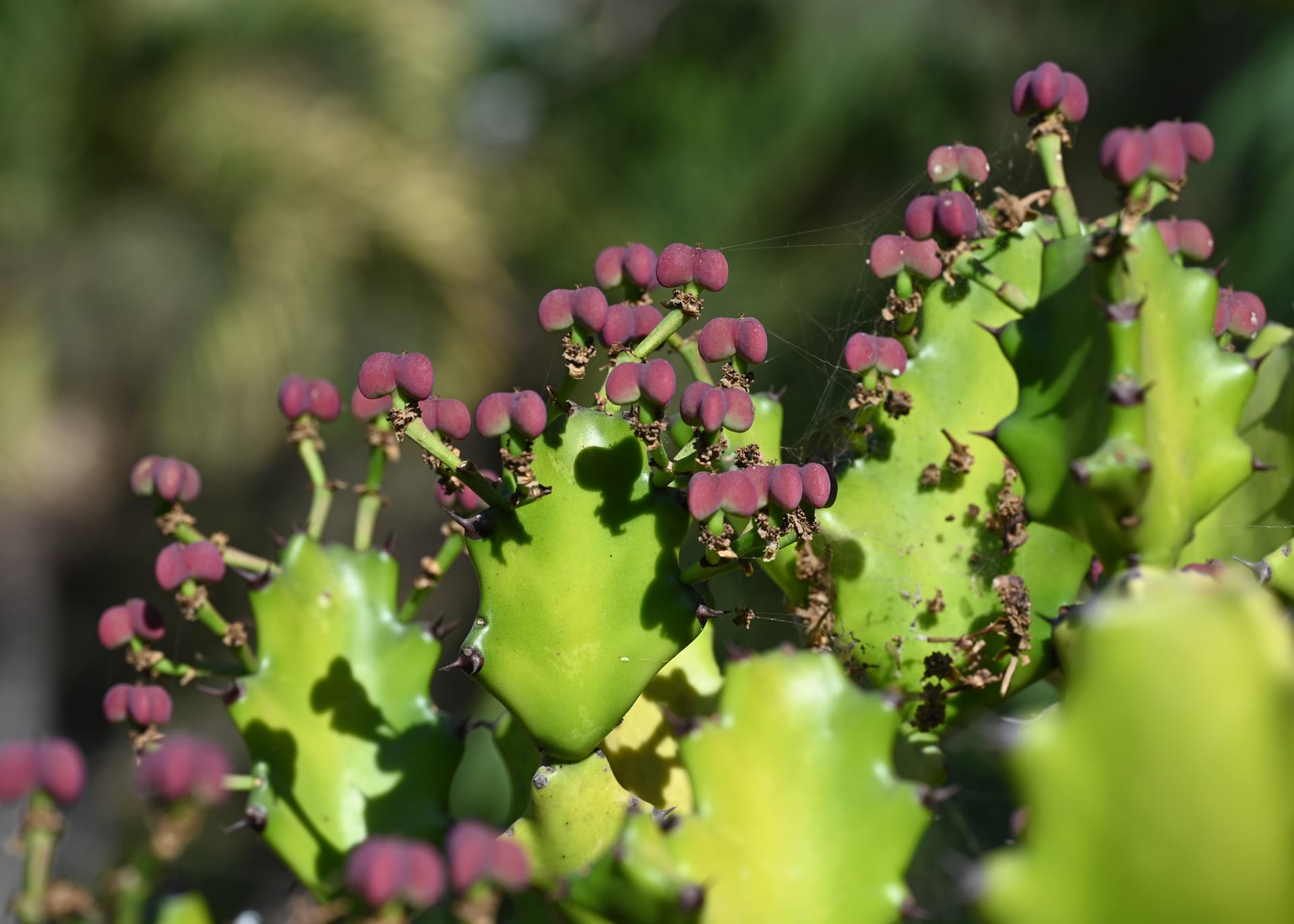
Euphorbia (Euphorbia, family Euphorbiaceae) is one of the world's largest plant genera, with over 2,000 known species. It encompasses diverse forms ranging from succulent, cactus-like varieties to popular ornamental foliage plants like poinsettia.
In Japan, Euphorbia is often discussed in the context of caudiciform and succulent plant collecting. Its distinctive forms and ease of care make it highly popular among collectors.
One important caution: white latex sap. The white liquid that oozes from cut surfaces has skin-irritating and toxic properties. Always wear gloves when handling and avoid contact with eyes (see the FAQ section at the end of this article for remedies).
Quick Comparison of Top Species (2026 Edition)
Below is a side-by-side comparison of all 15 species by type, ease of care, price range, and recommended collector level. Prices fluctuate based on availability; use these as guidelines.
| Rank | Species Name | Type | Ease of Care | Price Range | Best For |
|---|---|---|---|---|---|
| 1 | Valida | Spherical (striped ball) | ★★★★ | ¥5,000–¥50,000+ | Beginner to collector |
| 2 | Obesa | Perfect sphere | ★★★★ | ¥3,000–¥30,000 | Beginner |
| 3 | White Ghost | Columnar (white form) | ★★★ | ¥3,000–¥20,000 | Beginner to intermediate |
| 4 | Neriifolia | Columnar to tree-like | ★★★★★ | ¥1,000–¥10,000 | Beginner |
| 5 | Suzannae | Clustering globular | ★★★ | ¥3,000–¥15,000 | Intermediate |
| 6 | Groenewaldii | Caudiciform + branches | ★★★ | ¥10,000–¥50,000+ | Intermediate to advanced |
| 7 | Enopla | Clustered columnar | ★★★★ | ¥2,000–¥10,000 | Beginner |
| 8 | Francoisii | Small caudiciform | ★★★ | ¥10,000–¥100,000+ | Intermediate to advanced |
| 9 | Lactea | Columnar, crested form | ★★★★ | ¥2,000–¥15,000 | Beginner to intermediate |
| 10 | Tirucalli | Shrubby form | ★★★★★ | ¥500–¥3,000 | Beginner |
| 11 | Stellata (Flying Dragon) | Flat caudiciform | ★★★ | ¥5,000–¥30,000 | Intermediate |
| 12 | Pseudoglobosa | Clustering globular | ★★★ | ¥3,000–¥10,000 | Intermediate |
| 13 | Horrida | Columnar (spiny) | ★★★★ | ¥2,000–¥20,000 | Beginner to intermediate |
| 14 | Polygona | Multi-angled columnar | ★★★★ | ¥2,000–¥15,000 | Beginner to intermediate |
| 15 | Symmetrica | Spherical | ★★★★ | ¥5,000–¥30,000 | Intermediate |
Top 15 Popular Species Ranking
Rank 1: Euphorbia valida
Recommendation: ★★★★★
A signature "striped ball" type with a spherical to cylindrical body marked by prominent vertical stripes. Ranked alongside Obesa as the #1 most popular, Valida is the quintessential entry point for collectors.
| Item | Details |
|---|---|
| Origin | South Africa (Karoo region) |
| Form | Spherical to ovoid, 5–15 cm diameter |
| Growth Rate | Slow (1–2 cm/year) |
| Dioecious | Yes |
| Ease of Care | ★★★★ (Easy) |
| Price Range | ¥5,000–¥50,000+ |
Key Points: Often confused with Obesa, but Valida is more elongated, has thicker stripes, and retains a prominent dried flower bract at the apex. Seed propagation is common domestically, making this species increasingly accessible.
Rank 2: Euphorbia obesa
Recommendation: ★★★★★
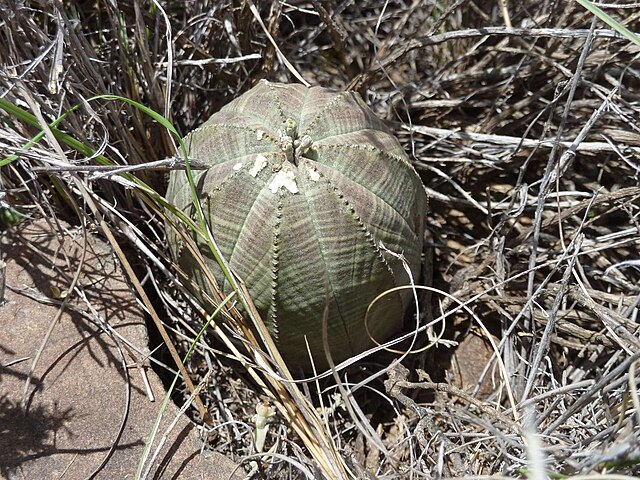
A nearly perfect sphere with fine vertical stripes—the iconic "baseball" type of succulents. Obesa rivals Valida in popularity and is celebrated as nature's "living sculptural sphere."
| Item | Details |
|---|---|
| Origin | South Africa (Eastern Cape) |
| Form | Perfect sphere, 5–12 cm diameter |
| Growth Rate | Extremely slow |
| Dioecious | Yes |
| Ease of Care | ★★★★ (Easy) |
| Price Range | ¥3,000–¥30,000 |
Key Points: Maintaining a perfect sphere requires even light distribution. One-sided light causes one-directional growth. Domestic seed-grown stock is abundant and price-stable. See the Obesa encyclopedia page for detailed cultivation notes.
Rank 3: Euphorbia lactea 'White Ghost'
Recommendation: ★★★★☆
A white-form variant of E. lactea. The distinctive pale, columnar stem is prized both as a specimen plant and interior decor.
| Item | Details |
|---|---|
| Form | Columnar, 50 cm to 1+ m tall |
| Chlorophyll | White form (chlorophyll-deficient) |
| Ease of Care | ★★★ (Moderate) |
| Price Range | ¥3,000–¥20,000 |
Key Points: Reduced photosynthetic capacity makes this sensitive to direct sun. Manage in bright, indirect light. Growth is slow, but its striking form drives its popularity.
Rank 4: Euphorbia neriifolia (Caladon Spurge)
Recommendation: ★★★★☆
A long-established Japanese favorite since the Meiji era. This semi-succulent species bears leaves while developing a thick, fleshy stem.
| Item | Details |
|---|---|
| Origin | India and Southeast Asia |
| Form | Columnar to tree-like, 1–3 m tall |
| Ease of Care | ★★★★★ (Very easy) |
| Price Range | ¥1,000–¥10,000 |
Key Points: Excellent heat tolerance; thrives even under summer's intense sunlight. Reasonably shade-tolerant for indoor cultivation. An ideal beginner species.
Rank 5: Euphorbia susannae
Recommendation: ★★★★☆
Small, dense green tubercles densely cluster into a unique, spherical form. Its endearing, bumpy appearance sustains strong collector interest.
| Item | Details |
|---|---|
| Origin | South Africa |
| Form | Globular, 5–10 cm diameter, multiple shoots |
| Ease of Care | ★★★ (Moderate) |
| Price Range | ¥3,000–¥15,000 |
Rank 6: Euphorbia groenewaldii
Recommendation: ★★★★☆
A rare species endemic to a limited region of Limpopo Province, South Africa. Its twisted, three-ridged branches radiating from a caudiciform base create its distinctive charm.
| Item | Details |
|---|---|
| Origin | South Africa (Limpopo Province) |
| Rarity | High |
| Ease of Care | ★★★ (Moderate) |
| Price Range | ¥10,000–¥50,000+ |
Rank 7: Euphorbia enopla (Japanese: Kōsaigaku)
Recommendation: ★★★☆☆
A South African columnar Euphorbia with Japanese common name "Kōsaigaku." Characterized by long, reddish spines that intensify in color with stronger light; forms clusters as it matures.
| Price Range | ¥2,000–¥10,000 |
|---|---|
| Ease of Care | ★★★★ (Easy) |
Rank 8: Euphorbia francoisii
Recommendation: ★★★★☆
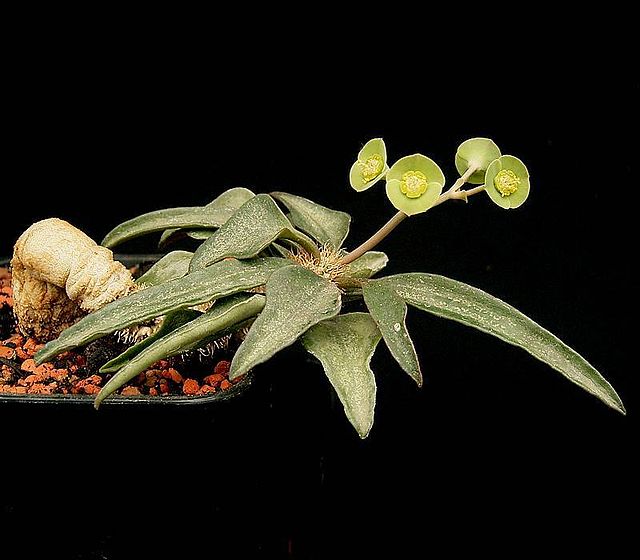
A small caudiciform Euphorbia from Madagascar. It produces beautifully patterned leaves from the caudex, making it a rare collector's item. Individual variation in leaf color and markings adds to its appeal; select stock commands premium prices.
| Origin | Madagascar |
|---|---|
| Characteristics | Caudiciform with colorful patterned foliage |
| Price Range | ¥10,000–¥100,000+ |
Rank 9: Euphorbia lactea
Recommendation: ★★★☆☆
The species form of White Ghost. Green margins frame a white central band; the fan-shaped, crested (cristata) form is equally popular. Grafted crested material marketed as "Maharaja" appears commonly in garden centers.
Rank 10: Euphorbia tirucalli (Pencil Cactus)
Recommendation: ★★★☆☆
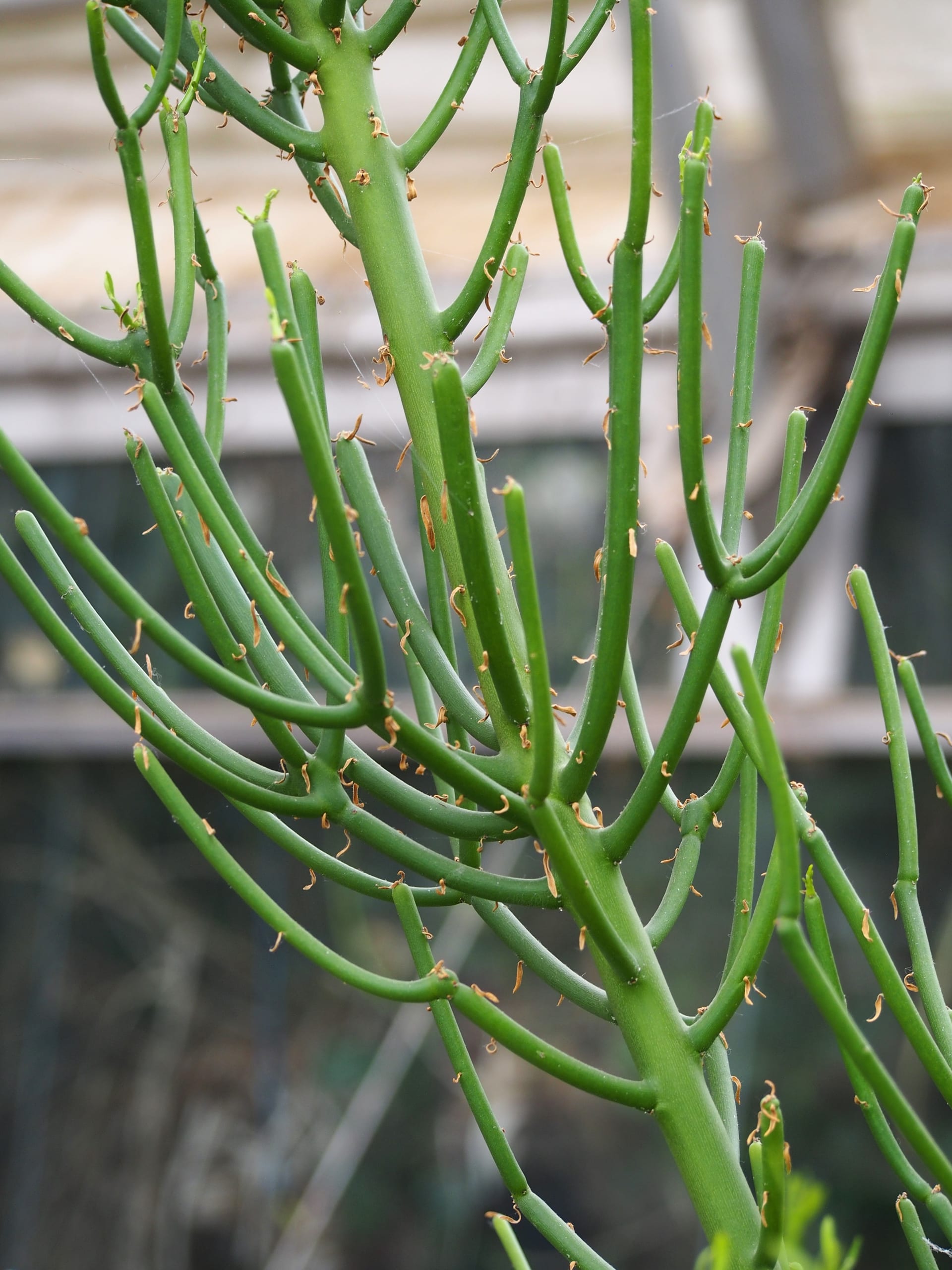
Sold as "Fire Stick" or "Milk Bush," this cultivar is especially popular for stems that blaze red from autumn through winter.
| Ease of Care | ★★★★★ (Very easy) |
|---|---|
| Price Range | ¥500–¥3,000 |
Rank 11: Euphorbia stellata (Flying Dragon)
Recommendation: ★★★☆☆
Native to South Africa. Its star-shaped branches radiate outward from a flattened caudiciform base, earning the Japanese common name "Flying Dragon." During cultivation, bury the caudex to encourage growth; expose it during the finishing stage to maximize ornamental appeal. See the Stellata encyclopedia page for details.
Rank 12: Euphorbia pseudoglobosa
Recommendation: ★★★☆☆
A small, spherical species resembling Suzannae, with clustered round stems. The absence of spines adds to its handling ease.
Rank 13: Euphorbia horrida
Recommendation: ★★★★☆
A columnar species lined with sharp spines (technically dried flower bracts). "Zebra Horrida" and other select cultivars are also popular. Hardy and easy to grow, making it an ideal entry point for columnar Euphorbias.
Rank 14: Euphorbia polygona
Recommendation: ★★★☆☆
A multi-angled columnar form resembling Horrida closely. Recent taxonomic views classify Polygona as a variety of Horrida; garden center stock often conflates the two.
Rank 15: Euphorbia symmetrica
Recommendation: ★★★☆☆
A slightly flattened spherical form resembling Obesa; sometimes treated as E. obesa subsp. symmetrica. The presence of dried flower bracts at the apex distinguishes it from Obesa.
Selection Guide by Form Type
- Spherical (Obesa, Valida, Symmetrica): Space-efficient for windowsills. Slow growth and form stability come at the cost of light sensitivity—once etiolated, damage is permanent. Placement is critical.
- Columnar (Horrida, Polygona, Enopla, Lactea): High visual impact with potential for clustering and large specimen development. Most are hardy and beginner-friendly.
- Caudiciform (Stellata, Francoisii, Groenewaldii): The centerpiece of caudex-plant enthusiasm. Many require winter warmth. See Popular Caudiciform Plant Ranking for cross-genus comparisons.
- Shrubby/Colorleaf (Tirucalli, Neriifolia): Affordable, fast-growing, and ideal for cultivation beginners. Perfect for learning watering rhythm.
Budget-Based Recommendations
- Up to ¥3,000: Tirucalli, Neriifolia, Enopla seedlings. Hardy, failure-resistant, and perfect for mastering watering techniques.
- Up to ¥10,000: Obesa seed-grown stock, young Valida, Horrida. This price tier unlocks the genuine pleasure of nurturing spherical forms.
- ¥10,000 and above: Selected Francoisii stock, Groenewaldii, large or crested Valida. Individual selection becomes part of the collecting experience.
General Euphorbia Care
Growth Type and Year-Round Care Calendar
Most succulent Euphorbias are summer growers.
| Season | Location | Watering |
|---|---|---|
| Spring (Mar–May) | Gradual acclimation to outdoor direct sun | 2–3 days after soil dries |
| Summer (Jun–Sep) | Outdoors; prioritize air circulation | When soil dries; watch for rot |
| Autumn (Oct–Nov) | Ensure adequate light | Gradually reduce frequency |
| Winter (Dec–Feb) | Bright indoor windowsill; 5°C+ | Once monthly or withhold completely |
Soil Mix
Drainage is paramount. Standard formulas: Akadama:Pumice = 6:4, or Pumice:Akadama = 5:5.
Watering
Spherical and caudiciform forms are exceptionally drought-tolerant. Spring/autumn: water 2–3 days after soil dries. Summer/winter: 1–2 times monthly.
Light
Most prefer direct sun. For indoor management, supplement with plant-growth LEDs. White forms like White Ghost require indirect light.
Repotting
Optimal timing: early spring (start of growth period). Repot every 1–2 years by gently breaking up the root ball and refreshing soil. Wear gloves when handling cut roots—they exude sap. Rinse cut surfaces, dry, then pot up.
Propagation (Seed and Cuttings)
- Seeds: Species like Obesa and Valida (dioecious) require both male and female plants. Seeds explosively dehisce when mature; contain them in tea strainers or cloth bags for collection.
- Cuttings: Suitable for columnar and shrubby types. Rinse latex from cut branch ends, allow the cut surface to dry 1–7 days, then insert into dry soil.
Caution: Latex Sap
All species exude white sap. Avoid skin and eye contact; always wear gloves. Keep away from pets that might chew or nibble.
Frequently Asked Questions (FAQ)
Q. How do I tell Valida and Obesa apart?
Valida retains a prominent dried flower bract at the apex and has a slightly elongated form with thicker stripes. Obesa's flower bract drops cleanly, leaving a smooth, perfectly spherical surface. When in doubt, check the apex for the flower bract—it's the surest identifier.
Q. What should I do if latex gets on my skin?
Wash immediately and thoroughly with soap and running water. Those with sensitive skin should exercise special caution. If sap contacts your eye, flush thoroughly with water; seek medical attention if pain or irritation persists.
Q. Can I grow these with dogs or cats at home?
The latex is toxic, so if your pets chew or nibble, Euphorbia is best avoided. If you must grow one, place it on high shelves or hanging planters. For pet-safe plant options, see Guide to Foliage Plants Safe for Pets.
Q. What is the minimum winter temperature?
South African spherical and columnar types tolerate down to roughly 5°C. Madagascar caudiforms like Francoisii are safer above 10°C. Winter hardiness improves if you water sparingly or withhold water entirely during dormancy.
Q. What are "crested" (cristata) and "monstrose" forms?
Abnormal growth at the apex produces ribbon-like or irregular shapes. Crested E. lactea grafted specimens marketed as "Maharaja" are treated as one-of-a-kind collectibles and command premium prices.
Q. Can etiolation (stretching) be reversed?
Once a plant etiolates, the damaged portion won't recover. Increase light going forward to check future growth, or for columnar species, perform a basal cut and re-root the cutting. Always wear gloves and wash the cut surface when pruning.
Summary
Euphorbia encompasses everything from approachable entry species like Valida and Obesa to high-value rare forms like Francoisii. Start your collection with Obesa or Valida, then gradually explore more distinctive species. Explore the full genus in the Euphorbia encyclopedia, and trends in caudiciform popularity at Popular Caudiciform Plant Ranking.
At GrowerDirect, you can purchase succulents and caudiciform plants listed by growers directly, and you can also consult the sellers about how to grow them. Listings change with the season, so check back from time to time if a particular species catches your eye.