Source: Wikimedia Commons
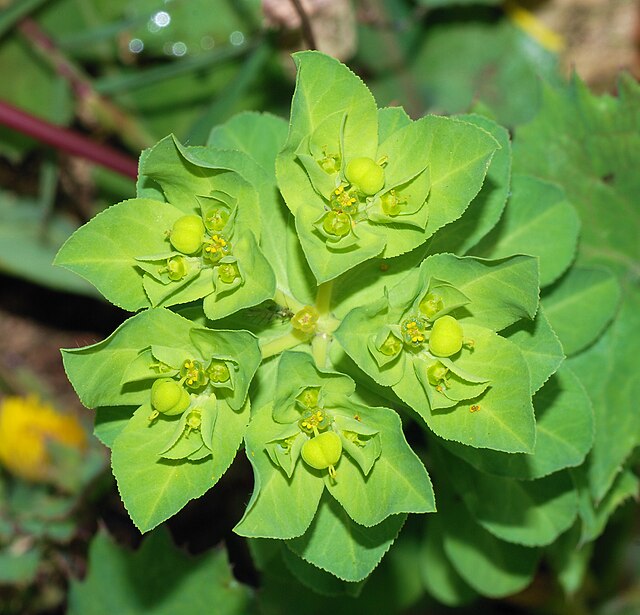
Euphorbia
IntermediateMany resemble cacti but are entirely different family. Obesa and Horrida popular. Toxic white latex requires careful handling.
About
Euphorbia is a vast and extraordinarily diverse genus of over 2,000 species in the family Euphorbiaceae. Among these, numerous succulent species have evolved in Africa, Madagascar, the Arabian Peninsula, and the Americas, many of which closely resemble cacti in form despite being unrelated. Notable succulent examples include the spherical E. obesa, the ribbed columnar E. horrida, and the branching candelabra-like E. trigona. A defining characteristic of all Euphorbias is a milky white latex sap produced when tissue is damaged; this sap is caustic and can irritate skin and mucous membranes, requiring careful handling. Cultivation requirements vary by species, but most succulent Euphorbias prefer bright light, excellent drainage, and sparing watering. Overwatering is the most common cause of failure. Propagation is by cuttings (after allowing the latex to seal) or from seed.
Source: Wikipedia (CC BY-SA 4.0)
Lifespan of the Euphorbia
The Euphorbia lives 10+ years.
Size of the Euphorbia
The Euphorbia grows to 5cm-1m (varies by variety).
Temperature & humidity for the Euphorbia
The ideal temperature for the Euphorbia is 5〜35℃.
Basic Info
Origin
Africa, Madagascar, Arabian Peninsula, and the Americas (widespread)
Lifespan
10+ years
Size
5cm-1m (varies by variety)
Temperature
5〜35℃
Humidity
30〜50%
Growing Tips
Light & Placement
Loves sun and needs good airflow. Outdoors choose an airy sunny spot; indoors a bright windowsill.
Watering
Water sparingly, only once the soil dries. It dislikes wet soil and rots easily, so keep it on the dry side.
Temperature & Overwintering
Growing range is 5-35°C. In winter keep lows at 5-10°C or above, though this varies by species.
Soil & Repotting
Use a well-draining mix with extra pumice. To avoid wet soil, choose a pot that dries out quickly.
Propagation
Propagate by cuttings or seed. For cuttings, wash off the latex from the cut end and let it dry before inserting into soil.
Notes
Toxic white latex — avoid skin contact
Euphorbia FAQ
QWhat is the growing difficulty level for Euphorbia?
Intermediate. A variety suitable for intermediate growers. Requires some cultivation experience and knowledge of environment management. Pay careful attention to temperature and humidity control.
QWhat is the ideal temperature for Euphorbia?
The ideal temperature for Euphorbia is 5〜35℃. Avoid sudden temperature changes and maintain a stable environment.
QWhat is the lifespan of Euphorbia?
The average lifespan of Euphorbia is 10+ years. With proper cultivation environment and nutrient management, you can keep it healthy for a long time.
QHow large does Euphorbia get?
The mature size of Euphorbia is 5cm-1m (varies by variety). This may vary slightly depending on cultivation environment and individual differences.
QWhat is the typical price for Euphorbia?
The price of Euphorbia varies significantly by variety, characteristics, size, and lineage. Please check GrowerDirect's price guide for the latest market information.
Last updated: June 23, 2026
References & Sources
Edited & verified by: GrowerDirect Editorial Team
The classifications, regulations, and growing data on this page are created and verified based on the primary information database below.
Regulations & Conservation Status
Euphorbia: only succulent species are listed in CITES Appendix II (non-succulent species are excluded).
Sources: CITES — Euphorbia spp. (succulent species) Appendix II
Regulations may change. Always verify the latest information with the relevant authorities.
Related Species
Find listings for this species
Related Articles
Top 15 Popular Euphorbia Ranking 2026: Valida, Obesa, White Ghost & More Compared
A ranking guide to popular Euphorbia species. Compare 15 species favored by collectors—including Valida, Obesa, White Ghost, Lactea, Neriifolia, and Suzannae—by characteristics, ease of care, and price range.
Autumn Preparation Management for Summer-Type Succulents
A guide to autumn care for summer-type succulents, covering plant changes from September to November, timing for gradual watering reduction, placement and temperature management for transitioning plants indoors, autumn fertilizing and pest control, variety-specific care checkpoints, and preparation for winter dormancy.
Mealybug Control on Succulents | Complete Guide to Early Detection, Removal, and Prevention
Mealybugs hide easily at the base of succulent leaves and on new growth. This guide covers their characteristics, the environments where they thrive, tips for early detection, removal methods using cotton swabs and alcohol, and daily care practices to prevent recurrence.
Summer and Winter Type Succulents: Growth Cycles and Watering Management Strategy
This article explains the differences in growth types of succulent plants, their annual growth cycles, seasonal watering management strategies, common failures, and countermeasures.
🩺 Common diseases
Can't find the plant you're looking for?
Post your wishes for free and growers with matching plants will contact you with introductions.