A Beginner's Guide to Growing Succulents
For beginners starting to grow succulents and cacti. A thorough guide covering soil and pot selection, watering frequency, light management, repotting and propagation methods, and recommended beginner varieties such as echeveria and haworthia.
Key Takeaways
For beginners starting to grow succulents and cacti. A thorough guide covering soil and pot selection, watering frequency, light management, repotting and propagation methods, and recommended beginner varieties such as echeveria and haworthia.
Related Species
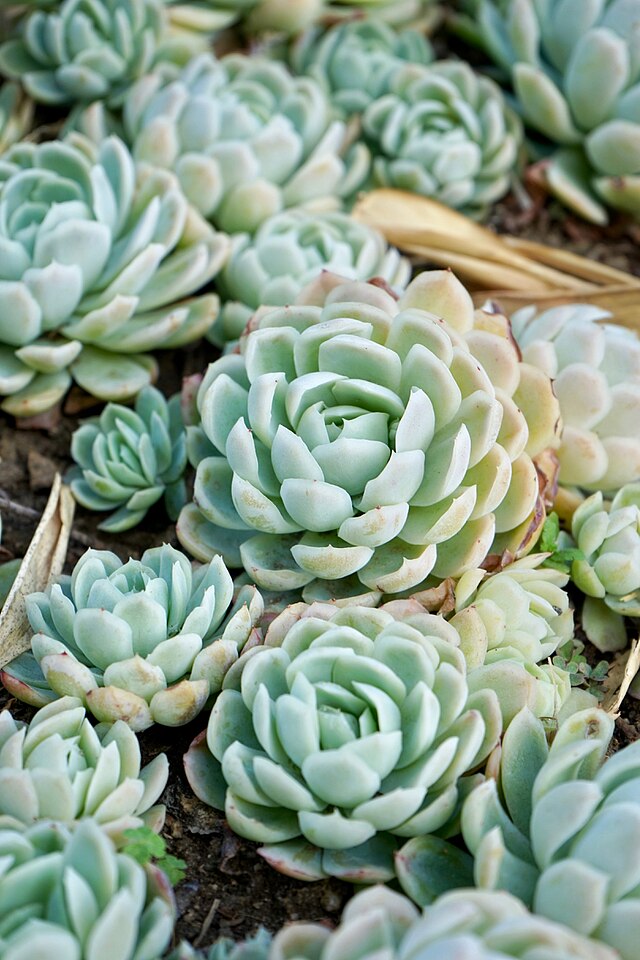
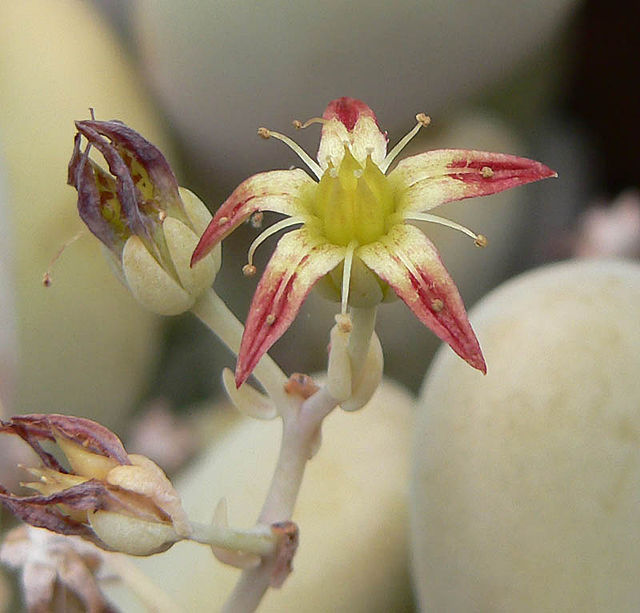
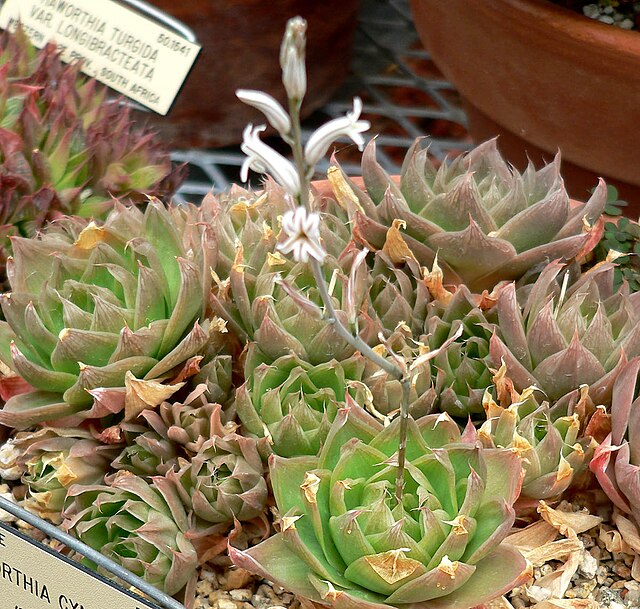
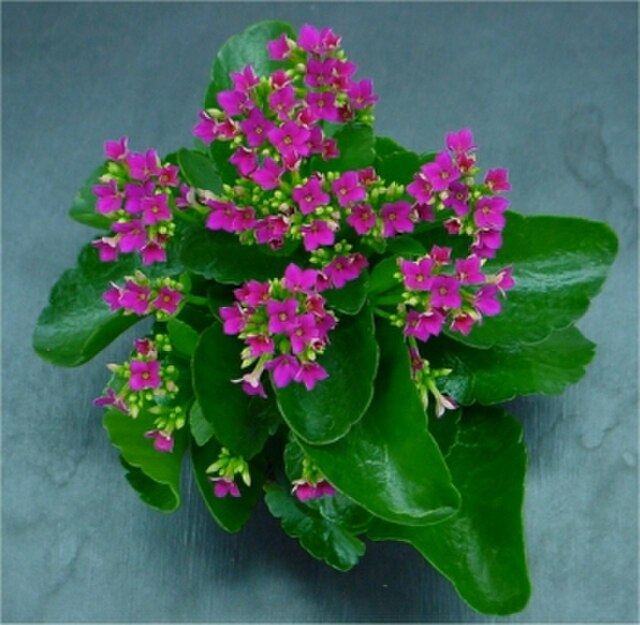
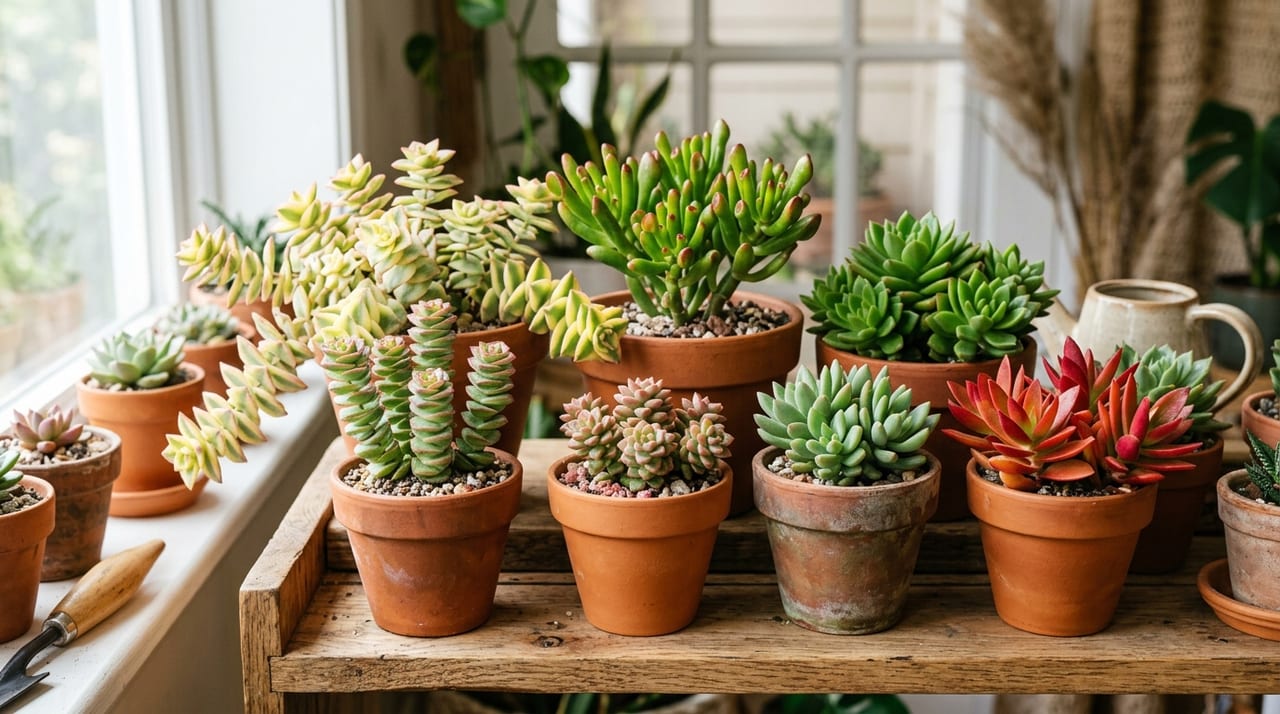
Succulents are a collective term for unique plants that store water abundantly in their leaves and stems. Their plump, fleshy forms are soothing to behold and have grown increasingly popular as interior décor. Requiring infrequent watering and relatively little maintenance, they're also recommended for those who tend to kill plants. This article provides a thorough explanation for those growing succulents for the first time—from fundamentals of soil and watering to light management, propagation methods, and popular varieties. For those who prefer to explore the full picture in encyclopedia format, see our Succulent Encyclopedia as well.
Soil and Pot Selection—Creating an Environment That Prevents Root Rot
The majority of failures with succulents stem from root rot. Establishing an environment with good drainage is the first step to growing them long-term.
Choosing the Right Soil
The easiest and most recommended approach is to use commercially available succulent-specific potting soil. It has balanced drainage and water retention built in from the start, with a formulation that's forgiving for beginners.
Once you gain experience, blending your own soil becomes another enjoyable aspect. A basic DIY blend is as follows. For more detailed ratios, see our Succulent Soil and Soil Selection Guide.
- Red soil (small grain) 4 : pumice 4 : leaf mold 2
- Using more pumice or perlite further improves drainage
- Reducing the proportion of leaf mold creates a mix suited for varieties that prefer drier conditions
Choosing the Right Pot
Terracotta pots are ideal. They excel in breathability and drainage, rarely becoming waterlogged, making them an excellent match for succulents' nature. They also have a natural aesthetic that complements interior design.
Plastic pots retain water well and require reducing watering frequency. Containers without drainage holes, such as glass vessels, carry a high risk of root rot and are not recommended for beginners. Always choose pots with drainage holes at the bottom.
Watering Basics—Making Dryness Your Ally
The most important point in succulent care is watering timing over quantity. Overwatering is a direct cause of root rot, so it's essential to be mindful of giving too much. For finer techniques, see Succulent Watering Techniques.
Watering Frequency by Season
| Season | Frequency | Tips |
|---|---|---|
| Spring & Fall (active growth) | Once every 1–2 weeks | Water thoroughly when soil is completely dry |
| Summer (high temperature) | 1–2 times per month | Water in the evening when temperatures cool |
| Winter (dormancy) | About once per month | Light watering or drought conditions are acceptable |
Signs of Underwatering and Overwatering
- Signs of underwatering: leaves become wrinkled, lose firmness
- Signs of overwatering: leaves become soft and translucent, base darkens
When watering, direct water to the base of the plant, taking care not to let water collect between leaves. Especially in winter, water evaporates slowly, and any water remaining on the leaves can cause damage.
Light and Placement—Mastering Light Management
Most succulents prefer well-lit environments. Providing adequate light ensures they maintain a tight, attractive form.
Light Fundamentals
Common succulents such as echeveria and sedum ideally need at least 4–6 hours of direct sunlight daily. Prolonged insufficient light causes "etiolation," where stems become elongated and plant form deteriorates. Since etiolated plants cannot be restored to their original shape, placement requires careful attention from the start. For guidance on addressing etiolation if it occurs, see Etiolation Recovery: A Practical Guide.
Seasonal Considerations
- Spring & Fall: Outdoors under eaves or on bright windowsills is ideal. During rainy periods, moving indoors provides peace of mind
- Summer: Intense direct sunlight causes leaf burn. Use 30–50% shade cloth or move to bright indirect light out of direct sun
- Winter: Move cold-sensitive varieties indoors. Avoid environments where temperatures drop below 5°C
Indoor-Friendly Varieties
Haworthia is a unique succulent with semi-translucent leaves and an unusual preference for avoiding direct sunlight. It thrives in environments with soft light, such as bright interiors behind lace curtains. It's also popular as a decorative foliage plant for desks and shelves. For more detailed care instructions, see Haworthia Care: The Complete Guide.
Propagation—Expand Your Collection by Dividing Your Favorites
Another appealing aspect of succulents is how easily they propagate. There's the enjoyment of multiplying one pot into many or sharing with friends. There are three main propagation methods.
Leaf Propagation
This is the most popular method of propagating succulents.
- Gently remove healthy leaves from the base (be careful not to snap them mid-way)
- Let the cut end dry for 2–3 days
- Place leaf horizontally on dry soil (no need to insert into soil)
- After several weeks, once roots and new shoots appear, begin light watering
If cells remain at the leaf base, sprouting will occur, so careful removal is key to success.
Stem Cutting
This method is also well-suited for utilizing etiolated stems.
- Cut the stem to about 5 cm
- Let the cut end dry for 2–3 days (drying is important to prevent mold)
- Insert into dry soil and withhold watering until roots emerge
Division
When offshoots appear beside the parent plant, carefully separate them without damaging roots and pot them independently. This is the most reliable propagation method.
All methods have higher success rates when performed in spring through early summer (March–June). Choose a time when temperatures stabilize and growth accelerates. For those wanting to refine propagation techniques further, see Pro Tips: Succulent Propagation.
5 Recommended Varieties for Beginners
For those introducing succulents for the first time, it's best to start with varieties that are easy to grow and widely available.
- Echeveria — Renowned for its rose-like rosette form, it's the iconic succulent. High collectibility due to abundant color and shape variations
- Haworthia — Prized for its mystique with semi-translucent windows. Thrives in soft indoor light and pairs beautifully with desks and décor
- Sedum — Small and exceptionally hardy. Easy to use as groundcover or in mixed plantings, and difficult for beginners to kill
- Graptopetalum — Similar in appearance to echeveria but even more robust. Tolerant of heat, cold, and drought, ideal for beginners
- Kalanchoe — Many varieties bloom colorful flowers for extended periods, rewarding to display. Popular as a flowering succulent
For those wanting to compare a wider range of options, also see 15 Recommended Succulents for Beginners.
With GrowerDirect, You Can Purchase Directly from Trustworthy Growers
When purchasing succulents, plant condition is crucial. Buying plants with poor root development or those weakened during transport can set you back from the start.
GrowerDirect is a platform that directly connects plant growers and buyers.
- Access to healthy plants: Directly obtain specimens meticulously managed by experts with strong root systems
- Find rare varieties: Discover varieties unavailable at garden centers and limited-edition crosses
- Consult growers directly: GrowerDirect's unique advantage is the peace of mind of asking the grower themselves about optimal care and seasonal management of your purchased variety
- Fair pricing without middleman markup: A welcomed arrangement for collectors, as purchase prices skip distribution costs
For beginners especially, sourcing a healthy specimen from a trustworthy grower is the secret to long-term success. We invite you to find your favorite succulent on GrowerDirect.