Complete Guide to Summer Care for Succulents | Managing High Heat, Moisture Stress, and Etiolation
Summer presents challenges for succulents: root rot, moisture stress, and shade requirements. Management varies by growth type—summer-growing, winter-growing, and spring-fall-growing species. This guide explains concrete strategies to survive intense heat, including shade cloth, water restriction, and air circulation.
Key Takeaways
Summer presents challenges for succulents: root rot, moisture stress, and shade requirements. Management varies by growth type—summer-growing, winter-growing, and spring-fall-growing species. This guide explains concrete strategies to survive intense heat, including shade cloth, water restriction, and air circulation.
Related Species
One of the most challenging seasons for growing succulents is summer. Many have experienced it: "The plant was thriving through spring, but suddenly weakened as soon as summer arrived" or "it rotted from moisture stress." In recent years, prolonged heat waves and tropical nights have become increasingly common, making proper summer management according to growth type ever more critical for succulent survival. This article explains the fundamentals of summer care by type in detail, while also introducing the mechanisms behind common failures and concrete solutions.
Understanding Succulent Growth Types
Succulents are divided into three types based on the season when growth is most active: "spring-fall type," "summer type," and "winter type." Since summer management varies significantly by type, the first step is to identify which type your plants belong to.
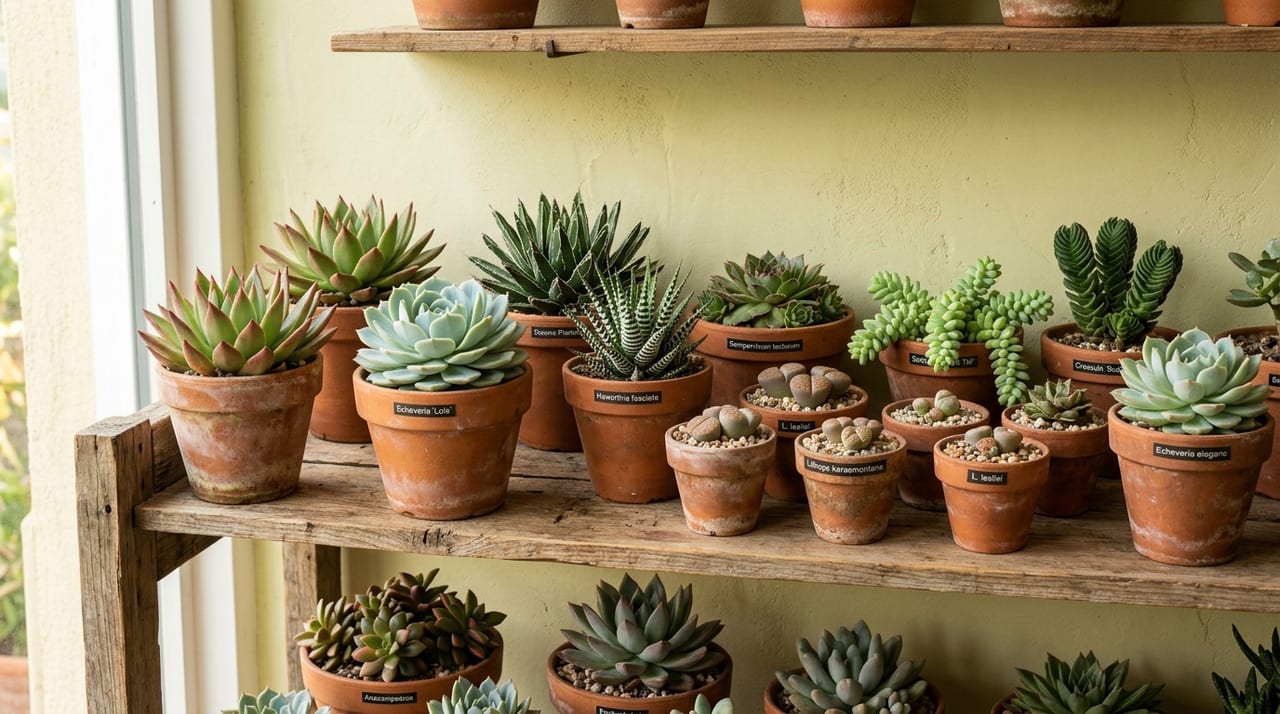
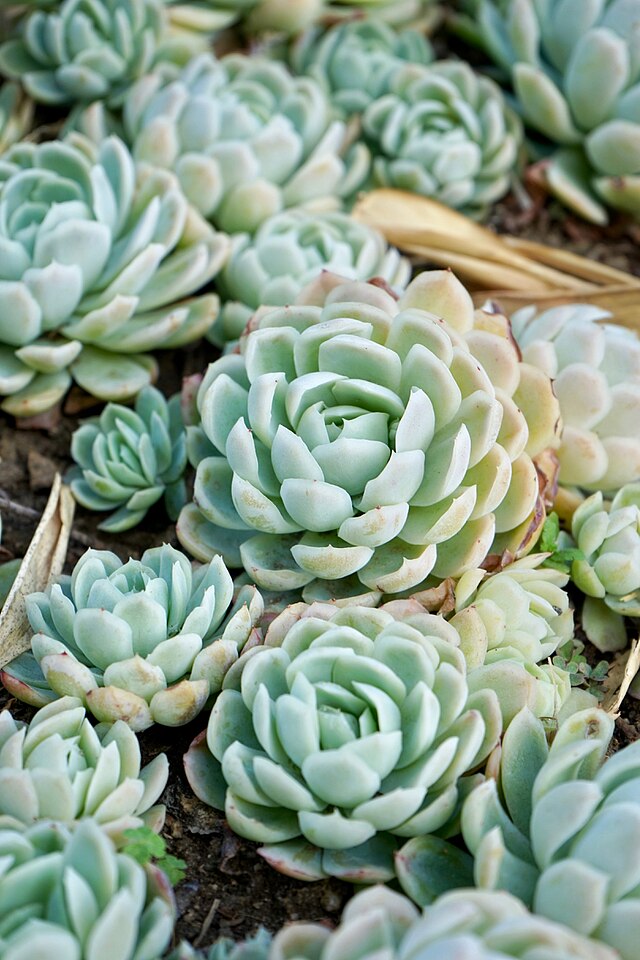
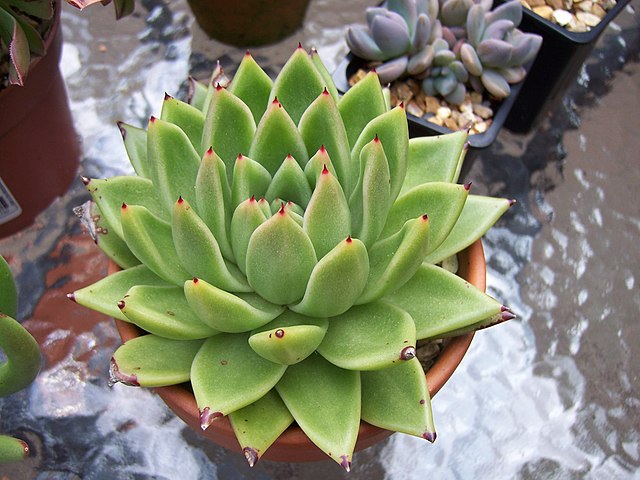
Spring-fall type (the most common among succulents) Grows in spring and autumn; dormant in summer and winter. Echeveria, Graptopetalum, some Sedum, and some Caudex plants fall into this category. The hardy Echeveria agavoides is a representative of this type. Since summer is a dormant period, management should involve complete water restriction or minimal watering.
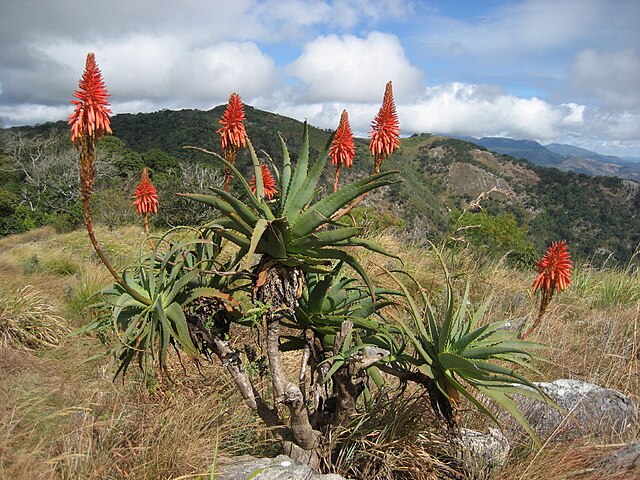
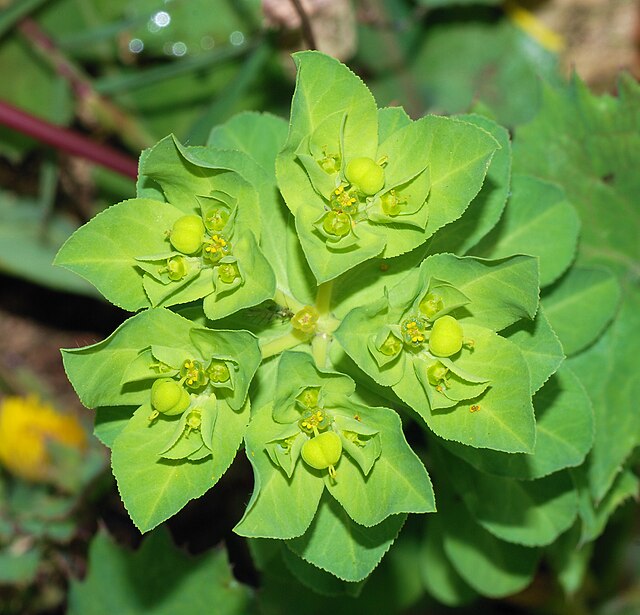
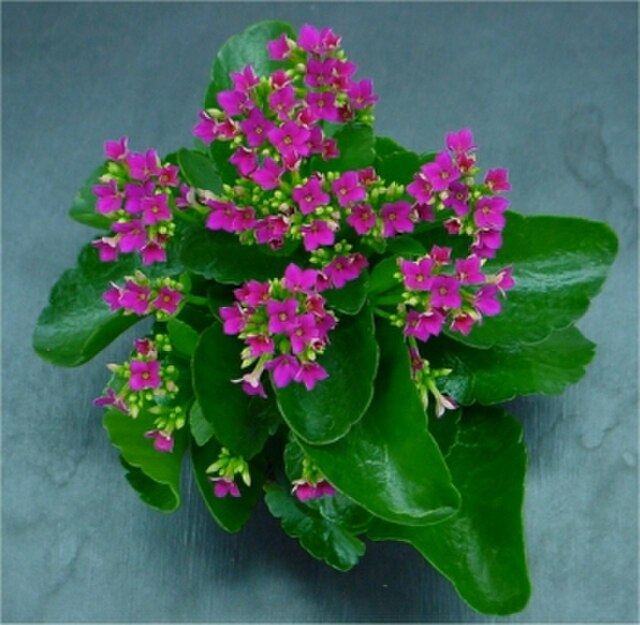
Summer type Plants that actively grow in summer. Aloe, some Euphorbia, Kalanchoe, and Agave fall into this category. Since they continue to grow even in summer, watering should continue; however, care must be taken against excess moisture in Japan's hot and humid climate.
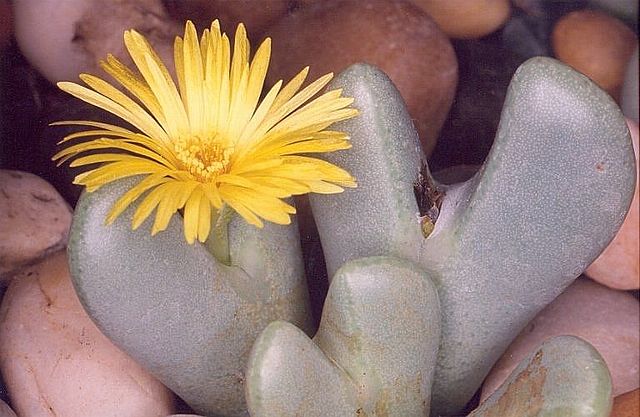
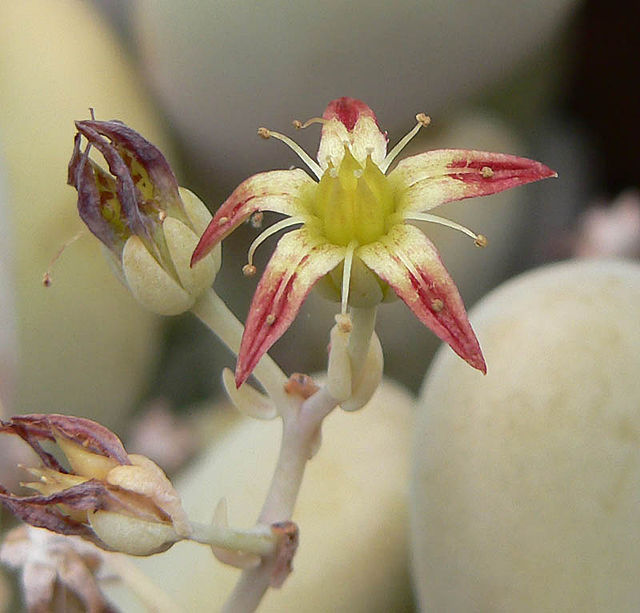
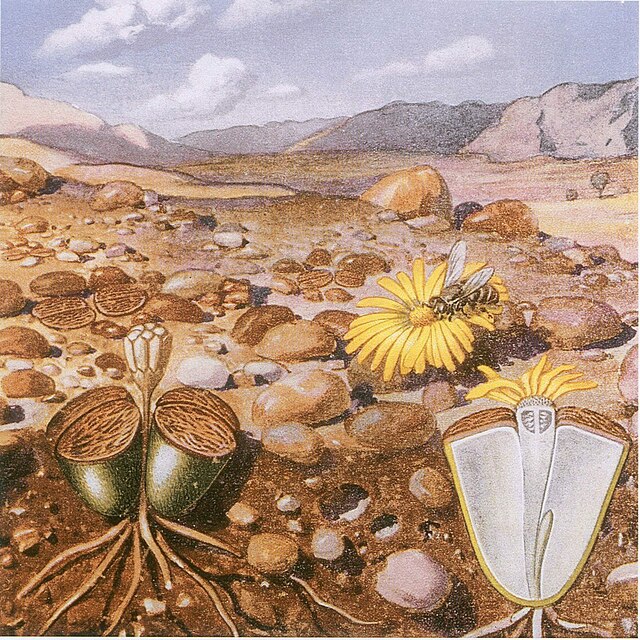
Winter type Plants that grow in winter. Lithops, Conophytum, and some Senecio species fall into this category. Since they enter complete dormancy in summer, water restriction is the principle. Keeping the soil consistently dry is essential for survival.
The Greatest Enemy of Summer Survival: The Mechanism of Moisture Stress
The overwhelming cause of succulent death in summer is "root rot from moisture stress." Understanding this mechanism clarifies why management must change.
When temperatures are high, soil temperature also rises. When soil remains moist while heating up, oxygen in the soil decreases, and anaerobic fungi and bacteria proliferate. This erodes roots, leading to root rot. Furthermore, spring-fall and winter types in dormancy have severely reduced ability to absorb water, so even small amounts of water carry high risk of remaining in the soil.
Concrete measures to prevent moisture stress
- Significantly reduce watering frequency (spring-fall and winter types) For spring-fall types, management during summer should be minimal—once or twice per month or near-complete water restriction—for safety. Applying the spring approach of "water when the soil surface dries" will result in overwatering in summer.
- Limit watering to cool evening and night hours Water during late afternoon to night when temperatures drop. Watering during the high heat of daytime further raises soil temperature, damaging roots.
- Prioritize air circulation Space plants 5–10 cm or more apart, and artificial airflow from a fan is also effective. Especially with indoor management, actively creating air circulation makes the difference between survival and death.
Shade Management and Placement Strategies
Direct sunlight from late rainy season through September causes "leaf scorch" in succulents. Leaf scorch is not merely a cosmetic issue; as leaf tissue is destroyed, the vigor of the entire plant is compromised.
Guidelines and methods for shade management The basic approach is to install shade cloth with 20–40% shading rate over shelves or support structures. Placing it directly on pots obstructs air circulation, so position it while maintaining space above the plants. While it varies by species, complete shade leads to etiolation (stems and leaves becoming elongated and spindly), so bright partial shade is ideal.
Three principles for placement
- Avoid rain: During rainy season through summer, move plants to eaves or sheltered parts of patios where rain does not reach. Rain exposure causes soil to remain wet for extended periods, a direct cause of moisture stress.
- Elevate from ground: Using shelves or slats to keep plants 10 cm or more above ground prevents heat buildup and ensures air circulation at the base. Placing pots directly on concrete or soil can cause pot-bottom temperatures to approach 60°C due to radiant heat.
- Avoid western sun: East- to south-facing locations receive morning light and are shaded in the afternoon, avoiding the harsh western sun of midsummer.
Managing Light and Temperature to Prevent Etiolation
An often-overlooked issue in summer care is "etiolation." Excessive shading or moving plants indoors can cause light insufficiency, leading to elongated, spindly stems that destroy the plant's natural beauty.
Etiolated plants have softer tissue and weaker resistance to disease. Since recovery takes time, shading should only "soften excessive light" while maintaining adequate brightness. If moving plants indoors, choose the brightest possible spot near a window, and supplemental LED grow lights can also be effective.
Also avoid places where air conditioning discharge blows directly on plants. Sudden temperature fluctuations and dry cold air stress the plants.
Care and Recovery Management After Summer
When maximum temperatures drop below 25°C from late September through October, spring-fall types enter their growing season again. Proper management during this period leads to beautiful autumn coloring and vigorous growth.
Recovery period (September–October) steps
Rather than suddenly increasing watering, gradually raise frequency: from once every two weeks to once weekly. Abruptly resuming normal watering can overwhelm roots not fully awakened from dormancy, causing root rot.
Apply slow-release solid fertilizer starting at half the recommended rate once growth clearly begins in October or later. Suddenly applying large amounts of fertilizer to heat-exhausted plants is counterproductive.
Even if some leaves are dead after summer, if the roots and stem center are alive, recovery usually follows. Carefully remove dead leaves, ensure air circulation at the base, and observe. Waiting for the plant to recover on its own has higher success rates than hastily replanting or leaf propagation.
Plant Selection: Succulents That Are Easier to Summer Over
If you want to expand your succulent collection, choosing species with lower summer care demands is one approach. Hardy Echeveria agavoides and Graptopetalum are known to tolerate some management mistakes and are less prone to failure in first-time summer care. Conversely, winter types like Conophytum, which tend to form dense clusters, require more careful air circulation, so it's reassuring to space plants with wider intervals on shelves or racks.
Summary
Succulent summer care is based on three principles: "water restriction or minimal watering, shading, and air circulation." Further combining "placement, watering timing, and etiolation prevention" allows most species to survive summer safely. The most important point is to adjust management according to growth type; uniform management tends to cause failure. Plants that survive summer will display beautiful autumn color and provide vigorous growth in fall. Careful summer care is the key to long-term succulent cultivation.