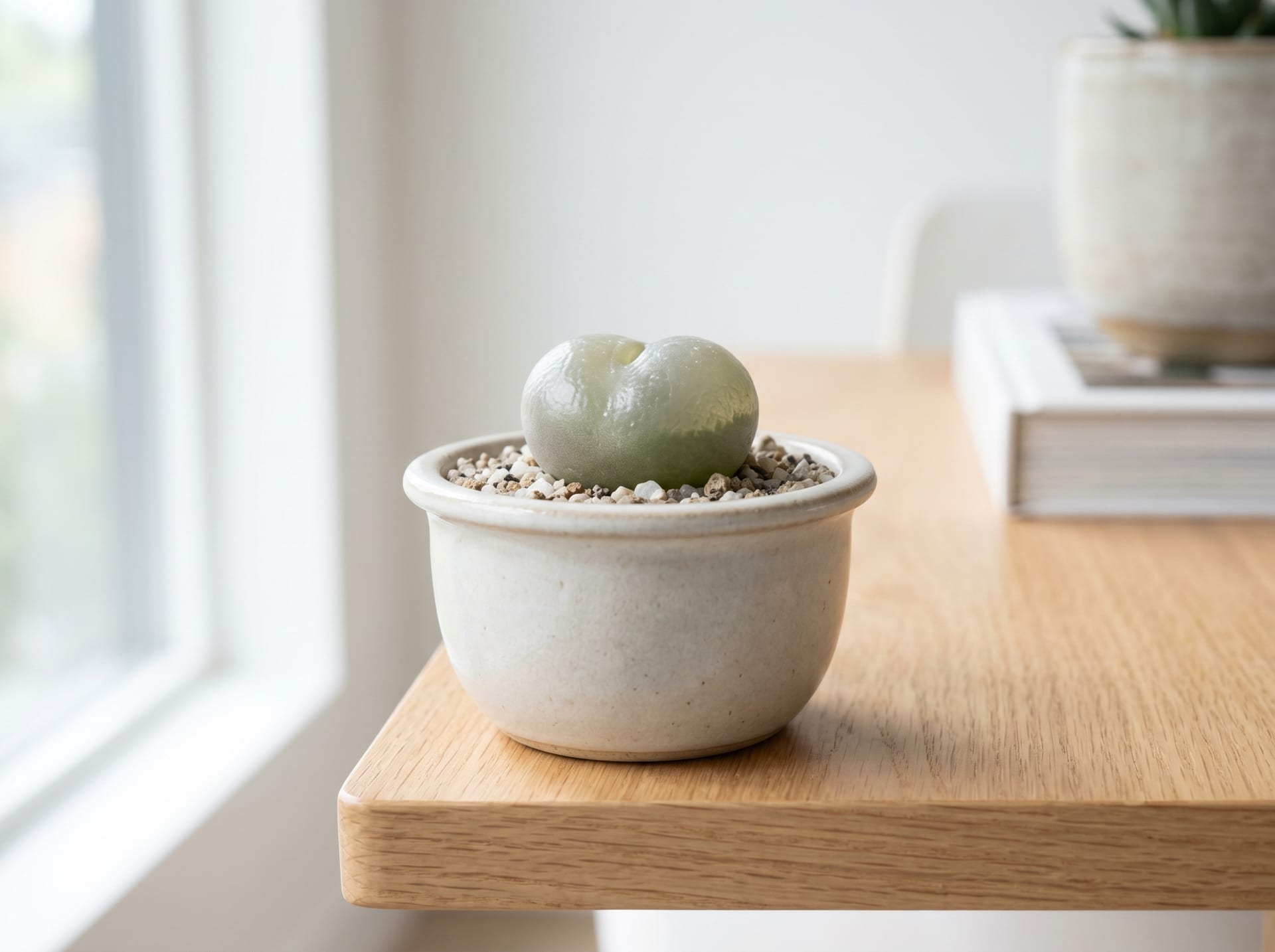
AI-generated image
Conophytum
IntermediateRelated to lithops. Small squishy spheres clustering together are adorable. Winter grower active autumn-winter.
About
Conophytum is a genus of dwarf succulent plants in the family Aizoaceae, endemic to the winter-rainfall regions of southern Namibia and the Cape Provinces of South Africa, where they grow in rocky quartz fields and gravel plains. Closely related to Lithops, they have similarly fused, highly succulent leaf pairs that form button-shaped, cone-shaped, or bilobed bodies just a few centimeters across. Common names include cone plants, dumplings, and button plants. In autumn, solitary flowers emerge from the central fissure in colors ranging from white and yellow to vivid pink, magenta, and orange; many species are night-blooming. As winter-growing plants, they are active from autumn through spring and enter a dry dormancy in summer, protected by their papery outer skin. Watering should be very light during the growing season and completely withheld in summer. Fast-draining mineral soil and ample light are essential.
Source: Wikipedia (CC BY-SA 4.0)
Lifespan of the Conophytum
The Conophytum lives 10+ years.
Size of the Conophytum
The Conophytum grows to 1-3cm (per head).
Temperature & humidity for the Conophytum
The ideal temperature for the Conophytum is 5〜25℃.
Basic Info
Origin
southern Namibia and the western and southern Cape Provinces of South Africa
Lifespan
10+ years
Size
1-3cm (per head)
Temperature
5〜25℃
Humidity
30〜50%
Growing Tips
Light & Placement
Needs plenty of light but avoid direct summer sun. Keep it in a bright, well-ventilated spot.
Watering
Mist autumn-spring. Complete drought in summer
Temperature & Overwintering
Ideal range is 5-25°C. During its winter growing season keep it off frost in a sunny spot under eaves or indoors.
Dormancy Care
A winter grower active from autumn to spring. In summer it rests inside its dried outer skin, so withhold water completely and keep it in an airy place.
Shedding
Sheds once yearly — no water during shedding
Notes
Weak to heat and humidity — ensure good ventilation
Conophytum FAQ
QWhat is the growing difficulty level for Conophytum?
Intermediate. A variety suitable for intermediate growers. Requires some cultivation experience and knowledge of environment management. Pay careful attention to temperature and humidity control.
QWhat is the ideal temperature for Conophytum?
The ideal temperature for Conophytum is 5〜25℃. Avoid sudden temperature changes and maintain a stable environment.
QWhat is the lifespan of Conophytum?
The average lifespan of Conophytum is 10+ years. With proper cultivation environment and nutrient management, you can keep it healthy for a long time.
QHow large does Conophytum get?
The mature size of Conophytum is 1-3cm (per head). This may vary slightly depending on cultivation environment and individual differences.
QWhat is the typical price for Conophytum?
The price of Conophytum varies significantly by variety, characteristics, size, and lineage. Please check GrowerDirect's price guide for the latest market information.
Last updated: September 18, 2026
References & Sources
Edited & verified by: GrowerDirect Editorial Team
The classifications, regulations, and growing data on this page are created and verified based on the primary information database below.
Primary sources
Related Species
Find listings for this species
Related Articles
Complete Guide to Growing Conophytum | Thorough Explanation of Shedding Mechanism, Summer Management, and Variety Selection
Explains the basic cultivation of the popular Mesembryanthemaceae genus Conophytum. Covers the unique shedding mechanism, summer dormancy management, autumn and winter watering and how to enjoy flowering, and includes recommended varieties for beginners.
Autumn Preparation Management for Summer-Type Succulents
A guide to autumn care for summer-type succulents, covering plant changes from September to November, timing for gradual watering reduction, placement and temperature management for transitioning plants indoors, autumn fertilizing and pest control, variety-specific care checkpoints, and preparation for winter dormancy.
Mealybug Control on Succulents | Complete Guide to Early Detection, Removal, and Prevention
Mealybugs hide easily at the base of succulent leaves and on new growth. This guide covers their characteristics, the environments where they thrive, tips for early detection, removal methods using cotton swabs and alcohol, and daily care practices to prevent recurrence.
Summer and Winter Type Succulents: Growth Cycles and Watering Management Strategy
This article explains the differences in growth types of succulent plants, their annual growth cycles, seasonal watering management strategies, common failures, and countermeasures.
🩺 Common diseases
Can't find the plant you're looking for?
Post your wishes for free and growers with matching plants will contact you with introductions.