Complete Guide to Growing Conophytum | Thorough Explanation of Shedding Mechanism, Summer Management, and Variety Selection
Explains the basic cultivation of the popular Mesembryanthemaceae genus Conophytum. Covers the unique shedding mechanism, summer dormancy management, autumn and winter watering and how to enjoy flowering, and includes recommended varieties for beginners.
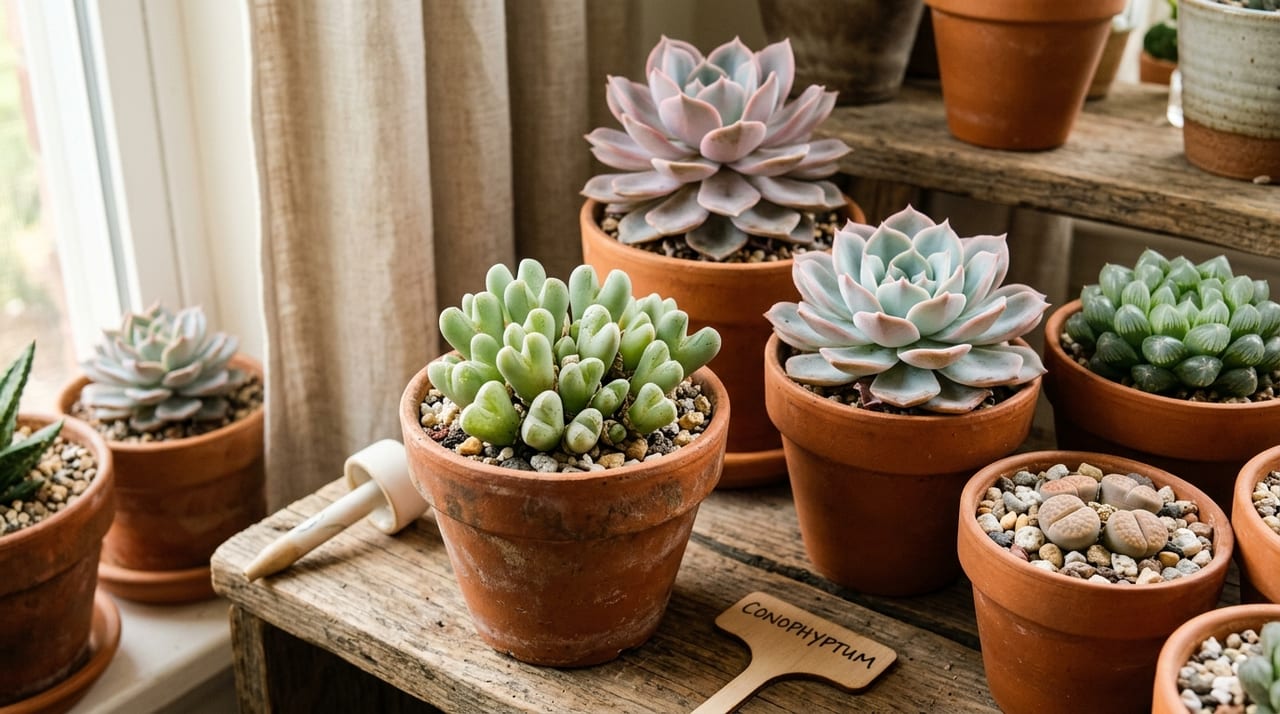
Key Takeaways
Explains the basic cultivation of the popular Mesembryanthemaceae genus Conophytum. Covers the unique shedding mechanism, summer dormancy management, autumn and winter watering and how to enjoy flowering, and includes recommended varieties for beginners.
Related Species
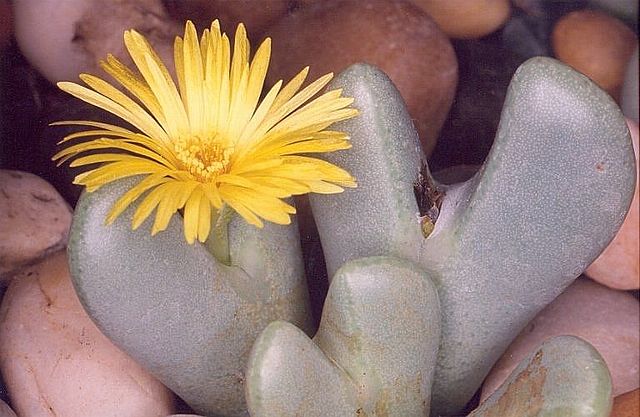
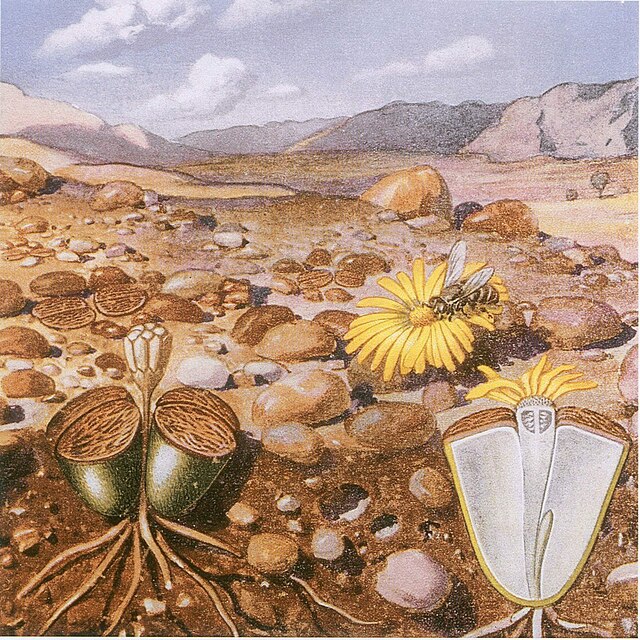
Conophytum (Conophytum) is a succulent plant belonging to the Mesembryanthemaceae family, native to South Africa, and plays a significant role in the group known as "living jewels" alongside Lithops (pebble plants). The charming sight of small spheres 1–3 cm in diameter forming dense clusters is extremely endearing, and the genus enjoys strong popularity among collectors. This article provides thorough explanations covering everything from basic care to variety selection, whether you are growing Conophytum for the first time or looking to take your cultivation further.
Conophytum Explained——Understanding the Differences from Lithops
Conophytum is a collective term for succulents classified in the genus Conophytum of the Mesembryanthemaceae family, with over 100 confirmed species, and reportedly over 500 including horticultural varieties. Though it belongs to the same Mesembryanthemaceae family as Lithops, there are several important differences.
Comparison with Lithops
| Feature | Conophytum | Lithops |
|---|---|---|
| Plant size | Smaller (1–3 cm) | Somewhat larger (2–5 cm) |
| Clustering tendency | Clusters very readily | Single head or a few heads |
| Shedding period | Autumn (around September–October) | Spring (around March–April) |
| Flowering period | Autumn to early winter | Autumn |
| Flower color | White, yellow, pink, purple, and many others | Primarily white and yellow |
| Growth type | Winter-growing (grows autumn to spring) | Winter-growing (grows autumn to spring) |
The greatest difference is the vigor of clustering. Given favorable conditions, Conophytum will fill a pot with dense clusters within a few years, resulting in a jewel-box-like appearance. This dense clustering is arguably Conophytum's greatest appeal.
The Shedding Mechanism——Understanding Conophytum's Most Distinctive Feature
The most important and unique aspect of Conophytum cultivation is "shedding." Understanding this process correctly is key to long-term cultivation success.
What is Shedding?
Conophytum's shedding is a phenomenon in which new leaves form inside the old leaves (outer skin) and emerge by breaking through the old leaves. Similar to snake shedding in principle, in plants this amounts to a "leaf renewal" in which old and new leaves exchange roles.
The Shedding Cycle (Annual)
- Summer (June–August): Dormant period. The plant is wrapped in old outer skin, covered entirely by thin papery skin. This outer skin acts as a shell protecting the new leaf body from desiccation
- Autumn (September–October): As temperatures drop, the new leaf body inside swells, breaking through the old outer skin and becoming visible. This is "shedding"
- Autumn to Winter (October–February): The new leaf body grows, and many species produce flowers. This is the peak growing season
- Spring (March–May): Growth slows gradually, and the plant begins preparing for dormancy
Key Points for Shedding Management
- Never remove the old outer skin by hand. This can damage the new inner leaves or allow harmful bacteria to enter
- Hold back on watering until shedding begins, and wait for the outer skin to split naturally
- Immediately after shedding, the plant is soft, so avoid direct sunlight and keep it in bright shade
Common Questions About Shedding——Not Starting, Failed, Double Shedding
Shedding doesn't start even when autumn arrives The trigger for shedding is cool nights. If the nighttime temperature remains above 25°C, shedding won't begin. Continue drought stress and wait for cooler nights. If there's still no sign by mid-October, check whether the base of the plant is blackening (rotted during summer). If you can feel a firm new leaf beneath the outer skin, it's fine to wait longer.
The old skin doesn't split completely and is constricting the new leaf Generally, do not touch it and leave it alone. Only when the skin is completely dry and papery and is clearly constricting the new leaf should you lightly mist the skin with a spray bottle and gently tear the outer skin with tweezers. Be careful not to touch the new leaf directly.
Double shedding (shedding twice in one year, resulting in a smaller plant) If watering after shedding comes too late in autumn or is insufficient, the new leaf won't thicken adequately before the next leaf forms inside the skin, and the plant becomes noticeably smaller. Conversely, this can also occur if watering is excessive in spring and beyond, preventing the plant from fully dormant during summer. The solution is twofold: "water well from October onward after shedding is complete" and "stop watering in April."
After shedding, the number of heads increased or decreased Two new leaves emerging from one skin is normal division, and this is how Conophytum clusters. Conversely, if the number of heads decreased, part of the plant likely rotted away during summer. For the next summer, strengthen shading and air circulation.
Why does Conophytum's shedding period differ from Lithops? Conophytum sheds in autumn, while Lithops sheds in spring. Though both belong to the same Mesembryanthemaceae family, the timing for resuming watering is the opposite, so when growing both, be careful not to confuse them. Lithops care is summarized in Complete Guide to Growing Lithops.
Seasonal Care Methods
Conophytum is a classic "winter-growing" succulent. In Japan's climate, autumn to spring is the growing season and summer is the dormant period. Proper management according to this growth cycle is the key to success.
Autumn (September–November)——Growth Begins, Shedding, Flowering
This period is the highlight of Conophytum cultivation.
- Watering: Once shedding is complete and the new leaf body is visible, begin watering in small amounts. Start with a light mist and gradually increase the amount weekly. From October onward, water thoroughly once the soil dries out
- Light: Soft, direct morning sunlight is ideal. Shading is not necessary, but if September is still very hot, 30% shading provides peace of mind
- Fertilizing: Apply diluted liquid fertilizer (about half the recommended concentration) twice a month. Nutritional support during the growing season contributes to fuller clustering
Winter (December–February)——Continued Growth, Cool Temperature Management
- Watering: 2–3 times per month, after the soil dries out. Avoid watering on days when temperature drops below 5°C
- Light: Make sure to expose the plant to weak winter sunlight. Secure adequate light by placing it on a windowsill indoors
- Temperature: Though cold-hardy, avoid temperatures below 0°C. An environment of 5–10°C is ideal. A room with heating that is too warm disrupts the growth rhythm, so be careful
Spring (March–May)——Slowing Growth, Dormancy Preparation
- Watering: From around April, gradually reduce. From May onward, water about once a month
- Light: Watch out for strengthening sunlight. Begin 30–50% shading from late April
- Fertilizing: Discontinue fertilizing from April onward
Summer (June–August)——Complete Dormancy
Summer care is the greatest challenge in Conophytum cultivation. In recent years, periods of intense heat have grown longer, making thorough shading and air circulation increasingly important.
- Watering: Principle is complete drought. The old outer skin retains moisture, so external watering is unnecessary. However, if the outer skin shrinks excessively and you are concerned about the contents, only lightly mist the surface with a spray bottle in the cool evening
- Light: Avoid direct sunlight and place in a bright, well-ventilated shade. 50–70% shading is necessary
- Air circulation: Excessive moisture is the greatest enemy. Keep air constantly moving with a circulating fan or regular fan. Leaving the plant in a sealed, unventilated indoor space causes it to rot easily
- Temperature: Try to avoid environments where temperatures exceed 35°C. Managing the plant in an air-conditioned room is also effective
Soil and Pots——Creating an Environment Suited to Mesembryanthemaceae
Soil Composition
Conophytum dislikes excessive moisture, so prepare soil emphasizing drainage.
Recommended Blend
- Red volcanic ash (small grain) 3 : Akadama soil (small grain) 3 : Pumice (small grain) 2 : Charcoal 1 : River sand 1
When using commercially available cactus and succulent potting soil, adding 20–30% more pumice or perlite will boost drainage for added confidence.
Pot Selection
- Unglazed clay pots or plastic pots are suitable. Clustering plants look striking in shallow pots (flat pots)
- Pot size should be about one size larger than the plant's diameter. Oversized pots allow soil to dry slowly, leading to root rot
- A drainage hole is essential. Line the bottom with a mesh net, add coarse stones, then add soil
Propagation——Leveraging Clustering with Division
There are two main methods for propagating Conophytum.
1. Division
The simplest method is dividing a clustered plant.
Best Time: September–October (right after shedding is complete)
Steps
- Remove the plant from its pot and shake off the old soil
- Find naturally separating parts and gently separate by hand. Do not forcibly tear apart
- Untangle the roots of the divided plants and remove damaged roots
- Let the cut surfaces dry in shade for 1–2 days
- Plant in fresh soil and begin light watering 3–5 days later
2. Seed Propagation (Seedlings)
Growing from seed allows you to enjoy the process of small plants developing into clustered colonies over several years.
Best Time: October–November
Steps
- Perform hand pollination during flowering and collect seeds the following year, or purchase seeds from a specialty store
- Sow seeds on sterilized fine sand. Do not cover seeds (light-germinating seeds)
- Maintain constantly moist soil by capillary action. Germination takes 2–4 weeks
- After germination, gradually increase air circulation and avoid excess moisture
- Plants reach 2–3 mm diameter in the first year. Takes 3–5 years to reach flowering size
Pest and Disease Management
Common Diseases
- Root rot: The most common problem. Caused by excessive moisture during summer. Prevent through complete drought and air circulation
- Gray mold: Occurs during rainy periods in early summer or autumn. Caused by insufficient air circulation. Prevent with benomyl fungicide spray
Common Pests
- Root mealybugs: White, powdery insects attach to roots. Wash the roots during repotting to remove them. For pesticides, check the label for one registered for root mealybugs (GF Ortran granules do not list root mealybugs among their target pests for ornamental flowers and foliage plants)
- Scale insects: They hide in the gaps of clustered plants. If found, remove them with a cotton swab dipped in alcohol. For prevention, spray an insecticide registered for scale insects
Source: MAFF Pesticide Registration Database (GF Ortran Granules)
Recommended Varieties for Beginners
Since Conophytum comes in extremely many varieties, it is best to start with hardy, readily available cultivars. When purchasing directly from growers, you also benefit from being able to confirm information about growing conditions and easily assess the plant's condition after shipment.
Tabi Type (Rabbit-ear Shape)
The tips of the leaves split like rabbit ears—an endearing form.
- C. bilobum (Bilobum): The hardiest starter variety. Produces yellow flowers. Relatively heat-tolerant
- C. pellucidum (Pellucidum): A beautiful species with translucent windows. Abundant pattern variation
Round Type (Spherical Form)
Smooth sphere with a jewel-like quality.
- C. burgeri (Burgeri): A translucent greenish sphere. Also called "the world's most beautiful Conophytum." Somewhat challenging but extraordinarily popular
- C. minutum (Minutum): Small and clusters readily. Produces cute pink flowers
Saddle Type (Saddle Shape)
Distinctive form with a depression in the center of the leaf.
- C. wittebergense (Wittebergense): Hardy with beautiful clustering. Deep pink flowers
- C. calculus (Calculus): Perfectly round sphere with a distinctively rough, granular surface texture
Points to Check When Purchasing
Conophytum changes appearance dramatically with the seasons. If purchase time falls during the dormant period (summer), the plain appearance of the plant wrapped in outer skin is not a concern if the inner plant is healthy. Conversely, avoid plants with evidence of the outer skin being forcibly removed during shedding season (autumn) or those with abnormally blackened outer skin. Choose plants whose base does not wobble and whose outer skin has good firmness.
Conclusion——Conophytum's Appeal is a "Small Universe"
Conophytum cultivation is far from difficult once you overcome summer dormancy management. The moment the plant sheds in autumn to reveal its new appearance, the sight of small flowers blooming all at once, and the gradual densening of clusters year after year offer a unique joy not found in other succulents.
By all means, add this "small universe" unfolding in a small pot to your collection.