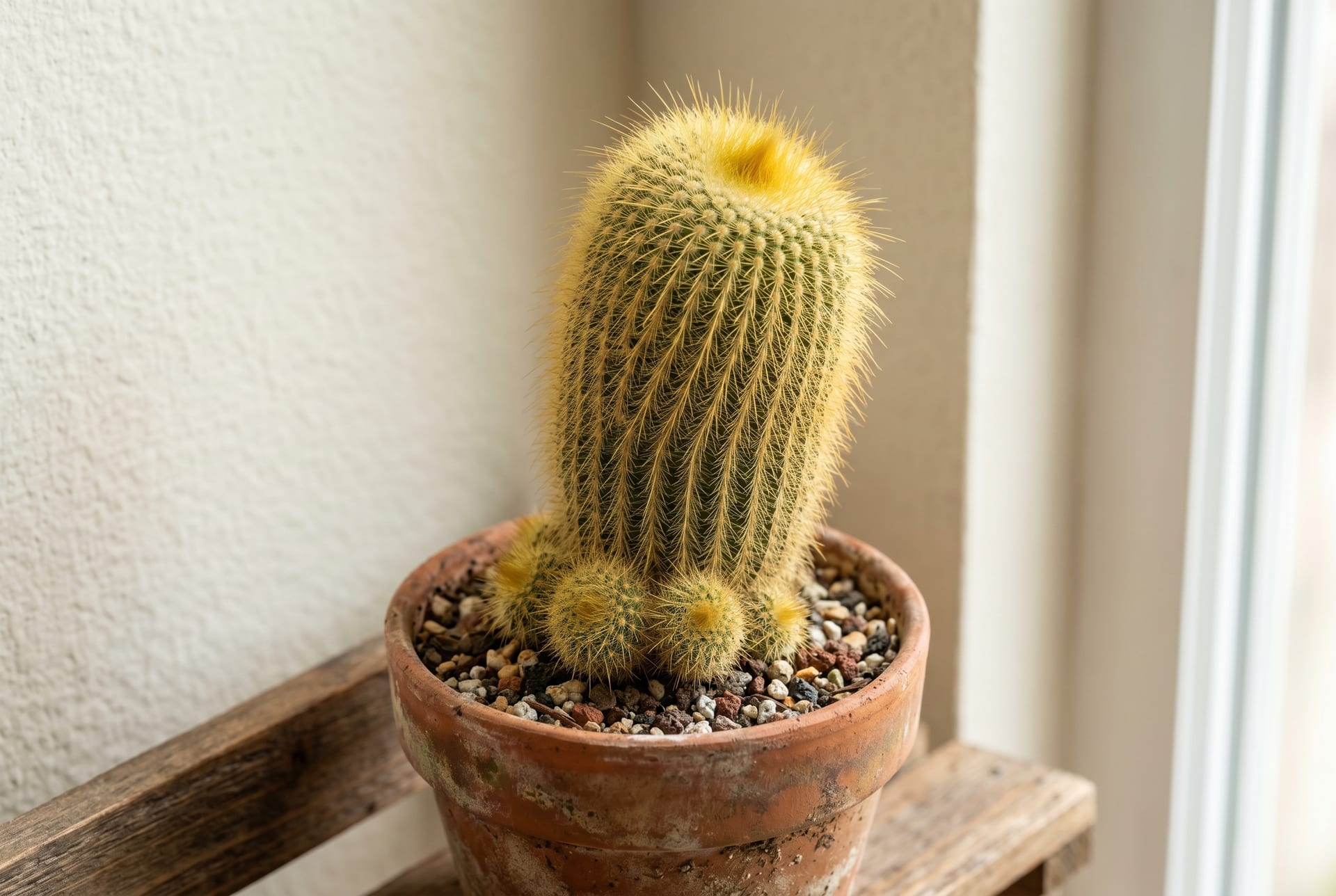
AI-generated image
Golden Ball Cactus
BeginnerParodia leninghausii
A cylindrical cactus glowing golden under a coat of soft golden bristles. Hardy, easy, and clustering with offsets, it is a popular beginner cactus.
Overview
The golden ball cactus (Parodia leninghausii, formerly Notocactus leninghausii) is a cactus of southern Brazil. Spherical when young, it grows into a column up to about 60 cm tall, and its whole body, clothed in soft golden bristles, seems to glow. It readily produces offsets at the base to form generous clusters. Fairly tolerant of heat and cold and easy to grow, it is a popular beginner cactus. Give it a sunny, airy spot; water thoroughly when the soil dries during the growing season and sparingly in winter, using a free-draining cactus mix. Mature plants bear yellow flowers at the crown. Its spines are relatively soft and less hazardous than those of many cacti, but watch for root rot from overly wet soil.
Source: Wikipedia (CC BY-SA 4.0)
Lifespan of the Golden Ball Cactus
The Golden Ball Cactus lives Perennial (decades).
Size of the Golden Ball Cactus
The Golden Ball Cactus grows to 10-12cm wide, up to 60cm tall.
Temperature & humidity for the Golden Ball Cactus
The Golden Ball Cactus tolerates temperatures of ≥1℃.
Basic Info
Origin
Rocky grasslands of southern Brazil
Lifespan
Perennial (decades)
Size
10-12cm wide, up to 60cm tall
Temperature
≥1℃
Humidity
30〜50%
Watering & Fertilizer
Minimal
Growing Tips
Lighting
Likes a sunny, well-ventilated spot
Watering
Water well when dry in growth season; sparingly in winter
Temperature & Overwintering
Fairly tolerant of both heat and cold. In winter water less and keep it in a bright spot.
Soil & Repotting
Use a well-draining cactus mix. Guard against root rot from wet soil by choosing a pot that dries quickly.
Propagation
It produces offsets at the base and clumps, so divide the offsets to propagate. Let the cut surface dry before potting.
Pests & Cautions
The spines are soft and less dangerous than most cacti, but gloves make handling safer.
Golden Ball Cactus FAQ
QWhat is the growing difficulty level for Golden Ball Cactus?
Beginner. A variety suitable for beginners. No special equipment or experience is required—you can grow it without problems by setting up a basic cultivation environment.
QWhat temperatures can Golden Ball Cactus tolerate?
Golden Ball Cactus tolerates temperatures of ≥1℃. This is the tolerated range, not the ideal growing temperature. Keep conditions well inside it and avoid sudden temperature changes.
QWhat is the lifespan of Golden Ball Cactus?
The average lifespan of Golden Ball Cactus is Perennial (decades). With proper cultivation environment and nutrient management, you can keep it healthy for a long time.
QHow large does Golden Ball Cactus get?
The mature size of Golden Ball Cactus is 10-12cm wide, up to 60cm tall. This may vary slightly depending on cultivation environment and individual differences.
QHow should I water and fertilize Golden Ball Cactus?
Golden Ball Cactus: watering & fertilizer — Minimal. Aim for appropriate frequency and amount.
QWhat is the typical price for Golden Ball Cactus?
The price of Golden Ball Cactus varies significantly by variety, characteristics, size, and lineage. Please check GrowerDirect's price guide for the latest market information.
Last updated: October 2, 2026
References & Sources
Edited & verified by: GrowerDirect Editorial Team
The classifications, regulations, and growing data on this page are created and verified based on the primary information database below.
Taxonomy & Authority
Accepted name: Parodia leninghausii (F.Haage) F.H.Brandt
Synonyms: Notocactus leninghausii (F.Haage) A.Berger, Eriocactus leninghausii (F.Haage) Backeb.
Authority databases: Wikipedia
Nomenclature follows global taxonomic authority databases.
Regulations & Conservation Status
The family Cactaceae is listed in its entirety in CITES Appendix II. This genus (Parodia) contains no Appendix I species. Specimens in commerce are of captive origin.
Sources: CITES Checklist — Cactaceae spp. (Appendix II, whole family)
Regulations may change. Always verify the latest information with the relevant authorities.
Related Species
Find listings for this species
Related Articles
Complete Guide to Cactus Care | Differences from Succulents and Management Tips
From the differences between cacti and succulents, to basic care including watering, sunlight, and repotting, and introducing popular species. This guide comprehensively covers the fundamentals of cactus cultivation.
Grafting Techniques for Cacti and Succulents: Complete Guide to Cultivating Rare Species and Accelerating Growth Through Grafting
Comprehensive explanation from the basic principles of grafting cacti and succulents to actual work procedures, rootstock selection, and management methods.
Rose Balling Explained | Why Buds Won't Open and Prevention Strategies
Rose balling is a phenomenon where outer petals wetted by rain or dew stick together as they dry, causing buds to fail to open and deteriorate. This guide explains the varieties and weather conditions prone to balling, prevention methods through rain protection, fertilization, and moisture management, and how to gently separate stuck petals.
How to Grow Golden Celebration | The Appeal of English Roses and Care Tips
This guide explains the practical cultivation of David Austin's English rose 'Golden Celebration,' covering its characteristics, sunlight, planting, watering, fertilizing, pruning, training, and pest and disease management.
🩺 Common diseases
Can't find the plant you're looking for?
Post your wishes for free and growers with matching plants will contact you with introductions.