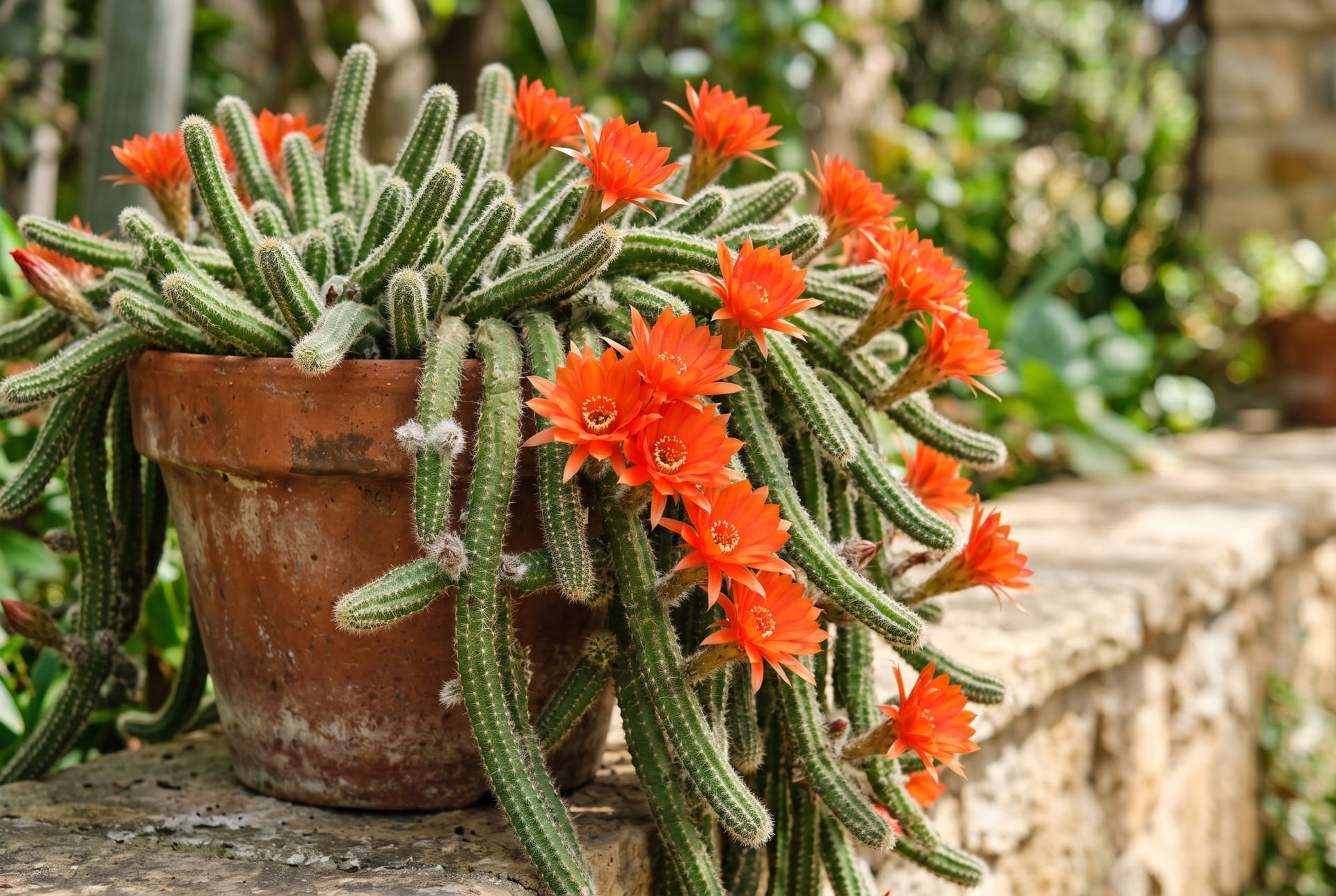
AI-generated image
Peanut Cactus
BeginnerEchinopsis chamaecereus
A small cactus of finger-like stems that cluster and trail, opening a succession of vivid orange-red flowers. Hardy and free-flowering, it is an easy favorite.
About
The peanut cactus (Echinopsis chamaecereus, formerly Chamaecereus silvestrii) is a small cactus from the mountains of northwestern Argentina (unrelated to the fragrant sandalwood that shares its Japanese name, byakudan). It is distinctive for its many finger-like stems, about 1-2 cm thick and 10-15 cm long, that cluster and trail over the pot rim, clothed in soft white spines. Its chief appeal is prolific flowering: from spring into early summer it covers itself in vivid orange-red trumpet flowers. Very hardy and easy, and propagated simply by cutting and rooting a stem, it has long been a popular beginner cactus. It likes a sunny spot — too little light reduces flowering — and is watered when dry during the growing season and kept dry and dormant in winter. Relatively cold-tolerant, it also suits a hanging pot where its stems can trail.
Source: Wikipedia (CC BY-SA 4.0)
Lifespan of the Peanut Cactus
The Peanut Cactus lives Perennial (decades).
Size of the Peanut Cactus
The Peanut Cactus grows to Stems 1-2cm thick, up to 15cm long.
Basic Info
Origin
Mountains of northwestern Argentina
Lifespan
Perennial (decades)
Size
Stems 1-2cm thick, up to 15cm long
Temperature
0〜35℃
Humidity
30〜50%
Watering & Fertilizer
Minimal
Growing Tips
Lighting
Sunny spot; poor light reduces flowering
Watering
During the spring-to-autumn growing season, water once the soil dries. In winter keep it on the dry side to let it rest, then resume watering with the spring sun.
Cold
Fairly cold-tolerant; keep dry in winter
Soil & Repotting
Use a well-draining cactus mix. When the slender stems clump up and spill over the pot, repot and divide at the same time.
Propagation
Easily propagated by cutting and rooting stems
Peanut Cactus FAQ
QWhat is the growing difficulty level for Peanut Cactus?
Beginner. A variety suitable for beginners. No special equipment or experience is required—you can grow it without problems by setting up a basic cultivation environment.
QWhat is the lifespan of Peanut Cactus?
The average lifespan of Peanut Cactus is Perennial (decades). With proper cultivation environment and nutrient management, you can keep it healthy for a long time.
QHow large does Peanut Cactus get?
The mature size of Peanut Cactus is Stems 1-2cm thick, up to 15cm long. This may vary slightly depending on cultivation environment and individual differences.
QHow should I water and fertilize Peanut Cactus?
Peanut Cactus: watering & fertilizer — Minimal. Aim for appropriate frequency and amount.
QWhat is the typical price for Peanut Cactus?
The price of Peanut Cactus varies significantly by variety, characteristics, size, and lineage. Please check GrowerDirect's price guide for the latest market information.
Last updated: June 26, 2026
References & Sources
Edited & verified by: GrowerDirect Editorial Team
The classifications, regulations, and growing data on this page are created and verified based on the primary information database below.
Taxonomy & Authority
Accepted name: Echinopsis chamaecereus (Speg.) Friedrich & Rowley
Synonyms: Chamaecereus silvestrii (Speg.) Britton & Rose
Authority databases: Wikipedia
Nomenclature follows global taxonomic authority databases.
Regulations & Conservation Status
The family Cactaceae is listed in its entirety in CITES Appendix II. This genus (Echinopsis) contains no Appendix I species. Specimens in commerce are of captive origin.
Sources: CITES Checklist — Cactaceae spp. (Appendix II, whole family)
Regulations may change. Always verify the latest information with the relevant authorities.
Related Species
Find listings for this species
Related Articles
Complete Guide to Cactus Care | Differences from Succulents and Management Tips
From the differences between cacti and succulents, to basic care including watering, sunlight, and repotting, and introducing popular species. This guide comprehensively covers the fundamentals of cactus cultivation.
Grafting Techniques for Cacti and Succulents: Complete Guide to Cultivating Rare Species and Accelerating Growth Through Grafting
Comprehensive explanation from the basic principles of grafting cacti and succulents to actual work procedures, rootstock selection, and management methods.
Autumn Preparation Management for Summer-Type Succulents
A guide to autumn care for summer-type succulents, covering plant changes from September to November, timing for gradual watering reduction, placement and temperature management for transitioning plants indoors, autumn fertilizing and pest control, variety-specific care checkpoints, and preparation for winter dormancy.
Mealybug Control on Succulents | Complete Guide to Early Detection, Removal, and Prevention
Mealybugs hide easily at the base of succulent leaves and on new growth. This guide covers their characteristics, the environments where they thrive, tips for early detection, removal methods using cotton swabs and alcohol, and daily care practices to prevent recurrence.
🩺 Common diseases
Can't find the plant you're looking for?
Post your wishes for free and growers with matching plants will contact you with introductions.