How to Grow Golden Celebration | The Appeal of English Roses and Care Tips
This guide explains the practical cultivation of David Austin's English rose 'Golden Celebration,' covering its characteristics, sunlight, planting, watering, fertilizing, pruning, training, and pest and disease management.
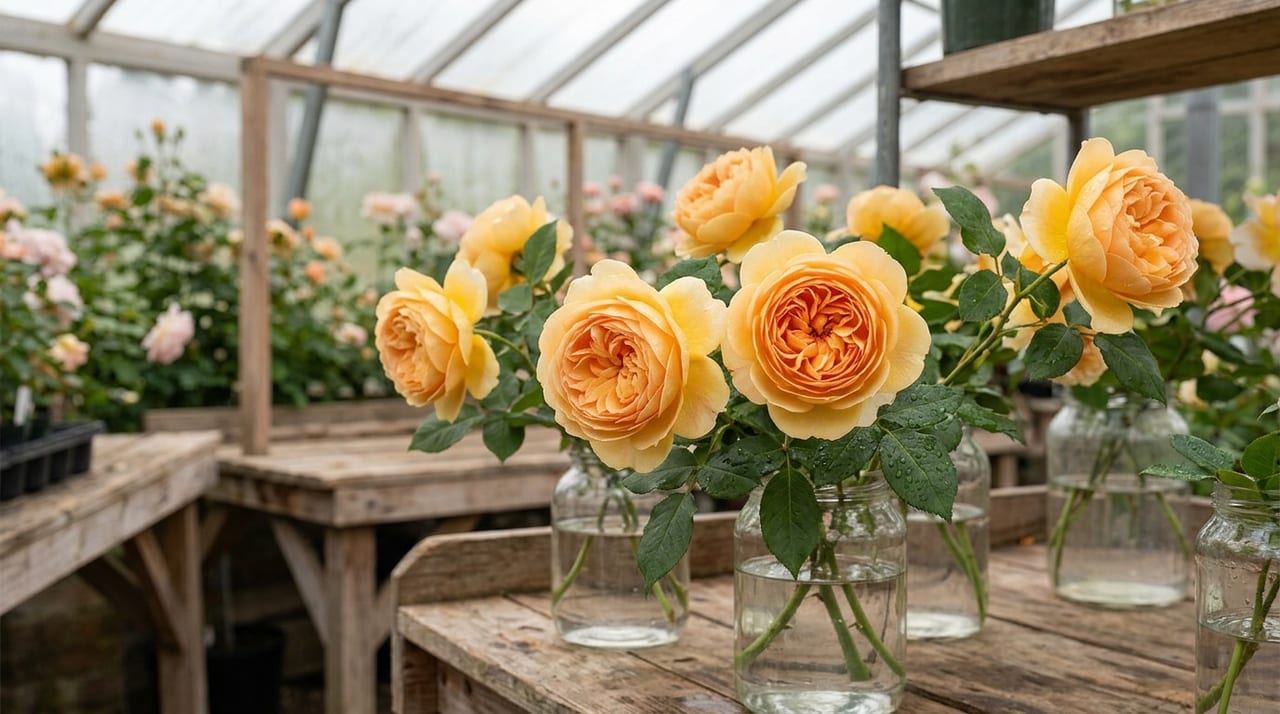
Key Takeaways
This guide explains the practical cultivation of David Austin's English rose 'Golden Celebration,' covering its characteristics, sunlight, planting, watering, fertilizing, pruning, training, and pest and disease management.
Related Species
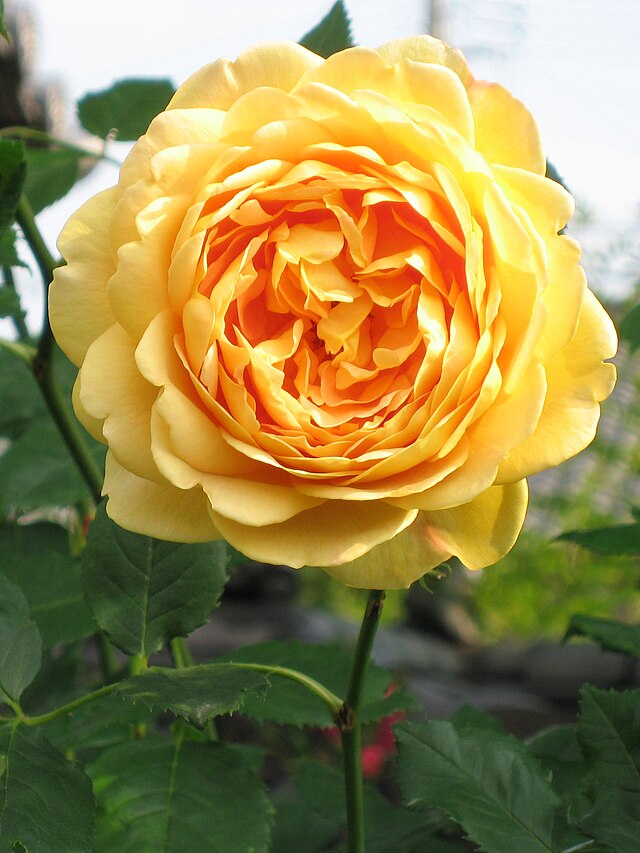
Among David Austin's English roses, the variety that commands an overwhelming presence is 'Golden Celebration.' The large, cup-shaped flowers with their gradient from a deep yellow to apricot and orange, combined with a strong fragrance that blends tea scent with fruity sweetness, possess the power to transform the very air with just one bloom in the garden. While based on a shrub form, it also possesses semi-climbing characteristics, making it a versatile variety that looks equally refined whether grown as an independent plant or trained along supports or fences. Here, we present the key points of daily care to enjoy this appealing rose in your garden or balcony for years to come.
Know the Characteristics and Appeal of the Variety
The greatest appeal of Golden Celebration lies in the size of its flowers and the richness of their color. The cup-shaped flowers, which become larger than the palm of one's hand when fully open, feature outer petals that are pale yellow, transitioning toward the center to a deeper, orange-tinted yellow, creating a gradient of light within a single bloom. The fragrance is strong, combining tea-like scent with fruity sweetness, and even as a cut flower displayed indoors, it makes its presence known.
The plant's growth habit is fundamentally shrubby (semi-spreading, low-growing), but is characterized by vigorous, well-extending branches that can be handled as a semi-climber. When planted in the ground, it can be trained into a compact, rounded form as an independent specimen, or it can be guided along stakes, obelisks, or fences to be enjoyed like a climbing rose across a wall. Originally known as a very hardy variety, it is also manageable for those attempting English roses for the first time.
Sunlight and Location Selection
As is true for roses in general, Golden Celebration also loves sunlight. Choose a location where it receives at least 5 to 6 hours of direct sun per day, preferably with good morning sun throughout. Insufficient sunlight will not only reduce flowering but will also cause branches to become spindly, leading to gaps in the plant structure and increased susceptibility to pests and diseases.
Good air circulation is equally important. When moisture accumulates inside the plant, diseases such as black spot and powdery mildew become more likely to occur. Maintain adequate spacing between adjacent plants and walls, and manage the plant through pruning so that branches and foliage do not become too dense. When training semi-climbing branches, ensure space between the wall or fence and the plant, creating pathways for air to flow, which will help prevent disease. Even when growing in containers, make it a point to place them in an open space with good air circulation.
Planting and Soil Preparation
The ideal planting period is from late autumn to early spring, during the dormant season. For ground planting, dig a planting hole approximately 50 centimeters in both diameter and depth. Mix the excavated soil thoroughly with well-aged compost and leaf mold to create soil with both good drainage and water retention. Roses dislike excessive moisture while also being sensitive to dryness, so soil with well-developed aggregate structure—light and fluffy—is ideal.
When growing in containers, prepare a pot of at least size 10 (approximately 30 centimeters in diameter) for a large sapling, and using commercially available rose-specific potting soil mixed with bark compost and leaf mold will make management easier. Take care not to break apart the root ball too much when planting, and water generously after planting to help it settle into the soil. Plant the grafted portion (the boundary between rootstock and scion) just barely below the soil surface—this depth helps stabilize the plant.
Basics of Watering and Fertilizing
For ground-planted specimens with well-established roots, watering can generally be left to natural rainfall, but during the intense heat and drought of midsummer and within the first or two years after planting when the plant is young, water generously whenever the soil surface becomes dry. Container-grown plants dry out more quickly, so the basic rule is to water thoroughly until water drains from the pot holes whenever the soil surface becomes dry.
Fertilizing is fundamentally done several times throughout the year in divided applications.
- Dormant season fertilizer (base fertilizer): In winter (around January to February), during the dormant season, bury fertilizers centered on bone meal or oil cake around the base of the plant.
- Post-bloom fertilizer: Apply after flowering.
- Additional fertilizers: From summer through autumn, regularly apply slow-release compound fertilizer or liquid fertilizer.
Excessive nitrogen will cause branches and foliage to flourish while reducing flowering and increasing disease susceptibility, so selecting a rose-specific fertilizer that contains phosphorus and potash in balanced proportions will provide peace of mind.
Pruning and Training to Shape the Plant
Pruning is broadly divided into two timing periods: winter 'major pruning' and summer 'summer pruning (shaping).' Winter pruning is performed during the dormant period in January to February. Remove dead branches, thin or weak branches, and any branches growing inward at their base, then cut back vigorous branches just above outward-facing buds. Because Golden Celebration has semi-climbing characteristics, when training it as an independent plant, use the guideline of cutting it back to approximately one-third to half of its overall height. When training it as a climber, retain the primary long-growing shoots while pruning away unnecessary branches.
Summer pruning is performed to prevent the plant from becoming exhausted from the intense summer heat and to prepare for autumn flowering. It suffices to lightly trim overgrown branches while also removing spent flowers. When training along supports, positioning long-growing branches at as close to a horizontal angle as possible along stakes or fences allows new flowering buds to emerge more readily from each node along the branch, greatly increasing the number of flowers. When tying in trained branches, remember to loosen the training ties occasionally as the plant grows to avoid overly constricting the branches.
Pest and Disease Management and Tips for Enjoying Blooms Longer
Of particular concern in rose cultivation are black spot, powdery mildew, and aphids.
- Black spot: A disease where black spots appear on leaves, gradually yellowing and dropping. Since spores spread via rain and soil splash, it is effective to avoid wetting the leaves when watering and to prevent soil splash by using ground cover or mulch.
- Powdery mildew: A disease where leaves and new growth appear dusted with a white powder. Poor air circulation and excess fertilizer (particularly nitrogen excess) are common contributing factors. Focus on maintaining good air circulation through appropriate pruning and practicing balanced fertilization. For both diseases, promptly remove and dispose of affected leaves, and when necessary, preventively apply garden fungicide.
- Aphids: These gather around new growth and buds, sucking nutrients and hindering growth while also causing secondary diseases such as sooty mold. Upon discovery, remove them by hand, blast them away with a strong spray of water, or use a specialized insecticide to eliminate them quickly. Creating an environment where natural predators such as ladybugs can thrive is also a long-term prevention strategy.
To enjoy blooms for an extended period, the practice of 'spent flower removal'—regularly removing spent flowers—is also essential. If spent flowers are left on the plant, it will direct energy to seed production there, reducing vigor for the next flowers. Cutting back just below the flower stalk and just above the five-leaflet leaves will encourage new flower buds to emerge again from that point. Golden Celebration is a repeat-flowering variety with strong continuous blooming capacity, and under suitable conditions will bloom repeatedly from spring through autumn. By continuing careful maintenance day after day, you will be able to enjoy those rich golden flowers and their deep fragrance throughout the long season.
GrowerDirect offers a diverse selection of rose saplings, including English roses like these, directly from growers throughout Japan through our marketplace platform. When unsure about growing methods, refer to the cultivation notes written by each grower on their product pages and find the rose that best suits your garden or balcony.