Complete Care Guide for Camellias and Sasanqua|Variety Selection, Pruning Timing, and Poison-Haired Caterpillar Control
Complete care guide for camellias (tsubaki) and sasanqua. Learn variety selection based on bloom timing, flower type, and tree height; how to create humus-rich acidic soil; post-bloom pruning techniques to ensure next year's flower buds; poison-haired caterpillar (tea tussock moth) control and camellia leaf gall (mochi-byo) management—a practical guide for beginners.
Key Takeaways
Complete care guide for camellias (tsubaki) and sasanqua. Learn variety selection based on bloom timing, flower type, and tree height; how to create humus-rich acidic soil; post-bloom pruning techniques to ensure next year's flower buds; poison-haired caterpillar (tea tussock moth) control and camellia leaf gall (mochi-byo) management—a practical guide for beginners.
Related Species
About Camellias and Sasanqua
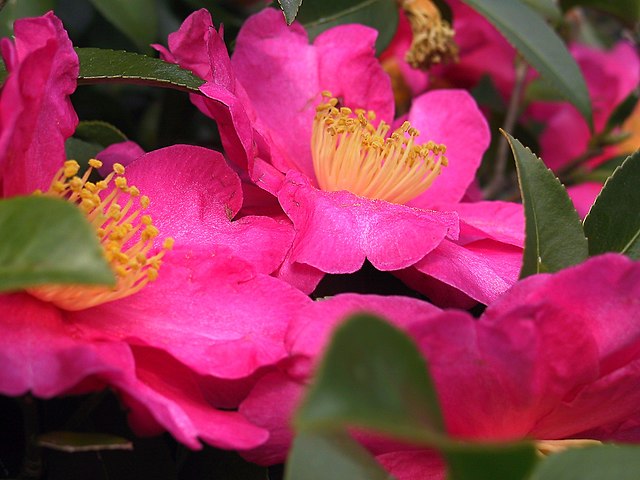
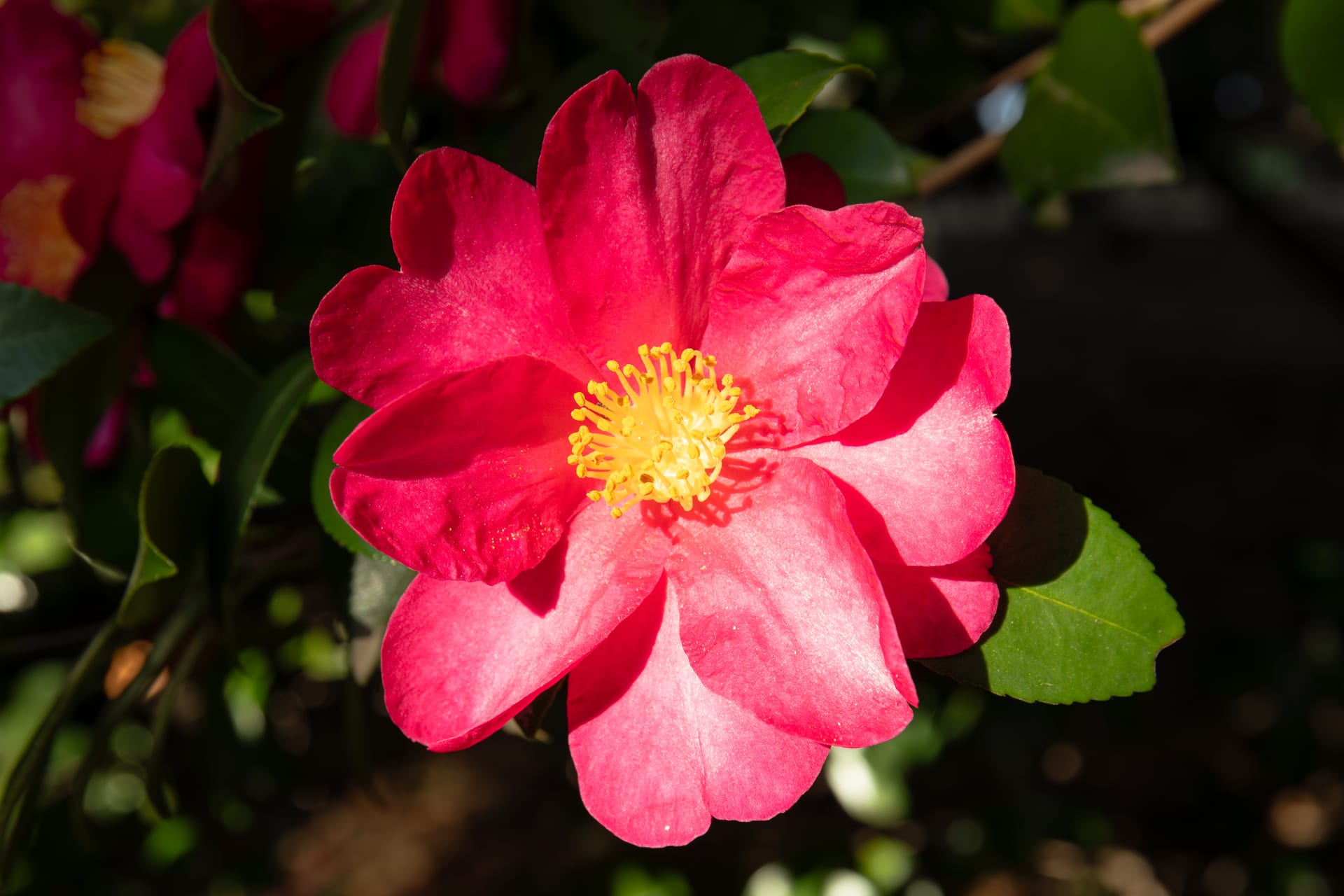
Camellia (Camellia japonica) and Sasanqua (Camellia sasanqua) are both evergreen trees in the Camelliaceae family, genus Camellia. These are iconic flowering trees of Japan, long cherished in tea ceremony, flower arrangement, and garden landscaping. Flowers display diverse forms—single, double, multiple-layered, and peony-form blooms—and come in abundant varieties of white, pink, red, and striped (variegated) colors.
Camellia blooms from winter through early spring (December–April) and characteristically drops entire flowers. Sasanqua blooms from autumn through winter (October–January), with petals scattering individually. This difference in flower drop is one of the most recognizable distinguishing characteristics.
Additionally, camellia leaves are thick and glossy, while sasanqua leaves are thinner with fine serrated edges. Camellias tend to grow taller, while sasanqua typically stays more compact and bushy. Other ornamental shrubs with similar characteristics include rhododendrons and azaleas; comparing them on points like acidic soil preference and pruning timing deepens your understanding of their care.
How to Choose Varieties
Thousands of varieties of camellia and sasanqua exist. Keep these points in mind when selecting:
| Point | Consideration |
|---|---|
| Bloom timing | Early (November+), mid-season (January–February), late (March–April) |
| Flower form | Single, double, multiple-layered, peony-form |
| Plant height | Varies greatly from compact cultivars to tall trees |
| Intended use | Garden tree, hedge, potted plant, tea ceremony flower |
| Disease resistance | Selecting varieties resistant to camellia leaf gall and anthracnose reduces maintenance |
Sasanqua generally prefers sunlight and handles pruning well, making it ideal for hedges. Many camellia varieties bloom in partial shade, making them popular for shaded gardens and tea gardens.
Sunlight and Location
Camellia
- Grows well in both partial shade and full sun
- Avoid intense western sun, which can scorch leaves
- Direct winter north wind can damage flower buds
- Ideal locations are the east side of buildings or the edge of well-lit woodland
Sasanqua
- Prefers full sun (more light means better flowering)
- Somewhat sensitive to cold wind, but generally more cold-hardy than camellia
- For hedges, south- or east-facing sunny locations are ideal
For potted plants, use 4–11 size pots, planting one specimen per pot; keep outdoors from spring through autumn. Winter outdoor placement is fine, but large-flowered varieties benefit from frost protection during bloom to extend flower longevity.
Watering and Soil Management
While camellias and sasanqua dislike drought, they also won't tolerate waterlogging.
Watering Potted Plants
- Water thoroughly when the soil surface becomes dry
- Check soil moisture frequently during bloom and hot summer periods
- Don't let water pool in saucers
- Summer drought can reduce next year's flowering
Watering In-Ground Plants
- Water during dry spells for the first 1–2 years after planting
- Once established, rely mainly on natural rainfall
- Water every 1–2 weeks during extended summer heat
Soil Mix (Potted Plants) They prefer slightly acidic (pH 5.5–6.5), humus-rich, well-draining soil.
- Small-grain red volcanic soil 50% + leaf mold 40% + perlite 10%
- Or use commercial camellia/sasanqua potting mix
Feeding and Pruning Tips
Fertilizing Apply fertilizer 2–3 times per year.
| Timing | Fertilizer Type and Purpose |
|---|---|
| After bloom (March–April) | Slow-release fertilizer (post-bloom feeding) |
| Before summer (June) | Light supplemental feeding (maintain vigor) |
| Autumn (September–October) | Slow-release fertilizer (flower bud development) |
Don't fertilize during hot summer periods or while blooming (December–March). Over-fertilizing causes root damage and weak, leggy growth.
Pruning Prune immediately after bloom (March–May). Flower buds for next year begin forming 1–2 months after bloom, so late pruning removes developing buds.
- Basically, remove only dead wood, crossing branches, and inward-facing growth
- If major reshaping is needed, do it in March–April
- Sasanqua responds well to hedge-pruning for a compact form
- Applying fungicide to pruning cuts prevents disease infection
Pest and Disease Management
Poison-Haired Caterpillar This is the primary pest of camellias and sasanqua. Caterpillar hairs are toxic; skin contact causes severe itching and rash. Spray insecticide (such as acephate) during peak seasons (May–June and August–September); locate and remove egg masses early. Always wear protective clothing, mask, and goggles when handling. Toxic hairs remain even on shed skins, so never touch fallen caterpillars with bare hands.
Source: MAFF Pesticide Registration Database (GF Ortran Wettable Powder) / MAFF Pesticide Registration Database (GF Ortran Liquid)
Camellia Leaf Gall Leaves and flower buds swell and turn white; occurs during wet seasons. Remove affected parts and apply preventive fungicide (such as mancozeb).
Anthracnose Dark brown lesions appear on leaves and branches. Remove affected branches and leaves, then apply preventive fungicide.
Key Tips for Growing Camellias and Sasanqua Successfully
Once established, camellias and sasanqua require minimal care and reliably produce beautiful blooms year after year. Here are the key points for success:
Annual Care Calendar
| Period | Main Tasks |
|---|---|
| March–April (Post-bloom) | Pruning, post-bloom feeding, repotting (potted plants) |
| May–June | Monitor new growth, pest and disease prevention |
| July–August | Manage drought stress, control second generation of poison caterpillar |
| September–October | Apply autumn fertilizer, monitor flower buds |
| November–January | Sasanqua blooming period, careful watering |
| December–February | Camellia blooming period, frost protection for large-flowered varieties |
Variety selection greatly affects how demanding care will be. If poison caterpillar control seems daunting, consider choosing camellia varieties or locations with naturally lower pest pressure rather than sasanqua. Consulting with growers and specialist nurseries to find varieties suited to your garden is the first step toward long-term enjoyment.
Purchasing and Long-Term Care
Selecting Seedlings
- Choose vigorous plants with multiple flower buds
- Leaves should be glossy and free of disease spots or insect damage
- Roots should be well-established and stable in the pot
- For in-ground planting, select specimens with a well-formed root ball at appropriate size
Once planted in a suitable location, camellias and sasanqua remain in place for many years. During the first year, monitor establishment; afterward, plants become increasingly vigorous each year. Choose in-ground planting for large specimens or container growing for limited spaces, depending on your lifestyle.
Benefits of Purchasing from Growers Buying from specialized growers makes it easier to find rare varieties and cultivars with specific flower forms and colors. Additionally, you can get personalized care advice tailored to your specific variety. Since management needs (cold hardiness, pruning timing, bloom habit) vary by variety, advice from growers familiar with specific cultivars greatly helps long-term care.
Camellias and sasanqua are deeply rooted in Japanese culture. In tea ceremony, a single camellia symbolizes "wabi" (austere beauty) and adorns the tearoom; in flower arrangement, it is an essential winter material. By cultivating them while appreciating their connection to Japanese culture, you'll develop a richer relationship with these plants beyond mere garden ornament. For overall garden composition, consider using evergreen camellias and sasanqua as backdrop plantings, with seasonal flowers arranged in front. For more on garden bed design, see our guide to selecting annuals and perennials.