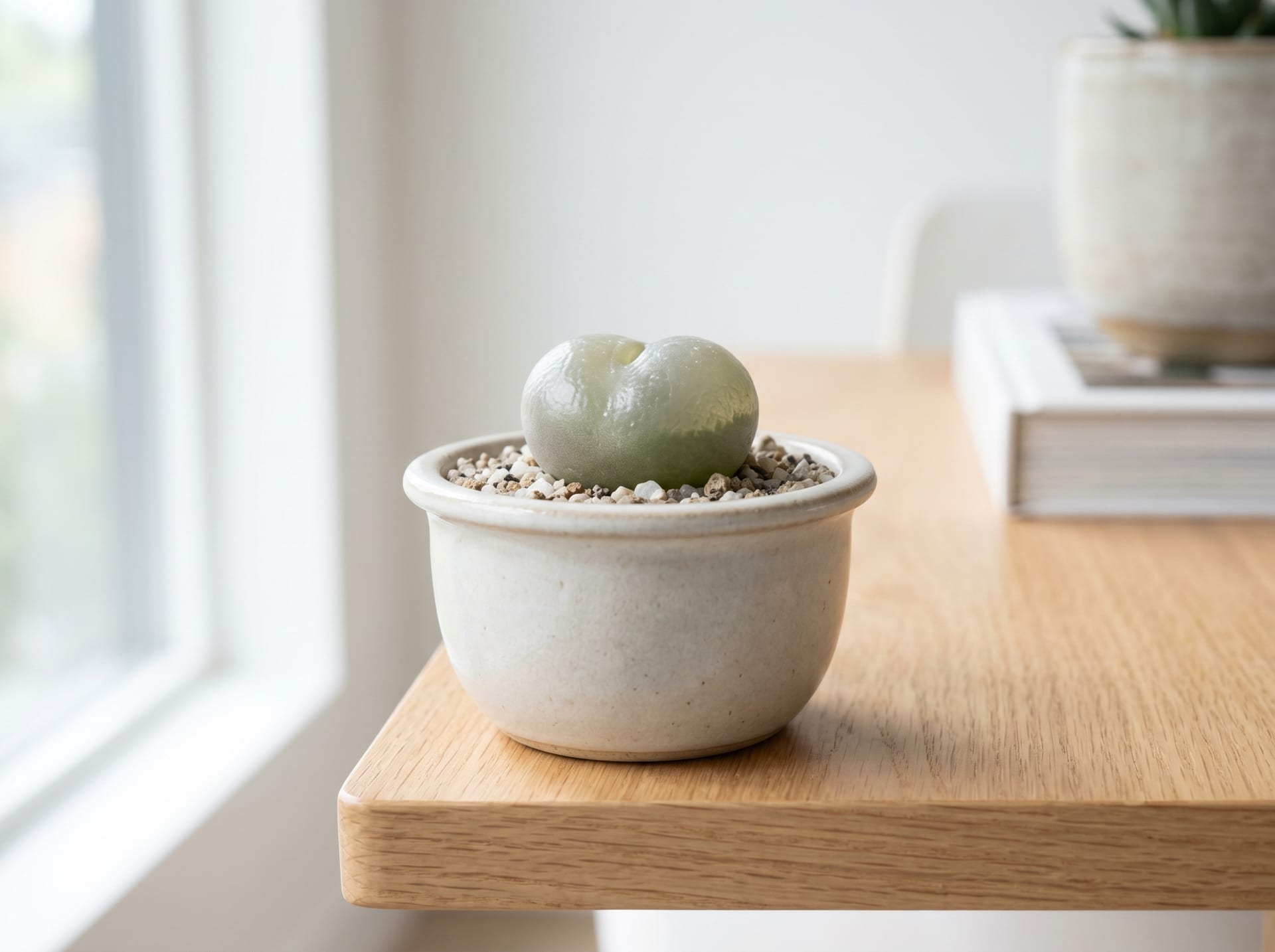
Conophytum
Related to lithops. Small squishy spheres clustering together are adorable. Winter grower active autumn-winter.
View Conophytum encyclopedia →Grower Wanted!
List your plants on GrowerDirect and sell directly to customers nationwide!
6 Transparency Commitments from GrowerDirect
Grower disclose this information for Succulents & Cacti. We guarantee transparency in variety, origin, light requirements, and difficulty level.
- Variety Disclosed
- Real Photos
- Color Details
- Origin Disclosed
- Light Requirements
- Difficulty Level
Browse all 131 varieties
Light Requirements
Difficulty Level
Verified growers wanted for Succulents & Cacti
Growers are signing up now ahead of launch. Subscribe to be notified when new listings go live.
Getting alerts is free with a member account. When new listings match your saved search, we'll notify you by email and in-app.
Browse other categories
Verified growers (preview)
Are you growing succulents & cacti?
Register as a grower and connect with buyers directly.
Apply as a growerConophytum key facts
- Growing Difficulty
- Intermediate
- Lifespan
- 10+ years
- Size
- 1-3cm (per head)
- Temperature
- 5〜25℃
- Light & Placement
- Needs plenty of light but avoid direct summer sun. Keep it in a bright, well-ventilated spot.
- Watering
- Mist autumn-spring. Complete drought in summer
- Temperature & Overwintering
- Ideal range is 5-25°C. During its winter growing season keep it off frost in a sunny spot under eaves or indoors.
- Dormancy Care
- A winter grower active from autumn to spring. In summer it rests inside its dried outer skin, so withhold water completely and keep it in an airy place.
- Shedding
- Sheds once yearly — no water during shedding
- Notes
- Weak to heat and humidity — ensure good ventilation
About Conophytum
Conophytum is a succulent in the Mesembryanthemaceae family, native to the arid rocky outcrops of South Africa and Namibia, celebrated alongside Lithops as one of the world's "living jewels." The genus name derives from the Greek for "cone plant," reflecting its most distinctive feature: two leaves so fully fused that they form a seamless sphere or cone-shaped body. Each head measures just 1–3 cm, yet in autumn the plant produces delicate flowers from the central fissure — a charming contrast to its stone-like appearance. The highlight of cultivation is the annual molting cycle, where the old skin is shed to reveal a fresh new head, an experience unique among houseplants. With proper care, Conophytum can live for over a decade, forming ever-larger clusters that become more spectacular each year. Its minimal watering needs and compact size make it an increasingly popular entry point into the world of succulent growing.
7 things to know before growing Conophytum
1Summer Dormancy
Conophytum enters full dormancy in summer (roughly June–August). During this period, withhold water entirely or water only minimally, and keep the plant in a shaded, well-ventilated spot. Watering too much in summer can cause root rot or collapse of the bodies.
2Watch the Skin Shed
As autumn arrives, the old outer skin dries out and a new body emerges from within — a process called shedding. During this time, reduce watering and never force the old skin off. Allow the process to happen naturally for the healthiest results.
3Water in Fall and Winter
The active growing season runs from autumn through winter (roughly September–April). During this period, water thoroughly once the soil has completely dried out. Good drainage is essential — use a well-draining mix and ensure no water pools at the bottom of the pot.
4Loves Bright Light
Conophytum thrives in bright light. During the growing season, place it on a sunny outdoor ledge or a bright windowsill. Insufficient light causes the bodies to stretch and become etiolated. However, protect dormant plants from intense direct sunlight in midsummer.
5Soil and Pot Choice
A well-draining cactus or succulent mix combined with 20–30% perlite or coarse sand works well. Unglazed terra cotta pots or shallow containers help prevent moisture buildup around the roots. Avoid oversized pots, as excess soil retains water and increases the risk of rot.
6Blooms in Autumn–Winter
During the growing season, Conophytum produces small daisy-like flowers that emerge from the cleft between the lobes. Depending on the variety, blooms range from white and yellow to pink and purple, adding to their ornamental appeal. Adequate sunlight and proper watering encourage reliable flowering.
7Clumping and Division
Over the years, Conophytum naturally multiplies into dense clumps. When the pot becomes crowded, divide the cluster at the start of the autumn growing season using a clean, sharp tool. Allow cut surfaces to dry for a day or two before planting in fresh soil, and keep newly divided plants out of direct sun until established.
Frequently asked questions about Conophytum
- Q.The body looks shriveled in summer — is that normal?
- A.Shriveling during summer dormancy is completely normal. The body may deflate slightly while watering is withheld, but it will recover once watering resumes in autumn. If the shrinkage seems extreme, give a very small amount of water once a month.
- Q.Can I peel off the old skin during molting?
- A.It is best to let the old skin fall away naturally. Forcing it off can damage the surface of the new body. Only remove it with tweezers if the old skin has dried completely and is clearly impeding the new growth.
- Q.How do I get my Conophytum to flower?
- A.Sufficient light and proper summer drought are key to blooming. Allowing a complete summer dormancy and resuming watering in autumn resets the growth cycle and encourages flower bud formation. Plants that receive too little light often fail to bloom.
- Q.How is Conophytum different from Lithops?
- A.Both belong to the Mesembryanthemaceae family, but Conophytum is generally smaller, with bodies that tend to be more spherical or conical. It also offers a wider variety of flower colors and tends to form denser clumps as it matures, more readily than most Lithops.
- Q.How do I propagate — division or seed?
- A.Division is recommended for beginners. In early autumn, separate clumps into groups of 2–3 heads, allow the cut surfaces to dry for one to two days, then replant. Success rates are high with this method. Growing from seed takes longer but offers the rewarding experience of raising new varieties.
Handy Growing Tools for Conophytum
Learn more about Conophytum in the encyclopedia
View Conophytum encyclopedia entry →
Care difficulty, size, origin and light needs — all basics covered.
Conophytum related articles
See more Conophytum articles →More in this category
Can't find the plant you're looking for?
Post your wishes for free and growers with matching plants will contact you with introductions.