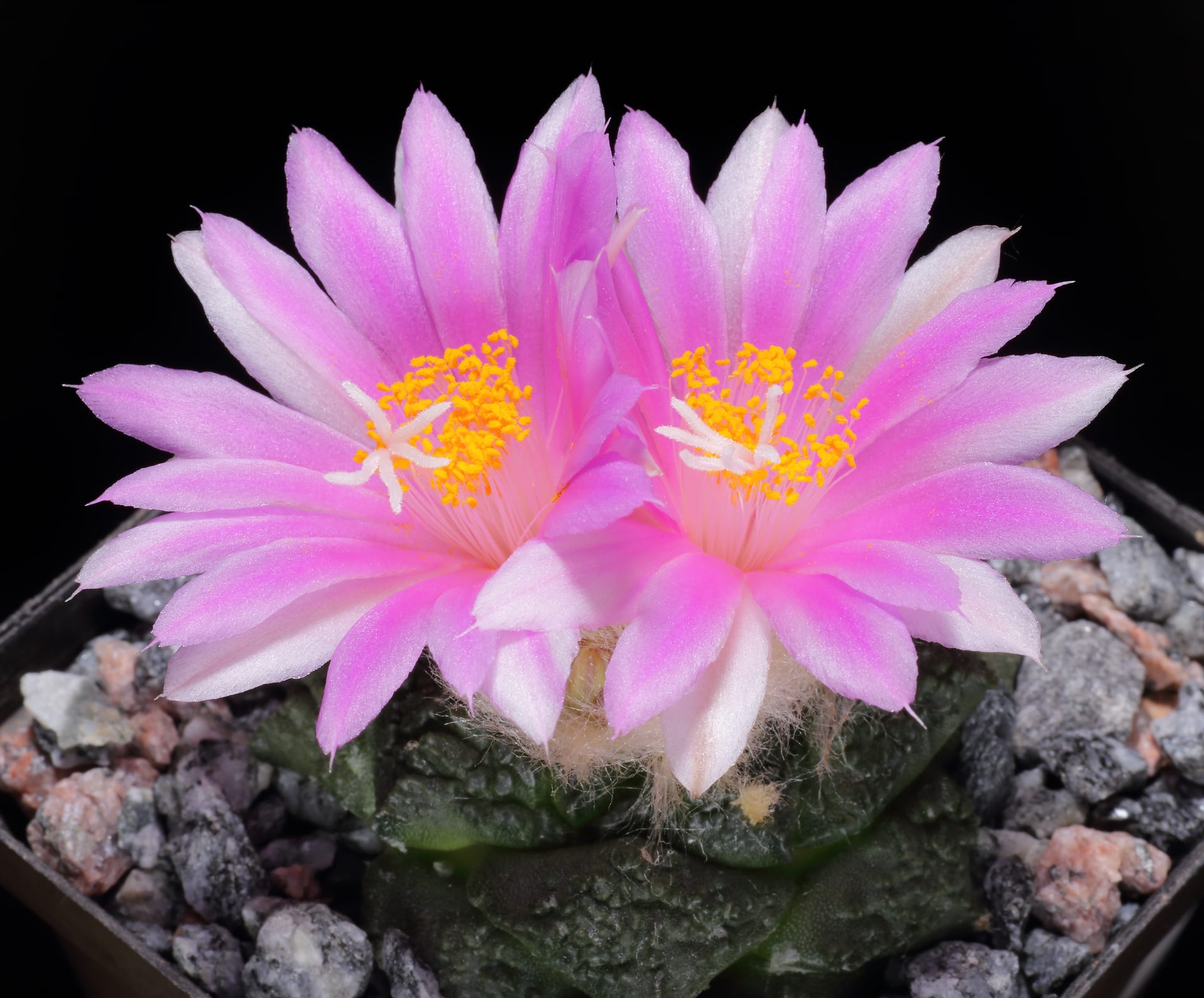
 © C T Johansson / CC BY-SA 3.0
Living rock cactus
Living rock cactus (Ariocarpus) is a spineless, flattened cactus whose grooved, triangular tubercles overlap like petals, much like the pattern on a tortoise shell. Its low rosette sits close to the soil like a stone, and in autumn it produces pink-purple flowers from the crown. It is a representative species of the Ariocarpus group and grows very slowly, taking 10 years or more to mature. The body typically measures about 10 cm across (rarely 15 cm) and 1.5–10 cm tall. Rated for experienced growers, it rewards patient care. It is listed in CITES Appendix I and designated an Internationally Endangered Species under Japan's Act on Conservation of Endangered Species (種の保存法), so transferring a plant by sale or gift, or displaying or advertising it for sale, requires an individual registration certificate, and this applies to plants propagated in Japan too. Plants without a certificate cannot be bought or sold, so always confirm the certificate when buying.
View Living rock cactus encyclopedia →0% commission on your first sales!Register by September 30, 2026 and your first 2 plants are commission-free!
Grower Wanted!
List your plants on GrowerDirect and sell directly to customers nationwide!
6 Transparency Commitments from GrowerDirect
Grower disclose this information for Succulents & Cacti. We guarantee transparency in variety, origin, light requirements, and difficulty level.
- Variety Disclosed
- Real Photos
- Color Details
- Origin Disclosed
- Light Requirements
- Difficulty Level
Browse all 131 varieties
Light Requirements
Difficulty Level
Verified growers wanted for Succulents & Cacti
Growers are signing up now ahead of launch. Subscribe to be notified when new listings go live.
Getting alerts is free with a member account. When new listings match your saved search, we'll notify you by email and in-app.
Browse other categories
Verified growers (preview)
Are you growing succulents & cacti?
Register as a grower and connect with buyers directly.
Apply as a growerLiving rock cactus key facts
- Growing Difficulty
- Advanced
- Lifespan
- Perennial; extremely slow, taking a decade or more to mature
- Size
- 10–15 cm across, 1.5–10 cm tall (up to about 20 cm across in cultivation)
- Watering
- Little needed; a small amount of slow-release organic fertiliser at repotting
- Light & Placement
- In habitat most of the body is buried, so it dislikes intense light. From spring to autumn keep it under 30–50% shade, out of the rain or in a cold frame; in winter keep it in a greenhouse or a sunny room.
- Watering
- A summer grower. Water thoroughly when the mix dries; in midsummer and winter just moisten it about twice a month. Water at the base so the woolly crown is not washed away.
- Temperature & Overwintering
- It likes warmth and starts growing later in spring than most cacti. A Japanese reference gives 3°C as the minimum survival temperature. Watch for sunburn when moving plants or during sudden sunny spells.
- Soil & Repotting
- It has a thick taproot, so use a deeper pot and a free-draining mix. Repot every 2–3 years, adding a little slow-release organic fertiliser.
- Propagation
- Raised from seed; sometimes grafted onto a columnar stock to speed growth.
- Pests & Cautions
- Scale insects are common and hide between the tubercles. As a CITES Appendix I and Japanese Internationally Endangered Species, transfers require a registration certificate, including for plants propagated in Japan.
About Living rock cactus
Learn about the living rock cactus (Ariocarpus): a spineless, flat cactus with overlapping grooved tubercles and pink-purple autumn flowers. Very slow-growing and best suited to experienced growers.
7 things to know before growing Living rock cactus
1Dislikes strong light, so shade it
In the wild most of its body sits buried in the soil, so it dislikes strong light. From spring to autumn, keep it rain-sheltered outdoors or in a simple greenhouse under 30–50% shade, and in winter move it to a greenhouse or a sunny indoor spot. Watch for sunburn after moving it or during sunny breaks in the rainy season.
2Water sparingly
Water mainly in the spring and autumn growing seasons, and only once the soil has dried out completely. Cut back in midsummer and especially in winter. Water can pool in the crown and cause damage, so apply it at the base of the plant.
3Fast-draining soil
Use a low-organic mix that puts drainage first. A cactus blend based on granular materials such as pumice, akadama, or hyuga soil is a good guide. Avoid fine or moisture-retentive soil to reduce the risk of root rot.
4Choose a deep pot
Although the visible body is low and flat, this cactus tends to send a thick root deep into the soil. A pot with some depth suits the root and keeps the plant stable. Fast-drying pots such as unglazed clay work well too.
5Repot only occasionally
Because growth is so slow, frequent repotting is unnecessary. Repot in spring or autumn when the soil has aged and drains poorly, or when the pot becomes cramped. Wait a few days before watering afterward so any damaged roots can recover.
6Summer and winter care
In midsummer, avoid stuffy air and harsh light by moving the plant to bright shade with good airflow, and water less. In winter, keep it away from frost and freezing and let it stay on the dry side while dormant. During long spells of rain, move it under eaves or to a bright indoor spot.
7Choosing a plant and the registration certificate
Look for a plump, firm body with sturdy tubercles. Check the base and the bottoms of the tubercles for discoloration or soft spots, and look between the tubercles for hidden scale insects. As an Appendix I species, it must come with a registration certificate under Japan's Act on Conservation of Endangered Species (種の保存法), so always confirm the certificate when buying.
Frequently asked questions about Living rock cactus
- Q.Can a beginner grow it?
- A.It is rated for experienced growers. Watering and soil management take practice, so it helps to get a feel for them with other cacti or succulents first.
- Q.When does it bloom?
- A.It blooms in autumn, producing pink-purple flowers from the crown. Because the plant takes a long time to mature, a small plant may need to wait before it flowers.
- Q.How large does it grow?
- A.It reaches about 10 cm across (rarely 15 cm) and 1.5–10 cm tall. Because it grows so slowly, reaching that size takes many years.
- Q.Is slow growth a problem?
- A.No, it is simply how this plant is. It takes 10 years or more to mature, and pushing it with extra water or fertilizer can harm it.
- Q.How often should I water it?
- A.Go by how dry the soil is rather than a fixed schedule. Water in the spring and autumn growing seasons once the soil has dried out completely, and cut back in midsummer and winter.
Handy Growing Tools for Living rock cactus
Learn more about Living rock cactus in the encyclopedia
View Living rock cactus encyclopedia entry →
Care difficulty, size, origin and light needs — all basics covered.
More in this category
Can't find the plant you're looking for?
Post your wishes for free and growers with matching plants will contact you with introductions.