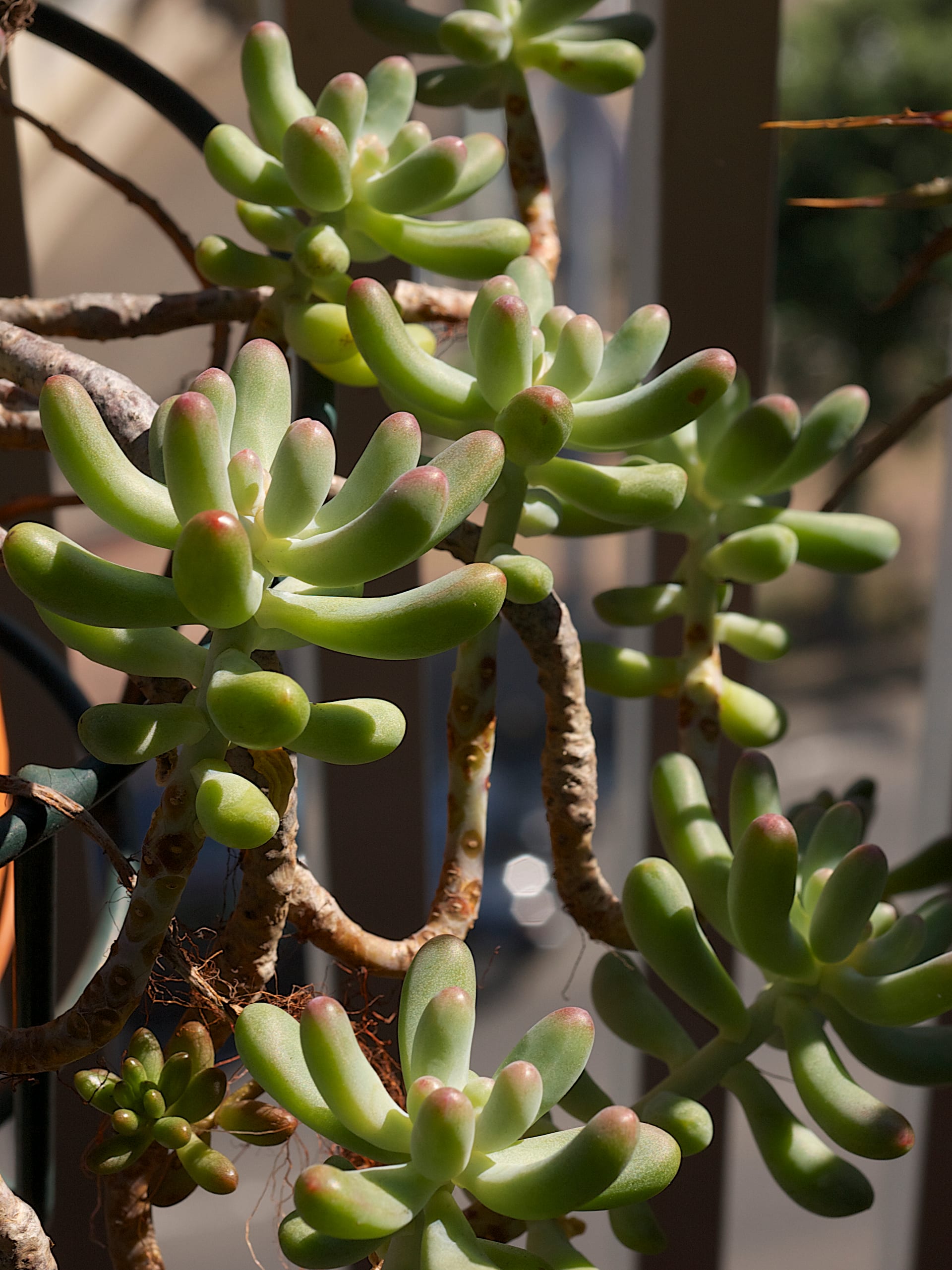
 © salchuiwt from Japan / CC BY-SA 2.0
Jelly bean plant
Otomegokoro, called the jelly bean plant in English, is a Sedum whose pale green, powdery leaves cluster around the stems like little beans. Each leaf is about 1 to 4 cm long and 6 to 10 mm thick, and the plant stands roughly 10 to 30 cm tall. Strong sun, dry spells and winter cold turn the leaf tips red, which is the main highlight through the seasons. It is a perennial rated as beginner-friendly, and with bright light, good airflow and restrained watering it is easy to keep, including as an accent in mixed planters.
View Jelly bean plant encyclopedia →0% commission on your first sales!Register by September 30, 2026 and your first 2 plants are commission-free!
Grower Wanted!
List your plants on GrowerDirect and sell directly to customers nationwide!
6 Transparency Commitments from GrowerDirect
Grower disclose this information for Succulents & Cacti. We guarantee transparency in variety, origin, light requirements, and difficulty level.
- Variety Disclosed
- Real Photos
- Color Details
- Origin Disclosed
- Light Requirements
- Difficulty Level
Browse all 131 varieties
Light Requirements
Difficulty Level
Verified growers wanted for Succulents & Cacti
Growers are signing up now ahead of launch. Subscribe to be notified when new listings go live.
Getting alerts is free with a member account. When new listings match your saved search, we'll notify you by email and in-app.
Browse other categories
Verified growers (preview)
Are you growing succulents & cacti?
Register as a grower and connect with buyers directly.
Apply as a growerJelly bean plant key facts
- Growing Difficulty
- Beginner-friendly
- Lifespan
- Perennial (little published data on lifespan)
- Size
- 10-30 cm tall; leaves 1-4 cm long and 6-10 mm thick
- Watering
- A little slow-release or liquid fertiliser in spring and autumn
- Light & Placement
- Grow it outdoors in full sun in spring and autumn. It dislikes heat and humidity, so from the rainy season through summer keep it in airy partial shade out of the rain. Colour develops as autumn cools and lasts until spring.
- Watering
- It is a spring-autumn grower (March-June and September-November). Water thoroughly when the surface dries in these periods; from the end of the rainy season through the summer rest hold back and keep it out of the rain. Keeping it on the dry side brings out the red tips.
- Temperature & Overwintering
- Overwinter it free from frost. Cold deepens the tip colour, but do not let it freeze.
- Soil & Repotting
- Use a free-draining mix and repot every 1-2 years just before or early in a growing season, cutting back leggy stems at the same time.
- Propagation
- Stem cuttings root without trouble. Fallen leaves sometimes root, but Japanese sources say leaf cuttings rarely succeed, so use stem cuttings for reliable results, in March-May or September-October.
- Pests & Cautions
- Scale insects and aphids may attack stems and leaves, and root mealybugs the roots. Older plants become straggly; cut them back to renew them.
About Jelly bean plant
Otomegokoro (jelly bean plant) is a Sedum with powdery, pale green, bean-like leaves whose tips blush red in strong sun and winter cold. A beginner-friendly perennial 10 to 30 cm tall, with the basics of light, watering and seasonal care.
7 things to know before growing Jelly bean plant
1Bright light, good airflow
Outdoors, choose a sunny spot; indoors, a bright window. With too little light the stems stretch, the leaves spread apart and the red tips fade. Strong sun brings out the red color, but move the plant into it gradually rather than all at once.
2Water only when dry
Let the soil dry out completely, then water thoroughly until it drains from the bottom. The leaves store water, so overwatering invites root rot and leggy growth. The white powder rubs off easily, so pour water gently at the base rather than over the leaves.
3Fast-draining soil
A cactus and succulent mix, or a blend of akadama and pumice, drains well and suits this plant. Use a pot with drainage holes and never let water pool in the saucer. Soil that stays wet leaves the roots stuffy and prone to rot.
4Repot when roots fill
Repot when roots crowd the pot or water starts draining slowly. Shake off some of the old soil and move the plant to a pot one size larger. Choose mild spring or autumn weather, and hold off watering for a few days afterward.
5Summer humidity, winter cold
In hot, humid weather, move the plant to bright shade with good airflow and water sparingly to prevent stuffiness. Winter cold turns the tips red, but where frost or freezing is expected, bring it under eaves or indoors. Reviewing its position each season is the key to keeping it for years.
6Choosing a healthy plant
Look for plump, firm leaves with the white powder still evenly in place. Avoid plants with very stretched stems or shriveled leaves. Red tips come from sun or cold and are part of this plant's charm.
7Handle leaves gently
The leaves can pop off at a touch, so hold the stem or pot rather than the leaves when moving the plant. Fallen leaves sometimes root, but leaf cuttings are said to succeed only rarely, so for reliable propagation take stem cuttings instead. The best times are March to May and September to October.
Frequently asked questions about Jelly bean plant
- Q.Can a beginner grow Otomegokoro?
- A.Yes, it is rated beginner-friendly. Give it bright light and good airflow, and water only after the soil has dried. Overwatering is the main thing to watch at first.
- Q.Are the red leaf tips a sign of disease?
- A.No. Sun, dryness and winter cold naturally turn the tips red, and it is one of the plant's highlights. In low light the color fades and the stems tend to stretch.
- Q.How big does it grow?
- A.It grows about 10 to 30 cm tall, with leaves 1 to 4 cm long and 6 to 10 mm thick. If the stems get untidy, you can cut them back to tidy the shape.
- Q.Why do the leaves keep falling off?
- A.The leaves come off easily, sometimes at a light touch. Overwatering or stuffy conditions can also cause leaf drop, so review your watering interval and airflow.
- Q.How long does it live?
- A.It is a perennial that can be enjoyed year after year. Few sources give a clear lifespan, so we can't state a figure. Cutting back and rooting cuttings when the plant gets untidy helps keep it going.
Handy Growing Tools for Jelly bean plant
Learn more about Jelly bean plant in the encyclopedia
View Jelly bean plant encyclopedia entry →
Care difficulty, size, origin and light needs — all basics covered.
More in this category
Can't find the plant you're looking for?
Post your wishes for free and growers with matching plants will contact you with introductions.