 © Mokkie / CC BY-SA 4.0
Propeller plant
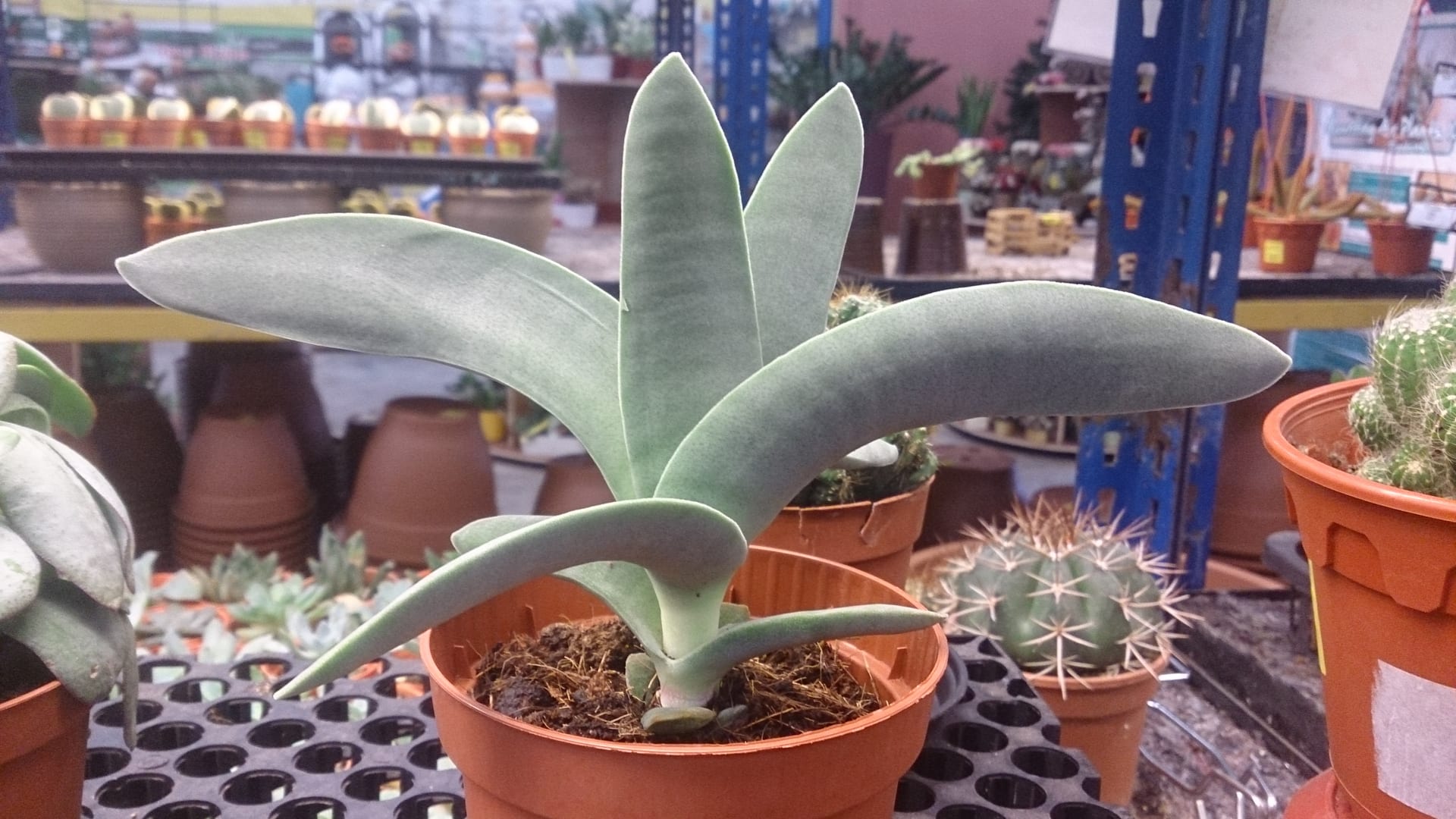
Known in Japan as Shintō (神刀), the propeller plant is a Crassula whose thick, sickle-shaped, gray-green leaves stack alternately left and right, like the blades of a propeller. The leaf surface is finely granular, which gives it a distinctive texture to the touch. In summer, dense clusters of small scarlet flowers open at the tips of the stems, standing out against the muted foliage. Rated beginner-friendly, this perennial succulent grows 60 cm to 1 m tall and does well in a pot when it gets plenty of light and a fast-draining mix.
View Propeller plant encyclopedia →0% commission on your first sales!Register by September 30, 2026 and your first 2 plants are commission-free!
Grower Wanted!
List your plants on GrowerDirect and sell directly to customers nationwide!
6 Transparency Commitments from GrowerDirect
Grower disclose this information for Succulents & Cacti. We guarantee transparency in variety, origin, light requirements, and difficulty level.
- Variety Disclosed
- Real Photos
- Color Details
- Origin Disclosed
- Light Requirements
- Difficulty Level
Browse all 131 varieties
Light Requirements
Difficulty Level
Verified growers wanted for Succulents & Cacti
Growers are signing up now ahead of launch. Subscribe to be notified when new listings go live.
Getting alerts is free with a member account. When new listings match your saved search, we'll notify you by email and in-app.
Browse other categories
Verified growers (preview)
Are you growing succulents & cacti?
Register as a grower and connect with buyers directly.
Apply as a growerPropeller plant key facts
- Growing Difficulty
- Beginner-friendly
- Lifespan
- Perennial
- Size
- 60 cm–1 m tall
- Watering
- Light feeder
- Light & Placement
- Grow in good light; indoors use a sunny south- or west-facing window. Too little light makes the stem stretch and the plant lose shape.
- Watering
- Drought tolerant; water sparingly, only after the mix dries, and even less in cool weather.
- Temperature & Overwintering
- It does not tolerate freezing. A US grower reports it surviving around -6°C, but potted plants should come into a frost-free room or greenhouse in winter.
- Soil & Repotting
- Plant in a loose, well-aerated mix. Tall plants become top-heavy, so choose a stable pot.
- Pests & Cautions
- The summer flowers last nearly a month. It may also be labelled with the older name Crassula falcata or as var. minor.
About Propeller plant
Propeller plant (Shintō): a beginner-friendly Crassula with gray-green, sickle-shaped leaves and scarlet summer flowers, 60 cm to 1 m tall. Care and buying tips.
7 things to know before growing Propeller plant
1Light and airflow
Give it a sunny, well-ventilated spot. Too little light stretches the stems and loosens the stacked leaves, so the propeller-like shape is lost. Indoors, choose a bright windowsill.
2Water when dry
Let the soil dry out, then water thoroughly until it drains from the bottom of the pot. The thick leaves store moisture, so constantly damp soil invites root rot. Cut back sharply in winter and keep the plant on the dry side.
3Fast-draining mix
Use a commercial succulent and cactus mix, or blend extra akadama or pumice into regular potting soil for good drainage. As the plant grows taller it becomes top-heavy, so a stable pot helps prevent tipping. Always choose a pot with drainage holes.
4Repotting and pruning
Repot in spring or autumn, roughly once every one to two years, when the roots fill the pot. If the stems stretch and lose their shape, cut them back to tidy the plant. Let the cut ends dry, and the trimmed stems can be used as cuttings.
5Summer heat, winter frost
In midsummer, intense direct sun and stuffy heat can damage the leaves, so move the plant to bright shade with good airflow. Water sparingly during hot weather. In winter, bring it under eaves or indoors before frost arrives.
6Enjoying summer flowers
Dense heads of small scarlet flowers open at the stem tips in summer. To enjoy them, give the plant plenty of sun all year so it builds up strength. Snip off spent flowers to keep it tidy.
7Choosing a plant
Look for firm, gray-green leaves stacked neatly and alternately left and right. A compact plant with steady, unstretched stems is easier to grow. Check the photos and description for wrinkled or discolored leaves and a blackened stem base.
Frequently asked questions about Propeller plant
- Q.Can beginners grow the propeller plant?
- A.Yes, it is rated beginner-friendly. Give it bright light and good airflow, use a fast-draining mix, and water only after the soil has dried out. As long as you avoid overwatering, it is relatively easy to grow.
- Q.How large does the propeller plant get?
- A.It is a perennial that reaches 60 cm to 1 m in height. As the stems lengthen the plant can become top-heavy, so a stable pot is a good idea. If it loses its shape, you can cut it back to tidy it up.
- Q.When does the propeller plant bloom?
- A.It blooms in summer, when dense clusters of small scarlet flowers open at the tips of the stems. To enjoy the flowers, grow the plant in a sunny spot so that it builds up strength.
- Q.Can I grow it indoors?
- A.Yes, if you can give it a bright spot such as a sunny windowsill. Too little light makes the stems stretch and the stacked leaves loosen, so it helps to set the plant outside in good light on fine days. Keep the air moving around it as well.
- Q.How do I propagate it?
- A.Stem cuttings are the usual method. Let the cut end dry for a few days, then insert it into a fast-draining mix and keep it in bright shade. Avoid overwatering until the cutting has rooted.
Handy Growing Tools for Propeller plant
Learn more about Propeller plant in the encyclopedia
View Propeller plant encyclopedia entry →
Care difficulty, size, origin and light needs — all basics covered.
More in this category
Can't find the plant you're looking for?
Post your wishes for free and growers with matching plants will contact you with introductions.