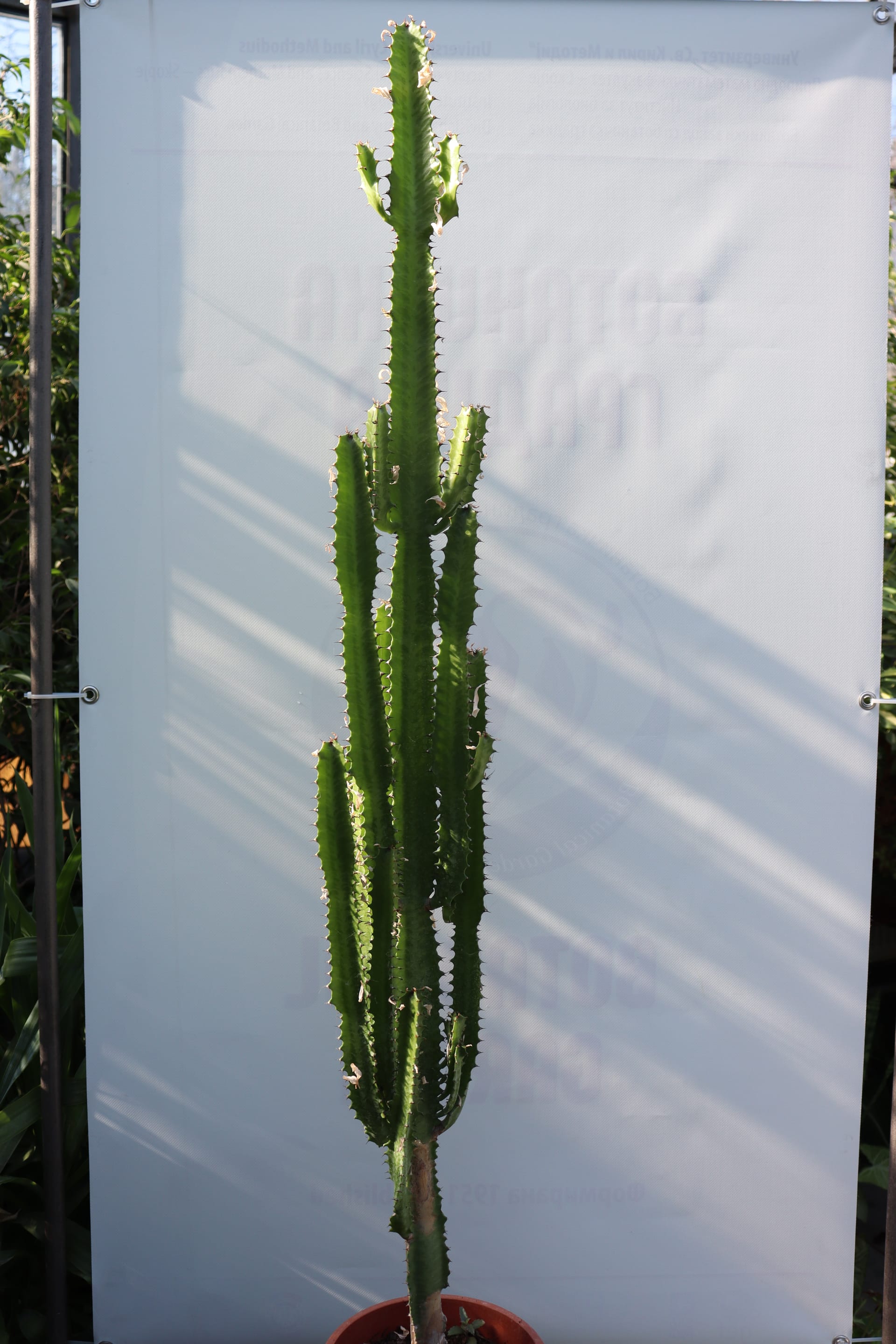
 © Dandarmkd / CC BY-SA 4.0
African milk tree
Euphorbia trigona, known as African milk tree, is a columnar euphorbia that sends up upright three-angled stems in a candelabra-like form. The dark green stems carry a pale V-shaped marking, and teardrop-shaped leaves appear between the paired spines along each ridge. It looks like a cactus but belongs to the spurge family, and it is considered beginner-friendly. A perennial that can reach 1.5 to 3 m tall, it makes a bold architectural plant. In cultivation it is known for not flowering, so its appeal lies in the stems themselves.
View African milk tree encyclopedia →0% commission on your first sales!Register by September 30, 2026 and your first 2 plants are commission-free!
Grower Wanted!
List your plants on GrowerDirect and sell directly to customers nationwide!
6 Transparency Commitments from GrowerDirect
Grower disclose this information for Succulents & Cacti. We guarantee transparency in variety, origin, light requirements, and difficulty level.
- Variety Disclosed
- Real Photos
- Color Details
- Origin Disclosed
- Light Requirements
- Difficulty Level
Browse all 133 varieties
Light Requirements
Difficulty Level
Verified growers wanted for Succulents & Cacti
Growers are signing up now ahead of launch. Subscribe to be notified when new listings go live.
Getting alerts is free with a member account. When new listings match your saved search, we'll notify you by email and in-app.
Browse other categories
Verified growers (preview)
Are you growing succulents & cacti?
Register as a grower and connect with buyers directly.
Apply as a growerAfrican milk tree key facts
- Growing Difficulty
- Beginner-friendly
- Lifespan
- Perennial
- Size
- 1.5–3 m tall
- Temperature
- 18〜29℃
- Watering
- Light feeder
- Light & Placement
- Indoors give bright indirect light; outdoors part sun. In poor light the stems grow thin.
- Watering
- A summer grower. Avoid overwatering; water when the top 2–3 cm of the mix is dry, and less in winter.
- Temperature & Overwintering
- It prefers about 18–29°C. It is cold-sensitive: bring it indoors before temperatures fall below 7°C. A Japanese reference gives 10°C as its limit.
- Soil & Repotting
- Use a sandy, free-draining or cactus mix. The roots are shallow and big plants topple easily, so choose a heavy, stable pot.
- Propagation
- Roots easily from cuttings; dry the cut piece for 3–7 days to callus before inserting.
- Pests & Cautions
- The white latex from cuts is toxic: it irritates skin and can cause severe eye inflammation. Wear gloves and eye protection when pruning or repotting, and keep the plant away from children and pets. Watch for mealybugs and spider mites.
About African milk tree
Euphorbia trigona (African milk tree) is a candelabra-like columnar succulent with three-angled stems that grows 1.5 to 3 m tall. Beginner-friendly and perennial. Learn about light, watering, winter care and more before you start.
7 things to know before growing African milk tree
1Give It Bright Light
It prefers a bright, airy spot with plenty of light. Without enough light the stems stretch and turn thin, spoiling the shape. If you move it outdoors, acclimate it gradually, because a sudden switch from indoors to strong sun can scorch the stems.
2Water Only When Dry
During the growing season from spring to autumn, water thoroughly once the soil has dried out completely, until water runs from the drainage hole. The stems store water, so overwatering can lead to root rot and soft stems. When in doubt, it is safer to water less.
3Soil and Pot Choice
A fast-draining cactus and succulent mix suits it well. Because it grows tall and becomes top-heavy, choose a stable pot that will not tip over easily. Use a pot with drainage holes and never leave water standing in the saucer.
4Repot in Growing Season
When the roots fill the pot, repot into a slightly larger one in spring or early summer, when temperatures are rising. This perennial can eventually reach 1.5 to 3 m tall, so plan to move up in pot size as it grows. After repotting, wait a few days before watering to let the roots settle.
5Warm and Dry in Winter
It dislikes cold, so bring it to a bright indoor spot protected from frost and chills, ideally staying above about 10°C. Growth slows in winter, so water very sparingly and keep the soil on the dry side. Losing a few lower leaves in winter does not necessarily mean the plant is in trouble.
6Mind the White Sap
Cutting or damaging the stems or leaves releases a milky white sap. It can irritate the skin and eyes, so wear gloves and goggles when pruning or repotting. If it gets on you, rinse with water right away, see a doctor if discomfort persists, and keep the plant out of reach of children and pets.
7Choosing a Healthy Plant
Look for firm stems without scars, discoloration, or mushy patches. A base that does not wobble and leaves or new growth between the paired spines are good signs. Compare the photos and size details on the listing, and check that the plant will fit the space you have.
Frequently asked questions about African milk tree
- Q.Is it suitable for beginners?
- A.Yes, its growing difficulty is rated beginner-friendly. Give it bright light, water only after the soil dries, and keep it warm and on the dry side in winter. Avoiding overwatering is the main thing to watch.
- Q.How big does it get?
- A.It is a perennial that grows 1.5 to 3 m tall. It gains height gradually over the years, so allow for ceiling height and room to spare when choosing a spot. You can trim it to control the height, but wear gloves because of the sap.
- Q.Does it flower?
- A.It is known for not flowering in cultivation. Its appeal lies instead in the candelabra-like three-angled stems and the teardrop-shaped leaves.
- Q.Why are the leaves dropping?
- A.The teardrop leaves can drop with winter cold, low light, overwatering, or a change of environment. If the stems are still firm, review the light and watering and wait and see. If the stems feel soft, root rot is possible, so stop watering and let the soil dry out.
- Q.How is it different from a cactus?
- A.They look alike, but this plant belongs to the spurge family, not the cactus family. One way to tell them apart is the milky white sap that appears when the plant is cut or damaged. Its fleshy stems store water, so the basic rule is to water only after the soil has dried.
Handy Growing Tools for African milk tree
Learn more about African milk tree in the encyclopedia
View African milk tree encyclopedia entry →
Care difficulty, size, origin and light needs — all basics covered.
More in this category
Can't find the plant you're looking for?
Post your wishes for free and growers with matching plants will contact you with introductions.