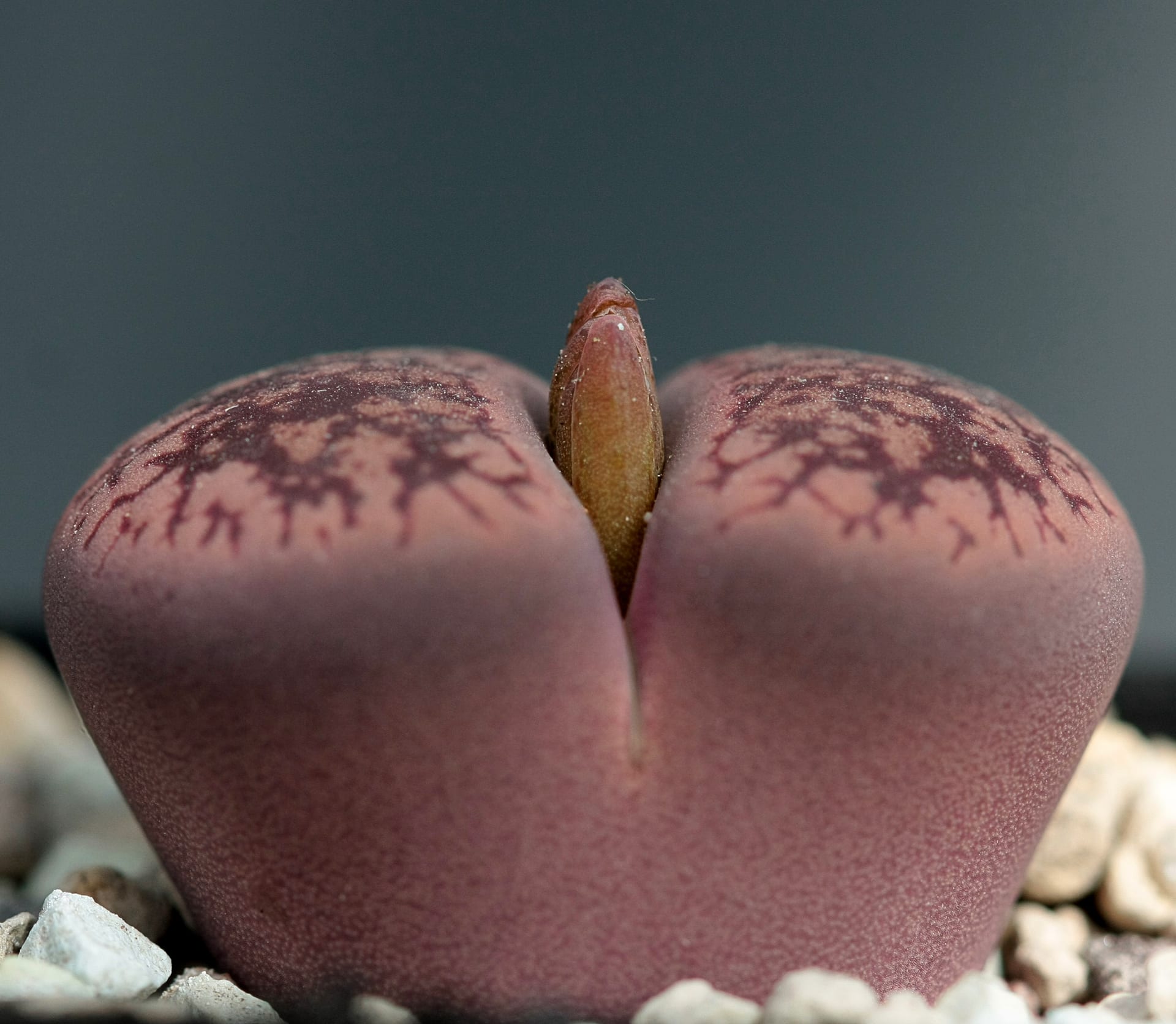
 © Dornenwolf / CC BY 2.0
Lithops aucampiae
Nichirin-gyoku, or Lithops aucampiae, is a South African living-stone succulent that looks like a small pebble split down the middle. Its reddish-brown top surface is marked with a dark brown net-like pattern, and each head measures roughly 25 to 55 mm long and 20 to 40 mm wide, which makes it a large Lithops. In autumn it produces bright yellow flowers up to 52 mm across, a striking contrast to its modest body. It is a widely grown, hardy species that is relatively forgiving of watering mistakes, so it suits beginners. As a perennial, it gives you new leaves and blooms year after year.
View Lithops aucampiae encyclopedia →0% commission on your first sales!Register by September 30, 2026 and your first 2 plants are commission-free!
Grower Wanted!
List your plants on GrowerDirect and sell directly to customers nationwide!
6 Transparency Commitments from GrowerDirect
Grower disclose this information for Succulents & Cacti. We guarantee transparency in variety, origin, light requirements, and difficulty level.
- Variety Disclosed
- Real Photos
- Color Details
- Origin Disclosed
- Light Requirements
- Difficulty Level
Browse all 133 varieties
Light Requirements
Difficulty Level
Verified growers wanted for Succulents & Cacti
Growers are signing up now ahead of launch. Subscribe to be notified when new listings go live.
Getting alerts is free with a member account. When new listings match your saved search, we'll notify you by email and in-app.
Browse other categories
Verified growers (preview)
Are you growing succulents & cacti?
Register as a grower and connect with buyers directly.
Apply as a growerLithops aucampiae key facts
- Growing Difficulty
- Beginner-friendly
- Lifespan
- Perennial (little published data on lifespan)
- Size
- Heads 25-55 mm long and 20-40 mm wide; flowers up to 52 mm across
- Temperature
- 8〜25℃
- Watering
- A little slow-release or liquid fertiliser from autumn to spring
- Light & Placement
- Grow it in a sunny, rain-sheltered spot; bright light is needed for good colour. From the end of the rainy season through summer let it rest in airy shade.
- Watering
- It is a winter grower. The key rule is to keep it dry from the end of flowering until the old leaves are fully replaced. Resume watering as autumn cools, soak the pot when the soil dries while growing, and keep it dry in the June-September rest.
- Temperature & Overwintering
- Keep winter minimums above about 3°C to keep plants looking good (they survive down to roughly 0-3°C). Light frost rarely kills them, but bring them in or protect them in the coldest spell.
- Soil & Repotting
- It sends down a thick taproot, so use a reasonably deep pot and free-draining mix. It needs repotting only when growth slows or the pot is crowded, ideally in October-November.
- Propagation
- Propagate from seed (October-November) or by dividing clumps; divisions are slow to root, so do it early in the season.
- Pests & Cautions
- Scale insects and aphids may attack buds and flowers and root mealybugs the roots; slugs eat petals and cutworms the leaves. Pick off spent flowers, which can cause rot.
About Lithops aucampiae
Lithops aucampiae: a large, beginner-friendly living stone with a net-patterned reddish-brown top and big yellow flowers. Traits and care tips.
7 things to know before growing Lithops aucampiae
1Sun and airflow
Nichirin-gyoku wants plenty of direct light. With too little, it stretches out and the net pattern on the top surface fades, so give it a bright spot sheltered from rain outdoors, or a sunny windowsill indoors. Good airflow also helps prevent stuffy, damp conditions.
2Water mainly in autumn
Watering centers on autumn, when the plant is actively growing. Wait until the soil is completely dry, then water thoroughly and let it dry out again before the next watering. It is fairly forgiving of watering mistakes, but avoid keeping the soil constantly damp.
3Hold water while shedding
Lithops shed their old leaves as a new pair grows from inside, mostly from winter into spring. The new leaves draw moisture from the old ones, so don't water until the old pair has shriveled to a papery skin. Watering during this stage can harm the plant, so be patient.
4Keep it drier in summer
Growth slows in hot weather, so cut back on watering and let the plant rest. Strong sun combined with damp heat can lead to rot, so a bright spot with good airflow is safer. When cooler weather returns and the plant stirs, resume watering gradually.
5Choose a fast-draining soil
Drainage is the top priority. Mix coarse grit such as pumice or sand generously into a commercial succulent mix so the roots dry quickly. Because the roots grow deep, a slightly deeper pot works well.
6Repot only when crowded
Frequent repotting isn't necessary; do it when the plant has multiplied and filled the pot. Early autumn, as growth resumes, is a good time, and it helps to hold back water for a while afterward to protect the roots. Avoid disturbing a plant that is in the middle of shedding.
7Choosing a healthy plant
Look for a firm top surface with no wrinkles, dark spots, or damage around the fissure. A clear dark brown net pattern on the reddish-brown ground is a good sign. Each head should measure roughly 25 to 55 mm long and 20 to 40 mm wide, so check the listing for the number of heads and the condition of each one.
Frequently asked questions about Lithops aucampiae
- Q.Can beginners grow Lithops aucampiae?
- A.Yes, it is rated as beginner-friendly. It is a hardy, widely grown species that is relatively forgiving of watering mistakes, but you should still water in autumn and hold back during shedding and in summer.
- Q.When does it flower, and what are the flowers like?
- A.It produces large, bright yellow flowers up to 52 mm across. Blooming is mainly in autumn, and plants grown in a sunny spot are more likely to flower well.
- Q.Can I grow it on an indoor windowsill?
- A.Yes, if the windowsill is sunny. Too little light makes the plant stretch and the pattern fade, so choose the brightest spot you have and make sure the air doesn't stagnate.
- Q.The old leaves are shriveling. Is it dying?
- A.This is normal shedding: the new pair of leaves uses the moisture stored in the old pair, so the old leaves shrink. Hold back water until they have become a papery skin, then return to regular care once shedding is finished.
- Q.How many years can I keep it?
- A.It is a perennial that grows by shedding its old leaves each year. However, there is little documentation on its lifespan, so a specific number of years can't be given. With care suited to its needs, it can be enjoyed for a long time.
Handy Growing Tools for Lithops aucampiae
Learn more about Lithops aucampiae in the encyclopedia
View Lithops aucampiae encyclopedia entry →
Care difficulty, size, origin and light needs — all basics covered.
More in this category
Can't find the plant you're looking for?
Post your wishes for free and growers with matching plants will contact you with introductions.