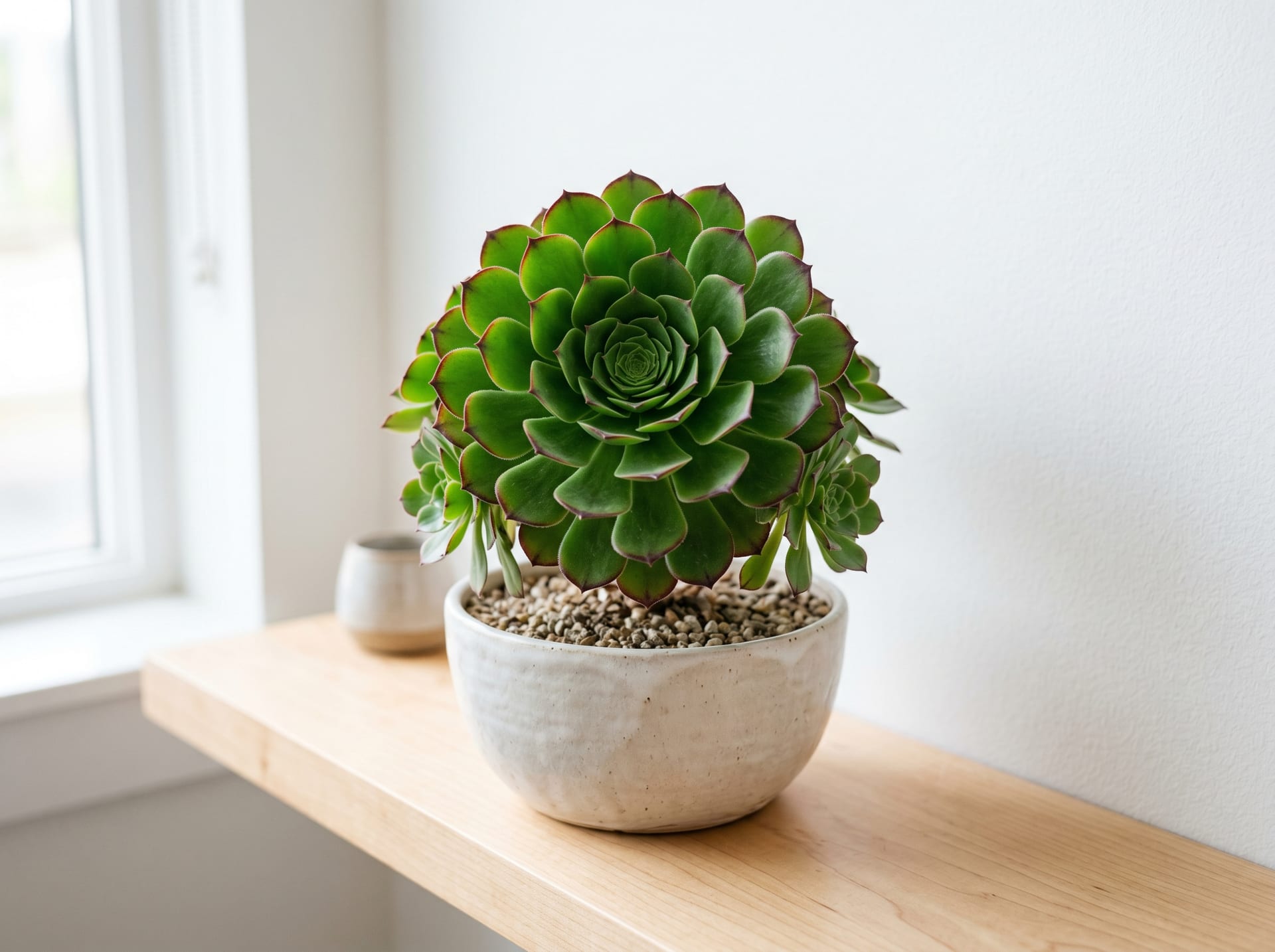
Aeonium
Aeonium is a striking succulent native to the Canary Islands, known for its rosette-shaped leaf clusters. With varieties ranging from deep black to bright green and variegated forms, it is prized both as a plant and as a decorative accent. Its unique growth cycle — dormant in summer, active in winter — sets it apart from most succulents.
View Aeonium encyclopedia →0% commission on your first sales!Register by September 30, 2026 and your first 2 plants are commission-free!
Grower Wanted!
List your plants on GrowerDirect and sell directly to customers nationwide!
6 Transparency Commitments from GrowerDirect
Grower disclose this information for Succulents & Cacti. We guarantee transparency in variety, origin, light requirements, and difficulty level.
- Variety Disclosed
- Real Photos
- Color Details
- Origin Disclosed
- Light Requirements
- Difficulty Level
Browse all 131 varieties
Light Requirements
Difficulty Level
Verified growers wanted for Succulents & Cacti
Growers are signing up now ahead of launch. Subscribe to be notified when new listings go live.
Getting alerts is free with a member account. When new listings match your saved search, we'll notify you by email and in-app.
Browse other categories
Verified growers (preview)
Are you growing succulents & cacti?
Register as a grower and connect with buyers directly.
Apply as a growerAeonium key facts
- Growing Difficulty
- Intermediate
- Lifespan
- 10+ years
- Size
- 15-90cm
- Temperature
- 5〜25℃
- Light & Placement
- Loves sun, but keep it out of harsh midsummer sun in cool partial shade. Give it plenty of light from autumn to spring.
- Watering
- Winter type: water autumn-spring, none in summer
- Temperature & Overwintering
- Ideal range is 5-25°C. Keep it out of frost by overwintering under eaves or in a bright indoor spot.
- Dormancy Care
- A winter grower active from autumn to spring. In summer the leaves close and it rests, so keep it nearly dry in a cool, airy place.
- Propagation
- Fairly easy from cuttings. Cut a stem during the autumn-to-spring growing season, let it dry, then insert it into soil.
- Notes
- Weak to summer humidity — manage in cool partial shade
About Aeonium
Aeonium is a succulent in the family Crassulaceae, native primarily to the Canary Islands with some species found across North Africa and the Mediterranean coast. Its genus name derives from the Greek word for "eternal." The plant is best known for its geometric rosettes that form at the tips of branching stems, with varieties offering a remarkable range of appearances — from deep black-purple (as in A. arboreum 'Atropurpureum') to bright yellow-green and elegantly variegated forms. Unlike most succulents that grow actively in summer, aeonium follows a winter-growing cycle, entering dormancy during the hot months and resuming growth from autumn through spring. This seasonal rhythm is the most important factor to understand when cultivating it. Once you learn to adjust watering and care to match this cycle, aeonium is a rewarding and low-maintenance plant appreciated by beginners and experienced growers alike.
7 things to know before growing Aeonium
1Summer Dormancy
Aeonium enters dormancy in summer, closing its rosettes and requiring very little water. Overwatering during this period is a leading cause of root rot. The main growing season runs from autumn through spring when temperatures cool.
2Water Sparingly
Even during the growing season, water only after the soil has dried out completely. Avoid leaving standing water in saucers, as this promotes rot. A slight softening of the leaves is a reliable sign that it's time to water.
3Light and Placement
Aeonium thrives in bright light but can suffer leaf burn under intense midsummer sun. Outdoors, a semi-shaded spot works well; indoors, a south-facing window is ideal. Insufficient light causes etiolation, causing stems to stretch and rosettes to lose their compact shape.
4Cold Tolerance Varies
Most aeoniums can tolerate temperatures down to around 0°C, but frost will damage the leaves. Since winter is their growing season, bring them indoors when temperatures drop below 5°C. In very cold climates, year-round indoor cultivation is the safest approach.
5Soil and Pot Selection
A well-draining succulent or cactus mix is ideal for aeonium. Adding 20–30% pumice or perlite to commercial succulent soil improves drainage further. Terracotta pots help excess moisture evaporate, reducing the risk of root rot.
6Easy Propagation by Cuttings
Propagation is straightforward: cut a rosette head, let the cut end dry for a few days, then plant it in soil. Success rates are highest when done during the growing season from autumn to spring. Leaf propagation does not work well for aeonium, so stem cuttings are the standard method.
7Cost to Start and Maintain
Common varieties start at just a few hundred yen, while popular types like Aeonium arboreum 'Atropurpureum' typically cost 1,000–3,000 yen. Including soil, pots, and fertilizer, initial setup costs are usually well under several thousand yen. Ongoing maintenance costs are low — a small amount of slow-release fertilizer during the growing season is sufficient.
Frequently asked questions about Aeonium
- Q.The rosettes have closed in summer — is the plant dying?
- A.Rosettes closing and appearing to shrink during summer is a normal dormancy response. Reduce watering, move the plant to a cool, semi-shaded spot, and it will reopen as temperatures drop in autumn.
- Q.How do I deepen the leaf color of Aeonium arboreum 'Atropurpureum'?
- A.More sunlight generally intensifies the dark coloration. Ensuring adequate light during the growing season and avoiding excess fertilizer are the key factors for achieving deeper, richer color.
- Q.How often does aeonium need to be repotted?
- A.Repotting every 2–3 years is a reasonable guideline, with autumn (the start of the growing season) being the best time. Signs that repotting is needed include roots emerging from drainage holes or noticeably poor drainage.
- Q.Can aeonium be grown entirely indoors?
- A.Yes, but providing adequate light is essential. A south-facing window or a dedicated grow light will support healthy indoor growth. Without sufficient light, the plant tends to etiolate, producing leggy, weak stems.
Handy Growing Tools for Aeonium
Learn more about Aeonium in the encyclopedia
View Aeonium encyclopedia entry →
Care difficulty, size, origin and light needs — all basics covered.
Aeonium related articles
Winter-Type Succulent Care Guide | Management Methods for Aeonium, Orostachys, and Sedum
An explanation of winter-type succulents' characteristics and care during summer dormancy and autumn-winter growth periods, by variety. This guide also provides detailed tips on how to successfully guide winter-type succulents through the summer, as they often decline during this season.
Complete Guide to Growing Aeonium | Summer Care, Propagation by Cuttings, and Variety Selection
Comprehensive guide to Aeonium care. Covers the often-confusing growth cycle of winter-growing versus summer-dormant types, summer dormancy strategies, propagation methods by cuttings, and characteristics of popular varieties including Arboreum and Holly Rose.
More in this category
Can't find the plant you're looking for?
Post your wishes for free and growers with matching plants will contact you with introductions.