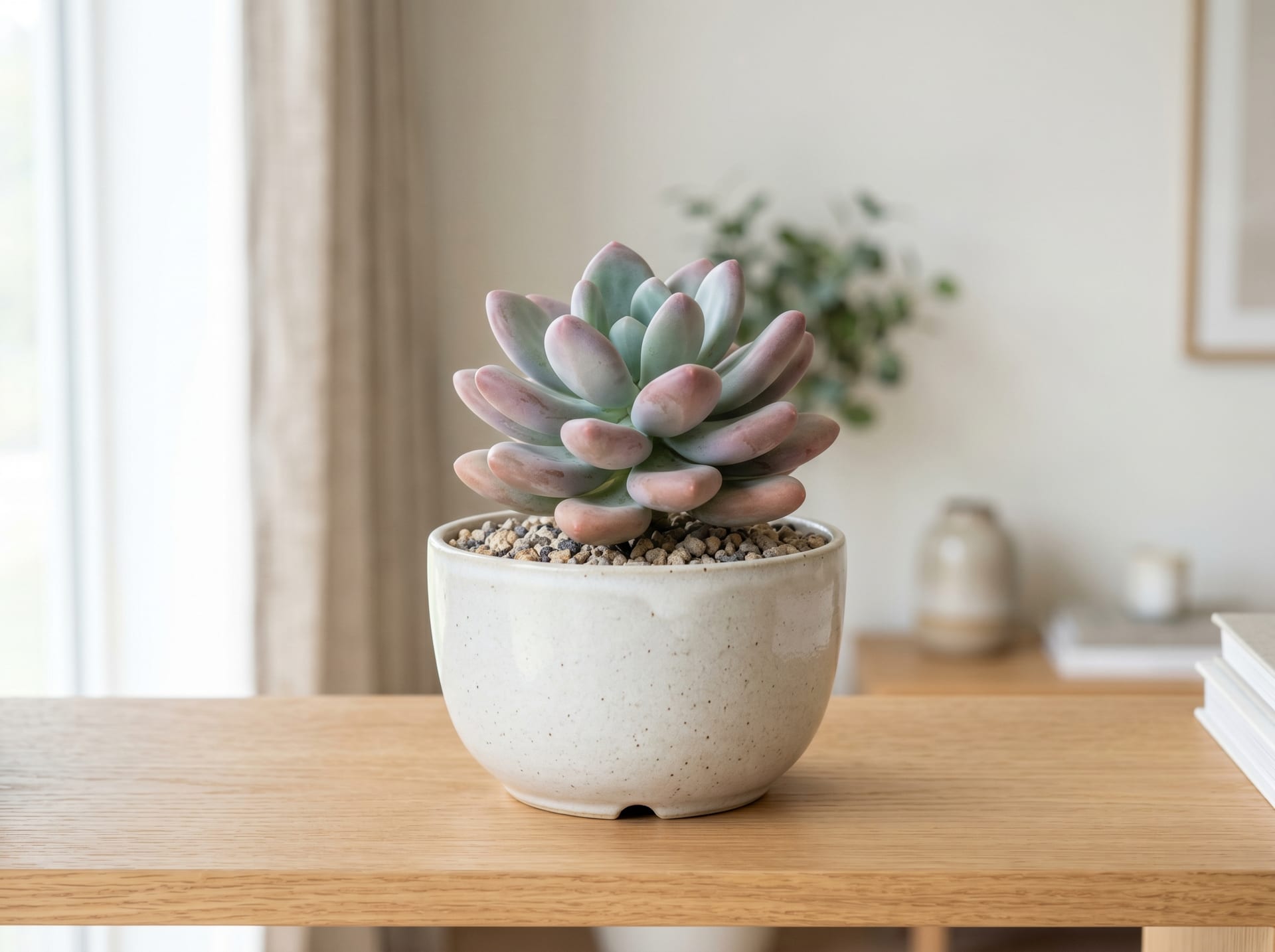
Pachyphytum / Graptopetalum
Pachyphytum and Graptopetalum succulents, native to Mexico and often grouped together in horticulture, are prized for their plump, rounded leaves dusted with a soft powdery coating. Their excellent drought tolerance makes them a forgiving choice for beginners venturing into succulents. Seasonal color changes and attractive blush tones add extra visual appeal throughout the year.
View Pachyphytum / Graptopetalum encyclopedia →Grower Wanted!
List your plants on GrowerDirect and sell directly to customers nationwide!
6 Transparency Commitments from GrowerDirect
Grower disclose this information for Succulents & Cacti. We guarantee transparency in variety, origin, light requirements, and difficulty level.
- Variety Disclosed
- Real Photos
- Color Details
- Origin Disclosed
- Light Requirements
- Difficulty Level
Browse all 131 varieties
Light Requirements
Difficulty Level
Verified growers wanted for Succulents & Cacti
Growers are signing up now ahead of launch. Subscribe to be notified when new listings go live.
Getting alerts is free with a member account. When new listings match your saved search, we'll notify you by email and in-app.
Browse other categories
Verified growers (preview)
Are you growing succulents & cacti?
Register as a grower and connect with buyers directly.
Apply as a growerPachyphytum / Graptopetalum key facts
- Growing Difficulty
- Beginner-friendly
- Light & Placement
- Prefers a sunny, well-ventilated spot. Without enough light the rosette loosens and stretches, so keep it somewhere bright.
- Watering
- Water thoroughly once the soil has dried out completely. These are spring-and-autumn growers, so cut back in midsummer and midwinter.
- Temperature & Overwintering
- Moderately hardy; some kinds overwinter outdoors as long as they are kept off the frost. In some regions indoor management is the safer choice.
- Soil & Repotting
- Use a well-draining succulent mix. When the plant grows leggy and outgrows its pot, repot in the spring or autumn growing season.
- Propagation
- Easily propagated by leaf or stem cuttings. Even dropped leaves often grow into new plants.
About Pachyphytum / Graptopetalum
Pachyphytum and Graptopetalum are two Mexican succulent genera commonly grouped together in horticulture. Their thick, chubby leaves are coated in a waxy white bloom that catches the light with a silver or pale-pink sheen. The tidy rosette form is as ornamental indoors as it is in the garden. These plants are notably tough and drought-resistant, making them manageable even for busy owners or first-time succulent growers. One of their standout features is seasonal color change: when exposed to cool nights and reduced watering in autumn and winter, the leaves flush pink, rose, or purple. Easy propagation through leaf and stem cuttings and the wide diversity of available varieties make this group a favorite among collectors worldwide.
7 things to know before growing Pachyphytum / Graptopetalum
1Water Sparingly
Overwatering is the number one risk for Pachyphytum and Graptopetalum, as they are highly susceptible to root rot. During the growing seasons of spring and autumn, water only after the soil has fully dried out, then wait a few extra days. In midsummer and midwinter, keep watering to a minimum.
2Sunlight Shapes Beauty
Adequate sunlight keeps leaves compact and enhances their color. A bright windowsill or an outdoor spot with half-day to full sun is ideal. Insufficient light causes etiolation—stems stretch and the characteristic plumpness is lost.
3Watch for Summer Heat
Intense midsummer sun can scorch leaves, so use shade cloth or move plants to bright indirect light during peak heat. High humidity combined with heat also promotes rot, making good air circulation essential throughout the summer months.
4Color Change Needs Stress
When temperatures swing between warm days and cool nights in autumn and winter, leaves blush pink, red, or purple. Reducing water and exposing plants to cool overnight temperatures enhances coloration. Avoid frost and temperatures below 0°C, which can cause serious damage.
5Choose Fast-Draining Soil
Commercial cactus and succulent potting mix works well straight from the bag. For extra drainage, blend in 20–30% perlite, pumice, or small akadama particles. Avoid clay-heavy or moisture-retentive soils, which dramatically increase root rot risk.
6Easy Leaf Propagation
Gently twist a healthy leaf free from its base and lay it on dry soil—roots and a new rosette will sprout on their own. Wait until roots are visible before beginning light watering. Leaf propagation is highly reliable and one of the most rewarding aspects of growing succulents.
7Fertilize Lightly in Season
A diluted liquid fertilizer formulated for succulents, applied once a month during the spring and autumn growing seasons, is all that is needed. Excess fertilizer causes leggy growth and washed-out leaf color. Withhold fertilizer entirely during the summer and winter dormant periods.
Frequently asked questions about Pachyphytum / Graptopetalum
- Q.Can Pachyphytum and Graptopetalum be grown indoors?
- A.Yes, they can thrive indoors if given enough light. A south-facing windowsill that receives direct sun for several hours is ideal. Rotating plants outdoors periodically helps prevent etiolation and keeps growth compact.
- Q.The white powder rubbed off the leaves—is that a problem?
- A.The white coating is a natural wax called farina, and once removed it does not grow back. It does not harm the plant's health, but the characteristic appearance is diminished. Handle plants from the underside or by the pot to avoid rubbing it off.
- Q.Can I leave them outside through winter?
- A.In frost-free climates, outdoor wintering is fine. Where temperatures drop below 0°C, bring plants inside or under frost protection. Mild cold (around 5–10°C) is actually beneficial—it triggers the attractive leaf color change these plants are known for.
- Q.What type of pot works best?
- A.Unglazed terracotta or breathable ceramic pots with drainage holes are the best choice. Terracotta absorbs excess moisture, significantly reducing root rot risk. Plastic pots work too, but require even more restrained watering since they retain moisture longer.
Handy Growing Tools for Pachyphytum / Graptopetalum
Learn more about Pachyphytum / Graptopetalum in the encyclopedia
View Pachyphytum / Graptopetalum encyclopedia entry →
Care difficulty, size, origin and light needs — all basics covered.
Pachyphytum / Graptopetalum related articles
Pachyphytum and Graptopetalum Care Guide: Protecting Bloom and Leaf Propagation
A comprehensive guide to growing Pachyphytum (Moonstone, etc.) and Graptopetalum (Ghost Plant, etc.). Learn watering techniques to preserve white blooms, summer care for spring/autumn succulents, soil composition for excellent drainage, and detailed propagation steps using leaf and stem cuttings.
Complete Guide to Succulent Leaf Propagation | Tips to Boost Success Rates and Variety-Specific Methods
A comprehensive guide to propagating succulents by leaf. Covers how to remove leaves, drying timeframes, optimal growing media, success rates by variety (Echeveria, Graptopetalum, Sedum, etc.), and common mistakes to avoid.
More in this category
Can't find the plant you're looking for?
Post your wishes for free and growers with matching plants will contact you with introductions.