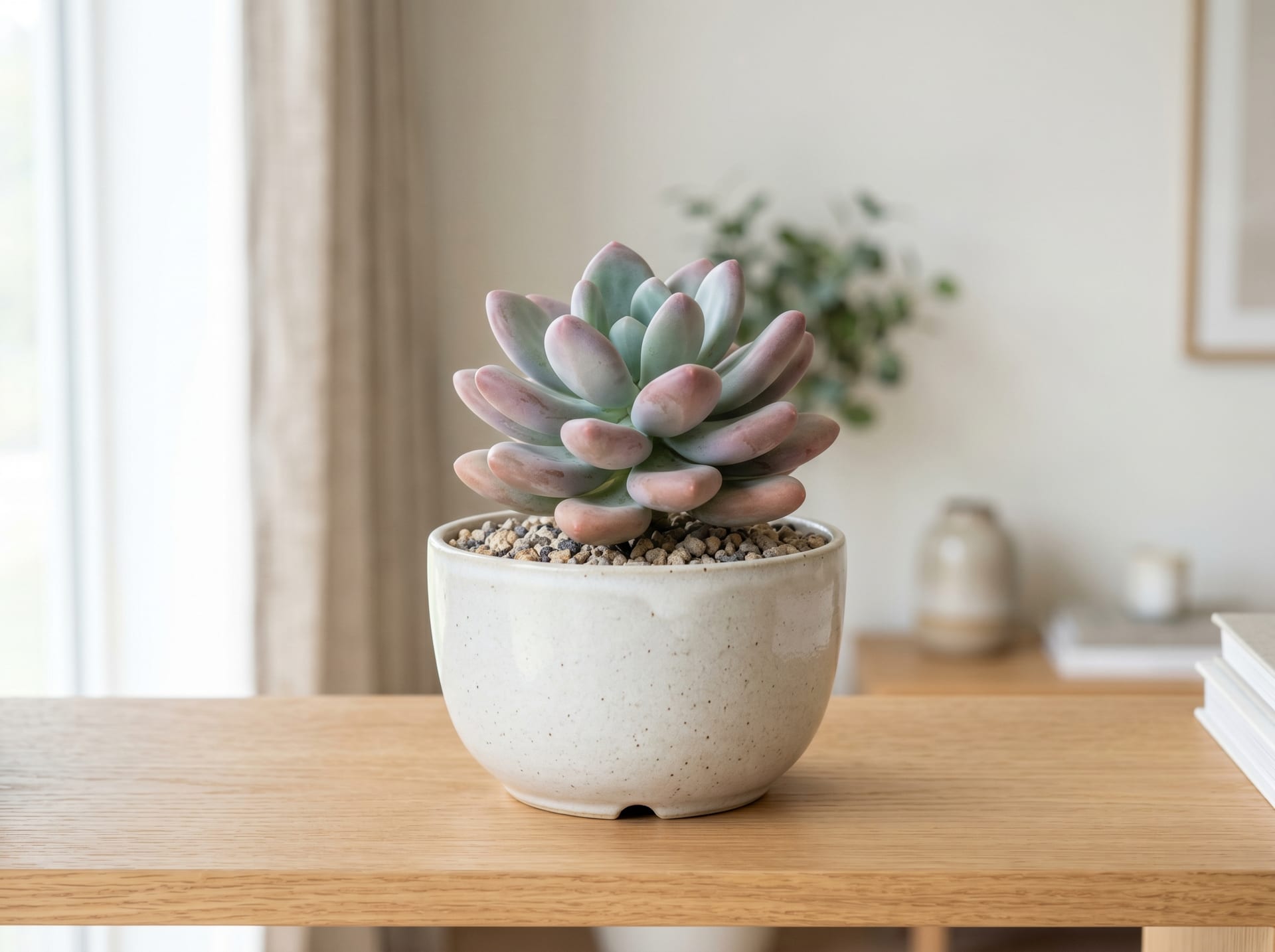
AI-generated image
Pachyphytum / Graptopetalum
BeginnerPachyphytum spp. / Graptopetalum spp.
Mexican succulents with distinct characteristics. Pachyphytum displays powder-blue waxy coating; graptopetalum offers rich color diversity. Both highly drought-tolerant with minimal water and bright light requirements.
About
Pachyphytum and Graptopetalum are two closely related genera of rosette-forming succulents in the family Crassulaceae, both native to Mexico. Because of their similar appearance and care, they are often grouped together in horticulture. Pachyphytum, known by Japanese names such as 'Hoshi-bijin' and 'Momo-bijin', is prized for its rounded, very thick leaves coated in a powdery white bloom. Graptopetalum, typified by 'Oboro-zuki' (Graptopetalum paraguayense), forms rosettes of flattish, radiating leaves and is widely used as a breeding parent in intergeneric crosses with Echeveria and Sedum. Both are hardy and easy to grow, making them suitable for beginners. They follow a spring-and-autumn growth pattern and prefer bright light with good air circulation. Water thoroughly only after the soil has dried completely, reducing watering in the heat of summer and the cold of winter. They have moderate cold tolerance; some can overwinter outdoors where frost is avoided, though indoor care is safer in colder regions. Both propagate readily from leaf and stem cuttings, and even fallen leaves often grow into new plants.
Source: Wikipedia (CC BY-SA 4.0)
Basic Info
Origin
Mexico
Temperature
0〜35℃
Humidity
30〜50%
Growing Tips
Light & Placement
Prefers a sunny, well-ventilated spot. Without enough light the rosette loosens and stretches, so keep it somewhere bright.
Watering
Water thoroughly once the soil has dried out completely. These are spring-and-autumn growers, so cut back in midsummer and midwinter.
Temperature & Overwintering
Moderately hardy; some kinds overwinter outdoors as long as they are kept off the frost. In some regions indoor management is the safer choice.
Soil & Repotting
Use a well-draining succulent mix. When the plant grows leggy and outgrows its pot, repot in the spring or autumn growing season.
Propagation
Easily propagated by leaf or stem cuttings. Even dropped leaves often grow into new plants.
Pachyphytum / Graptopetalum FAQ
QWhat is the growing difficulty level for Pachyphytum / Graptopetalum?
Beginner. A variety suitable for beginners. No special equipment or experience is required—you can grow it without problems by setting up a basic cultivation environment.
QWhat is the typical price for Pachyphytum / Graptopetalum?
The price of Pachyphytum / Graptopetalum varies significantly by variety, characteristics, size, and lineage. Please check GrowerDirect's price guide for the latest market information.
Last updated: June 23, 2026
References & Sources
Edited & verified by: GrowerDirect Editorial Team
The classifications, regulations, and growing data on this page are created and verified based on the primary information database below.
Primary sources
Regulations & Conservation Status
Sources: CITES Appendices — taxon not listed
Regulations may change. Always verify the latest information with the relevant authorities.
Related Species
Find listings for this species
Related Articles
Pachyphytum and Graptopetalum Care Guide: Protecting Bloom and Leaf Propagation
A comprehensive guide to growing Pachyphytum (Moonstone, etc.) and Graptopetalum (Ghost Plant, etc.). Learn watering techniques to preserve white blooms, summer care for spring/autumn succulents, soil composition for excellent drainage, and detailed propagation steps using leaf and stem cuttings.
Autumn Preparation Management for Summer-Type Succulents
A guide to autumn care for summer-type succulents, covering plant changes from September to November, timing for gradual watering reduction, placement and temperature management for transitioning plants indoors, autumn fertilizing and pest control, variety-specific care checkpoints, and preparation for winter dormancy.
Mealybug Control on Succulents | Complete Guide to Early Detection, Removal, and Prevention
Mealybugs hide easily at the base of succulent leaves and on new growth. This guide covers their characteristics, the environments where they thrive, tips for early detection, removal methods using cotton swabs and alcohol, and daily care practices to prevent recurrence.
Summer and Winter Type Succulents: Growth Cycles and Watering Management Strategy
This article explains the differences in growth types of succulent plants, their annual growth cycles, seasonal watering management strategies, common failures, and countermeasures.
🩺 Common diseases
Can't find the plant you're looking for?
Post your wishes for free and growers with matching plants will contact you with introductions.