Source: Wikimedia Commons
Candelabra aloe
BeginnerAloe arborescens
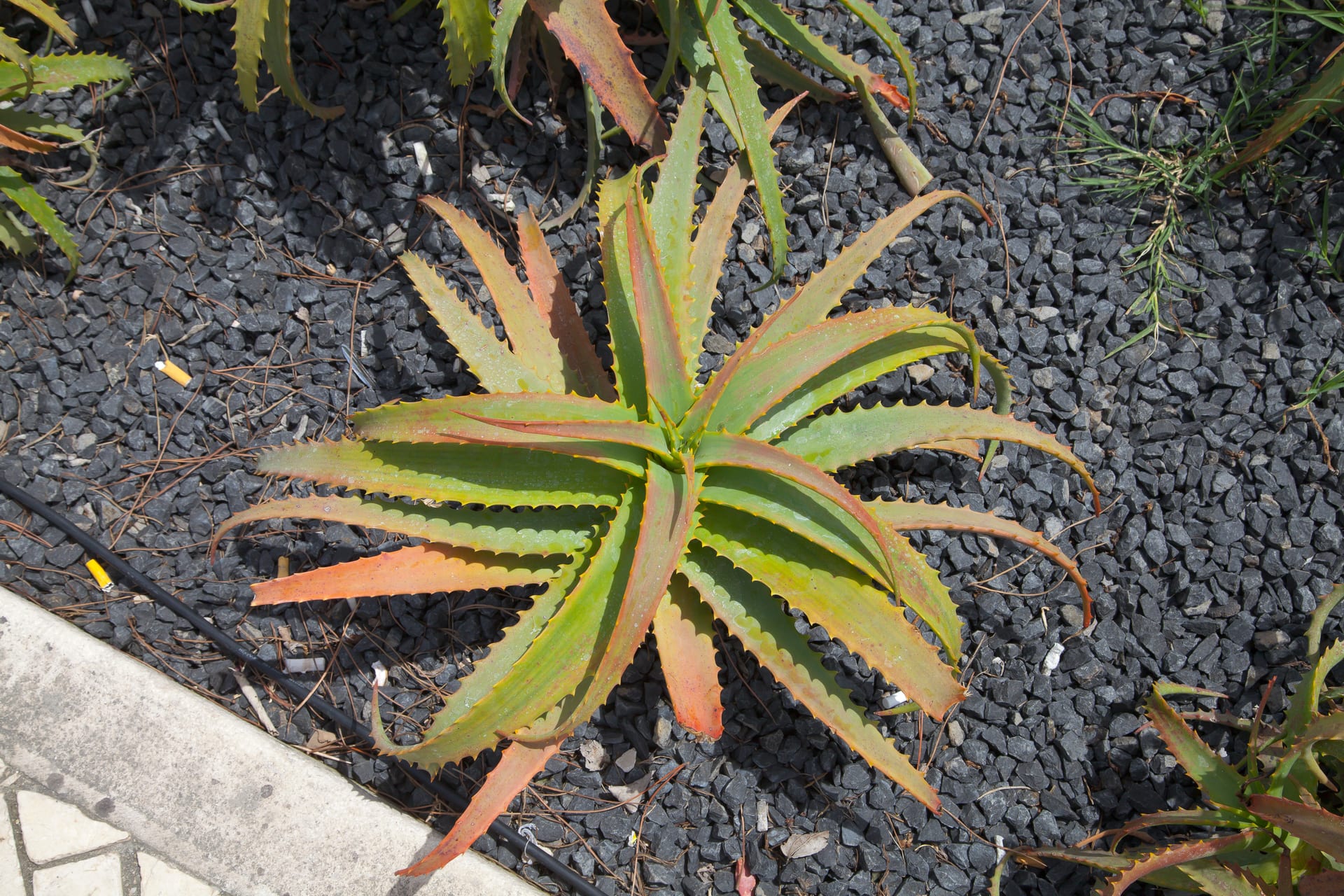
A large, branching aloe that forms clumps 2–3 m tall, with grey-green leaves edged in pale teeth and red-orange flower spikes in winter. Long grown in Japanese gardens under the folk name isha-irazu.
About
Aloe arborescens, the krantz or candelabra aloe, is a member of the Asphodelaceae native to eastern South Africa, Mozambique, Zimbabwe and Malawi. It has the third widest range of any aloe and is one of the few found from sea level to mountain tops, usually on rocky outcrops and exposed ridges. Despite the name 'tree-like', it is a multi-headed shrub 2–3 m tall, with rosettes at the ends of branching stems. The grey-green to bluish leaves carry conspicuous pale teeth. Flowering comes in the cold season (May–July in South Africa, late autumn to winter in the northern hemisphere), with dense, usually unbranched racemes of red-orange tubular flowers; yellow and bicoloured forms also exist. It grows fast, tolerates drought and neglect once established, and roots readily from branch cuttings. It hybridises easily with other aloes, which matters if you collect seed. The plant has a long history of cultivation in Japan and has naturalised in warm areas. It is sold widely as potted plants and young stock in garden centres, making it one of the most familiar aloes in Japan.
Source: Wikipedia (CC BY-SA 4.0)
Size of the Candelabra aloe
The Candelabra aloe grows to 2–3 m tall (mature plants in the ground).
Basic Info
Origin
Eastern South Africa, Mozambique, Zimbabwe and Malawi
Lifespan
Perennial; forms long-lived clumps
Size
2–3 m tall (mature plants in the ground)
Temperature
5〜35℃
Humidity
30〜50%
Watering & Fertilizer
Light feeder; a little base fertiliser in free-draining soil is enough
Growing Tips
Light & Placement
Prefers full sun and also grows in light shade; more sun gives a more compact plant.
Watering
Very drought tolerant. In pots, water once the mix has dried and less in winter; overwatering leads to rot.
Temperature & Overwintering
Japanese references class it as a spring–autumn grower. It tolerates light frost but is damaged by hard frost; a US grower rates it to about -5°C. In cold areas grow it in a pot and move it to a bright, frost-free place in winter.
Soil & Repotting
Use free-draining soil with some compost. It grows large, so move it to a bigger pot once roots fill the container.
Propagation
Branch cuttings root easily: let the cut dry for a day, then insert in free-draining soil or sand and keep them on the dry side. Seed sown in spring germinates in 3–4 weeks.
Pests & Cautions
The marginal teeth are firm, so gloves help when handling. It hybridises readily with other aloes, so seedlings may not resemble the parent.
Candelabra aloe FAQ
QWhat is the growing difficulty level for Candelabra aloe?
Beginner. A variety suitable for beginners. No special equipment or experience is required—you can grow it without problems by setting up a basic cultivation environment.
QHow large does Candelabra aloe get?
The mature size of Candelabra aloe is 2–3 m tall (mature plants in the ground). This may vary slightly depending on cultivation environment and individual differences.
QHow should I water and fertilize Candelabra aloe?
Candelabra aloe: watering & fertilizer — Light feeder; a little base fertiliser in free-draining soil is enough. Aim for appropriate frequency and amount.
QWhat is the typical price for Candelabra aloe?
The price of Candelabra aloe varies significantly by variety, characteristics, size, and lineage. Please check GrowerDirect's price guide for the latest market information.
Last updated: September 23, 2026
References & Sources
Edited & verified by: GrowerDirect Editorial Team
The classifications, regulations, and growing data on this page are created and verified based on the primary information database below.
Taxonomy & Authority
Regulations & Conservation Status
Listed in CITES Appendix II (as part of the genus-level listing of Aloe spp., excluding Aloe vera). International trade requires export permits, but no registration is needed to transfer plants within Japan. It is not regulated under Japan's Invasive Alien Species Act.
Sources: Species+ (CITES): Aloe arborescens / Ministry of the Environment: list of Invasive Alien Species
Regulations may change. Always verify the latest information with the relevant authorities.
Related Species
Find listings for this species
Related Articles
Complete Guide to Growing Aloe | Sunlight, Watering, and Propagation from Offsets
From the basic characteristics of drought-tolerant succulent aloe to detailed guidance on sunlight, watering, repotting, propagation by offsetting, and root rot prevention.
Autumn Preparation Management for Summer-Type Succulents
A guide to autumn care for summer-type succulents, covering plant changes from September to November, timing for gradual watering reduction, placement and temperature management for transitioning plants indoors, autumn fertilizing and pest control, variety-specific care checkpoints, and preparation for winter dormancy.
Mealybug Control on Succulents | Complete Guide to Early Detection, Removal, and Prevention
Mealybugs hide easily at the base of succulent leaves and on new growth. This guide covers their characteristics, the environments where they thrive, tips for early detection, removal methods using cotton swabs and alcohol, and daily care practices to prevent recurrence.
Summer and Winter Type Succulents: Growth Cycles and Watering Management Strategy
This article explains the differences in growth types of succulent plants, their annual growth cycles, seasonal watering management strategies, common failures, and countermeasures.
🩺 Common diseases
Can't find the plant you're looking for?
Post your wishes for free and growers with matching plants will contact you with introductions.