Pachyphytum and Graptopetalum Care Guide: Protecting Bloom and Leaf Propagation
A comprehensive guide to growing Pachyphytum (Moonstone, etc.) and Graptopetalum (Ghost Plant, etc.). Learn watering techniques to preserve white blooms, summer care for spring/autumn succulents, soil composition for excellent drainage, and detailed propagation steps using leaf and stem cuttings.
Key Takeaways
A comprehensive guide to growing Pachyphytum (Moonstone, etc.) and Graptopetalum (Ghost Plant, etc.). Learn watering techniques to preserve white blooms, summer care for spring/autumn succulents, soil composition for excellent drainage, and detailed propagation steps using leaf and stem cuttings.
Related Species
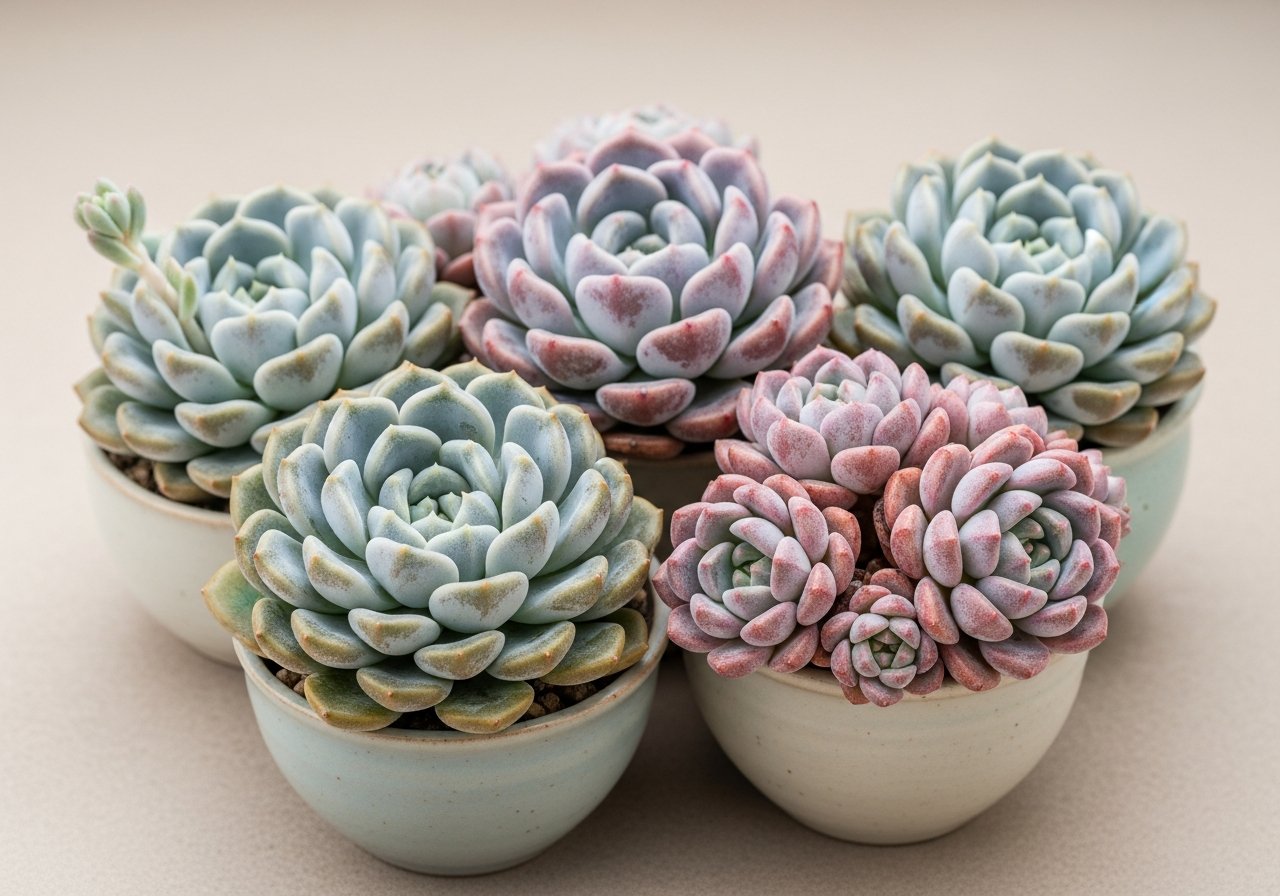
What are Pachyphytum and Graptopetalum
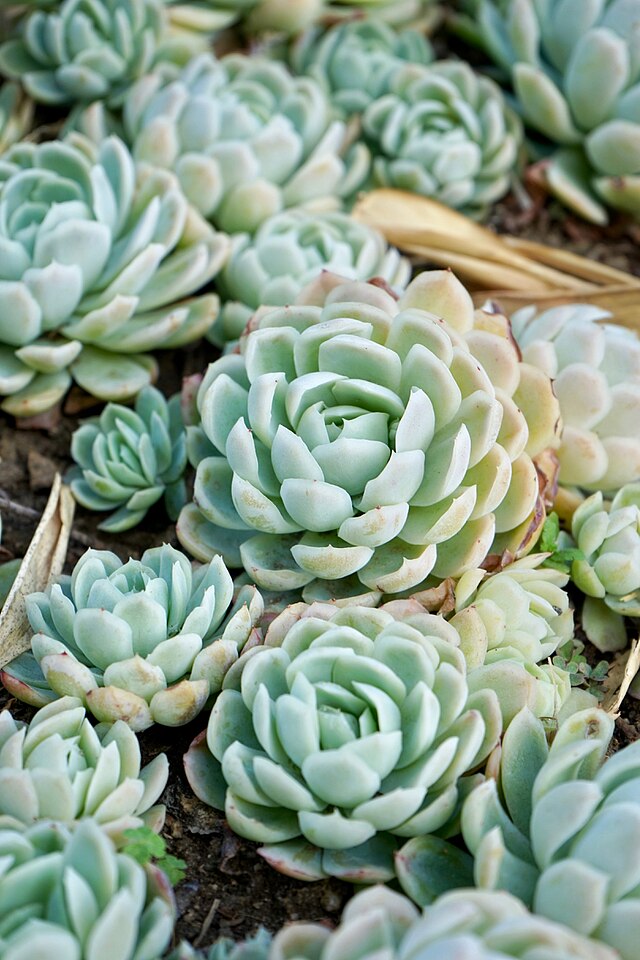
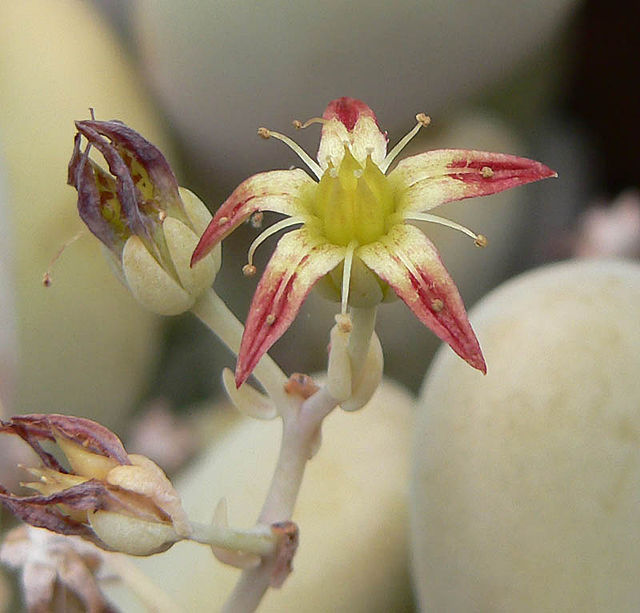
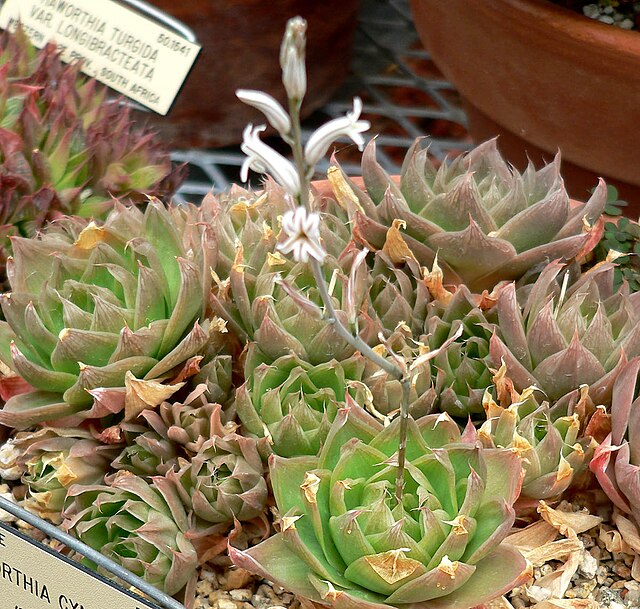
Pachyphytum (Pachyphytum) is a genus in the Crassulaceae family native to Mexico, prized as a succulent for its round, thick, fleshy leaves. Representative species include "Moonstone" (P. oviferum) and "Peachbijin" (P. cv. 'Momobijin'), which are beloved for their beautiful appearance with a powdery bloom (a waxy white coating) on the leaf surface. In some plant databases, they are classified together as the "Pachyphytum-Graptopetalum group," and the two genera are so closely related that their boundaries can be unclear.
Graptopetalum (Graptopetalum) is also a Crassulaceae genus native to Mexico and Arizona, known for its beautiful rosette form similar to Echeveria. The representative species "Ghost Plant" (G. paraguayense) is renowned for high cold and heat tolerance, making it hardy and easy to grow.
The two genera are frequently hybridized, and many hybrids such as Graptopetalum × Pachyphytum crosses (×Graptobakia) and Echeveria crosses are available in cultivation. They are approachable for beginners yet popular with collectors.
Growing Conditions and Light Requirements
Pachyphytum and Graptopetalum species are essentially "sun-loving" succulents.
Spring and Fall (Main Growing Seasons)
- Full sun outdoors is best
- Adequate light helps the bloom display beautifully and keeps the plant compact and well-formed
- Insufficient light is the primary cause of etiolation (stretching)
Summer (Hot Season Management)
- Since these are not summer-growing succulents, care must be taken with high heat and humidity
- Provide shade (30–50% reduction) and good air circulation; reduce watering frequency
- Poor ventilation can lead to rot from excessive moisture
Winter
- Cold tolerance varies by species, but most tolerate temperatures down to about –3 to –5°C
- Ghost Plant (Graptopetalum) is especially cold-hardy and can overwinter in gardens west of the Kanto region
- Many can winter over in a frost-free eave or sheltered location
Watering and Bloom Protection
Watering follows basic succulent principles, but Pachyphytum's bloom (white powder) cannot be restored once damaged.
Tips for Protecting Bloom
- Do not water the leaves (water the soil at the base of the plant)
- Protect from direct rain
- Avoid touching leaves with bare hands (fingerprints remove the bloom)
- Use a soft brush to gently dust the leaves when cleaning
- Avoid touching leaves when repotting
Watering Schedule
- Spring and Fall: Water thoroughly 2–3 days after the soil dries out
- Summer: Light watering approximately once every 2–3 weeks
- Winter: About 1–2 times per month
Soil and Repotting
Well-draining soil with good aeration is ideal. A basic soil mix ratio is shown below.
| Component | Ratio |
|---|---|
| Red volcanic soil (fine grade) | 40% |
| Kanuma soil | 30% |
| Pumice / Perlite | 20% |
| Small amount of leaf mold | 10% |
Repotting is best done in spring (March–May) or fall (September–October). Gently loosen the roots and remove dead roots, then move to a pot one size larger. Avoid planting Pachyphytum too deeply; ensure the base of the rosette is not buried too deeply in soil. For more details on soil composition ratios and particle size selection, see our Complete Guide to Succulent Soil and Pot Selection.
Propagation by Stem Cuttings and Leaf Cuttings
One of the great pleasures of growing succulents is propagation by leaf cuttings or stem cuttings.
Leaf Cuttings
- Remove healthy leaves from their base (twist gently while pulling for a clean removal)
- Place leaves cut-side up on a clean tray in shade
- Roots and new shoots appear within 1–2 weeks
- Once shoots develop, transplant into succulent soil
Many Pachyphytum species propagate readily from leaf cuttings, making them suitable for beginners. Graptopetalum can also be propagated this way.
Stem Cuttings Cut the stem to your desired length, allow it to dry for 3–5 days, then insert into dry soil. Side shoots will also emerge from the lower cut portion. Pachyphytum species have easily drying cut surfaces, making this a relatively fail-safe method.
Recommended Species and Fertilizer Management
Representative Pachyphytum Species
- Moonstone (P. oviferum): Round, plump leaves covered with blue-tinted white bloom
- P. hookeri: Beautiful rosette with narrow leaves densely overlapping
- Peachbijin (Hybrid): Popular cultivar with lovely pink-tinted coloration
Representative Graptopetalum Species
- Ghost Plant (G. paraguayense): Pale gray-pink leaves; cold-hardy and tough
- G. filiferum: Unique appearance with densely clustered thin-tipped white leaves
Fertilizer Management During the growing season (spring and fall), apply slow-release fertilizer once every 2–3 months or diluted liquid fertilizer monthly. Do not fertilize in summer or winter. Excess fertilizer weakens leaves and damages bloom, so use sparingly.
Pest and Disease Prevention and Treatment
Aphids They tend to congregate on new shoots. Rinse off with water or apply insecticide upon discovery.
Mealybugs They hide on leaf undersides and at the base of the plant. Treat with insecticide or alcohol on a cotton swab. Good air circulation helps prevent infestation. For care comparisons with related succulents like Echeveria, see Echeveria vs. Haworthia: Complete Comparison, which clarifies differences in light requirements and watering frequency.
Seasonal Care Calendar and Purchasing Tips
Annual Care Guidelines for Pachyphytum and Graptopetalum
| Month | Main Tasks | Watering Frequency |
|---|---|---|
| Jan–Feb | Indoor overwintering; maintain light | 2–3 times monthly |
| Mar–Apr | Move outdoors; ideal repotting time | Once weekly |
| May–Jun | Active growth; propagate by leaf and stem cuttings | 1–2 times weekly |
| Jul–Aug | Provide shade; significantly reduce watering | Once every 2–3 weeks |
| Sep–Oct | Growth resumes; repotting possible | 1–2 times weekly |
| Nov–Dec | Move indoors; stop fertilizing | 2–3 times monthly |
Purchasing Tips Pachyphytum and Graptopetalum are widely available from specialty succulent growers and online retailers. Rare varieties (unusual hybrids, etc.) are best purchased directly from growers for quality specimens. When purchasing, check that the leaves are full and have good bloom, and that the base is firm. Seedlings propagated from leaf cuttings may have sparse roots, so verify root development before buying.
Pachyphytum and Graptopetalum Cultivation Summary
Checklist for Success
- Light: Ensure full sun outdoors, especially in spring and fall
- Bloom protection: Keep water, hands, and rain off the leaves
- Summer care: Provide 30–50% shade; water sparingly (once every 2–3 weeks)
- Winter care: Overwinter in a frost-free location indoors or under eaves; maintain minimum 0°C
- Propagation: Leaf cuttings (high success rate, enjoyable for beginners)
- Soil: Use mineral-based mixes with excellent drainage
Pachyphytum and Graptopetalum captivate enthusiasts with their beautiful bloom and rounded leaf silhouettes. They are popular because leaf cuttings allow easy propagation, offering the pleasure of growing many plants from a single specimen. With proper care techniques, these succulents can display their beauty for years.
When purchasing seedlings propagated from leaf cuttings from a grower, keep in mind that root development is often incomplete. After arrival, manage them on the drier side to encourage strong root establishment. Conversely, well-established plants root reliably after planting, increasing success rates for beginners. Growing your own leaf-propagated seedlings and gradually multiplying them is one of the great pleasures of succulent cultivation. On GrowerDirect, growers throughout the country offer seed-grown and leaf-propagated Pachyphytum and Graptopetalum specimens. Check root condition and parent plant information directly with sellers to find the perfect plant for your needs.