Guide to Growing Stapelia
From the ecology of Stapelia, which has starfish-shaped flowers and reproduces through a unique scent, we explain the key points of cultivation from placement and watering to soil and propagation methods.
Key Takeaways
From the ecology of Stapelia, which has starfish-shaped flowers and reproduces through a unique scent, we explain the key points of cultivation from placement and watering to soil and propagation methods.
Related Species
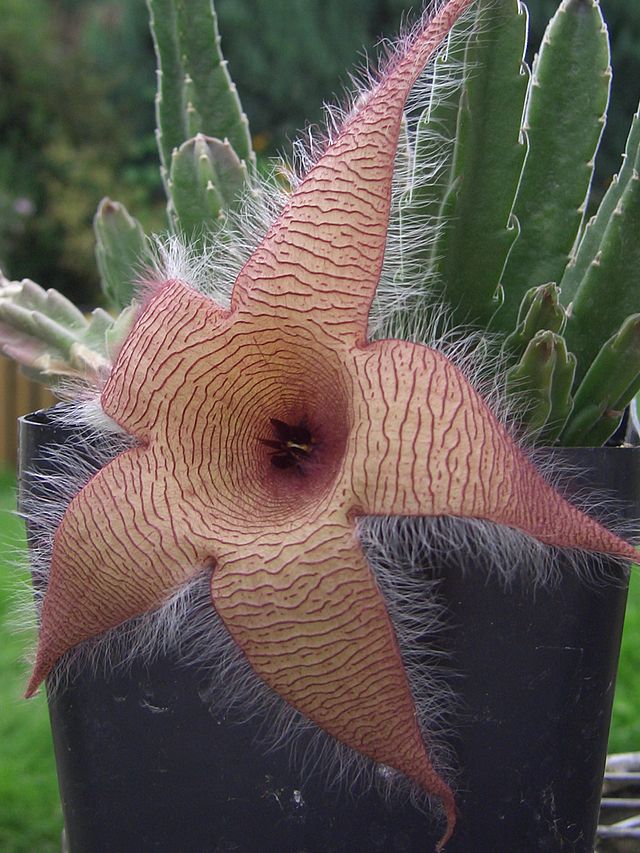
Stapelia is a succulent in the Asclepiadaceae subfamily, widely distributed throughout southern Africa. It is known for extending thick, multi-branched stems with square cross-sections in a clustered growth pattern and producing large, starfish-shaped flowers. The flowers can range from a few centimeters to over ten centimeters across, and are characterized by unique colors such as reddish-brown or yellow with fine patterning. While many succulents are valued for the appearance of their stems and leaves, Stapelia's greatest appeal lies in its uniquely formed flowers and distinctive ecology. Being native to arid regions, it has a hardy nature and is known as a relatively easy-to-grow succulent.
Basic Characteristics of Stapelia
While the Stapelia genus includes various species, Stapelia itself is widely appreciated as a representative species known for its starfish-shaped flowers. The following characteristics are notable:
- Stems are succulent with square-columnar protrusions, spreading along the ground while growing in clusters
- When flowering, it emits a distinctive scent, attracting insects such as flies to facilitate pollination through this characteristic carrion-flower ecology
- The combination of striking visual appearance and a unique pollination strategy using insects is a characteristic unique to Stapelia, rarely seen in other succulents
- Some specimens display fine, hair-like protrusions on the stem surface, and observing these textural differences is another pleasure of cultivation
Placement and Light Management
Stapelia is a succulent that prefers bright locations. Outdoors, it should be placed in a sunny spot with good air circulation; indoors, a bright south-facing window is ideal. Placement should be adjusted according to the season and light conditions as follows:
| Condition | Response |
|---|---|
| Intense summer direct sunlight | Prolonged exposure can cause stems to sunburn and discolor; use shade cloth or move to partial shade |
| Insufficient light | Stems may become leggy and elongated, which can disrupt the plant's appearance; be cautious |
| Winter | Bring indoors to a bright location and avoid cold drafty windowsills |
The basic principle of management is to maintain adequate light by adjusting placement according to the season.
Watering and Soil Management
Like other succulents, the basic rule for watering Stapelia is to water thoroughly only after the soil has dried out. Since the succulent stems store moisture, frequent watering is not necessary. The key management points are as follows:
- During cooler periods, increase the interval between waterings and maintain the soil on the dry side
- Stems are prone to rot when kept too wet, so choose soil with excellent drainage
- Commercial succulent potting soil mixed with pumice or perlite is commonly used
- Choose a pot with drainage holes at the base
- During humid seasons such as the rainy season, move the plant under an eaves or indoors to protect it from rain
Management for Flowering
Since Stapelia flowers emit a distinctive scent, it is worth considering this when choosing a location. Managing the plant outdoors or in a well-ventilated area makes the scent less noticeable and allows for close observation of flowering. Flowering is influenced by adequate light and proper moisture management; maintaining appropriate care from spring through autumn, the growth period, promotes flower bud formation. Observing the uniquely shaped flowers and patterns like starfish in detail is another pleasure of growing Stapelia. While the flowering period varies depending on species and growing conditions, flowers typically can be enjoyed for several days to a week.
Propagation and Daily Observation
Stapelia can be propagated relatively easily by cuttings.
- Cuttings: Cut overgrown stems, allow the cut ends to dry for a few days, then insert into well-draining soil to encourage rooting
- Division: Due to its clustering growth habit, division is also a viable propagation method
In daily care, observing stem color, luster, and firmness helps you understand moisture levels and overall plant health.
| Stem Condition | Meaning |
|---|---|
| Wilting | Sign of underwatering |
| Softening and discoloration | Sign of root rot from overwatering |
Regular observation allows you to quickly adjust care methods, which is essential for long-term healthy growth. Densely planted clusters are prone to moisture buildup, so periodically thinning and dividing pots also improves air circulation.
Summary
Stapelia is a distinctive presence among succulents, possessing uniquely shaped starfish-like flowers and an innovative pollination strategy that attracts insects through scent. By understanding its basic needs—preference for sunlight and aversion to excess moisture—and adjusting watering and placement seasonally, you can enjoy its unique flowers during the blooming period. The clustered growth habit as it develops is also a point of visual interest. GrowerDirect features an online catalog of succulents, including Stapelia grown by our growers, so please take a look if you are interested.