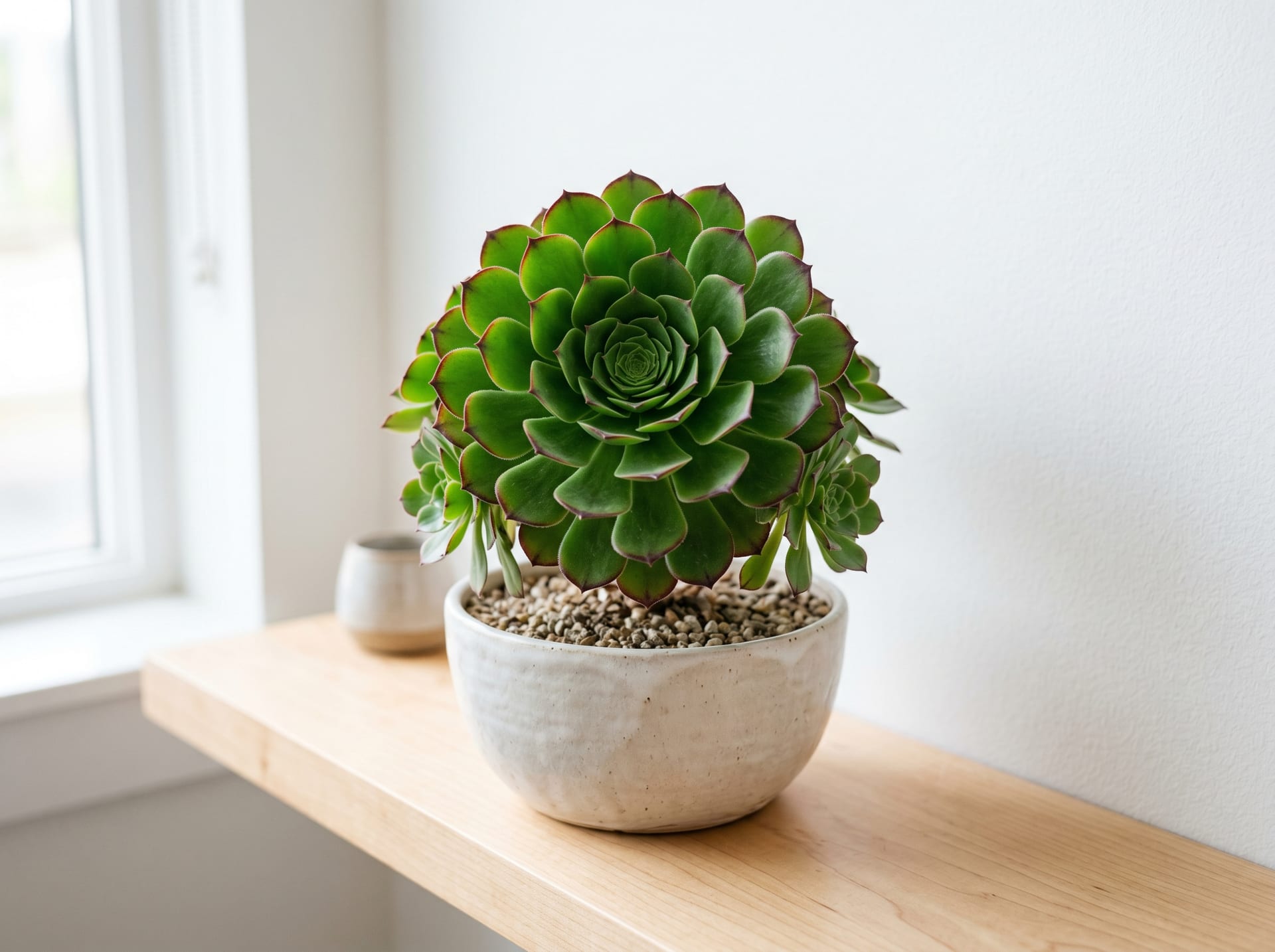
AI-generated image
Aeonium
IntermediateUnique silhouette with rosette leaves atop stems. Zwartkop (Black Rose) most famous. Winter grower, dormant in summer.
About
Aeonium is a genus of about 35 species of succulent subtropical plants in the family Crassulaceae, known as tree houseleeks. Most species are native to the Canary Islands, with some found in Madeira, Cape Verde, Morocco, East Africa, and Yemen. Plants form flat rosettes at stem tips and range in leaf color from bright green to deep burgundy or near-black. The genus name derives from the ancient Greek aiōnios, meaning 'ageless'. Aeoniums follow a winter-growth pattern: they are active during the cooler months from autumn through spring and enter dormancy in summer, when leaves may curl inward. They prefer bright light but should be shielded from intense midsummer sun. Watering during the growing season should be regular; in summer, water is withheld almost entirely. Stem cuttings root readily, facilitating propagation.
Source: Wikipedia (CC BY-SA 4.0)
Lifespan of the Aeonium
The Aeonium lives 10+ years.
Size of the Aeonium
The Aeonium grows to 15-90cm.
Temperature & humidity for the Aeonium
The ideal temperature for the Aeonium is 5〜25℃.
Basic Info
Origin
the Canary Islands, some are found in Madeira, Cape Verde, Morocco
Lifespan
10+ years
Size
15-90cm
Temperature
5〜25℃
Humidity
30〜50%
Growing Tips
Light & Placement
Loves sun, but keep it out of harsh midsummer sun in cool partial shade. Give it plenty of light from autumn to spring.
Watering
Winter type: water autumn-spring, none in summer
Temperature & Overwintering
Ideal range is 5-25°C. Keep it out of frost by overwintering under eaves or in a bright indoor spot.
Dormancy Care
A winter grower active from autumn to spring. In summer the leaves close and it rests, so keep it nearly dry in a cool, airy place.
Propagation
Fairly easy from cuttings. Cut a stem during the autumn-to-spring growing season, let it dry, then insert it into soil.
Notes
Weak to summer humidity — manage in cool partial shade
Aeonium FAQ
QWhat is the growing difficulty level for Aeonium?
Intermediate. A variety suitable for intermediate growers. Requires some cultivation experience and knowledge of environment management. Pay careful attention to temperature and humidity control.
QWhat is the ideal temperature for Aeonium?
The ideal temperature for Aeonium is 5〜25℃. Avoid sudden temperature changes and maintain a stable environment.
QWhat is the lifespan of Aeonium?
The average lifespan of Aeonium is 10+ years. With proper cultivation environment and nutrient management, you can keep it healthy for a long time.
QHow large does Aeonium get?
The mature size of Aeonium is 15-90cm. This may vary slightly depending on cultivation environment and individual differences.
QWhat is the typical price for Aeonium?
The price of Aeonium varies significantly by variety, characteristics, size, and lineage. Please check GrowerDirect's price guide for the latest market information.
Last updated: June 23, 2026
References & Sources
Edited & verified by: GrowerDirect Editorial Team
The classifications, regulations, and growing data on this page are created and verified based on the primary information database below.
Primary sources
Regulations & Conservation Status
Sources: CITES Appendices — taxon not listed
Regulations may change. Always verify the latest information with the relevant authorities.
Related Species
Find listings for this species
Related Articles
Complete Guide to Growing Aeonium | Summer Care, Propagation by Cuttings, and Variety Selection
Comprehensive guide to Aeonium care. Covers the often-confusing growth cycle of winter-growing versus summer-dormant types, summer dormancy strategies, propagation methods by cuttings, and characteristics of popular varieties including Arboreum and Holly Rose.
Autumn Preparation Management for Summer-Type Succulents
A guide to autumn care for summer-type succulents, covering plant changes from September to November, timing for gradual watering reduction, placement and temperature management for transitioning plants indoors, autumn fertilizing and pest control, variety-specific care checkpoints, and preparation for winter dormancy.
Mealybug Control on Succulents | Complete Guide to Early Detection, Removal, and Prevention
Mealybugs hide easily at the base of succulent leaves and on new growth. This guide covers their characteristics, the environments where they thrive, tips for early detection, removal methods using cotton swabs and alcohol, and daily care practices to prevent recurrence.
Summer and Winter Type Succulents: Growth Cycles and Watering Management Strategy
This article explains the differences in growth types of succulent plants, their annual growth cycles, seasonal watering management strategies, common failures, and countermeasures.
🩺 Common diseases
Can't find the plant you're looking for?
Post your wishes for free and growers with matching plants will contact you with introductions.