Complete Guide to Growing Aeonium | Summer Care, Propagation by Cuttings, and Variety Selection
Comprehensive guide to Aeonium care. Covers the often-confusing growth cycle of winter-growing versus summer-dormant types, summer dormancy strategies, propagation methods by cuttings, and characteristics of popular varieties including Arboreum and Holly Rose.
Key Takeaways
Comprehensive guide to Aeonium care. Covers the often-confusing growth cycle of winter-growing versus summer-dormant types, summer dormancy strategies, propagation methods by cuttings, and characteristics of popular varieties including Arboreum and Holly Rose.
Related Species
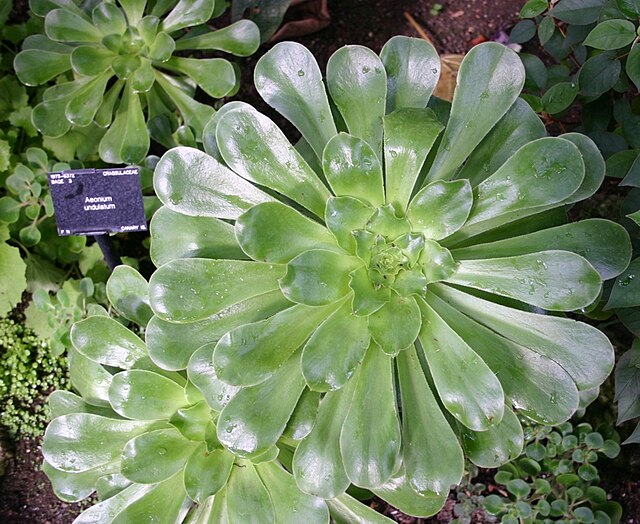
Aeonium is a succulent plant in the Crassulaceae family native to the Canary Islands, North Africa, Madeira, and similar regions. It is particularly renowned for its beautiful rosette-shaped foliage and black-leaved varieties such as Black Rose, making it popular as an ornamental houseplant as well.
However, Aeonium follows a growth cycle opposite to typical succulents (winter-growing), which often results in failure, particularly "killing the plant during summer." This guide focuses on summer management—the most challenging season—and provides a complete overview of Aeonium care.
Basic Knowledge About Aeonium
What Are Winter-Growing Succulents?
Aeonium is a "winter-growing" succulent. Winter-growing plants have a growth cycle in which the cool seasons of autumn through spring are their active growing period, while they enter dormancy (cease growth) during summer.
In their native Canary Islands, summers are hot and dry, while winters through spring receive relatively more rainfall—a Mediterranean climate. Having adapted to this environment, Japan's hot summers become the most severe season for Aeonium.
Distinguishing the Growth Period from the Dormancy Period
Signs of Active Growth (Autumn to Spring)
- New leaves unfold from the center of the rosette
- Leaf color is deep and glossy
- In some varieties, stems elongate and flower buds emerge
Signs of Dormancy (Summer)
- Rosette leaves curl inward (leaves curl into a compact form to prevent water loss)
- Lower leaves drop off
- Growth stops, and the plant absorbs little water even when watered
The "curling of leaves" is not a sign of dying but rather a dormancy response. First-time growers often worry, but the leaves will naturally return to normal as temperatures cool.
Seasonal Management Calendar
| Season | Plant State | Location | Watering |
|---|---|---|---|
| Spring (March–May) | Active growth | Bright location | 1–2 times per week |
| Summer (June–Sept) | Dormant | Partial shade, emphasize airflow | 1–2 times per month (small amount in evening) |
| Autumn (Sept–Nov) | Active growth (best time to repot) | Bright location | 1–2 times per week |
| Winter (Dec–Feb) | Gradual growth | Bright location (indoors if below 32°F) | Once per week |
※ Most failures occur in summer. The key is avoiding high heat and humidity conditions.
Featured Varieties
Comparison Table of Main Varieties
| Variety | Leaf Color & Characteristics | Plant Shape | Ease of Care |
|---|---|---|---|
| Black Rose | Dark purple to black (requires sunlight) | Tree-like | ◯ (turns green without adequate light) |
| Canariense | Green with fine hairs; leaf tips redden | Large rosette | ◯ |
| Sunburst | Cream and green variegation | Medium-sized | △ (somewhat slow-growing) |
| Dodrantale | Green, small | Clustering | ◎ (good heat and cold tolerance) |
| Arboreum | Green, large | Tree-like with branching | ◎ (hardy, ideal for beginners) |
| Tabuliforme | Green, flat, plate-like | Single stem | △ (monocarpic) |
Black Rose (Aeonium 'Zwartkop')
The most popular Aeonium variety. Leaves are dark purple to black, creating a striking contrast. As it matures, the stem elongates and develops a tree-like form. Deep black leaf coloration requires sufficient sunlight; lack of light causes greening.
Canariense (Aeonium canariense)
A species close to the wild form native to the Canary Islands. The appeal lies in its large green rosette, distinguished by fine hairs (cilia) on the leaves. When exposed to sunlight, leaf tips become tinged with red.
Sunburst (Aeonium 'Sunburst')
A variegated variety with cream and green coloring. Leaf tips can become tinged with pink, creating exceptional beauty. Growth is somewhat slow.
Dodrantale (Aeonium dodrantale)
A small Aeonium with rosettes 2–4 inches in diameter. It clusters readily, making it ideal for mixed plantings and rock walls. It has moderately strong heat and cold tolerance.
Arboreum (Aeonium arboreum)
One of the wild species with large green rosettes. The stem becomes tree-like and branches well. Hardy and easy to grow—an excellent variety for beginners.
Tabuliforme (Aeonium tabuliforme)
Distinctive for its flat, plate-like rosette—an exceptionally unique form. Typically grows as a single stem and often dies after flowering (monocarpic).
Light and Placement
Placement During the Growth Period (Autumn to Spring)
A brightly lit location is ideal during the active growing season.
- Outdoors: A frost-free location with direct sunlight and good airflow. Watch for frost (move indoors if temperatures drop below 32°F)
- Indoors: A bright window, preferably south-facing
Black Rose in particular develops deeper black foliage with adequate direct sunlight. Insufficient light causes leaves to turn green, diminishing the plant's distinctive beauty.
Placement During Dormancy (Summer)
Manage in partial to full shade during summer.
- Bright shade with 30–50% light reduction
- A well-ventilated location (humidity is the enemy)
- As cool a location as possible
On scorching days, moving the plant to a slightly cooler spot like under an eave provides peace of mind.
Watering Methods
During the Growth Period (Autumn to Spring)
The basic principle is to water thoroughly when the soil dries out. Aeonium requires more water than typical succulents; water approximately 2–3 days after the soil dries completely.
- Active growing seasons (spring and autumn): approximately 1–2 times per week
- Winter (continued growth but cooler temperatures): reduce to approximately once per week
During Dormancy (Summer)
Summer management calls for near-complete withholding of water.
While some recommend complete drought, Japan's long summers can stress the plant. Watering 1–2 times per month with small amounts helps maintain plant health. Water in the cool evening to night hours, and ensure good airflow the following morning so soil dries quickly.
Watering Precautions
- Water pooling in the rosette center (growing point) causes rot
- Do not allow water to collect in saucers
- Watering during hot summer days creates a humid, high-temperature environment inside the pot, promoting rot
Soil and Repotting
Soil
Use highly draining soil.
Recommended mix:
- Succulent potting soil 5 : Small-grain red volcanic soil 3 : Perlite 2
- Or add perlite (20–30%) to commercial "cactus and succulent soil"
Aeonium has fine roots; a soil mix with some water retention capacity performs better during the growth period than completely dry soil.
Repotting Timing
Repot in autumn (September–October) when growth resumes. Repotting after summer dormancy allows you to inspect the root system and prepare fresh soil for the active season ahead.
Propagation by Cuttings
Aeonium propagates extremely easily from cuttings. Simply cut the stem, dry it, and insert into soil for roots to develop.
Cutting Propagation Steps
- Cut the stem tip to 10–15 cm length
- Allow the cut end to dry for 2–3 days (1–2 days in summer) in a well-ventilated, shaded spot to form callus
- Insert the stem into dry succulent soil (approximately 1–2 inches deep)
- Begin light watering approximately 1 week after inserting
- Keep in bright shade away from direct sun while waiting for roots to develop
The best time for cuttings is during the growth period, autumn through spring. High summer temperatures make rooting difficult and increase rot risk.
Management After Cutting
Rooting takes 2–4 weeks. Once roots develop (gently tug the stem; resistance indicates rooting), gradually acclimate to sunlight and transition to standard care.
Flowering and Aftercare
Mature Aeonium plants send up flower stems in spring through early summer, producing numerous small yellow flowers.
Note: Monocarpic Varieties
Many Aeonium species and varieties are monocarpic—the rosette that flowers dies after blooming. However, shoots emerging from side branches survive, so the entire plant does not perish.
Once flowering begins, identify offset rosettes, and take cuttings as insurance before the parent rosette dies. After flowering, remove the dead rosette portion and either grow the offsets in place or propagate them separately.
Common Problems and Solutions
Plant Weakens or Dies in Summer
The most frequent problem. The cause is high heat and humidity. Manage with near-drought conditions and keep the plant in partial shade with excellent airflow. Humidity is the main culprit.
Leaves Turn Green (Black Rose, etc.)
Insufficient light causes this. During the growth period, expose the plant to ample direct sunlight for better black leaf coloration.
Stem Becomes Leggy
Caused by insufficient light or overfertilizing. Leggy stems can be reset through cutting propagation.
Lower Leaves Drop Continuously
This is normal senescence. It is natural for Aeonium to gradually shed lower leaves while increasing in height. However, prolonged drought accelerates this; water appropriately during the growth period.
Find Rare Varieties on GrowerDirect
Aeonium availability varies greatly by variety. While Black Rose appears in garden centers, variegated varieties, small forms, and newly introduced international cultivars are best sourced from specialist growers. GrowerDirect features dedicated Aeonium growers with listings, and you can ask growers directly about cultivation conditions and care methods before purchasing. If you're seeking varieties that fit your collection, explore GrowerDirect today.